
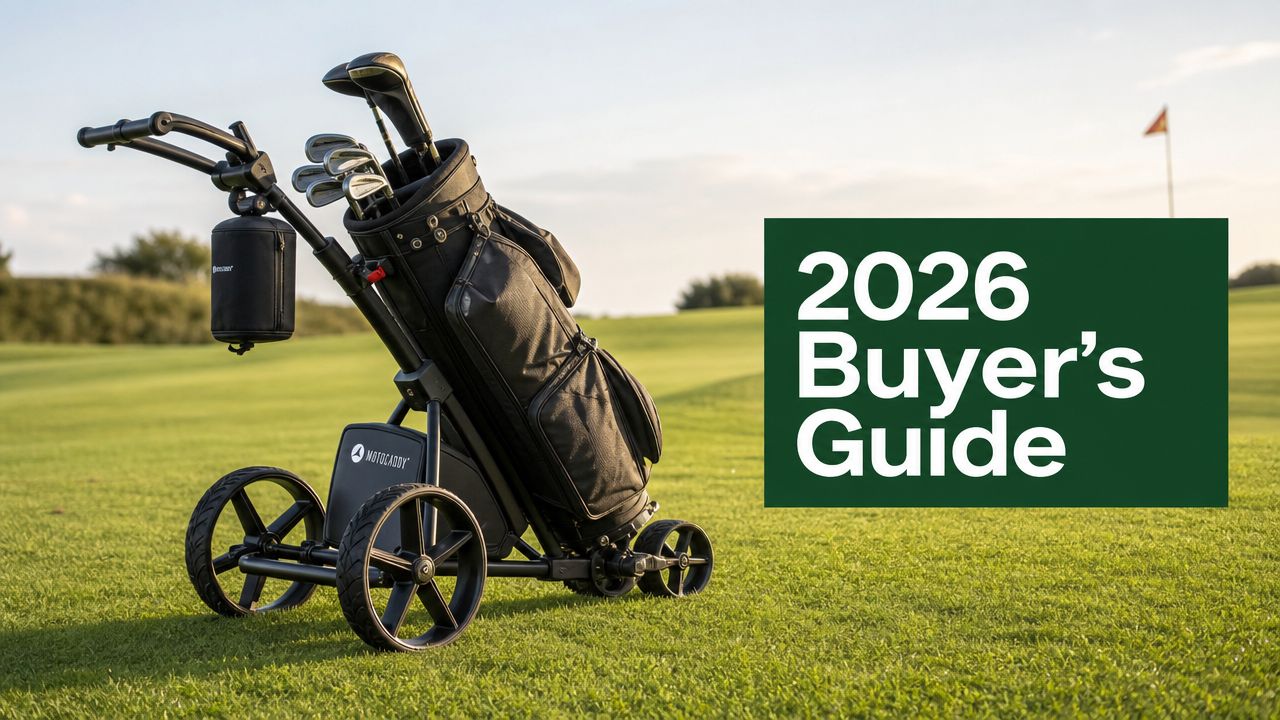
You're probably reading this because your push cart still works fine, but your legs and shoulders are getting a little less enthusiastic by the back nine. The usual pain point isn't the first few holes. It's the long climb on a hilly fairway, the awkward cross-slope lie, or that last stretch when pushing your bag starts to steal energy from your swing.
That's why the smartest conversation in golf walking gear isn't always about buying a full electric trolley. For a lot of golfers, the better move is simpler. Upgrade the cart you already own with the right electric golf trolley accessories, especially a power-assist system, and keep everything you already like about walking.
That approach makes sense on the course and in the market. Golfers are putting more money into upgrades, not just replacements, because they want better performance without starting over.
Why Smart Accessories are a Game Changer
A standard push cart does one job well. It carries your bag. The problem is that it still asks you to supply all the effort. On flat ground, that's manageable. On hills, wet turf, or a long round, it becomes a slow drain on your energy.
Smart accessories change that equation. Instead of replacing a good cart with a full electric model, you add help where it matters most. A powered wheel system, better storage, a stable umbrella holder, or a cleaner control setup can turn a familiar push cart into something much easier to live with.
The shift toward upgrades isn't just anecdotal. The global golf cart accessories market was valued at $1974.7 million in 2025 and is projected to reach $3500.0 million by 2035, with growth tied to golfers choosing affordable upgrades over buying entirely new vehicles, according to Wise Guy Reports' golf cart accessories market analysis.
That matters because it tells you this isn't a niche idea anymore. Golfers are deciding that “upgrade your walk” is often the more practical path.
Practical rule: If your current push cart tracks well, folds easily, and fits your bag properly, don't replace it just to gain motorized help. Improve the weak point instead.
There's also a flexibility advantage. A full electric trolley locks you into one system. An upgraded push cart often lets you keep the frame, storage habits, and setup you already know. You're not relearning where anything goes. You're just reducing the effort.
If you want a broader look at why more walkers are moving this direction, this guide on the benefits of electric push carts for golfers lays out the appeal well. The short version is simple. You preserve the walking experience, but remove a lot of the push fatigue.
The Core Upgrade Power Systems and Batteries
The centerpiece of most meaningful upgrades is the power system. If you understand that one piece, the rest of the buying process gets much easier.

What a power-assist system actually adds
A power-assist setup takes your regular push cart and gives it motorized propulsion. Usually that means four core parts:
- The motor unit that drives the cart forward
- The battery that feeds the system
- The remote or control interface that tells it what to do
- The charger that gets you ready for the next round
It's like power steering for your golf walk. You're still walking and guiding the cart, but you're no longer doing all the heavy work.
Some systems focus on simple forward assist. Better ones add more control, including reverse and braking support. That's where the experience starts to feel less like “a cart with a gadget attached” and more like a proper upgrade.
For example, the Pro Rider Electric Golf Trolley uses a GO/STOP button and an A-B button for preset distance control, as shown in the Pro Rider user manual. Premium systems in the market also commonly include features such as adjustable distance control, downhill control, remote operation, cable-free battery setups, and even GPS, which you can see across the Motocaddy electric caddies range.
Why battery specs matter more than marketing language
Battery talk confuses a lot of golfers because product pages often throw around technical terms without translating them into real use. What you really want to know is this: will the battery finish your round without creating new hassles?
A useful benchmark exists here. High-capacity lithium-ion batteries in premium electric assist systems can deliver 380Wh energy density, enabling up to 27 to 36 holes per charge, and that performance is often paired with overcharge protection for reliability over hundreds of charge cycles, according to this battery performance video overview.
That tells you several practical things at once:
- Lithium-ion is the modern standard if you care about lower weight and better longevity.
- Range should be judged by holes per charge, not vague promises.
- Protection circuits matter because a battery isn't cheap to replace.
If you want to get more comfortable reading battery claims before you buy, this explainer on electric trolley batteries is a good companion.
Remote control and braking are not luxury features
Golfers sometimes treat remote control as a gimmick until they use one on a sidehill lie or a long path between green and tee. Variable-speed control lets you match the cart to your walking pace. Reverse helps in tight areas near tee boxes or bridges. Braking matters most on descents, where an unhelpful cart can feel like it's pulling away from you.
A good power-assist setup shouldn't just move the cart. It should make the cart easier to manage in the moments when manual pushing is most awkward.
That's the reason power-assist is the smartest first upgrade. Before you add cup holders, baskets, or travel covers, solve the force problem.
Essential On Course Convenience Accessories
Once the cart moves more easily, convenience accessories start to matter more. You notice them in small moments. Where did you put your rangefinder? Is your phone secure? Can you reach your umbrella without digging through the bag?

A tidy setup reduces friction all round long. You spend less time stopping, searching, bending, and rearranging gear. That doesn't sound dramatic, but it makes walking feel smoother and keeps your attention on golf instead of equipment.
Holders that earn their place
Some accessories look minor until you play in wind, drizzle, or full sun. Phone holders, GPS mounts, scorecard trays, and umbrella holders are in that category. They don't add power, but they remove annoyance.
Functional accessories like phone and umbrella holders can improve course functionality by as much as 40% for walking golfers, according to Big Horn Golfer's guide to electric golf push cart accessories.
That improvement makes sense in real use. A phone holder keeps yardage apps visible. An umbrella holder frees both hands. A scorecard tray stops the shuffle of glove, pencil, card, and towel every few minutes.
A simple way to judge any holder is to ask one question: does it save motion? If it reduces bending, rummaging, or balancing loose items on the handle, it's doing its job.
Storage that supports walking
Storage accessories work best when they're selective. More compartments aren't always better. Better compartments are better.
Here's what tends to help most:
- Cooler pockets or drink holders for hydration on warm rounds
- Mesh baskets for extra layers, snacks, or a headcover you don't want to stuff in the bag
- Small utility trays for tees, balls, a rangefinder, and a divot tool
- Wheel covers or travel bags to keep dirt off your car boot after a wet day
The key is placement. If every item sits low, secure, and reachable, the cart feels stable and organized. If accessories stick out, rattle, or crowd the handle area, they become one more thing to manage.
This walkthrough shows what that kind of organized setup looks like on course:
Avoid accessory clutter
The easiest mistake is adding every available attachment. A cleaner rule is to build around your round.
Bring the accessories that remove repeated hassle, not the ones that just fill empty space on the frame.
If you usually play quick nine-hole rounds, a basic phone holder and drink setup might be enough. If you walk long courses in mixed weather, an umbrella holder, storage basket, and protective covers make more sense. Convenience accessories work best when they support your habits instead of trying to impress you on a spec sheet.
How to Ensure Perfect Accessory Compatibility
Compatibility is where good upgrade plans go wrong. A golfer buys a motorized add-on, assumes “most carts” means their cart, and then finds out the frame shape, axle design, or folding geometry gets in the way.
That's avoidable if you check the right things before you buy.

Start with the cart, not the accessory
Most golfers shop the opposite way. They get excited about a powered wheel or a clever mount, then try to make it fit whatever cart they own. Flip that process.
Begin with your push cart and inspect:
- Frame shape around the axle and rear support area
- Wheel layout on a three-wheel or four-wheel design
- Folding path so accessories won't block collapse or storage
- Handle spacing for mounts, holders, and control placement
This is especially important with powered systems. The mounting bracket has to match the cart's structure, not just its brand category. A “universal” label doesn't mean universal in practice. It usually means broadly compatible with exceptions.
A useful shortcut is to check a dedicated push cart compatibility list before you compare features. That one step can save you the most frustration.
Weight and balance matter more than people think
A compatible accessory can still be a bad fit if it changes how the cart behaves. This happens when a battery sits too high, a rear-mounted unit shifts the balance awkwardly, or a loaded storage tray makes the handle area top-heavy.
What you want is a setup that keeps the cart planted and predictable on uneven ground. A low center of gravity helps on side slopes, curbs, and wet turf. It also makes the cart feel less twitchy when you're turning.
Use this quick check before buying:
| Checkpoint | Why it matters | Good sign |
|---|---|---|
| Mount position | Affects stability and steering feel | Sits low and centered |
| Battery placement | Changes balance and foldability | Secure, compact, out of the way |
| Wheel replacement fit | Affects traction and tracking | Locks in cleanly with no wobble |
| Folded clearance | Prevents awkward storage issues | Cart still folds without forcing parts |
Don't skip the control layout
Electronic accessories need physical compatibility and user compatibility. A remote that's hard to reach, a brake button you can't use confidently, or a screen hidden behind your bag can make a technically compatible setup feel wrong.
If you have to change your normal walking rhythm to operate the accessory, the accessory isn't fitted well enough.
Look at your own habits. Do you walk with one hand on the handle? Do you like the cart to move slightly ahead? Do you often play hilly courses? Those answers should shape where controls sit and what kind of response you want.
Compatibility isn't paperwork. It's the difference between a smooth upgrade and a garage project.
Simple Installation and Maintenance Tips
Most golfers are happier buying an accessory than installing one. That's fair. Nobody wants a Saturday afternoon project with missing tools and vague instructions. The good news is that many modern add-ons are designed for quick setup and straightforward care.
Installation should feel obvious
A well-designed accessory usually follows a simple pattern. Mount the bracket, secure the powered component, pair or test the control, and do a short practice roll before the first round.
Use this order:
- Test fit first. Before tightening anything fully, check fold clearance and wheel movement.
- Keep the cart empty. Remove the bag during setup so you can judge balance properly.
- Walk it in a driveway or car park. That tells you whether tracking, braking, and response feel natural.
- Add bag weight last. Once the system works cleanly unloaded, repeat the test with your full golf bag.
If the accessory is fighting the frame, stop there. Forcing a bracket or improvising spacers usually creates problems later.
Battery habits that preserve lifespan
Battery care doesn't need to be technical, but it does need to be consistent. Charge the battery with the intended charger, store it in a dry place, and don't leave it neglected for long stretches.
Here's the practical version:
- Charge after use if you've completed a round
- Avoid dirty connections by wiping terminals and mounts clean
- Store indoors rather than leaving the battery in a hot car or damp garage
- Check before the season starts so your first round isn't a surprise failure
Golfers often focus on the motor and forget that the battery is the part with the most routine responsibility. A little consistency keeps performance predictable.
Clean the system like golf gear, not workshop machinery
You don't need aggressive cleaning products. A damp cloth, a soft brush around wheel housings, and attention to mud buildup are usually enough. Dry everything before storage, especially after a wet round.
Keep it clean enough that moving parts stay clear and connections stay dry. That's usually all good maintenance asks of you.
Travel bags and wheel covers help here. They don't make the accessory perform better, but they reduce mess in transport and protect components from knocks. For off-season storage, remove the battery if the system allows it, clean the mount points, and store the setup where it won't get crushed by other gear.
Matching Accessories to Your Golfer Profile
The best accessory setup depends on the golfer, not the catalog. Two players can walk the same course and need completely different help. One wants less strain. Another wants to save energy for scoring. Another just wants an affordable path into electric assistance.

The senior golfer
This player usually values ease, balance, and confidence more than flashy features. The right setup removes awkward lifts, heavy pushing, and repeated bending.
A lightweight system matters here. For seniors and mobility-challenged players, total system weights under 21lbs significantly reduce strain, making it easier to lift the cart in and out of a vehicle and move around the course.
That golfer often benefits most from:
- A lightweight power-assist upgrade instead of a full replacement trolley
- An umbrella holder that removes one more physical task in bad weather
- Simple controls with clear start, stop, and speed changes
- Minimal extra attachments so the cart stays tidy and stable
The wrong choice for this golfer is usually overcomplication. More buttons and more accessories don't always create more comfort.
The fitness-focused walker
This golfer still wants to walk and stay active. They just don't want the cart to drain the round. On a hilly course, pushing a loaded bag can turn a healthy walk into a tiring grind.
A power-assist system is ideal here because it preserves movement without demanding full pushing force all day. Add a drink holder or cooler, a phone mount for GPS, and maybe a small basket for layers, and the cart becomes part of a better walking routine.
This golfer should think in terms of energy management, not laziness. The point is to arrive at the last few holes feeling stable in posture and swing, not worn down from cart work.
The budget-conscious upgrader
This golfer already knows a full electric trolley is an expensive jump. They don't need every premium feature. They need the biggest improvement per dollar spent.
That usually points to one smart decision. Buy the accessory that changes the round the most. In many cases, that's the power-assist unit.
A few practical guidelines help:
- Keep your current cart if the frame is still solid
- Spend first on propulsion, not cosmetic add-ons
- Add convenience accessories later based on actual use
- Choose accessories you'll notice every round, not once a month
A good upgrade path starts with effort reduction. Organization and extras come after that.
That's why “upgrade your walk, don't replace your cart” works for so many golfers. It meets different needs without forcing everyone into the same expensive setup.
Your Decision Checklist for the Right Accessories
A good buying decision usually comes down to a short list of honest answers. What frustrates you now? How often do you walk? What part of the round do you want to make easier?
If your current push cart rolls well and folds properly, accessories can give you most of the benefit of a new electric setup without replacing the whole system. The mistake is buying based on feature excitement instead of fit, use, and priority.
Use this checklist before you buy anything.
Accessory Purchase Decision Checklist
| Consideration | What to Check | My Requirement |
|---|---|---|
| Cart compatibility | Brand, model, frame shape, axle area, folding clearance | |
| Primary goal | Less strain, better organization, easier hill walking, cleaner transport | |
| Round length | Do you usually play 9, 18, or more holes in one outing? | |
| Course type | Flat, hilly, wet, windy, long walk between holes | |
| Power system needs | Do you want forward assist only, or also reverse and braking control? | |
| Battery expectations | How much range do you want between charges? | |
| Control preference | Remote, handle controls, distance presets, simple start-stop | |
| Weight tolerance | How much added equipment are you comfortable lifting into the car? | |
| On-course convenience | Phone holder, umbrella holder, cooler, basket, travel cover | |
| Budget sequence | What must you buy now, and what can wait until later? |
One final rule helps keep the decision clean. Buy for the problem you feel every round. If your issue is fatigue, solve propulsion first. If your issue is clutter, solve access and storage first. If your issue is uncertainty, solve compatibility before anything else.
That's a key advantage of electric golf trolley accessories. They let you build a setup around your own walk, instead of adapting your game to a completely new trolley.
If you like the idea of keeping your existing push cart and adding motorized help where it counts, take a look at Caddie Wheel. It's built for golfers who want an easier walk without replacing the cart they already trust, and it's a smart place to start if your main goal is reducing push fatigue while staying on your feet.
Share:
Rangefinder Holder for Golf Cart: 2026 Buyer's Guide
Four D Pushcart: The Ultimate Golfer's Guide for 2026