
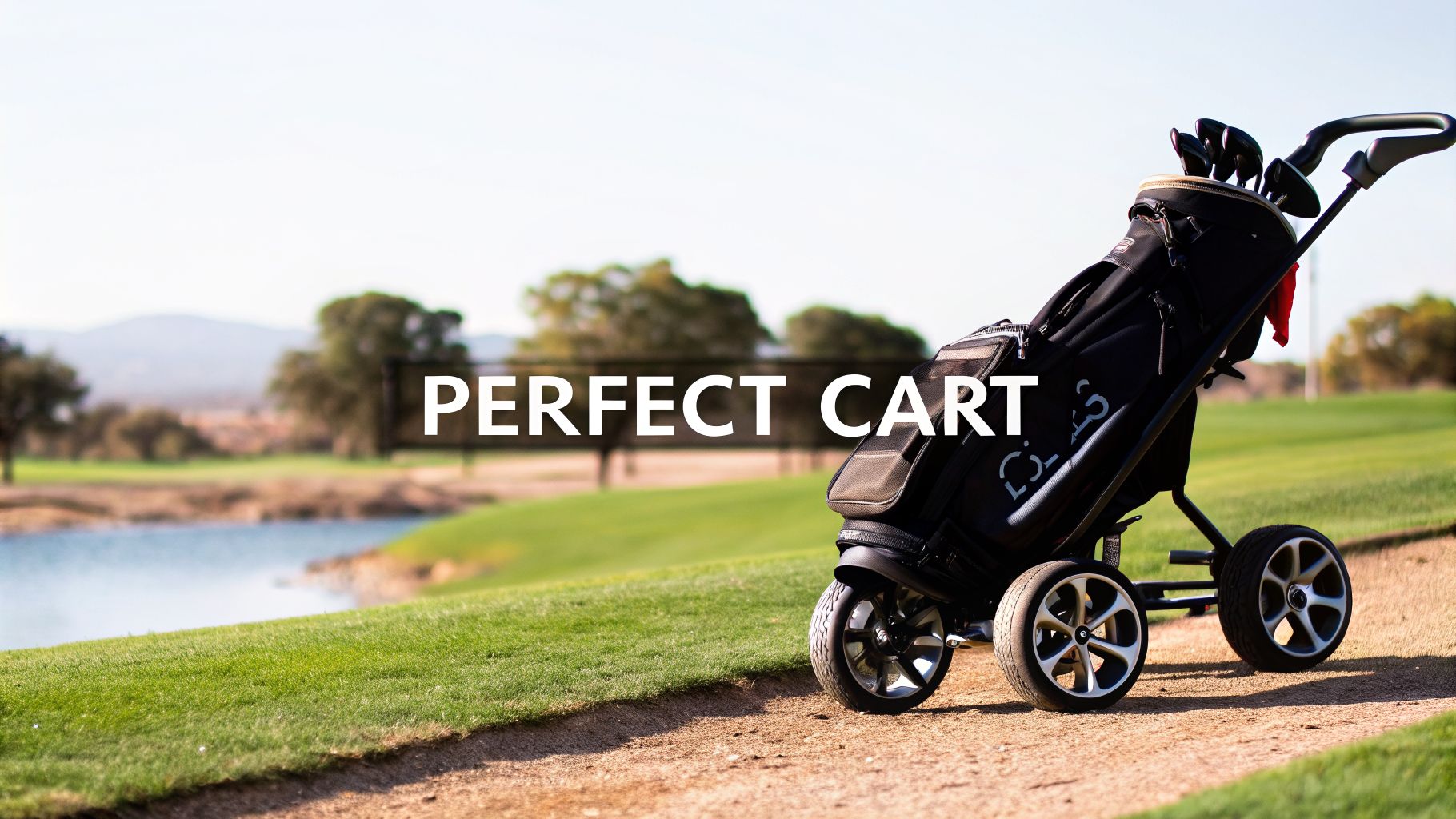
Picture this: you're walking up to the 18th green, feeling just as strong and clear-headed as you did on the first tee. That’s the feeling a modern golf bag cart delivers. It's more than just a wheeled frame for your clubs; it's a simple, game-changing upgrade that lets you save your energy for what really matters—your swing.

Why a Golf Bag Cart Is Your Best Investment
This guide isn’t just about helping you avoid a sore back. It’s about showing you how a quality push or electric cart can fundamentally sharpen your performance on the course. You can forget those old, clunky pull carts from back in the day—the awkward, wobbly ones that always seemed to tip over. Today's models are marvels of engineering, built for incredible stability, smooth rolling, and pure convenience.
When you switch from carrying your bag to pushing a cart, you're making a direct investment in your endurance and focus. Studies on golfer fatigue have shown that lugging a 30-pound bag for miles directly hurts your concentration and messes with your swing mechanics. A cart takes that fatigue out of the equation, so you can finish your round as strong as you started.
Preserve Your Body and Your Game
Walking the course is fantastic for your health, but carrying a heavy bag puts a ton of repetitive strain on your body. Over time, that can lead to nagging issues in your shoulders, back, and knees, potentially cutting your golfing years short.
A cart completely removes that burden. It’s like having a personal caddie who handles all the heavy lifting, letting you enjoy a great walk without paying the physical price. This simple change makes the game far more accessible, especially on hilly courses that might otherwise feel too exhausting.
The real game-changer is energy conservation. A typical 18-hole round is a four- to six-mile walk. By pushing a cart instead of carrying, golfers can save an estimated 25% of their physical energy. That’s energy you can pour back into your focus and shot-making.
More Than Just Wheels
Modern carts have also evolved into mobile command centers for everything you need on the course. They’re designed with smart, practical features that keep you organized and ready for anything. No more digging through your bag’s pockets; everything has its place.
Key features often include:
- Dedicated Storage Consoles for your phone, wallet, and keys.
- Built-in Cooler Pockets to keep your drinks and snacks perfectly chilled.
- Integrated Umbrella Holders for fast deployment when the weather turns.
- Easy-Access Scorecard and Pencil Holders to make tracking your score a breeze.
This kind of organization means less time fumbling for gear and more time zeroing in on your next shot. It's not just about convenience; it’s about playing smarter. This guide will cover everything from the different types of carts out there to game-changing electric upgrades, helping you find the perfect partner for your game.
From Simple Pull Carts to Smart Electric Models

If you look at the evolution of golf bag carts, you’ll see a clear progression from simple, functional designs to today's highly ergonomic and even automated models. It all started with the classic two-wheel pull cart. For decades, this was the standard, but it’s now been almost entirely replaced by smarter, more stable options.
Think of a two-wheel pull cart like dragging an old, clunky suitcase through an airport. Sure, it gets the job done, but it’s a constant battle to keep it balanced and moving straight. That pulling motion puts an awkward, twisting strain on your shoulder and back, which can easily build up over 18 holes and throw off your swing.
The Modern Standard: Push Carts
The real breakthrough came with the arrival of three and four-wheel push carts. These models completely flipped the script, letting golfers push their gear instead of yanking it behind them. This simple ergonomic shift makes a night-and-day difference in comfort and stability.
Pushing is a much more natural motion. It engages your core and larger muscle groups, taking the concentrated stress off your shoulders. Today’s push carts are the foundation for a comfortable walk on the course, gliding effortlessly over fairways and cart paths.
- Three-Wheel Carts are the champions of maneuverability. A single front wheel, often one that swivels, makes navigating tight turns an absolute breeze.
- Four-Wheel Carts deliver maximum stability. Their wider, more planted base makes them nearly impossible to tip over, even when you're trekking across hilly or uneven ground.
The Electric Revolution: Caddies and Power Assists
The biggest leap forward in golf cart tech has been the addition of electric power. When you enter this world, you have two main choices: a fully integrated electric caddy or a power-assist system that upgrades the push cart you already own.
An integrated electric caddy is a complete, all-in-one motorized unit. It’s a dedicated machine built from the ground up to carry your clubs, often packed with advanced features like a remote control or even a "follow" mode.
These all-in-one caddies are incredible, but they also represent a serious investment—often costing well over a thousand dollars. For many golfers, that price tag is a major hurdle, especially if they already have a high-quality push cart they love.
This is where power-assist systems come into play. Think of your favorite push cart as a high-performance bicycle frame. A power-assist kit, like the Caddie Wheel, is like adding a powerful but compact electric motor to that bike. You get to keep the frame you already know and trust but completely transform the experience.
This approach offers the best of both worlds. You get the effortless freedom of a motorized cart without the high cost and without having to ditch your existing gear. It’s a practical and accessible way to get into the electric game. The demand for these kinds of solutions is a huge part of why the global golf cart industry is projected to hit USD 3.6 billion by 2034, with much of that growth coming from products that reduce physical strain for the massive number of golfers who prefer to walk.
To help you sort through these options, here's a quick comparison:
Comparing Different Golf Bag Cart Types
| Cart Type | Primary Use Case | Key Benefit | Main Drawback |
|---|---|---|---|
| Two-Wheel Pull Cart | Basic, occasional use on flat courses. | Lightweight and simple. | Puts strain on the shoulder and back; unstable. |
| Three-Wheel Push Cart | All-purpose walking on most courses. | Excellent maneuverability and easy turning. | Can be less stable than a four-wheel on steep hills. |
| Four-Wheel Push Cart | Golfers playing on hilly or uneven terrain. | Maximum stability and balance. | Slightly less maneuverable in tight spaces. |
| Electric Power-Assist | Upgrading a manual push cart for effortless walking. | Cost-effective way to get motorization. | Requires charging and adds some weight. |
| Integrated Electric Caddy | The ultimate hands-free walking experience. | Fully automated, often with remote/follow modes. | High initial cost and a dedicated piece of equipment. |
This table should give you a clearer picture of where each cart type shines. If you’re leaning toward a motorized option, we’ve put together a resource you’ll find helpful. Feel free to check out our detailed comparison of different electric carts to dive even deeper.
Ultimately, choosing the right golf bag cart comes down to your personal needs, your budget, and how you want to experience your walk on the course.
The Real Benefits of Walking With a Cart
Most golfers see a push cart as a simple way to save their back, but the real advantages go much deeper—directly impacting your performance on the course. By ditching the heavy bag, you conserve a huge amount of physical energy. This isn't just about comfort; it's a strategic move that pays dividends with every swing you take.
Think of your energy like a full tank of gas at the start of a round. Every time you hoist and carry that bag, you're burning precious fuel. By the time you make the turn to the back nine, that tank is running low, which is exactly when your focus and mechanics start to fall apart.
Better Scores Through Energy Conservation
A golf cart lets you save that fuel for what really matters: pulling off great shots. Golfers who walk a full 18 holes cover anywhere from four to six miles. Studies have shown that lugging a 30-pound bag over that distance can cause a major drop in clubhead speed and accuracy during the final few holes.
Using a cart takes that fatigue right out of the equation. The energy you save helps you maintain better posture, make a more consistent turn, and stay mentally sharp from the first tee to the final putt. This is especially true on a hilly or tough course, where a cart can be the difference between a pleasant walk and an absolute grind.
A common myth is that pushing a cart is still a tough workout. While it's fantastic low-impact exercise, it’s far less draining than carrying. The result? Players often finish their rounds feeling stronger and more focused, leading to fewer mental mistakes and lower scores.
Long-Term Health and Accessibility
Beyond just one round, a golf bag cart is an investment in your long-term health as a golfer. The repetitive strain of slinging a bag over your shoulder can lead to chronic pain in your back, shoulders, and even your knees. By pushing your clubs instead, you prevent all that wear and tear, extending your ability to play the game you love for years to come.
Of course, as you start walking the course more, you'll want to optimize your performance with a smart hydration plan. A cart makes that easier, too.
Your On-Course Command Center
Modern carts have also evolved into incredibly efficient mobile organizers. They're designed to be your personal command center, keeping everything you need right at your fingertips. This gets rid of all the little distractions that can pull you out of the zone.
Key organizational benefits include:
- Dedicated Storage: No more fumbling in your pockets. Consoles hold your phone, rangefinder, and scorecard.
- Accessible Refreshments: Built-in cooler pouches and drink holders keep snacks and water handy.
- Ready for Anything: Umbrella holders and gear straps mean you're prepared for changing weather without a second thought.
At the end of the day, using a golf bag cart isn’t about taking the easy way out. It’s about playing smarter, preserving your body, and creating an environment where you can focus 100% on your game.
How to Choose the Right Golf Bag Cart
Finding the perfect golf bag cart isn't about grabbing the priciest model off the shelf. It’s about matching the right features to your game, your home course, and even the trunk of your car.
Think of it like buying a vehicle. You wouldn't get a low-profile sports car for navigating a bumpy country road, just like you wouldn't buy a giant pickup for tight city parking. A golf cart follows the same logic—its design should fit your specific needs.
The key is to weigh the trade-offs. A heavier cart might offer rock-solid stability on hilly fairways, but it can be a real pain to hoist into your car after a long round. A feature-packed cart with tons of storage is handy, but it might be bulkier than you really need. This guide will break down the must-know criteria to help you make a choice you’ll be happy with for seasons to come.
Folding Mechanism and Storage
Before you get lost in all the cool features, let’s talk about the most practical thing: storage. Where is this cart going to live when you're not on the course? The answer comes down to its folding mechanism and how small it gets when collapsed.
Carts generally fold in two ways:
- One-Step Folds: These are built for pure convenience. With a single press of a button or pull of a lever, the cart collapses in one smooth motion. They're perfect for golfers who value getting from the car to the first tee without any fuss.
- Multi-Step Folds: These carts take a few extra seconds to break down, but their huge advantage is an incredibly compact size. If you're working with a small car trunk or tight storage space at home, a multi-step fold is often the way to go.
Pro Tip: Don't just eyeball it—measure! Before you hit "buy," grab a tape measure and check the dimensions of your car trunk. Jot down the width, depth, and height, then compare them to the folded specs of any cart you're considering. This simple step guarantees it'll actually fit.
Wheels and Maneuverability
A cart's wheels are like the tires on your car—they completely dictate the quality of the ride. Your choice here affects how effortlessly it glides across different surfaces and how nimble it feels around the greens. You'll mainly find two types of tires and a key design difference.
- Air-Filled Tires: These deliver the smoothest, most cushioned ride imaginable, soaking up bumps and rolling almost silently. The downside? Just like a bicycle tire, they need occasional air and can potentially go flat.
- Foam or Solid Tires: These are 100% maintenance-free. They will never go flat and are incredibly durable, but they do provide a firmer ride that can feel a bit bumpier on rough patches.
The classic three-wheel versus four-wheel debate usually boils down to maneuverability versus stability. A three-wheel cart with a swivel front wheel is unbelievably agile, making it a breeze to weave around bunkers and trees. On the other hand, four-wheel carts offer a wider, more stable base, which is fantastic for hilly courses where you don't want to worry about tipping.
This is a great time to remember why you're even getting a cart. It all comes back to saving energy so you can play better golf.

As you can see, the core benefit—saving physical energy—has a direct and positive impact on your mental game, which is where scores are really made.
Bag Compatibility and Brakes
A great cart needs to hold your bag securely without any annoying twisting or shifting mid-round. Look for models with adjustable upper and lower brackets, which often use bungee cords or silicone straps to lock your bag in place. This ensures both stand bags and larger cart bags fit snugly.
Brakes are another non-negotiable safety feature, especially if you play courses with any kind of elevation change. You’ll generally see two types:
- Foot Brakes: Typically located near one of the rear wheels, you just press down with your foot to engage them. Simple and effective.
- Hand Brakes: Positioned on the handle like a bicycle brake, these give you more control, allowing you to gradually slow the cart on a downhill walk.
We're seeing a huge trend toward cart-friendly gear. The global golf bag market is projected to hit USD 4.889 billion by 2035, and a big part of that is the rapid growth of cart bags. It makes sense—as more golfers use push carts, they naturally want bags and accessories designed specifically for that purpose. It’s a perfect synergy.
Finally, think about the little extras that make a round more pleasant. Features like a roomy storage console, an umbrella holder, a drink holder, and a scorecard clip can add a ton of value.
To learn even more about what separates a good cart from a great one, check out our comprehensive guide on choosing a golf push cart.
The Ultimate Upgrade: Powering Your Push Cart

What if you could give your trusty push cart a powerful electric motor? Imagine cruising up the steepest hills on your course without breaking a sweat, all while using the cart you already know and love. This isn’t some far-off idea; it’s the smart solution offered by power-assist systems.
These clever devices bridge the gap between a standard manual push cart and a pricey, fully integrated electric caddy. The appeal is instantly clear: you get the effortless feel of a motorized golf bag cart for a fraction of the cost, and you don’t have to part with your existing gear.
It's the ultimate upgrade for any walking golfer. Instead of shelling out over a thousand dollars on a brand-new electric caddy, you can electrify your current setup—saving both money and your energy on the course.
The Best of Both Worlds
Power-assist systems like the Caddie Wheel are built around a simple yet brilliant concept. Think of it like adding a high-performance engine to your favorite car. You keep the familiar handling and features you like, but you gain a whole new level of power and freedom.
The entire experience is designed for convenience from start to finish.
- Simple Installation: Most systems use a "drop-on" design. You attach a lightweight bracket to your cart's axle, and the motorized wheel simply snaps into place in minutes. No complex wiring, no headaches.
- Intuitive Remote Control: Navigate the course with a simple remote. You can move forward, reverse, and brake with the push of a button, letting you park your cart exactly where you need it while you focus on your next shot.
- Freedom to Walk: With the cart moving under its own steam, you can walk freely beside it, completely unburdened. It’s like having a personal caddie, just without all the chatter.
This growing interest in cart enhancements is part of a larger trend. The specialized smart follow golf carts market, for example, was valued at USD 215.7 million in 2024. As this and the wider golf accessories market—projected to hit USD 693.7 million by 2035—continue to expand, power-assist systems are perfectly positioned as the ideal upgrade for everyday golfers.
Performance and Reliability on the Course
A major question with any electric device is always battery life, but modern power-assist systems are built for endurance. A single charge can typically last for up to 36 holes, easily covering a full day of golf and then some. The batteries are often lightweight lithium-ion models that recharge quickly, so you’re always ready for your next round.
These systems are also built tough. The motors and wheels are designed to handle any terrain you throw at them, from slick morning dew on the fairways to bumpy cart paths and steep, grassy hills. You get consistent, reliable power no matter where your tee shot lands.
The core benefit here is profound energy savings. By letting the motor do the work, you arrive at each shot feeling physically fresh and mentally sharp. This is especially critical on the back nine, where fatigue often leads to poor decisions and sloppy swings.
This upgrade is a smart investment for any serious walking golfer looking to get more enjoyment out of the game. It allows you to reap all the health benefits of walking the course without the physical drain of pushing a heavy cart. By combining affordability with performance, a power-assist system offers a practical path to a more effortless round of golf. If you want to dive deeper into the world of electric options, be sure to read our post exploring the benefits of an electric golf bag cart.
Keeping Your Cart in Top Condition
A great golf bag cart is an investment, and just like your clubs, it deserves a little TLC to keep it performing for years to come. Think of it as a quick pre-round checkup for your gear. These simple habits prevent minor annoyances from turning into major headaches and keep your cart rolling smoothly, so you can stay focused on your game.
It all starts with the basics. After a muddy or dusty round, just take a minute to wipe down the frame with a damp cloth. Pay a little extra attention to the folding joints and wheel axles—that's where dirt and grass love to build up, causing stiffness or squeaks down the line. A clean cart isn't just for show; it's about function.
Routine Maintenance Checklist
To keep your cart in peak fighting shape, run through this quick checklist every few months or after a particularly tough round. It only takes a few minutes and can head off most common issues before they even start.
- Check Wheel Alignment: Are your wheels pointing straight? If a wheel is out of whack, your cart will pull to one side, forcing you to constantly wrestle it back on track. Most axles are easy to adjust with simple tools.
- Inspect and Clean Wheels: Grass, mud, and sand can get wedged in the wheels and brakes, slowing you down. A quick scrub with a brush and some water will keep them spinning freely.
- Lubricate Moving Parts: Hit all the folding mechanisms, hinges, and axle points with a silicone-based lubricant. This is the secret to stopping squeaks and ensuring the folding action stays smooth and effortless.
A well-maintained cart is a reliable cart. Spending just 10-15 minutes on this kind of upkeep every few rounds can dramatically extend its life and prevent those frustrating on-course meltdowns, like a brake that won't hold on a steep hill.
Electric System and Battery Care
If you're using an electric-assist system like the Caddie Wheel, giving the battery and electronics some love is the key to long-term performance. In fact, proper battery care is the single most important thing you can do to maximize its lifespan.
Stick to these best practices for battery health:
- Charge After Every Use: Always plug in your battery as soon as you can after a round, even if you only played nine holes. This keeps the battery conditioned and ready for your next tee time.
- Avoid Full Depletion: Try not to run the battery completely bone-dry. Constantly draining it to 0% can hurt its overall capacity and shorten its life.
- Use the Correct Charger: Only use the charger that came with your system. A mismatched charger can cause serious damage to the battery.
- Store It Properly: During the off-season, bring the battery inside and store it in a cool, dry place. Give it a full charge once every two months to keep it healthy.
Simple Troubleshooting Fixes
Even with the best care, you might run into a small hiccup now and then. Here’s how to solve a few common problems right on the spot.
Problem: The folding mechanism is sticky or hard to operate. Solution: This is almost always caused by dirt getting into the joints. Give the hinges a thorough cleaning and hit them with a silicone lubricant to get everything moving smoothly again.
Problem: The remote control won't connect to the cart. Solution: First things first, check the batteries in your remote. If they're fresh, try re-pairing the remote to the receiver on the cart by following the manufacturer’s instructions. It's often just a simple connection reset.
Common Questions About Golf Bag Carts
Picking out a new golf bag cart can feel like you’re trying to solve a puzzle. You’ve got questions, and you need straight answers before you commit. Whether you're a seasoned walker or just getting started, let's clear up a few of the most common things golfers ask.
Can Any Golf Bag Fit on Any Cart?
Not quite. While most modern carts are built with versatility in mind, perfect compatibility isn't always a guarantee. The biggest issue we see is with stand bags, which can twist and slide around on carts designed for beefier cart bags.
The key is to look for a cart with adjustable upper and lower brackets and solid straps. These features let you cinch your bag down so it stays put, no matter how bumpy the ride gets.
Is a Three-Wheel or Four-Wheel Cart Better?
This really comes down to the personality of your home course.
- Three-wheel carts are the agility experts. That single front wheel lets you pivot on a dime, making them a dream for navigating tight turns around trees or on narrow cart paths.
- Four-wheel carts are all about stability. With a wider, more planted base, they're nearly impossible to tip over on hilly or uneven ground.
The best choice is a trade-off: do you need more agility or more balance? If your course is mostly flat, a three-wheeler is fantastic. But if you’re constantly tackling hills, the peace of mind from a four-wheeler is hard to beat.
How Should I Organize My Bag on a Cart?
To get the best balance and make grabbing clubs a breeze, a little organization goes a long way. Think of it like loading a backpack.
Put your longest clubs—woods and hybrids—in the top section of your bag, closest to the cart handle. Your irons should sit in the middle, with your wedges and putter at the bottom, nearest the front wheels. This setup distributes the weight evenly and stops you from fumbling around for the right club when it's your turn to hit.
Ready to make walking the course effortless? The Caddie Wheel transforms your favorite push cart into a remote-controlled caddy, saving your energy for what matters most—your swing. Discover the Caddie Wheel today!
Share:
The Ultimate Guide to Power Wheels Conversion Kits
Best golf bags for walking: Lightweight, Comfortable Picks for 2026