
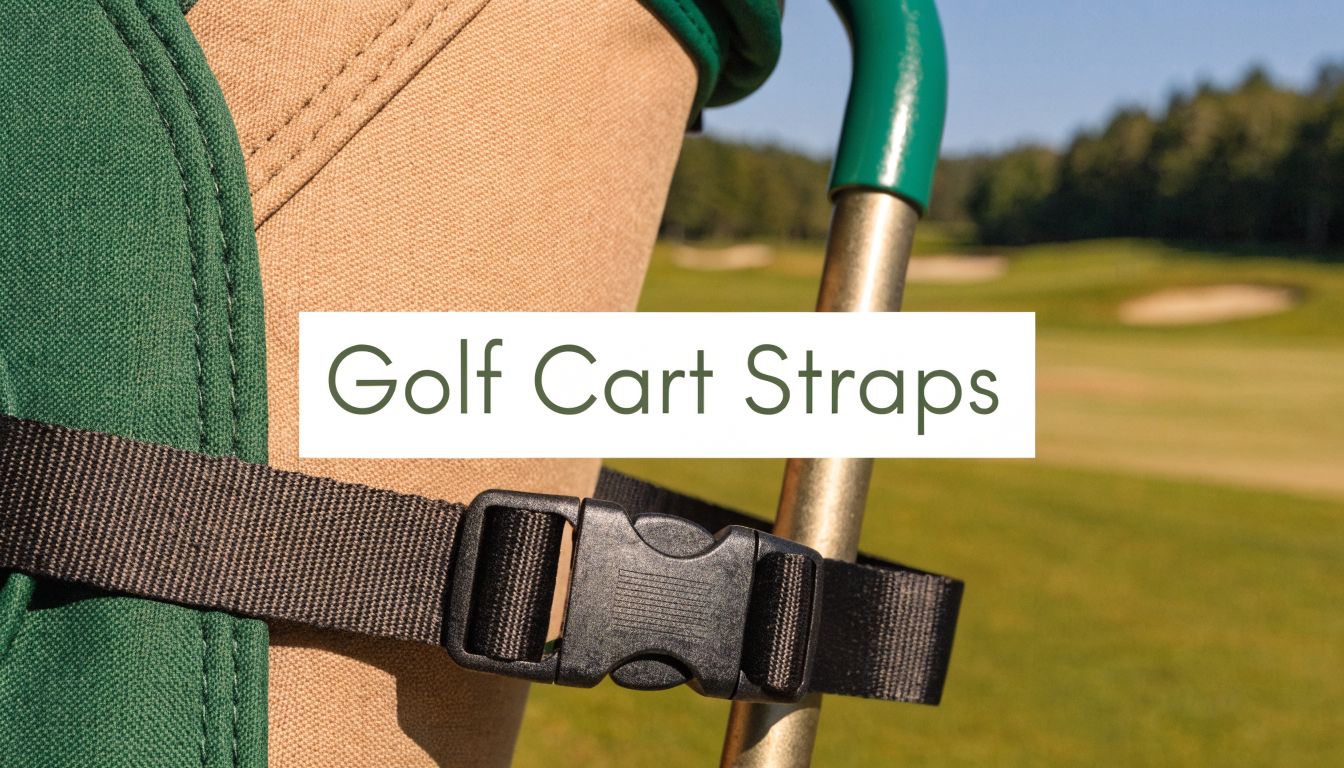
You're probably here because your bag has started doing one of three annoying things. It twists sideways every time you hit a bump. It creeps upward until the top strap is barely holding on. Or it felt fine when you pushed the cart by hand, then started acting loose the moment you added new gear and expected more from the setup.
That's normal. Most golfers don't think much about golf push cart straps until a round gets interrupted by a shifting bag, a rattling frame, or a cart that suddenly feels unstable on a sidehill. Then the straps stop looking like simple accessories and start looking like the part that decides whether your walk feels smooth or aggravating.
In a pro shop, I usually tell customers the same thing. Your bag, cart, and straps work as one system. If one part doesn't match the other two, you feel it all round.
Why Your Cart Straps Are More Than Just Straps
A loose strap can ruin a round in small ways before it causes a big one. Your bag leans a little to the right. The clubs start knocking together. You stop every few holes to tug the top strap tighter. By the back nine, you're steering the cart and babysitting the bag at the same time.

That's frustrating enough with a light carry bag. It gets worse with a cart bag full of rain gear, water, rangefinder, and extras you need on the course. If the bag isn't planted firmly in the upper and lower cradles, the whole cart feels unsettled. You push harder, correct more often, and waste energy on something you shouldn't have to think about.
What straps really do
A strap has three jobs.
- Hold the bag in place: It keeps the bag from sliding, rotating, or bouncing out of alignment.
- Protect your equipment: It reduces jolts, rubbing, and the chance of your clubs or bag taking a hit.
- Help the cart track properly: A centered bag makes the cart easier to control on turns, hills, and rough paths.
Practical rule: If your bag moves when you lift the cart slightly or rock it side to side, the straps aren't doing their job yet.
Push carts earned their place by making walking easier in the first place. The big turning point came when Sun Mountain introduced the foldable three-wheel Speed Cart in 1999, a design widely recognized for changing portability and ease of use in push carts. That shift mattered because walking golfers had already been dealing with the strain of carrying heavy bags, and biomechanical findings noted there showed higher perceived exertion with a single-strap carry setup than with push cart use.
Why this matters to everyday golfers
Most players spend money on clubs, balls, gloves, and the other essential gear for every round, but they overlook the parts that keep those items secure while walking. Straps sit in the background, so they're easy to ignore until they fail.
A good strap setup also helps you get more from the rest of your equipment. If you're matching a cart with the right bag shape and pocket layout, it helps to look at push cart friendly golf bags the same way you'd look at wheels or brakes. Fit matters.
The main mistake I see is treating every strap as interchangeable. They're not. Some are quick and convenient. Some are better for heavier bags. Some are fine for casual manual pushing but become a weak link once the cart is under more load.
Understanding Strap Types and Materials
If you put ten push carts side by side, you'll usually find the same few strap styles repeated in different forms. They all secure a bag. They just do it with different levels of stretch, grip, adjustment, and long-term durability.

Elastic and bungee straps
These are the quick-grab straps many golfers know best. You pull them across the bag, hook or latch them, and let the stretch do the work.
They're convenient. They're also forgiving if you swap between bags that aren't exactly the same size. That's why they show up on many everyday push carts.
Their weakness is also obvious once they age. Stretch materials lose snap. Sun, moisture, dirt, and repeated tension wear them down. When that happens, the strap still reaches across the bag, but it no longer holds the load firmly.
Best use: light to medium bag loads and golfers who want speed and simplicity.
Watch for: sagging, glazing, cracks, or a strap that looks fine but feels weak.
Hook and loop straps
Hook-and-loop straps give you more adjustment than a fixed elastic loop. That helps when one bag has a thicker spine, bigger apparel pocket, or awkward shape near the upper cradle.
They're easy to fine-tune, which is the main advantage. The problem is the fastening surface can collect grass, lint, sand, and general course debris. Once that surface clogs up, the hold gets less trustworthy.
A hook-and-loop strap often fails gradually, not all at once. It starts with a small peel at the edge, then opens more easily on bumps and side slopes.
Best use: golfers who switch bags often or need flexible adjustment.
Watch for: fuzzy mating surfaces, weak grip, and edges that peel back under tension.
Buckle and cinch straps
These are my preferred style for golfers who want the most secure hold. A buckle strap tightens with a more locked-in feel, and once set correctly it usually resists movement better than softer fastening systems.
They take a few more seconds to use. That's a trade many golfers are happy to make, especially if they walk hilly courses or carry heavier cart bags.
Here's the quick comparison:
| Strap type | Main strength | Main drawback | Best fit |
|---|---|---|---|
| Elastic/bungee | Fast and flexible | Can lose tension over time | Light to moderate loads |
| Hook-and-loop | Adjustable | Grip can weaken with debris and wear | Mixed bag sizes |
| Buckle/cinch | Firm, secure hold | Slower to fasten | Heavier bags and higher-demand setups |
The material matters as much as the mechanism
The fastening style gets attention, but the actual strap material decides how the strap ages. Nylon webbing tends to hold shape well. Elastic gives convenience but eventually relaxes. Rubberized or grippy surfaces can help reduce sliding where the strap contacts the bag.
If you're replacing worn straps, it helps to compare the hardware too, not just the fabric. A cheap clip on a decent strap still leaves you with a weak point. If you need a starting point for what replacement options look like, this guide on golf bag strap replacement is useful.
How to Properly Install and Tighten Your Straps
Most strap trouble starts with installation, not the strap itself. Golfers often blame the material when the problem is twisted routing, bad bag positioning, or tension that's either too loose or far too aggressive.

Start with the bag sitting correctly
Before you tighten anything, set the bag into the cart the way the cart was meant to hold it. The bag base should sit fully in the lower cradle. The upper rest should contact the bag without forcing it into an angle.
If the bag starts crooked, the straps will only lock that crooked position in place. Then the bag twists during the round and you assume the straps are slipping.
A quick check I use in the shop is simple:
- Base seated fully: The bottom of the bag should not rock in the lower support.
- Top centered: The upper bracket should hit the bag evenly, not off to one side.
- Pockets usable: Make sure you're not strapping directly over the pocket you need most.
Use the Goldilocks tension
The right strap tension is snug enough to stop movement, but not so tight that it crushes pockets, bends soft bag panels, or puts unnecessary pressure on the cart frame.
Too loose is easy to spot. The bag wiggles.
Too tight is a little trickier. You'll see distorted bag panels, crushed apparel pockets, or straps that are doing all the work because the bag isn't resting naturally in the cradles.
Tighten until the bag stops moving, then stop. More tension doesn't always mean more security.
Keep straps flat and untwisted
A twisted strap creates pressure points and weakens contact with the bag. Instead of spreading force across a wider surface, it bites into one narrow line. That can lead to rubbing, sliding, and faster wear.
Run the strap flat from anchor point to anchor point. If the strap has a buckle, position it where it won't dig into a pocket or sit against a seam that gets stressed every round.
A short visual helps here if you want to see fastening in action:
Test before you tee off
Once the bag is strapped in, don't just assume it's good. Give it a deliberate shake. Roll the cart a few steps. Tilt it slightly the way it might lean on a slope or curb.
If something shifts in the parking lot, it will definitely shift on the course.
My basic pre-round test is:
- Wiggle the top of the bag and look for side-to-side play.
- Push the cart over a small bump and listen for clunking or settling.
- Recheck the lower strap because that's where a lot of creeping begins.
That minute of checking saves a lot of fuss by the third hole.
Compatibility with Add-On Motorized Wheels
Many golfers are frequently caught off guard. A strap that feels fine during manual pushing may not be the right strap once the cart has motorized assistance attached.
Manual pushing puts fairly predictable load on the bag. You start, stop, turn, and steady the cart with your hands. Add a motorized wheel, and the system changes. Now the straps may have to deal with more vibration, more pull through acceleration, and more repeated stress at the points where the bag contacts the cart.
Why universal fit can be misleading
A lot of straps are sold as universal fit. Physically, that may be true. They may reach around many different bag sizes and clip onto many different carts.
But broad fit doesn't automatically mean proper fit under higher demand. As noted by this discussion of universal replacement straps and compatibility concerns, the added weight, torque, and vibration from an add-on motor can ask more of a strap than standard elastic or hook-and-loop systems may comfortably handle.
That's the difference golfers need to understand. A strap can attach. That doesn't mean it will hold the bag with the same confidence once a motor is involved.
What changes when a wheel is powered
When you push a cart by hand, you naturally cushion movement. You ease into starts. You control pace on slopes. You react when the bag starts to shift.
A motor changes those inputs. Even a smooth one changes how force moves through the frame.
Look closely at these areas:
- Top strap tension: This often becomes the first place you notice extra movement.
- Lower cradle grip: If the base can slide at all, powered movement can expose it quickly.
- Fastener security: Hook-and-loop closures that were “good enough” can start to peel under repeated vibration.
- Hardware fatigue: Plastic clips and tired elastic can become weak links.
What to look for instead
If a golfer tells me they're upgrading a push cart with powered assistance, I steer them toward a more conservative strap choice. In plain terms, that means favoring security over convenience.
A better motor-ready strap setup usually includes:
| Feature to check | Why it matters |
|---|---|
| Wider strap contact | Spreads pressure and helps reduce slipping |
| Strong buckle or locking clip | Resists accidental loosening better than softer closures |
| Low-stretch webbing | Holds tension more consistently |
| Grippy contact surface | Helps the bag stay planted in the cradle |
| Healthy stitching and anchors | Handles repeated stress better |
If you're considering that kind of setup, it helps to think of the straps as part of the conversion, not an afterthought. This overview of an electric golf push cart conversion kit gives useful context on the kind of upgrade where strap demands can change.
If your cart is getting an assist wheel, inspect the straps before the first powered round, not after the first bag slip.
Maintenance and Safety Best Practices
Straps usually don't fail without warning. They show signs first. The problem is that golfers often miss those signs because the straps still “kind of work.”

A worn strap can turn a mild slope into a problem fast. If the bag shifts at the wrong moment, the cart may lean harder than expected, the load can pull off-center, and you're suddenly catching a tipping setup instead of enjoying the walk.
What to inspect regularly
You don't need a workshop routine. You need a quick habit.
Check these points before or after a round:
- Look for fraying: Edges that are fuzzy or split usually get worse, not better.
- Check elasticity: If an elastic strap stretches easily and doesn't rebound firmly, it's nearing the end of its useful life.
- Inspect hook-and-loop faces: Clean out grass and lint. If the surface looks worn smooth, holding power drops.
- Examine buckles and clips: Cracks, looseness, or bent parts are warning signs.
- Review stitching: Anchor points and sewn loops often show wear before the strap body does.
Keep straps clean and dry
Mud, sand, and fertilizer residue shorten the life of strap materials. After a wet or dirty round, wipe the straps down and let them dry before storing the cart. Don't leave them packed wet in a trunk for days.
If a strap has hook-and-loop material, pick debris out by hand. If it has webbing, wipe the surface and check whether grit has embedded near the buckle area.
A clean strap usually lasts longer because the fastening surfaces can actually do their job.
Stability affects your body too
There's another part golfers don't always connect. A secure bag isn't just safer for the clubs. It also makes the cart easier on you. According to Cart Tek's discussion of strap tension and placement, proper strap setup contributes to cart stability and can help reduce the physical strain and fatigue that come from managing an unstable load over a full walking round.
That matters most on uneven terrain. If you're constantly correcting a shifting cart, your hands, wrists, and shoulders feel it. Senior golfers tend to notice this first, but younger walkers do too when the course is hilly.
A simple safety habit
Do one small reset before every round:
- Put the bag in the cart.
- Tighten both straps.
- Lift the bag slightly by the top handle.
- Push the cart a few yards and listen.
If it rattles, shifts, or leans, fix it before you head to the first tee.
Troubleshooting Common Strap Problems
Most strap problems can be diagnosed by the symptom. If you know what the cart is doing, you can usually narrow down the cause in a minute or two.
The bag keeps twisting
This usually means one of three things. The bag base doesn't sit well in the lower cradle, the top strap is too loose, or the strap is pressing against a rounded part of the bag and slipping off line.
Quick fix on the course: Re-seat the bag and tighten the lower area first, then the upper. If needed, place a small towel between a slick bag panel and the cart contact point to add friction temporarily.
Long-term fix: Use a strap with firmer hold or better grip, and make sure the bag shape matches the cart supports.
The straps have lost their stretch
Old elastic can still look usable while behaving badly. You'll notice you're pulling it farther than before, yet the bag still feels loose.
Quick fix on the course: Shorten the effective length if the strap system allows it, or double-check whether the bag can be positioned deeper into the cradle to reduce slack.
Long-term fix: Replace the strap. Once elastic gives up, it rarely comes back in a reliable way.
The hook-and-loop keeps coming undone
This is often a debris problem at first, then a wear problem later. Grass, lint, and dirt weaken the grip. Repeated pulling rounds the hooks and smooths the loops.
Quick fix on the course: Clean out the fastening surfaces and press them together over the fullest contact area possible.
Long-term fix: Move to a buckle-style system if your setup sees heavier use or more vibration.
The bag bounces on rough paths
That usually points to poor overall tension or a mismatch between the bag shape and the cart's upper and lower contact points.
Quick fix on the course: Stop and tighten both ends again. Don't just yank the top one and hope for the best.
Long-term fix: Reassess the whole setup. Better straps help, but so does a bag that sits properly on the frame.
The straps seem fine by hand but slip with newer gear
That's the classic warning sign that your old setup isn't keeping up with the load or motion anymore.
Quick fix on the course: Slow down, check both anchor points, and reduce unnecessary movement until you can inspect the setup fully.
Long-term fix: Upgrade the straps with the new use case in mind, especially if your cart now has powered assistance or you're carrying a heavier bag than before.
If you like walking but want less strain from your push cart setup, Caddie Wheel is worth a look. It adds electric power assist to many standard push carts, which can help you conserve energy over longer rounds. Before adding any motorized setup, make sure your bag fit and strap system are ready for the extra demands.
Share:
6 Volt Golf Cart Battery Charger: The Complete 2026 Guide
Upgrade Your Game with an Electric Push Cart Attachment