
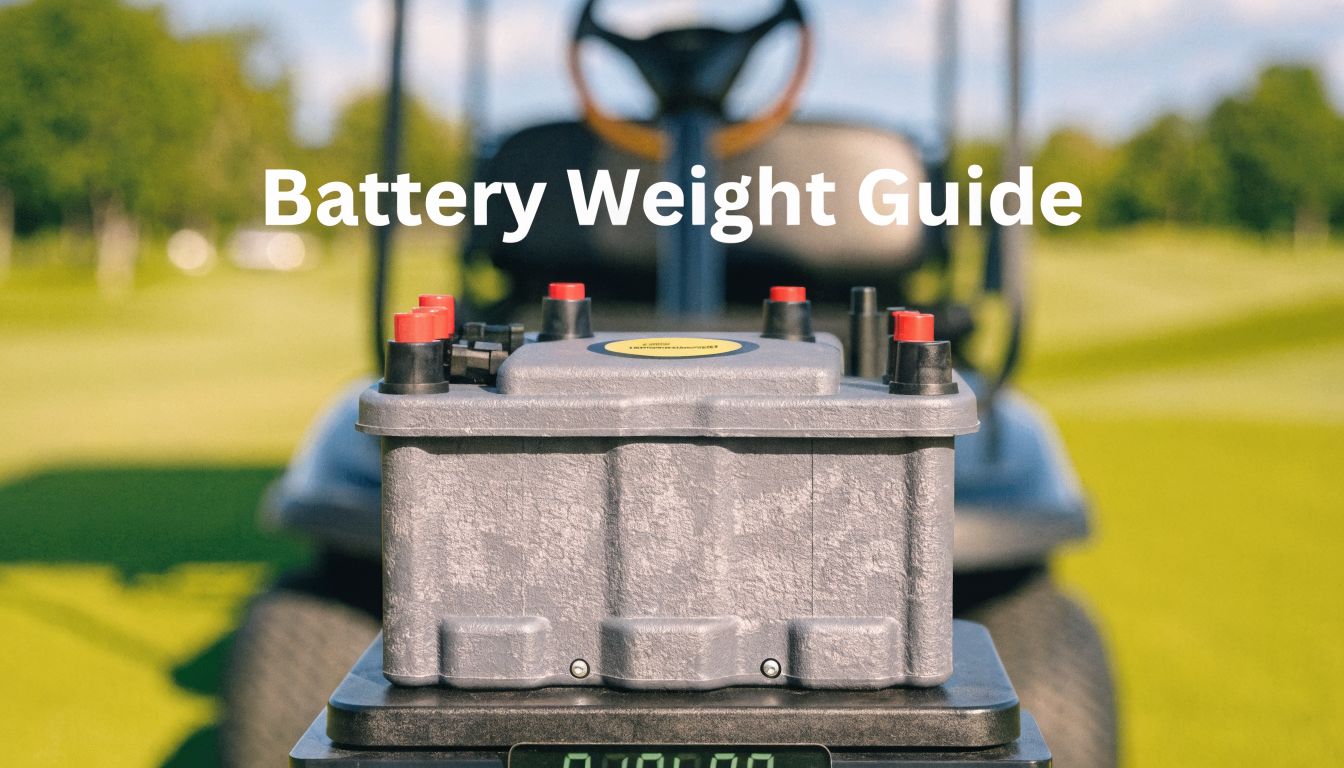
Ever wondered how much a golf cart battery weighs? It's a question that gets to the heart of your cart's performance. A single traditional lead-acid battery tips the scales at 50 to 70 pounds. Since most carts run on a set of six or eight, you're looking at a total weight that can easily top 400 pounds—and that's before you even climb in.
The Hidden Burden: Lead-Acid vs. Lithium
When you hit the accelerator, you're not just moving the cart; you're moving a massive bank of batteries. For years, the industry standard has been heavy, cumbersome lead-acid batteries. Think of it this way: a full set of old-school batteries can weigh as much as two adult passengers.
This isn't just a fun fact; it's a performance killer. All that extra mass slows your cart down, especially on hills, and puts a serious strain on its frame, suspension, and tires. The heavier the cart, the harder the motor has to work, which eats into your range and wears down components faster.
The infographic below paints a clear picture, comparing the sheer heft of traditional batteries against their modern lithium counterparts. The difference is staggering.

As you can see, making the switch to a lightweight lithium solution isn't a minor tweak. It’s a major upgrade that can slash your battery weight by up to 80%, unlocking huge gains in both performance and efficiency.
Golf Cart Battery Weight at a Glance
To put the numbers into perspective, let's break down the typical weights you'll encounter. The table below shows a direct comparison between individual lead-acid batteries and a complete lithium pack for a standard 48V system.
| Battery Type | Typical Individual Weight | Typical Full Set Weight (48V System) |
|---|---|---|
| Lead-Acid (6V) | 60–70 lbs | 480–560 lbs (8 batteries) |
| Lead-Acid (8V) | 60–65 lbs | 360–390 lbs (6 batteries) |
| Lead-Acid (12V) | 75–85 lbs | 300–340 lbs (4 batteries) |
| Lithium (48V Pack) | 60–90 lbs | 60–90 lbs (1 pack) |
The contrast is dramatic. While you'd need to lift and install multiple heavy lead-acid units, a single lithium pack provides the same power at a fraction of the weight. This isn't just about making installation easier; it's about fundamentally changing how your cart feels and performs.
Why This Weight Matters on the Course
Understanding the numbers is one thing, but appreciating the real-world impact is another. This "hidden" weight doesn't just affect your ride; it affects the course itself.
The sheer mass of a traditional battery bank is a hidden performance killer. Reducing it is one of the most effective upgrades you can make, improving everything from acceleration to turf impact.
Heavy carts are a nightmare for course superintendents, contributing to soil compaction and turf damage. Lighter carts are far gentler on the grass, helping to keep fairways and greens in the pristine condition we all love to play on.
This legacy of heavy technology has created challenges that lighter, more efficient solutions are finally solving. If you're interested in a deeper dive, you can learn more about the total weight of a golf cart in our detailed guide. This foundational knowledge will help you see why choosing the right battery is one of the most important decisions you can make for your cart.
Why Traditional Lead-Acid Batteries Are So Heavy
If you’ve ever tried to lift a traditional golf cart battery, you know they’re ridiculously heavy. That incredible weight isn’t a design flaw—it's baked right into the old-school chemistry that makes them work. Think of them less like modern batteries and more like small, heavy-duty power plants that rely on dense, basic materials to function.
At the heart of every lead-acid battery, you’ll find two main ingredients: a series of heavy lead plates and an electrolyte solution made of sulfuric acid and water. The chemical reaction between the lead and the acid is what generates electricity, but it’s also what makes the battery so cumbersome. To get the right voltage, dozens of these plates are stacked into cells, and the cells are linked together, adding up to a lot of dead weight.
Deconstructing the Weight
It's a straightforward but heavy-handed design. The bulk of that heft comes from two main places:
- Lead Plates: Lead is one of the densest common metals out there. When you stack dozens of plates inside a single battery, the pounds add up fast.
- Electrolyte Solution: The mix of sulfuric acid and water, often just called "battery acid," isn't light either. It fills all the space around the plates, contributing significantly to the total weight.
This technology has been around for over a century, but it follows a simple, unchanging rule: more power requires more lead and more acid, which always means more weight. Sealed Lead Acid (SLA) batteries, a common type, follow this same principle. If you're curious about the specs for these types of batteries, looking at durable battery options for Luggie owners can give you a good idea of how SLA technology is built.
A single 6-volt lead-acid battery typically weighs between 38 and 62 pounds, while an 8-volt battery can be anywhere from 50 to 70 pounds. Since a standard 48-volt cart uses six or eight of these, you’re looking at a total battery pack weight of 300 to 560 pounds. That’s a massive amount of weight that directly impacts your cart's performance.

A Real-World Analogy
To put that in perspective, imagine asking an extra adult passenger to ride along every single time you use your cart. That's what a full set of lead-acid batteries feels like to your cart’s motor and suspension. It’s a constant, heavy burden that you can feel with every move you make.
The weight of a lead-acid battery pack is like a permanent passenger you can't drop off. This "passenger" slows you down on every hill and makes every acceleration feel sluggish.
All that extra mass forces the motor to work harder, which kills your acceleration and makes climbing hills a slow, power-draining crawl. It also puts more strain on your brakes every time you stop. This fundamental, weight-heavy design is exactly why so many people are switching to modern, lightweight batteries—the difference in performance is night and day.
The Lightweight Advantage of Lithium Batteries
After wrestling with heavy, old-school lead-acid batteries for years, making the switch to lithium-ion feels like you've unlocked a secret performance mode for your golf cart. This isn't just a small tweak; it’s a total transformation in how your cart gets its power. The biggest difference? A massive drop in weight.
Imagine asking a full-grown adult to hop out of your cart before you hit the accelerator. That’s the kind of performance boost you feel when you go from a bulky, 400-pound set of lead-acid batteries to a single, compact lithium pack weighing less than 100 pounds. Your cart is no longer wasting precious energy just to haul its own power source around the course. This translates to quicker acceleration, longer range, and far more nimble handling.
Real-World Weight Savings
The numbers here really tell the story. Moving from lead-acid to lithium-ion batteries can slash your battery weight by 40-70%. A standard 48V lead-acid system, for example, typically weighs between 350 and 480 pounds. A comparable lithium setup? It can be as light as 60 to 105 pounds.
That's a staggering 70-80% reduction in total battery weight. Take the BSLBATT 48V 105Ah lithium battery, which clocks in at a mere 114 pounds while delivering plenty of robust power. For a full breakdown of these benefits, discover more insights about lithium vs traditional options on extremekartz.com.
This isn't just a golf cart phenomenon. The benefits of lightweight power are sought after in many off-grid applications. This practical guide on choosing an RV boondocking battery offers valuable comparisons that further highlight lithium's clear advantage when it comes to weight and efficiency.
More Than Just a Diet
Shedding hundreds of pounds from your cart does more than just give you a zippier ride. This lighter technology fixes many of the core problems that have plagued lead-acid designs for decades.
- Better Efficiency: With less weight to move, your cart’s motor doesn’t have to work as hard. That means you can travel farther on a single charge—often the difference between finishing 18 holes with power to spare or needing a tow back to the clubhouse.
- Less Wear and Tear: A lighter cart puts less strain on its suspension, tires, and frame. Over time, this adds up to lower maintenance costs and a longer life for your vehicle.
- Superior Handling: Your cart will feel more responsive and balanced. It’s easier to take tight turns and navigate hilly terrain without that top-heavy, lumbering feeling you get with a set of lead-acid bricks.
By switching to lithium, you’re not just upgrading your battery; you’re upgrading the entire driving experience. The heft of your battery is no longer a given—it's a choice.
It’s easy to see why modern cart owners are moving away from the heavy, clumsy power sources of the past. If you're curious to learn more about what makes these batteries so effective, you can dive into our in-depth article on the advantages of a golf cart lithium conversion. The era of lightweight, powerful, and efficient golf carts is here to stay.
It’s one thing to know the specs on a sheet, but understanding how much a golf cart battery weighs really hits home when you’re out on the course. That number isn’t just static data—it's an active force that shapes every part of your cart's performance, from the second you hit the accelerator to the moment you park it.
Think about it this way: a traditional set of lead-acid batteries can easily top 400 pounds. Before your cart even starts moving you and your clubs, a huge chunk of its energy is already being spent just to haul the batteries themselves. This constant, heavy load creates a ripple effect of performance issues you can feel on every single ride.

The Burden of Excess Mass
All that extra mass translates directly into sluggish, uninspired performance. You'll notice your cart feels slow off the line, and climbing even a gentle hill can turn into a struggle as the motor strains under the load. It’s simple physics: moving more weight demands more power, which absolutely kills your cart’s efficiency and cuts down your range.
A lighter battery isn't just a luxury—it's a performance upgrade. Shaving hundreds of pounds from your cart instantly makes it more responsive, efficient, and enjoyable to drive.
Beyond just speed, the constant stress of heavy batteries puts a ton of wear and tear on your cart’s most important parts. The suspension has to work harder, the tires wear down faster, and the motor and controller are always under strain, setting you up for expensive repairs down the road.
The Environmental Toll
The weight of your batteries doesn’t just affect your cart; it impacts the course itself. Talk to any course superintendent, and they’ll tell you soil compaction and turf damage are major concerns. Heavier carts are a big part of that problem, leaving ruts and damaging the delicate grass on fairways and greens.
- Soil Compaction: Hundreds of extra pounds press down on the turf, squeezing out the air and water that healthy grass needs to thrive.
- Turf Damage: Heavier carts are far more likely to tear up the ground, especially on wet days or during tight turns.
- Increased Maintenance: The damage left behind forces groundskeepers to spend more time and money on turf repair and recovery.
When you look at it this way, it’s clear that cutting battery weight helps everyone. Optimizing your cart’s power source is a smart move, much like how homeowners look into resources such as Jolt Electric residential power upgrades to improve performance with modern tech. In the end, a lighter battery is better for your cart, your wallet, and the golf courses you love to play.
Safely Handling and Installing Heavy Batteries
The weight of a traditional lead-acid battery is no joke. Before you even think about moving one, you need to understand what you're up against. These things are surprisingly heavy, often tipping the scales at over 60 pounds a piece. Trying to lift one of these awkward, dense blocks the wrong way is a classic recipe for a pulled muscle or a serious back injury.
Now, imagine wrestling with six or eight of them to replace a full set in your cart. It’s a real workout, and not the good kind. The hassle and physical risk involved are why having the right tools and using proper technique isn't just a suggestion—it’s essential for anyone working with old-school lead-acid batteries.
Essential Safety Precautions
When you’re swapping out lead-acid batteries, their weight is only half the story. These batteries are filled with corrosive sulfuric acid, so personal protective equipment (PPE) is a must. Always put on a pair of safety glasses and some acid-resistant gloves to protect your eyes and skin from any accidental splashes.
The real cost of heavy batteries isn't just measured in pounds, but in the risk of injury and the hassle of maintenance. A simple battery carrier strap can be the difference between a smooth installation and a trip to the emergency room.
A battery carrier strap is one of the smartest, cheapest tools you can buy for this job. These straps are made to securely grip the battery, giving you a balanced handle that makes lifting and lowering it into the cart bay much safer and more manageable.
Proper Lifting and Installation Tips
To keep yourself safe and get the job done right, make these steps a habit every time you handle a heavy battery:
- Bend Your Knees: This is lifting 101. Always lift with your legs, not your back. Squat down, grab a firm hold, and keep your back straight as you push up with your legs.
- Use a Carrier Strap: Don’t try to manhandle a battery with your bare hands. A carrier strap provides far better control and dramatically cuts the risk of dropping it.
- Work in a Ventilated Area: Lead-acid batteries can vent hydrogen gas, especially during charging. Always make sure you have good airflow to stop any dangerous gas from building up.
Of course, the easiest way to deal with a hazard is to remove it completely. Modern battery solutions have solved the "heavy lifting" problem for good. And for anyone concerned about fire safety with newer tech, you can learn more about how to protect your investment by using a fireproof lithium battery container.
So far, we've focused on the big picture: how hundreds of pounds of lead-acid batteries can weigh down a 1,000-pound riding cart, hurting its performance and straining its parts. Weight, it turns out, is the enemy of efficiency.
But what happens when you're the one providing the power? For golfers who love to walk, even a little extra weight can turn a refreshing stroll into a grueling slog up the back nine.
The Minimalist Approach to Power
This is where all that talk about battery weight really hits home. If a massive weight penalty is a problem for a powerful electric motor, it’s an even bigger issue when your own two legs are on the line.
Adding a clunky, heavy battery to a push cart defeats the whole purpose of walking—to get some great exercise without feeling totally wiped out. The last thing you want is to be wrestling a top-heavy cart up a steep hill on the 16th hole.
The perfect solution for a walking golfer isn't just about adding power; it's about adding smart power. You need a lightweight, high-capacity battery that gives you that motorized boost without turning your sleek push cart into something awkward and heavy.
Think of it this way: a power-assist system should be almost unnoticeable until you need it. The battery needs to be powerful but feather-light, letting the motor do its job efficiently so you can walk freely.

Walking Smarter, Not Harder
The whole point of adding power to a push cart is to make walking the course better, not to replace it. A lightweight battery and motor system does just that by taking the most exhausting part of the equation off your plate—shoving a loaded cart across miles of varied terrain.
This approach has some fantastic benefits:
- Conserves Your Energy: You can save your stamina for your swing, not for muscling your cart up an incline.
- Reduces Physical Strain: It takes the pressure off your back, shoulders, and legs, making it easier to walk 18 or even 36 holes in a day.
- Maintains the Health Benefits: You still get all the valuable exercise from walking the course, just without the risk of overexertion or injury.
By focusing on a lightweight power solution, you’re choosing to make every round more enjoyable. You get the best of both worlds: the health benefits of walking and the effortless convenience of a motorized caddie.
Ultimately, understanding how much a golf cart battery weighs on a large scale gives us the perfect context for appreciating the need for a light, minimalist design when it comes to our own game.
Common Questions About Golf Cart Battery Weight
Once you start digging into the world of golf cart batteries, a few key questions always seem to pop up. Let's tackle them head-on so you can feel confident about what really matters when it comes to cost, lifespan, and choosing the right power source for your cart.
Does a Heavier Battery Mean More Power?
Not anymore. While that used to be a decent rule of thumb for old-school lead-acid batteries—where more lead generally meant more capacity—it's a complete myth when comparing different battery types. The rise of modern lithium-ion batteries has changed the game entirely.
A single lithium battery can deliver the same, if not more, power than a set of lead-acid batteries weighing three to four times as much. It all comes down to their incredible energy density, which is just a fancy way of saying they pack a much bigger punch in a lighter, smaller package.
Key Takeaway: Don't judge a battery by its weight. A lightweight lithium battery can easily outmuscle a much heavier lead-acid setup, making it the clear winner for anyone who values performance.
Is the Lighter Weight of Lithium Worth the Higher Cost?
Lithium batteries do have a bigger price tag upfront, but looking at the total cost over time tells a different story. In the long run, they often end up being the more sensible financial choice.
A standard set of lead-acid batteries might last you 4-6 years, and that’s if you’re diligent with maintenance—topping off water levels, cleaning terminals, and hoping for the best.
On the other hand, a quality lithium battery can easily last 8-10 years or more, with zero maintenance required. When you add up the longer lifespan, superior performance, and the fact that you won't be paying for replacement batteries and installation labor every few years, that initial investment in lithium starts to look pretty smart.
Which Battery Type Has the Longest Lifespan?
This one’s an easy win for lithium-ion. Their chemistry allows them to be charged and discharged far more times than a lead-acid battery before they start to lose their capacity.
- Lead-Acid: Typically gives you 500-1,000 charge cycles.
- Lithium-ion: Can handle 3,000-5,000 charge cycles or even more.
This incredible durability means you aren’t thinking about battery replacements every few years. It’s the closest you can get to a "set it and forget it" power solution, giving you reliable performance for the life of your cart.
Just as a lighter battery is better for a riding cart, a lightweight power system is the key to enjoying your walk on the course. Caddie Wheel delivers powerful, motorized assistance without the fatigue of pushing a heavy cart, letting you walk more holes and focus on your game. Discover the difference at caddiewheel.com.
Share:
Upgrade Your Game with an Electric Push Cart Attachment
Golf Push Cart Tires: 2026 Guide to Sizing and Maintenance