
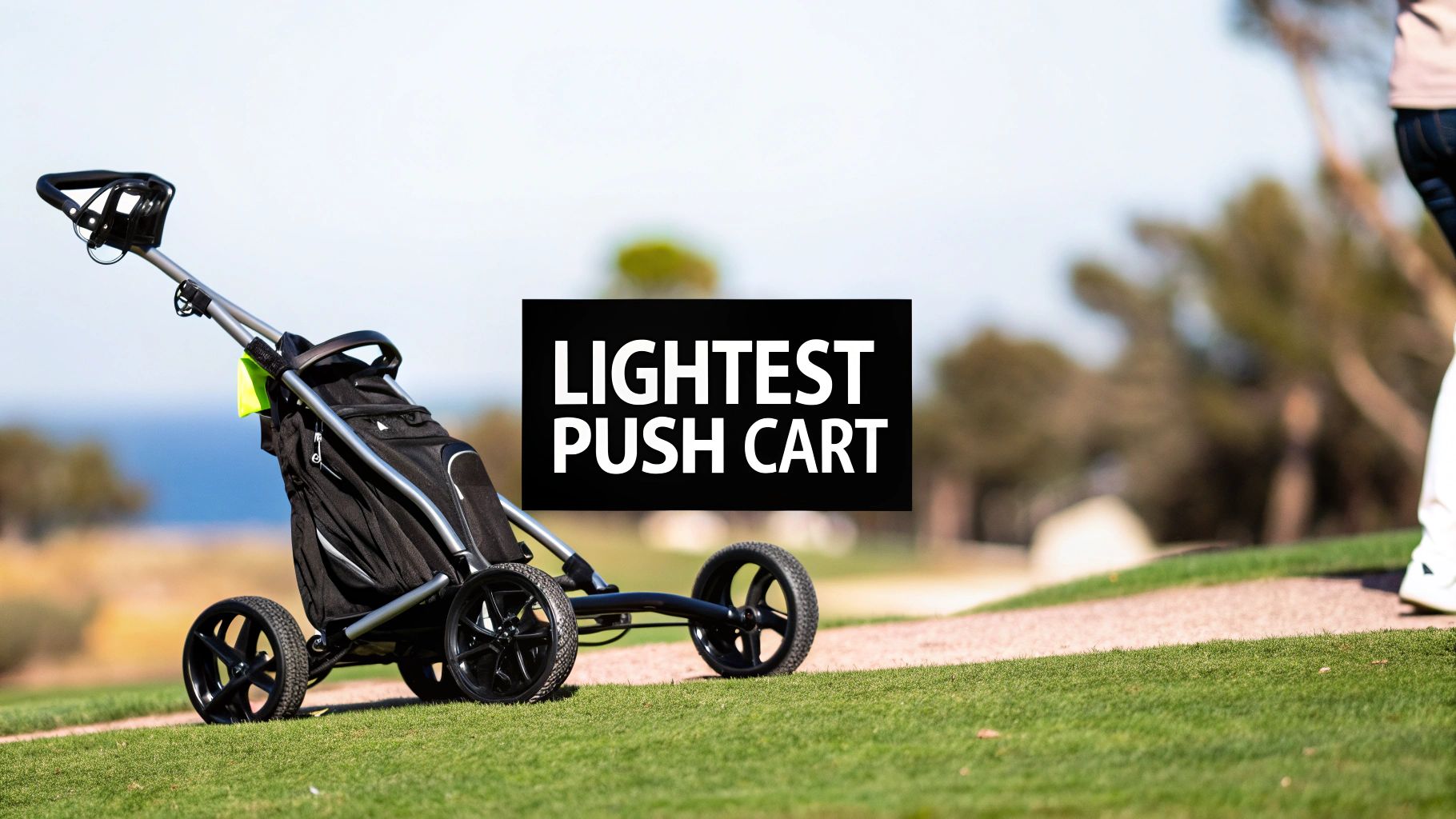
Walking 18 holes should be one of golf's purest joys. But let's be honest—wrestling a heavy, clunky push cart can turn a great round into a grueling workout before you even make the turn. The hunt for the lightest golf push cart isn't just about convenience; it’s a strategic move to save your energy for what actually matters: your game.
A lighter cart means less strain, easier transport from the car to the first tee, and more stamina left for that crucial putt on the 18th green.
Why the Weight of Your Golf Push Cart Matters

The real impact of your push cart's weight goes far beyond the parking lot. Sure, lifting a beast of a cart in and out of your trunk is a pain, but the real toll is paid out on the course, one step at a time. Every extra pound adds resistance, and over the 4-5 miles you walk in a typical round, that effort really adds up.
Picture this: you're facing a steep incline on the 14th hole. A heavy cart feels like an anchor, forcing you to dig deep and expend precious energy just to get to the top. By the time you reach your ball, you’re winded and physically taxed, which can subtly throw off your focus and swing mechanics when you need them most.
The Cumulative Effect of Cart Weight
The difference between a 12-pound cart and an 18-pound one might not seem like much on paper, but trust me, you'll feel every one of those six pounds on the back nine. This added weight sneaks up on you in a few ways:
- Increased Physical Fatigue: It's simple physics. Pushing more weight means burning more calories and recruiting more muscle, leading to that all-too-familiar tiredness late in the round.
- Reduced Maneuverability: Lighter carts are just plain nimbler. They make it easier to navigate narrow paths, whip around tight turns, and handle uneven terrain without feeling like you're in a wrestling match.
- Potential for Strain: Repeatedly hoisting and pushing a heavy cart can lead to nagging back or shoulder strain, turning a healthy walk into a potential injury risk.
Choosing the lightest golf push cart is a proactive decision. It’s about minimizing unnecessary physical load so you can maximize your mental clarity and physical performance from the first tee to the final putt.
At the end of the day, a lighter cart doesn't just make the walk easier; it helps protect your body and your scorecard. It ensures your energy is spent executing great shots, not fighting your own equipment. This simple choice can transform your walk from a chore you have to endure into a seamless, enjoyable part of the game.
Decoding Lightweight Materials and Design
The weight you see on a spec sheet doesn't tell the whole story. To really understand what makes the lightest golf push carts so light, you have to look under the hood at the materials and engineering that shave off every possible ounce. The difference between a 10-pound cart and a 15-pound one often boils down to what the frame is made of.
Two materials really dominate the lightweight push cart market: aircraft-grade aluminum and carbon fiber. Each one comes with its own set of pros and cons that affect durability, stability, and, of course, the price tag. Your choice between them will pretty much define your experience on the course.
For most golfers, aluminum hits that perfect sweet spot. It's incredibly strong for how little it weighs, it doesn't rust, and it's relatively cheap to produce. This balance makes it the go-to material for a huge range of dependable, lightweight carts that can take the bumps and scrapes of a normal round without costing a fortune.
Aluminum: The Dependable Workhorse
Don't mistake aircraft-grade aluminum for the stuff in a soda can. This is a high-tech alloy built for situations where strength-to-weight ratio is everything. It allows manufacturers to build a rock-solid frame using less metal, which directly cuts down the final weight.
Think of it as the perfect middle ground. An aluminum frame gives you a solid, reliable feel on the course and will easily last for years with almost no maintenance. If you're after great value and proven toughness in a lightweight package, you really can't go wrong with an aluminum cart. Our guide on how to choose a golf push cart dives deeper into making these kinds of practical decisions.
Carbon Fiber: The Featherweight Champion
On the other end of the spectrum, you'll find carbon fiber. This advanced composite material is significantly lighter than aluminum but offers incredible stiffness and strength. Carts built with carbon fiber frames are almost always the absolute lightest you can buy, sometimes even dipping into single-digit weight figures.
But all that high-end performance comes with a premium price. The process to manufacture carbon fiber is far more complex and costly, and you'll see that reflected in the final sticker price. It's the perfect choice for the golfer who wants to minimize weight above all else and is willing to invest in the latest technology to do it.
The evolution of these materials has been pretty incredible to watch. Back in the early 2000s, it wasn't uncommon for a push cart to weigh between 15 and 20 pounds. Today, thanks to better alloys and smarter design, the lightest models are often under 10 pounds. That’s a massive shift toward making the walk easier for everyone.
This industry-wide push for lighter gear has been a game-changer. For instance, just a few years ago in the late 2010s, a popular three-wheel cart like the Cube weighed around 14.5 pounds, which was considered a big improvement at the time.
Ultimately, whether you go for the practical strength of aluminum or the elite lightness of carbon fiber, you're benefiting from decades of innovation aimed at one simple goal: making your walk on the course as easy as possible.
Balancing Features and Weight
Every single feature on a push cart, no matter how small, adds ounces to its total weight. The whole game of finding the lightest golf push cart is really about making smart sacrifices. But which features are actually worth the extra load, and which are just dead weight?
This isn't about finding a cart with zero bells and whistles. It’s about picking the right ones for your game.
A minimalist golfer who plays flat, wide-open courses might want a barebones frame to shave off every possible ounce. Makes sense. But if you’re constantly tackling hilly tracks in unpredictable weather, a solid braking system and a sturdy umbrella holder aren't luxuries—they’re essentials that absolutely justify their weight. The key is to be honest about how you play and decide what adds real value to your round.
This visual breaks down the core decision you'll face:
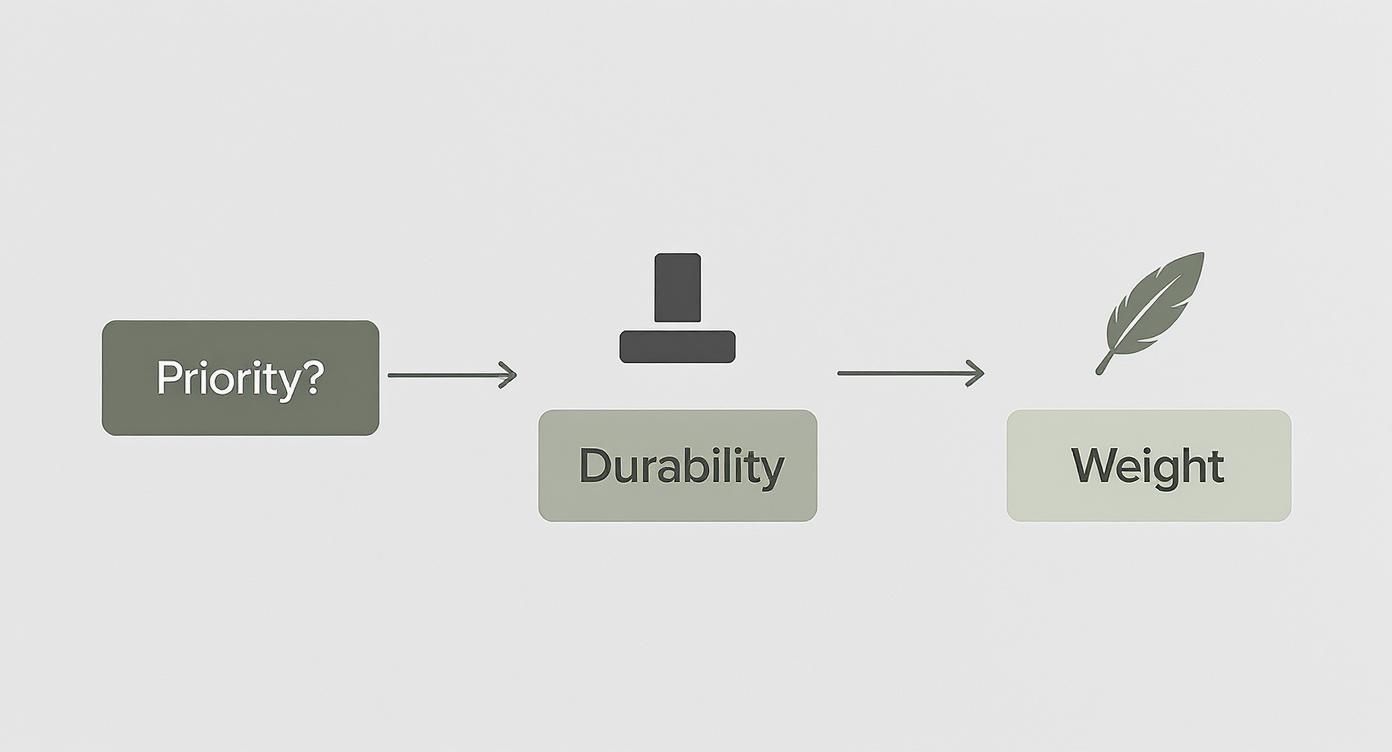
As you can see, what you prioritize—maximum durability or the absolute lowest weight—points you directly to the best material choice. That choice is the foundation of your cart’s final weight.
What Is Worth the Weight?
Let’s break down common features and accessories. Some add just a few ounces but deliver huge convenience, making them easy wins. Others can tack on several pounds, so you need to be sure you'll actually use them before committing.
The table below gives you a quick look at common features and what they'll cost you in terms of weight.
Common Push Cart Features and Their Weight Impact
| Feature/Accessory | Typical Weight Addition | Is It Worth It For You? |
|---|---|---|
| Drink Holder | 2-4 oz | Almost always. Staying hydrated is non-negotiable. |
| Umbrella Holder | 6-10 oz | Yes, if you play in sun or rain. A small price for protection. |
| Scorecard Console | 4-8 oz | Standard on most carts. The organization is worth the minimal weight. |
| Foot Brake | 8-12 oz | Essential. A simple foot brake is a lightweight safety must-have. |
| Hand Brake System | 1-2 lbs | Only for very hilly courses. Adds noticeable weight over a foot brake. |
| Swivel Front Wheel | 1-2 lbs | Great for maneuverability, but adds weight and complexity. |
| Storage Pouch/Net | 0.5-1.5 lbs | Depends on your needs. A simple net is light; a large bag is heavy. |
| Built-in Seat | 3-5+ lbs | A luxury. Only worth it if you face long waits or have back issues. |
| Cooler Bag | 2-4 lbs (empty) | Maybe. An insulated pouch is often a lighter, smarter choice. |
Ultimately, this helps you see where the pounds can sneak in. A fully loaded cart with a seat, hand brake, and large cooler can easily weigh 5-8 pounds more than a stripped-down version.
Low-Impact Essentials
Some features are just no-brainers. They form the baseline for a functional, comfortable cart and add up to less than a pound total.
- Drink Holder: It's a few ounces. You need water. Enough said.
- Umbrella Holder: If you play anywhere with a hint of sun or rain, this is a must-have. Don't get caught without one.
- Scorecard & Ball Holder: These are standard on almost every console for a reason—they keep you organized for virtually no weight penalty.
Sacrificing these for a tiny weight saving rarely makes sense for the average golfer. They just provide too much on-course comfort for a minimal trade-off.
Higher-Impact Luxuries
This is where the real decisions happen. These features can seriously bulk up your cart, so you have to be brutally honest with yourself about whether you'll actually use them.
- Built-in Seat: A seat can be a lifesaver during slow rounds or for golfers with back problems, but it can easily add 3-5 pounds or more. If you rarely wait on the tee box, you're just hauling extra metal for 18 holes.
- Large Storage/Cooler Bag: A dedicated cooler sounds great on a hot day, but a fully stocked one adds serious weight. An insulated pouch for a water bottle is often a much lighter and more practical alternative.
- Robust Hand Braking System: While absolutely critical for hilly courses, complex hand brakes with levers and cables are heavier than simple foot brakes. If your home course is mostly flat, a lighter foot brake is all you'll ever need.
Your goal should be to build a personalized setup. Don't just accept the standard feature package. Think critically about what will genuinely improve your day on the course versus what will just weigh you down on the 16th hole.
In the end, it’s a personal calculation. Before you buy, list your top three on-course priorities. Whether it's stability on hills, tons of storage, or pure, unadulterated lightness, let that list be your guide. This approach ensures you get a cart that feels like it was built just for you and your game.
Mastering Portability and Storage
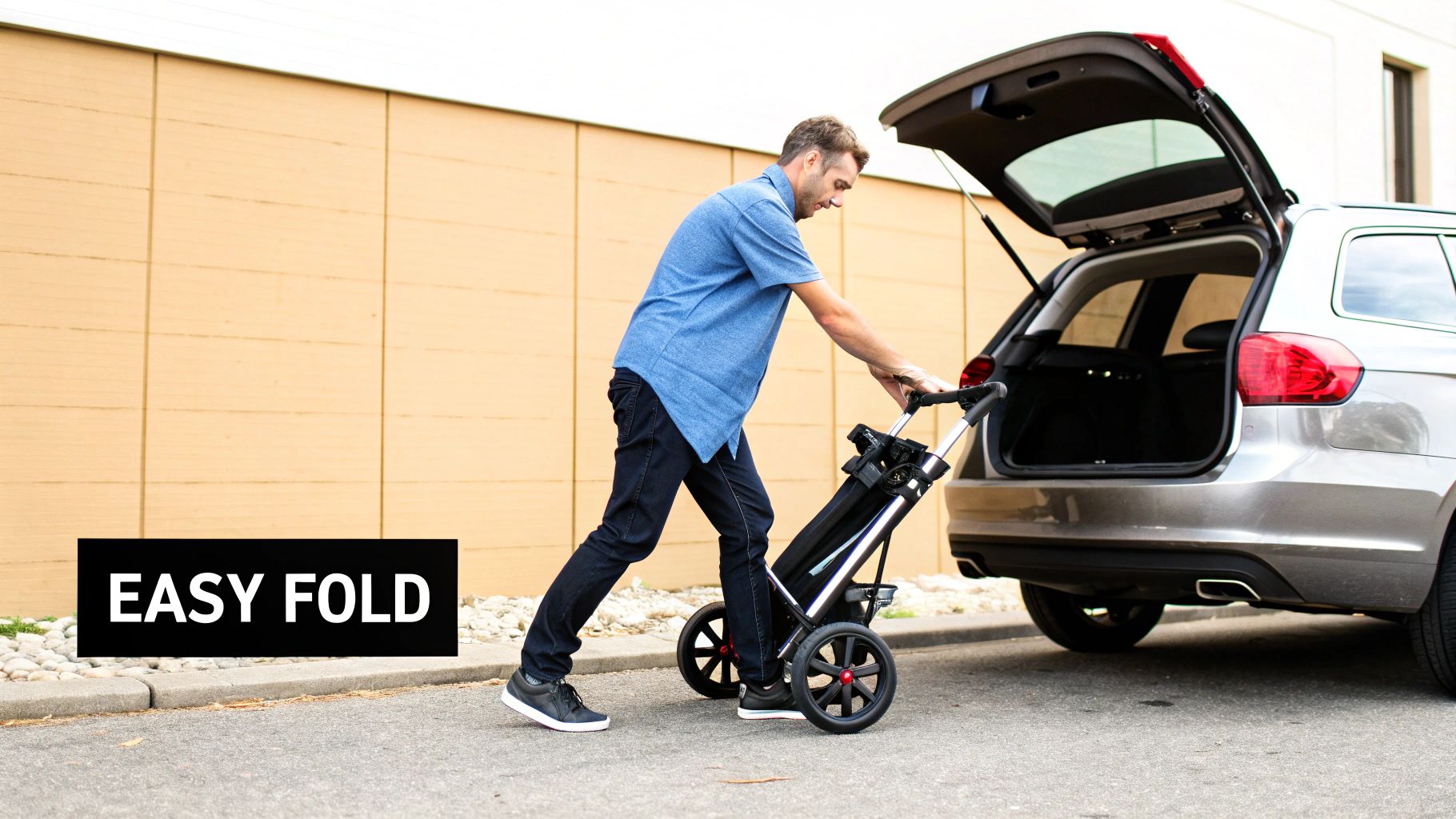
A cart’s weight on the spec sheet is only half the story. The real test is how it behaves off the course—when you’re lifting it, folding it, and trying to cram it into your car after a long round.
A cart that’s a nightmare to collapse and store will quickly lose its lightweight appeal, no matter what the scale says. The true measure of convenience comes down to two things: its folded size and how easily it gets that way. A cart that folds into a tiny, manageable package is a huge win for anyone with a small trunk or limited garage space.
Measure Twice, Fit Once
Before you get sold on a cart’s feathery weight, grab a tape measure. Seriously. Measure the available space in your vehicle’s trunk and any locker or closet where you plan to stash it. Jot down the maximum length, width, and height you can work with.
Now, compare those numbers directly against the "folded dimensions" in the product specs. This simple check can save you the massive headache of discovering your brand-new, ultra-light cart doesn't actually fit where it needs to go.
Evaluating Folding Mechanisms
Not all folding systems are created equal. They range from brilliantly simple one-click actions to frustrating, multi-latch puzzles. The last thing you want is to be wrestling with your cart in the parking lot while your buddies are already on the first tee.
Here’s a quick rundown of what you’ll find out there:
- One-Step Fold: This is the gold standard for convenience. Usually, a single button or lever lets the cart collapse or spring open in one fluid motion. Perfect for golfers who value speed and simplicity.
- Two-Step Systems: A common and reliable design. This typically involves folding the front wheel under the frame, then collapsing the main body. It’s a quick process that strikes a great balance between compact size and ease of use.
- Multi-Step Folds: Older or more complex designs might require several steps, like detaching wheels or fiddling with multiple latches. While they can fold down incredibly small, they demand more time and effort.
Remember, the best mechanism is the one you can operate quickly and confidently every single time. A smooth, intuitive fold makes the entire experience of using a push cart that much better.
The industry's push for lighter, more portable designs is relentless. For instance, some models like the Wishbone Model One feature a frame weighing just 6 pounds, which is roughly 50% below the traditional 14–17 pound standard. This kind of weight reduction shows just how critical portability has become. You can explore some of the top places to find these streamlined models in our guide on the 7 best places to buy a lightweight golf push cart in 2025.
Considering Electric Conversion Kits
What if you could add a motor to your current setup without buying a heavy, fully-integrated electric trolley? This is exactly where electric conversion kits come in. They offer a brilliant middle ground for golfers who already have a push cart they know and love.
These kits essentially transform your manual cart into a motorized one, saving you a ton of energy without the hefty price tag of a brand-new electric model.
The idea is pretty straightforward: a motorized wheel unit attaches to your existing cart. This approach lets you keep the lightweight frame you so carefully picked out while adding the muscle you need for those long rounds or hilly courses. It’s truly the best of both worlds—the portability of your current cart with the effortless glide of an electric one.
But hold on, not every cart is a good candidate for this kind of upgrade. Compatibility is the single most important factor to think about before you pull the trigger.
Is Your Cart Ready for an Upgrade?
Before you start shopping for a conversion kit, you need to give your current push cart a good, honest assessment. While most modern kits are designed with universal fittings, it's the little details that matter.
The frame's design, the width of the axle, and even the shape of the tubing all play a role in whether a kit will attach securely. A flimsy or oddly shaped frame just won't provide the stable base needed for a motorized attachment.
When you're looking at kits, it also pays to understand the properties of different battery chemistries like Lithium-ion and LiFePO4. The battery tech directly impacts the total added weight and, just as importantly, how many holes you can play on a single charge. A lighter lithium battery is almost always the right call to complement a lightweight cart.
The whole point of a conversion kit is to make walking easier, not to turn your streamlined cart into a cumbersome machine. The added weight from the motor and battery should be minimal enough to keep the cart easy to lift.
A well-designed kit shouldn't add more than 10-15 pounds to your setup. This ensures the cart is still manageable when you're lifting it in and out of your car. If you want to dive deeper into the nuts and bolts, our guide to a golf push cart electric conversion kit has more detailed compatibility tips.
Checklist for Conversion Kit Compatibility
Run through this quick checklist to see if your push cart is a solid candidate for a motorized upgrade.
- Frame Structure: Does your cart have a strong, standard-shaped lower frame or axle where a kit can mount securely? You'll want to avoid carts with unusual designs or thin, flexible tubing.
- Wheel Type: Are the rear wheels easy to pop off? Many conversion kits either replace or attach near the existing wheels.
- Total Weight: Is your current cart genuinely lightweight (under 15 pounds)? Adding a motor to an already heavy cart completely defeats the purpose.
- Balance: A well-balanced cart is going to handle the addition of a motor much better and will be less likely to tip over.
By thinking through these points, you can make a smart decision and get all the perks of electric power without giving up the portability that made you choose your cart in the first place.
Answering Your Top Questions About Lightweight Push Carts
Making that final call on a new push cart usually means getting a few last-minute questions sorted out. To make sure you're totally confident with your pick, let's run through some of the most common things golfers wonder about when they're hunting for the lightest possible cart.
Do Lighter Push Carts Snap in Half? (Aka, Are They Durable?)
This is probably the number one concern, and it's a fair one. But the short answer is no, not if you buy from a reputable brand. It's easy to picture a super light cart being flimsy, but modern engineering has pretty much solved that problem.
The best lightweight carts today are built with materials like aircraft-grade aluminum or even carbon fiber. These aren't chosen because they're cheap; they're chosen for their incredible strength-to-weight ratio. They're designed from the ground up to be both tough and light.
Sure, some dirt-cheap, no-name models might cut corners to hit a certain weight, but established brands invest heavily in smart design. They reinforce the key stress points on the frame so it can handle the bumps, twists, and turns of countless rounds. You're not just looking at the number on the scale—you're looking at the quality of the materials and the thoughtfulness of the construction.
A well-made lightweight cart isn't flimsy; it's efficient. It’s engineered to remove unnecessary bulk without compromising the structural integrity needed to securely carry your clubs over varied terrain.
How Much Should the Lightest Golf Push Carts Weigh?
The absolute lightest push carts you can find will dip below 10 pounds (about 4.5 kg), which is seriously impressive.
But for most of us, the real sweet spot for a cart that's ultra-light but still has all the features you need is somewhere between 10 and 14 pounds.
Carts in this range nail the balance perfectly. They’re light enough to lift into your car without a grunt and a breeze to push up hills, but they still have enough substance to feel stable on the course. They can also support handy features like a console or an umbrella holder without tipping over. Once you start getting over 17 or 18 pounds, you'll really begin to feel that extra weight by the back nine.
Are Three-Wheel or Four-Wheel Carts Lighter?
Nine times out of ten, a three-wheel push cart is going to be lighter than a four-wheel one. It really just comes down to simple mechanics—a three-wheel design needs a slightly smaller frame and one less wheel assembly, which trims weight right off the final product.
This design difference also changes how they feel on the course. Here’s a quick breakdown to help you figure out what's best for you:
-
Three-Wheel Carts:
- Lighter Weight: The minimalist frame keeps the overall mass down.
- More Agile: They're champions of maneuverability, making it easy to pivot around tight corners or navigate narrow paths between bunkers.
- Often More Compact: They tend to fold down into a smaller, more trunk-friendly package.
-
Four-Wheel Carts:
- Unbeatable Stability: With a wider, four-point base, these carts are rock-solid, especially on hilly or uneven ground. This is a huge plus on challenging courses.
- Track Straighter: They have a natural tendency to roll in a straight line, meaning you spend less effort correcting their path on long fairway walks.
Ultimately, your choice comes down to your priorities and the type of course you play most often. If shaving every possible ounce and having maximum agility is your goal, a three-wheel model is probably your best bet. But if you play on a lot of slopes and value stability above all else, the extra pound or two for a four-wheel cart is a trade-off worth making.
Ready to upgrade your walk with effortless power? The Caddie Wheel electric conversion kit attaches to most push carts in minutes, giving you motorized control without the bulk of a traditional electric caddy. Conserve your energy, conquer hills, and enjoy the game more.
Explore the Caddie Wheel and transform your push cart today!
Share:
Golf Trolleys Batteries Your Ultimate Power Guide
Your Guide to a Remote Controlled Golf Bag System