
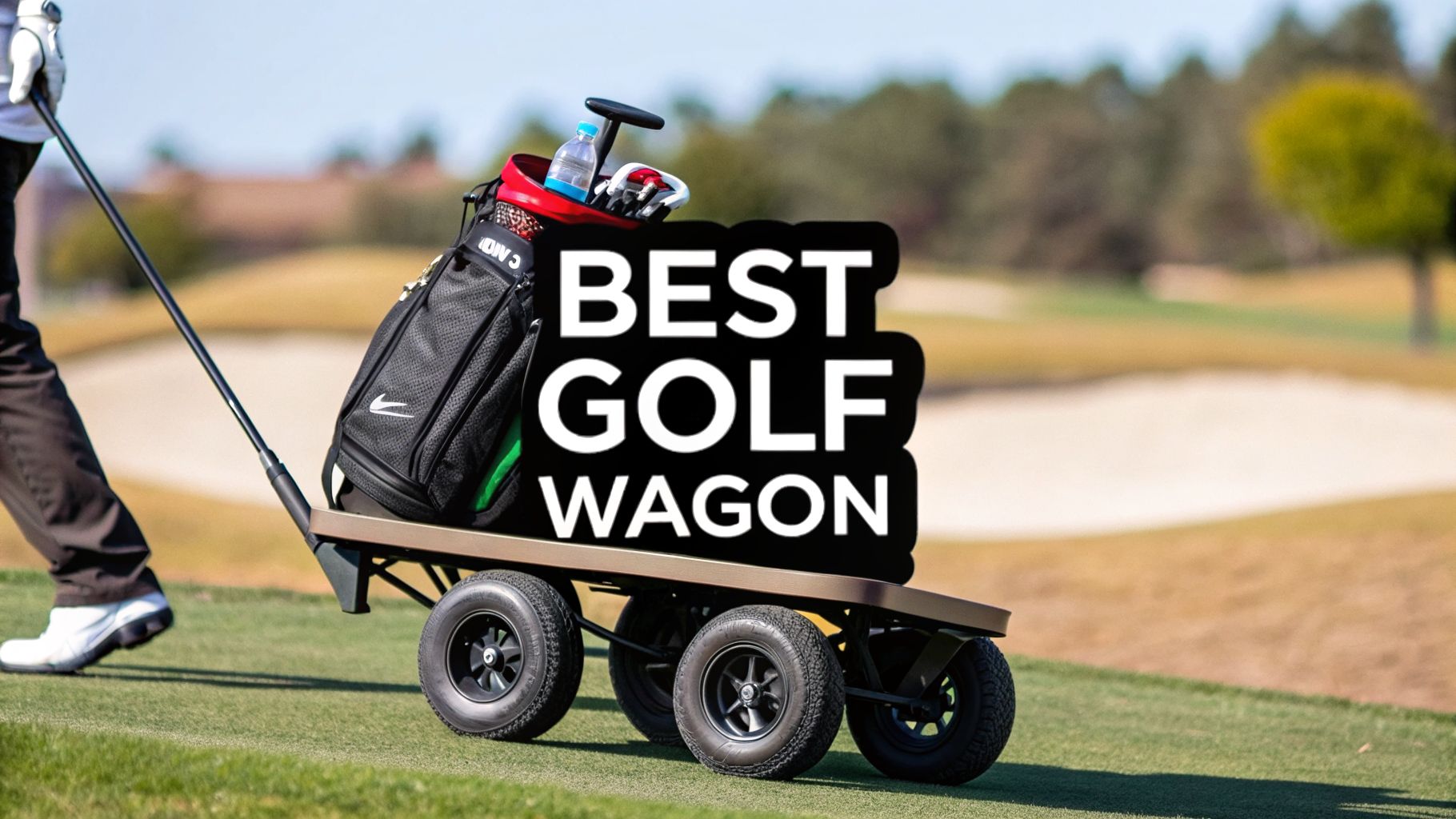
A sports wagon cart is a versatile, four-wheeled utility cart designed to haul gear for just about any activity. They’ve evolved from simple garden wagons into specialized equipment for sports, and for golfers, they offer a stable and high-capacity alternative to carrying a heavy bag or wrestling with a traditional two-wheel pull cart.
Using one can seriously cut down on physical strain and add a whole new level of convenience to your round.
Why a Sports Wagon Cart Is Your New Course Essential
Picture this: you’re walking up the 18th fairway, feeling just as fresh and focused as you did on the first tee. You aren't burdened by a heavy bag digging into your shoulder or fighting to keep an off-balance pull cart from tipping over. This is the reality a modern sports wagon cart offers, turning your round from a test of endurance into pure enjoyment of the game.

These carts have come a long way from their simple origins. Today, they are specialized tools engineered to make walking the course easier and more organized. With a stable four-wheel base and a deep cargo area, a sports wagon cart lets you bring everything you need—and more—without a second thought.
The Shift Toward Effortless Golf
The trend toward walking the course is undeniable. Golfers are increasingly seeking both the fitness benefits and a deeper connection to the game that walking provides. This movement is reflected in the rapid growth of the golf push cart market, which was valued at around $250 million in 2025 and is projected to climb significantly.
Golfers are discovering that walking can burn up to 1,500 calories per round while improving focus. The sports wagon cart is a key part of this shift, offering an even more comfortable and effortless way to walk. You can explore more data on this trend in recent market research about golf push carts.
A sports wagon cart’s biggest advantage is its ability to completely eliminate physical strain. Carrying a 30-pound bag for four hours puts incredible stress on your back, shoulders, and hips. A wagon removes this burden entirely, saving your energy for what truly matters—your swing.
Think of it this way: Your body has a finite amount of energy for a round of golf. You can either spend it hauling gear or swinging the club. A wagon ensures every ounce of energy is dedicated to your performance.
Practical Advantages on the Course
The benefits go far beyond just saving energy. The spacious design of a sports wagon cart means you never have to choose between packing an extra sleeve of balls or a rain jacket. Everything fits, from coolers and rangefinders to umbrellas and extra layers of clothing.
This level of convenience means you’re prepared for any situation without cluttering up your golf bag or weighing yourself down.
To put its advantages in perspective, let’s see how a sports wagon stacks up against the old-school ways of hauling gear.
Sports Wagon Cart vs Traditional Golf Gear Hauling
Here’s a quick comparison of the key advantages and disadvantages of using a sports wagon cart compared to carrying your bag or using a standard two-wheel pull cart.
| Feature | Sports Wagon Cart | Carrying Bag | Standard Pull Cart |
|---|---|---|---|
| Stability | Excellent (4 wheels) | Poor (unstable on hills) | Fair (2 wheels, prone to tipping) |
| Capacity | High (for bag + all accessories) | Low (limited to bag pockets) | Moderate (bag only) |
| Physical Strain | Minimal (pushes or pulls easily) | High (shoulder & back strain) | Moderate (pulling strain on arm) |
| Organization | Superior (separate space for gear) | Poor (all gear in one bag) | Fair (bag only) |
As you can see, the four-wheel design provides unmatched stability and capacity, making your walk much more comfortable.
Ultimately, a sports wagon cart isn't just about carrying your stuff; it's about improving your entire golfing experience. By reducing fatigue and boosting convenience, it allows you to walk the course, enjoy the health benefits, and stay mentally sharp from your first drive to your final putt.
Decoding the Anatomy of a Great Golf Wagon
Not all wagons are created equal, and that’s especially true when you need one to perform on the golf course. Knowing the key components of a high-quality sports wagon cart is the first step to picking a model that helps your game, not hurts it. Think of it like building a top-tier golf bag—every club has a specific job, and in a wagon, every part plays a role in its overall performance.
Let's break down the features that separate a basic yard hauler from a true golf course companion. This isn't just a checklist; it's about understanding the why behind each feature so you can make a smarter choice.
The Frame Foundation: Strength and Weight
The frame is the skeleton of your sports wagon, and its material determines both how tough it is and how easy it is to lug around. You'll mostly find two options: steel and aluminum, each with a clear trade-off.
- Steel Frames: These are the workhorses. A steel frame gives you incredible strength and rigidity, perfect for hauling heavy loads without any wobble or bending. The downside? Steel is heavy, which can make lifting the cart into your car a bit of a workout.
- Aluminum Frames: This is where you get a fantastic sweet spot between strength and low weight. An aluminum frame is way lighter than steel, making it a breeze to transport and steer. While it might not have the raw power of steel, a well-built aluminum frame is more than strong enough for a full golf setup.
For most golfers, an aluminum frame is the way to go. Its lighter weight means you’re less tired before you even swing a club, a small win you’ll really appreciate over 18 holes.
Wheels: The Secret to a Smooth Round
If the frame is the skeleton, the wheels are the feet. The kind of wheels on your cart will make or break your experience, especially on the mixed terrain of a golf course. Those standard, skinny plastic wheels might be fine on pavement, but they’re a recipe for disaster on grass.
A cart with the wrong wheels is like playing golf in dress shoes. It might work on the clubhouse patio, but it will fail you on the fairway, bog down in the rough, and potentially damage the turf.
To move around a course without a struggle, you need wheels designed for it. Look for all-terrain wheels, which are usually wider and made from solid rubber or filled with air. This wider base spreads the cart’s weight out, keeping it from sinking into soft ground and leaving ugly ruts on the green. Deeper treads also give you the traction you need on wet grass or hilly spots.
Critical Convenience Features
Beyond the main structure, it's the little things that really elevate a cart's usefulness on the course. A great golf wagon isn't just about hauling stuff; it’s about smart organization and easy transport.
1. Ergonomic Handle You’re going to be pushing or pulling this cart for miles, so comfort is everything. Find a model with an adjustable, telescoping handle and a comfortable grip. This lets you set it to the perfect height, so you can maintain good posture and avoid straining your back and shoulders.
2. Smart Storage and Capacity A solid sports wagon should have no problem holding your golf bag, a cooler, and other gear. Look for models with a deep main compartment to keep your bag from tipping over. Extra features like side pockets, cup holders, and front pouches are a huge plus for keeping smaller items like your phone, keys, and rangefinder organized and within reach.
3. Collapsible and Compact Design Finally, think about how the cart gets from your house to the course. The best wagons have an easy-to-use folding mechanism that collapses the whole thing down to a compact size. It should fit easily in your trunk. Some even fold up with a single pull, a feature you’ll come to love when you’re rushing to make your tee time.
How to Choose the Right Sports Wagon Cart for Your Game
Finding the perfect sports wagon cart isn’t about chasing the “best” one on the market. It’s about finding the one that fits you. Think of it like a club fitting—the right cart should feel like a natural extension of your game, not a piece of equipment you have to fight with.
To make this simple, let's break it down by looking at a few common golfer profiles. See which one sounds like you, and we’ll connect their needs to the cart features that will make the biggest difference on the course.
Match Your Cart to Your Golfer Profile
Every golfer brings a different set of priorities to the first tee. Pinpointing yours is the fastest way to choose a cart that solves problems instead of creating them.
-
The Weekend Warrior: You play regularly, but your gear also pulls double duty for beach trips, picnics, or kids’ soccer games. You need versatility. A lightweight aluminum frame is a must for easy transport, paired with all-terrain wheels that can handle everything from fairways to sand. A quick-fold mechanism is a non-negotiable for your on-the-go lifestyle.
-
The Senior Golfer: For this player, comfort is king. The goal is to save energy and reduce strain, not add to it. A cart with an adjustable, ergonomic handle is crucial for preventing back pain, and a stable, four-wheel base ensures it won’t tip on uneven lies. Most importantly, the frame should be explicitly compatible with motorized assists for a future power upgrade.
-
The Gear-Heavy Player: You’re the golfer who brings everything but the kitchen sink. Maximum capacity is your top priority. You need a deep-basin cart with high sides to securely hold a large tour bag, a cooler, and extra layers. Look for models with plenty of storage pockets and anchor points for bungee cords to keep it all organized.
By identifying what you need most—be it versatility, ease of use, or sheer capacity—you can cut through the noise and focus on the features that will actually improve your day on the course.
Analyze Your Course and Playing Habits
Beyond your personal style, the environment you play in is a massive factor. Your home course and how often you play should heavily influence your choice.
The biggest consideration here is terrain. This simple decision tree shows exactly how your typical course should guide your wheel selection.

The takeaway is crystal clear: all-terrain wheels are a golfer's best friend. They provide stability on hilly, undulating courses and prevent turf damage. Standard wheels are really only suited for perfectly flat, paved environments, which few golf courses are.
How often you play matters, too. If you’re out on the course multiple times a week, investing in a durable, high-quality cart with sealed wheel bearings and a rock-solid frame will pay dividends. For the more casual player, a basic, budget-friendly model might be all you need. Our guide on how to choose a golf push cart offers some more great perspectives you might find helpful.
Plan for Future Upgrades and Accessories
A great purchase is one that can grow with you. As you zero in on your ideal sports wagon, think about its potential for future upgrades—especially motorized assists. This is where the entire market is headed. The golf trolley market, which includes these carts, reached USD 15,286.8 million in 2025 and is projected to skyrocket to USD 22,856.6 million by 2034. That growth is fueled by tech that reduces physical strain, making it a perfect fit for golfers on hilly courses or anyone looking to save energy for their swing.
Choosing a cart with a frame that’s compatible with a motorized wheel assist is one of the smartest long-term plays you can make. It gives you an affordable upgrade path to a full electric caddy experience without having to buy a whole new setup down the line.
When you’re weighing your options, it helps to apply the same principles for choosing the right golf gear and separating what truly matters from clever marketing. A versatile, durable, and upgrade-ready cart is an investment that will make your rounds more enjoyable for years to come.
Power Up Your Wagon: Adding a Motorized Wheel Assist
What if you could give your trusty sports wagon cart all the quiet muscle of a high-end electric caddy, but for a fraction of the price? That’s exactly what motorized wheel assists do. These clever add-ons turn your manual cart into a self-propelled workhorse, completely changing how you experience the golf course.
Think of it like adding a small, silent engine to your existing setup. The biggest win is obvious right away: conquering steep hills without breaking a sweat. Instead of dreading that big incline on the 12th hole, you can stroll alongside your cart effortlessly, saving your energy for your game. It can make a 36-hole day feel like a casual walk in the park.
The Beauty of a Simple Upgrade
The real genius behind these systems is their simplicity. Most modern motorized assists feature a "drop-on" design, which means getting them installed is shockingly easy. You don't need a workshop full of tools or a call to a professional—it’s a quick DIY project you can knock out in minutes.
The whole process usually just involves three steps:
- Attaching a small bracket to your cart's rear axle or frame.
- Snapping the motorized wheel unit right onto that bracket.
- Syncing the remote control with the unit.
And that's it. You can turn your standard wagon into a fully remote-controlled caddy in less time than it takes to warm up on the range. This simple, effective design gets right to the heart of what walking golfers struggle with most: fatigue and physical strain.
How a Remote and Better Battery Redefine Your Round
Once it's installed, the fun really begins. These assists are typically operated with a small, intuitive remote. This little device puts complete command of your sports wagon right in the palm of your hand.
With just the push of a button, you can:
- Send your cart on ahead to the next tee box.
- Fine-tune the speed to match your exact walking pace.
- Use reverse to get out of a tight spot.
- Engage an electronic brake to keep the cart locked in place on a hill.
This hands-free freedom lets you focus completely on your next shot, your strategy, and the course itself. You’re no longer physically tied to your gear.
A motorized assist frees you from the work of golf so you can focus on the game of golf. It’s a simple change that elevates your mental and physical performance.
Worries about battery life are also a thing of the past. Modern units are built with high-capacity, long-lasting lithium-ion batteries. A single charge is usually good for 27 to 36 holes, which is more than enough for even the longest days on the course. Recharging is quick and easy with a portable charger, so your cart is always ready for your next round. For a deeper dive into electric options, check out our complete guide to motorized push carts.
Is a Motorized Assist the Right Move for You?
This kind of upgrade is a smart, affordable solution for a whole lot of golfers. It’s a no-brainer if you play on a hilly course where pushing a loaded cart turns into a serious workout by the back nine. Senior golfers and anyone with mobility issues often find it to be a complete game-changer, allowing them to keep walking the course comfortably.
But even if you’re in great shape, the energy-saving benefits are hard to ignore. When you reach the final holes, you’ll have more stamina and a clearer head—which can directly lead to lower scores. It takes your reliable sports wagon from a simple gear-hauler and turns it into a smart, performance-enhancing tool that helps you play your best.
Keeping Your Gear in Peak Condition
You've invested in a great sports wagon to make your rounds easier, and just like your clubs, it deserves a little TLC to keep it performing at its best. Think of it as a long-term investment in your game.
A few simple maintenance habits for both the cart and any motorized assist you're using will ensure your gear stays reliable, season after season. It’s the small stuff that prevents bigger headaches down the road.

It's a lot like taking care of your golf clubs—a quick wipe-down and inspection after a round can make all the difference. A little preventative care keeps your cart rolling smoothly and ready for action whenever you are.
Essential Cart Maintenance
Your maintenance routine should zero in on the cart’s frame and wheels. These are the parts that take the most abuse on the course, so giving them consistent attention is the secret to longevity.
Start with a simple cleaning. Grab a damp cloth and wipe down the frame, getting rid of any dirt, grass, or sand. This not only keeps it looking good but also prevents rust and keeps the folding mechanisms from getting jammed. While you’re at it, give all the fasteners and connection points a quick visual check.
A simple rule of thumb: If it moves, check it. If it’s meant to be tight, confirm it is. A loose bolt is much easier to fix in your garage than on the 7th fairway.
Next, turn your attention to the wheels. Clear out any grass or debris that’s wrapped around the axles and bearings. A smooth roll is all about clean bearings, so make this a regular habit. A quick shot of a silicone-based lubricant will keep them spinning freely and quietly.
Finally, tighten any loose nuts or bolts you come across. This check takes less than a minute but is your best defense against wobbles and potential frame damage over time.
Motorized Assist and Battery Care
If you’ve upgraded your wagon with a motorized assist, the battery and electronics need their own specific care routine. The battery is the heart of the system, and its lifespan is almost entirely dependent on how you treat it.
- Proper Charging: Always use the charger that came with your unit. After a round, let the battery cool down for about 30 minutes before plugging it in. And once it's fully charged, don't just leave it plugged in for days on end.
- Off-Season Storage: If you’re hanging up the clubs for a few months, store the battery in a cool, dry place. Charge it to about 50-70% capacity first, and then top it up to that same level every two to three months. We cover this in more detail in our in-depth guide to golf cart battery maintenance.
- Motor and Remote: Keep the motor housing clean and check your remote control's battery level every so often. Tossing a spare remote battery in your bag is always a smart move.
By keeping your equipment in top shape, you’re ensuring you’re always ready for a great round. And while you're focused on your gear, don't forget to take care of your body—investing in the best recovery tools for athletes will help you stay in top form for every game.
Of course. Here is the rewritten section, crafted to sound completely human-written and natural, following the specific style and tone of the provided examples.
Your Sports Wagon Cart Questions, Answered
Even after seeing all the benefits, you might still have a few questions rolling around in your head about using a sports wagon cart for golf. That's perfectly normal. This section is here to tackle those common queries head-on, giving you clear, practical answers to help you feel confident about your choice. Let's clear up any final hesitations.
Can Any Sports Wagon Cart Be Used for Golf?
Technically, you could try to press any old wagon into service on the course, but not all of them are cut out for the job. Your standard garden wagon, for instance, probably has wheels that will tear up the turf and a frame that’s not going to securely cradle a multi-thousand-dollar set of clubs. The best sports wagon for golf has a few specific, course-friendly features.
First and foremost, you need large, all-terrain wheels. This isn't just a suggestion—it's crucial. These wheels distribute the cart's weight, keeping it from sinking into soft fairways or leaving ruts on the greens. A stable, wide wheelbase is also non-negotiable; it stops the cart from tipping over on uneven ground, a common frustration with those wobbly two-wheel pull carts.
Most importantly, the cart has to hold your golf bag securely. While some wagons come with special golf bag attachments, a versatile model with high sides and a few strong anchor points for bungee cords can work just as well. This keeps your bag upright and stops your expensive clubs from clattering around.
Think of it this way: Using the wrong cart for golf is like using a driver in a sand trap. You might be able to make it work, but the results won't be pretty, and you risk causing damage. A purpose-built or well-chosen sports wagon respects both your gear and the course.
Finally, think about the future. Choosing a model with a frame that’s compatible with motorized assists, like the Caddie Wheel, gives you an easy and affordable upgrade path for when you decide you want that electric caddy experience.
How Hard Is Installing a Motorized Assist?
This is one of the most common concerns we hear, and the answer is refreshingly simple: it's incredibly easy. Manufacturers have designed modern motorized wheel assists with the average person in mind. Installation is a straightforward process that requires no special skills or tools, and many systems use a "drop-on" design for maximum convenience.
You can get the entire thing done in under 30 minutes right in your garage or driveway. It usually just involves a few simple steps:
- Attach the Bracket: You'll secure a small, lightweight mounting bracket to your cart's axle or lower frame using a couple of bolts. The hardware you need is almost always included.
- Snap on the Motor Unit: Once the bracket is on, the motorized wheel unit just drops onto it and snaps securely into place. There’s no complex wiring or heavy lifting involved.
- Pair the Remote: Just turn on the unit and the remote control to sync them. This usually takes just a few seconds.
That's it. You've just turned your manual sports wagon into a fully powered caddy. The design is intentionally user-friendly, so you can attach and detach the unit whenever you need to.
Is a Motorized Wagon Better Than a Dedicated Electric Trolley?
This question really boils down to your priorities: versatility, budget, and convenience. A dedicated electric trolley is a fantastic all-in-one solution, but it comes with a few trade-offs. They are often expensive, heavy, bulky to transport, and really only do one thing.
A sports wagon cart paired with a detachable motor assist gives you a more flexible and often more affordable alternative. Here’s a quick comparison:
| Feature | Motorized Sports Wagon | Dedicated Electric Trolley |
|---|---|---|
| Versatility | High (use wagon for other activities) | Low (golf only) |
| Cost | Lower initial investment & upgrade cost | High initial investment |
| Transport | Lighter and easier to separate components | Often heavy and bulky as one unit |
| Storage | More compact when disassembled | Requires more storage space |
The real magic of the wagon-and-motor combo is its adaptability. When you're not on the course, just pop the motor off, and you've got a high-capacity wagon that's perfect for beach trips, gardening, or hauling gear to the kids' soccer games. It’s an efficient way to get more value from your purchase. If you care about multi-purpose functionality and want to be smart with your budget, the motorized wagon is an excellent choice.
How Do I Choose the Right Wheels for Different Terrains?
Wheel selection is arguably the single most important decision for how your cart will perform on the course. The right wheels glide effortlessly, while the wrong ones can turn your round into a frustrating workout. Your choice should be based directly on the kind of courses you play most often.
- Standard Wheels: These are typically narrower and made of hard plastic or basic rubber. They’re really only good for perfectly flat courses with lots of paved cart paths. On grass, they tend to dig in and can be a real pain to push.
- All-Terrain Wheels: This is the best option for 90% of golfers. These wheels are wider, made of solid, high-grade rubber, and have deeper treads for better grip. Their wider profile spreads the weight out, protecting the turf and making it way easier to navigate across fairways, through the rough, and up damp hills.
- Beach-Style Wheels: If your local course is exceptionally sandy or has very soft, marshy areas, then extra-wide "beach" wheels are a game-changer. They’re designed to "float" over soft surfaces instead of digging in, which means a lot less effort for you.
When you're looking at wheels, take a second to check the bearings. High-quality, sealed bearings will give you a smooth and silent roll for years, making your walk across the course that much more pleasant.
Ready to stop pushing and start playing? Upgrade your game with the Caddie Wheel, the simple, powerful, and affordable way to motorize your sports wagon cart. Enjoy effortless rounds and focus your energy on what matters—your swing. Discover the Caddie Wheel advantage today.
Share:
Your Guide to Finding Pull Golf Carts for Sale in 2026
The Ultimate Guide to Choosing Your Golf Cart Cooler