
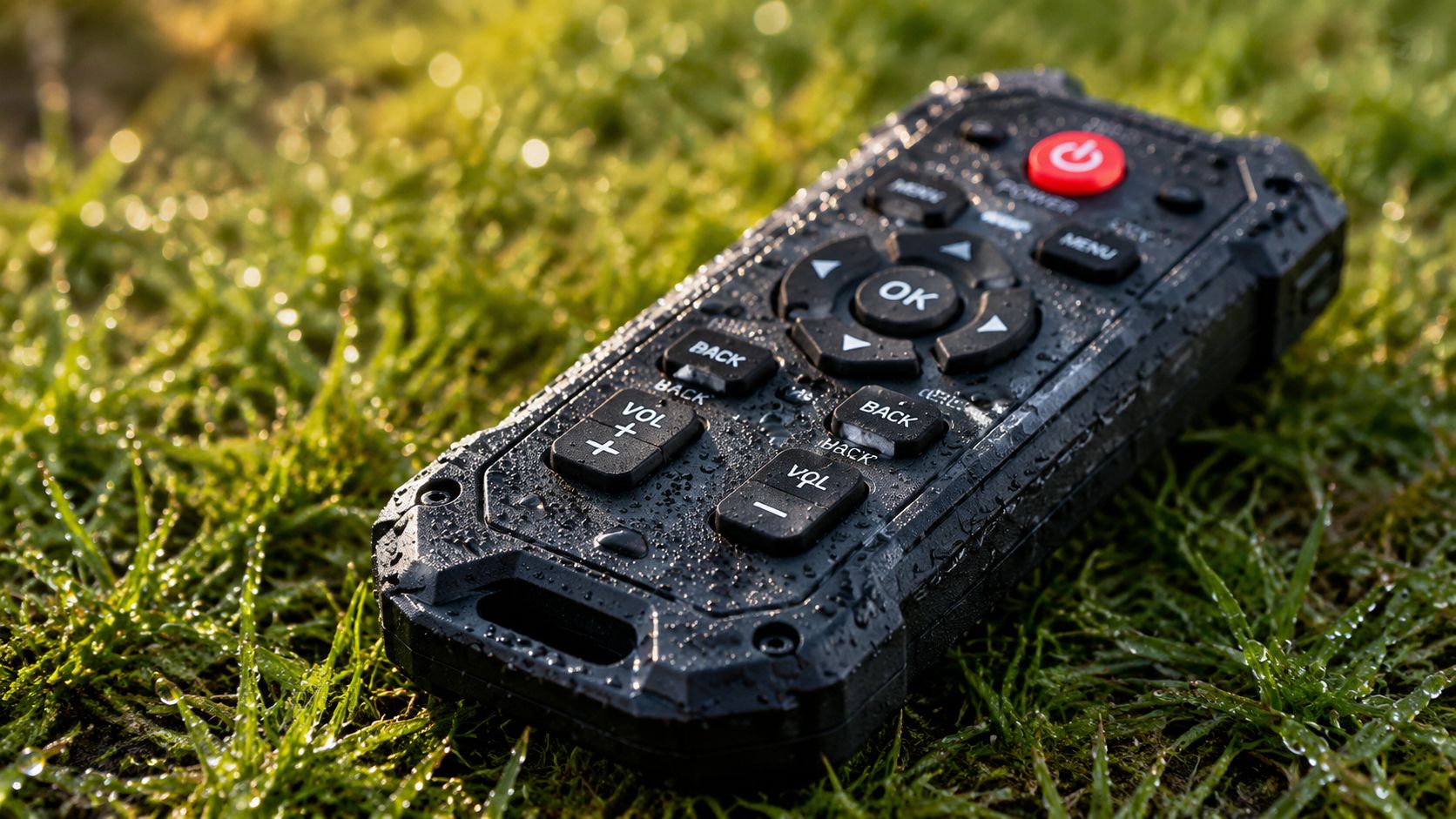
A lot of golfers buy a remote, see the word “waterproof” somewhere in the listing, and assume they're covered. Then the round tells the truth. The remote gets wet from cart-path spray, sits in a damp cup holder, or takes a short drop into rough that's holding water from overnight irrigation. Suddenly the buttons feel sticky, the case fogs, or the control starts acting erratic at the exact moment you need it to be simple.
On a golf course, water exposure usually isn't dramatic. It's repetitive. Dew at sunrise. Light rain on the turn. A wet towel. Muddy hands. A quick rinse after a sloppy day. That's why the practical question isn't “Is this remote waterproof?” The better question is “What kind of wet can it handle, and for how long?”
That distinction matters across a market that's already large and still growing. The broader remote-control market is valued at USD 1,608.05 million in 2024 and projected to reach USD 2,116.55 million by 2033, a projected rise of about 31.6% at a 3.1% CAGR, according to remote-control market projections from Market Reports World. Waterproof remote controls sit inside that bigger category, but on the course they solve a very specific problem. They keep one weak link from ruining a good walking round.
Introduction Dont Let Weather Dictate Your Round
You're on the back nine, the wind shifts, and the air gets heavy. A few holes ago the sky looked harmless. Now your bag is damp, your grips need a wipe before every shot, and the remote in your hand has become one more thing to worry about.
Golfers who walk with powered assistance know this feeling. The motor may be built for outdoor use, but the remote is the part you touch all day. It rides in your palm, your pocket, the console, or the cart handle. It sees sweat, drizzle, grass moisture, and the kind of accidental abuse that comes from trying to play golf instead of babysit electronics.
A standard remote might survive that for a while. The problem is “for a while” isn't the same as “reliable.” One wet round often doesn't kill electronics outright. Moisture gets in slowly, works past seams or button membranes, and turns a dependable control into a question mark.
Practical rule: On the course, the remote doesn't fail because you went swimming with it. It fails because ordinary golf weather keeps testing every weak seal.
That's where waterproof remote controls earn their keep. Not because they sound rugged on a product page, but because they remove the little bit of doubt that creeps in every time conditions turn. You shouldn't have to choose between finishing your round and protecting a handheld control.
For golfers, especially anyone using an electric push cart or motorized assist setup, the right remote means one thing above all else. Consistent control when the course is damp, dirty, or unsettled.
What Waterproof Really Means for Electronics
The word waterproof gets used too loosely. In product language, it can mean anything from “fine in rain” to “safe if dropped in water,” and those are not the same thing.
The cleanest way to judge a remote is by its IP rating, which stands for ingress protection. This rating describes a dual protection system. The first aspect keeps out solids such as dust and grit. The second aspect deals with water.

How to read the code
If you see IP66, the first 6 means the enclosure is dust-tight. The second 6 means it's protected against powerful water jets. If you see IP68, that moves beyond spray and indicates protection against prolonged immersion, based on the manufacturer's stated depth and time limits, as explained in RTI Control's page on IP66 and IP68 water-resistant remote benchmarks.
That's the part golfers need to simplify.
| Rating type | What it means in plain language | Golf use |
|---|---|---|
| IP65 | Handles splash and weather exposure | Rain, wet hands, damp fairways |
| IP66 | Better protection against stronger water exposure | Heavy rain, forceful rinse conditions |
| IP68 | Built for prolonged immersion under stated limits | Accidental drop into standing water or more severe exposure |
What a golfer actually needs
Most golfers don't need a submersible remote. They need a remote that won't care about drizzle, dew, or a soaked towel in the same pocket. That usually puts the target in the splash-resistant to strong weather-resistant range, not the “take it underwater” category.
If you want a deeper technical explainer, this guide to IP67 dust and water protection is a useful reference because it translates the code into normal buying decisions. On the golf side, weather protection also has to be considered as part of your overall setup, not just the remote, which is why gear planning often goes hand in hand with items like waterproof golf bag covers.
A remote can have a strong rating on paper and still be annoying in practice if the seals, buttons, or charging points are poorly executed.
Where confusion starts
A lot of product pages skip the rating and lean on softer words like weatherproof, water resistant, sealed, or outdoor-ready. Those terms aren't useless, but they don't tell you enough on their own.
When I look at a remote for golf use, I don't stop at the code. I want to know where water can get in. Button membrane. Battery door. Seam around the case. Charging port. Those are the pressure points. The rating tells you the target. The design tells you whether the product can live with golfers.
Why All-Weather Reliability Is a Game Changer for Golfers
You reach the 3rd tee with wet grips, a damp glove, and mist still hanging over the fairway. The remote has already been in a pocket with a towel, pulled out with dirty fingers, and hit with light spray from the cart path. That kind of exposure is normal on a golf course, and it's exactly why all-weather reliability matters.

Golf rarely dunks a remote in a lake. It wears it down through repeat contact with moisture. Dew on the rough. A brief shower. Sweat, sunscreen, and a wet hand grabbing the buttons ten or twenty times in a round. Then cleanup adds another test because mud, grit, and water get pushed into seams, button edges, and charging covers.
Splash resistance covers the way many golfers play
For many walking golfers, splash resistance is the right target. A remote that keeps working through drizzle, wet fingers, and pocket moisture is usually more useful than one sold with a bigger waterproof claim that doesn't change real on-course performance.
The important distinction is simple. Splash-resistant means it should tolerate ordinary golf weather. Waterproof suggests survival after heavier exposure, including accidental drops into standing water or much harsher conditions than most rounds produce. MirageVision makes a similar point in its discussion of outdoor remotes, especially around what “waterproof” claims often leave out in practice.
That difference affects buying decisions. It also affects expectations. A golfer who plays through dew and passing rain needs dependable sealing, not marketing language built around submersion they will never test.
Reliability changes your pace and your confidence
A remote that handles weather cleanly fades into the background. That's what you want. Tap the button, send the caddy, play the shot, move on.
A remote that feels vulnerable changes behavior. Golfers start shielding it with a towel, stuffing it deeper into a pocket, or pressing buttons twice because they are not sure the input registered. That hesitation gets old fast, especially on hilly walks where remote timing matters and remote control frequency and signal stability on the course already deserve enough of your attention.
The pressure points are predictable:
- Early tee times bring dew that transfers from grass to shoes, hands, and gear.
- Rainy stretches force the remote to deal with repeated moisture, not one dramatic event.
- Post-round cleanup exposes weak seams when dirt and water mix and get worked into the housing.
I've seen plenty of electronics pass a bench test and still feel wrong for golf because the sealing around the buttons or port cover was the weak spot. Product designers see the same pattern in other outdoor controls, including systems built for remote access for electronic gates. The lesson carries over. Water protection only helps if the details hold up in routine use.
If a remote only feels trustworthy on a dry afternoon, it does not match the way golfers use it.
How to Choose the Right Waterproof Remote Control
Choose for failure points, not label language. A remote can be called water-resistant, weatherproof, or waterproof and still disappoint on a wet back nine if the weak spot is the button membrane, battery door, or charging port.

The first question is simple. What kind of wet are you asking this remote to survive? Light rain, dripping hands, and a cart seat covered in water call for a well-sealed remote built for repeated splashes. Dropping it in a puddle, leaving it exposed through a storm, or using it around standing water is a tougher requirement. Golfers often get tripped up by IP codes because they sound precise. On the course, the practical distinction is easier. Splash-resistant means it should tolerate routine surface moisture. Waterproof means a brief dunk or heavy exposure is part of the design target, not an accident the product might survive.
Start with the parts you will touch and open.
- Buttons under wet fingers: Raised buttons with clear spacing are easier to use by feel when your glove is damp or you are walking uphill and not staring at the handset.
- Case seams: Fewer joins usually mean fewer leak paths. A simple shell is easier to seal well than a complicated one.
- Battery door: Replaceable batteries are fine if the door closes firmly and uses a proper gasket. A loose cover is trouble.
- Charging point: Open ports are common failure spots. Magnetic charging, sealed contacts, or a fully enclosed housing usually hold up better.
- Surface texture: A glossy remote may look clean online and feel slippery in drizzle.
Battery design deserves more attention than buyers give it. A built-in rechargeable battery can simplify sealing because there is no battery door to protect. The trade-off is long-term serviceability. Once that battery ages, replacement may be harder. A remote with replaceable cells is easier to keep alive for years, but every time you open the compartment you rely on the seal being clean, aligned, and undamaged. That is a real design trade-off, not a spec-sheet footnote.
The same logic shows up in other outdoor devices. remote access for electronic gates faces similar design choices because the housing, controls, and power setup all have to match exposure and use pattern, not just pass a lab test.
Golfers should also check how the remote communicates, not just how it resists water. A dry remote that drops signal on slopes or around tree cover is still a poor fit for the course. This guide to remote control frequency and signal stability on the course explains what to watch for.
A good buying rule is blunt. Buy for repeated splashes and dirty hands if that matches your rounds. Pay for full waterproofing only if your use really calls for it. The right choice is the one that stays predictable in real golf conditions, not the one with the most dramatic label.
A Perfect Example The Caddie Wheel Remote
The easiest way to judge a golf remote is to stop thinking like a spec sheet and start thinking like a walker on the 14th hole. Your hands are a little damp. The ground is soft. You want a quick response without fumbling.
That's why the most sensible golf remotes tend to have a simple shape, straightforward controls, and a casing that doesn't invite water into obvious weak points.

A good golf-specific example is the remote used with Caddie Wheel. It's built around the needs of walking golfers using powered push-cart assistance, with variable-speed control plus forward, reverse, and braking functions. That matters because on-course remotes don't need dozens of commands. They need clear ones, delivered quickly, without hunting for the right button.
Why this style works on the course
Golf rewards simple equipment. A remote with too many tiny controls may look advanced, but it usually feels worse when you're dealing with weather, gloves, or divided attention.
The Caddie Wheel setup is also a reminder that a practical buyer should match the remote to the whole system, not treat it as a standalone gadget. If you need a replacement or backup that fits the existing platform, the most direct option is the Caddie Wheel spare remote.
On the course, the best remote is the one you don't have to think about after the first hole.
There's an important real-world note here. Product relevance research around this topic points to the Caddie Wheel remote as water resistant, not waterproof. That's exactly the kind of distinction golfers should value. It's clearer and more useful than broad marketing language. If your rounds mainly involve rain, dew, and normal outdoor use, that may be the right level. If you expect submersion, that's a different requirement entirely.
Simple Care and Maintenance for Your Remote
A sealed remote still needs basic care. Waterproofing reduces risk. It doesn't make a remote invincible.
After-round habits that help
The best routine is simple and takes less than a minute.
- Wipe off moisture: Use a soft cloth after wet rounds so water doesn't sit around seams or buttons.
- Remove dirt early: Mud and grit can wear at button edges and case joints if left in place.
- Check closures: If your remote has a battery door or charging cover, make sure it's fully seated before the next round.
Clean it like golf gear, not shop equipment
Don't attack the remote with harsh cleaners. A damp cloth is usually enough. Strong chemicals can degrade rubberized surfaces, soften seals, or dry out the materials that help keep water out.
If the remote has a charging contact area or cradle system, keep that part clean too. Water resistance often depends on avoiding open ports, but the contact surfaces still need to stay free of grime.
Storage matters more than people think
In the off-season, store the remote dry and out of extreme heat. Don't leave it rattling around in a trunk or in a soaked side pocket of the bag for weeks at a time.
A lot of water problems aren't caused by one bad storm. They come from repeated neglect. Drying the remote, keeping the seals clean, and storing it properly do more for long-term reliability than any rescue trick after damage has already started.
FAQs About Waterproof Remote Performance
Does opening the battery compartment weaken water resistance
Yes, it can. A battery door only stays splash-tight if the gasket is clean, seated properly, and compressed evenly when you close it. One grain of sand, a twisted seal, or a latch that is not fully shut can turn a rain-safe remote into a risky one for a wet back nine.
Are rechargeable remotes better than ones with replaceable batteries
Neither option wins on its own. Rechargeable designs often make sealing easier because there is no battery door to reopen, but once the battery ages, service can be less convenient. Replaceable batteries are easier to sort out before a round or during a golf trip, but every battery change is another chance to nick a seal, trap grit, or close the compartment poorly.
For golf, the better question is how you play. If you want simple charging at home and fewer openings in the case, rechargeable can make sense. If you play long days, travel often, or want to swap batteries at the course, a well-sealed replaceable-battery remote can still be a good fit.
Does heat or cold affect performance
Yes. Cold weather can shorten usable battery life and make buttons feel stiffer. High heat is harder on plastic housings, rubber seals, and glued parts over time. A remote left in a hot trunk all afternoon may still work, but repeated heat exposure is one of the faster ways to age electronics.
What does a warranty usually cover
That depends on the brand and the wording. Many warranties cover defects in materials or assembly, but not water damage caused by conditions beyond the stated rating. This matters because "waterproof" in marketing copy often means rain and splashes, not submersion, pressure washing, or sitting in a flooded cart bag.
Read the use limits, not just the headline claim.
Can I make a non-waterproof remote safe with a sleeve or bag
Sometimes, for light rain or brief splash exposure. That setup is closer to splash-resistant than waterproof, and that difference shows up fast on the course. A sleeve can help during a passing shower, but it also dulls button feel, slows access, and can trap moisture inside if water gets in around the opening.
Golfers usually need a remote that handles wet hands, drizzle, bag jostling, and the odd drink spill without drama. A cover can buy some margin. It does not turn an indoor-style remote into an all-weather one.
If you want a golf-focused control system built around walking rounds, powered push-cart assistance, and simple on-course operation, take a look at Caddie Wheel. It's designed to add electric power assist to standard push carts with straightforward remote control, so you can keep walking and spend less energy pushing uphill or through long rounds.
Share:
Optimize Customer Support Resources for E-commerce
Your Guide to the Best Golf Cart Beverage Holder