

Think of a golf caddy motor as an electric power-assist kit for your push cart. It’s designed to transform your standard manual cart into a self-propelled, remote-controlled caddy. This clever upgrade takes the physical chore of pushing your clubs off your hands, letting you walk the course freely while your cart does all the work.
Stop Pushing and Start Playing Your Best Golf

Imagine strolling down your favorite fairway, soaking in the scenery, and saving every ounce of energy for your next shot instead of wrestling a heavy cart up another hill. That’s exactly what a golf caddy motor brings to your game. This simple upgrade turns your trusty push cart into a personal electric caddy, a lot like adding a motor to a bicycle.
This guide is all about the real-world benefits that help you stay fresh through all 18 holes. By the end, you’ll see how this technology saves your energy, cuts down on fatigue, and lets you focus on what really matters: your game.
A Smarter Way to Walk the Course
The whole idea is simple but powerful: separate the act of walking from the chore of pushing. A motorized caddy lets you keep a natural, comfortable pace without being weighed down by your clubs, especially on hilly courses. It’s a small change that makes a huge difference to your physical and mental stamina over a four-hour round.
The main advantages are clear:
- Less Physical Strain: It completely eliminates the effort of pushing and pulling, which is a massive relief on hilly courses or for golfers managing physical limitations.
- Sharper Focus and Performance: When you’re not wasting energy, you can maintain better concentration from the first tee to the final putt. For many, this leads directly to lower scores.
- More Enjoyment: Walking becomes a relaxing part of the experience again, not a tiring task. You get to fully appreciate your surroundings and the company you're with.
"Adding a motor to my push cart was a game-changer. I used to feel drained by the 14th hole, but now I finish the round feeling just as strong as when I started. It's the single best investment I've made in my golf game in years."
For a deeper dive into how this tech can transform your day on the course, check out the 5 benefits of electric push carts for golfers in our detailed article. Consider this guide your complete roadmap to choosing an upgrade that delivers immediate results.
How a Golf Caddy Motor Completely Changes Your Day on the Course
Adding a motor to your push cart is about way more than just convenience. It’s a strategic move that can genuinely shave strokes off your score and add years to your time on the links. Think about it: you're removing the most draining part of walking a course—shoving a 30-pound bag up and down hills for four hours.
This simple upgrade saves your physical energy, which pays off big time in mental focus on the back nine. Instead of feeling your legs and shoulders scream while trekking up that steep fairway on the 12th hole, you can walk comfortably beside your cart, thinking only about your next shot.
See the Game Through Fresh Eyes
The real magic of a golf caddy motor comes alive when you see how it helps different kinds of players. This isn't a one-size-fits-all gadget; everyone finds their own unique edge.
Let’s break it down with three common examples:
- The Competitive Player: For anyone serious about their handicap, stamina is everything. A motorized caddy means they arrive at each ball with fresh legs and a clear head, wiping out the late-round fatigue that leads to sloppy, costly mistakes. They can finish the 18th hole just as strong as they started the first.
- The Senior Golfer: So many senior players love the game, but walking hilly courses becomes painful or just plain exhausting. A motor tears down that barrier, letting them keep enjoying the health benefits of walking without the joint strain. It's the key to playing more often and for many more years.
- The Weekend Warrior: This player wants the exercise of walking but doesn’t want to be totally wiped out after the round. A motor strikes the perfect balance—a great walk that feels energizing, not grueling, leaving them with plenty of gas in the tank for the rest of their day.
A Smart Trend That's Here to Stay
This shift toward energy-saving tech isn't some niche movement. The global golf cart market, valued at USD 2.12 billion in 2025, is expected to hit USD 3.70 billion by 2034. That growth is fueled by a massive number of players—26.6 million Americans played on-course golf in 2023 alone.
That’s a huge audience of golfers who can benefit from power-assist upgrades to save energy and get more enjoyment out of the game. You can dig into more stats on this growing market from Fortune Business Insights.
By removing the physical burden of pushing your cart, you’re free to focus 100% on strategy, your swing, and shot execution. It’s a simple change that delivers a powerful competitive edge.
The core benefit is the same for everyone: it separates the healthy act of walking from the tiring labor of hauling your gear. You're no longer just a player; you're a course manager who wisely delegates the heavy lifting. This is how you maintain peak performance and find more joy in every single round.
Decoding the Tech: What to Look for in a Caddy Motor
Choosing the right motor can feel a bit technical, but it really boils down to a few key features that directly impact your experience on the course. Getting these right ensures you pick a golf caddy motor that perfectly matches your game, turning your trusty push cart into a reliable partner.
Think of this as your buyer's checklist. We'll break down the essentials—from power and battery life to controls and design—so you can make a confident and informed decision.
Motor Power and Torque
The heart of any motorized caddy is, of course, the motor itself. When you're looking at different options, it's easy to focus on speed, but the real game-changer is torque. Torque is the rotational force that gets your cart up hills without slowing down or showing any signs of struggle. A motor with plenty of torque will handle steep inclines effortlessly, even when your bag is loaded to the brim.
For anyone who plays on a hilly course, good torque isn't just a nice-to-have; it's a must. It’s the difference between your cart gliding up the fairway and you having to give it a "helpful" shove halfway up the slope. If you want to dive deeper into the nuts and bolts, you can learn more about AC and DC motors for golf carts and see how they stack up on varied terrain.
Battery Life and Real-World Performance
Manufacturers often talk about battery capacity in terms of holes, like a "36-hole battery." While this is a great benchmark, what you actually get out on the course can vary.
A few things can influence how long a single charge really lasts:
- Course Terrain: Hilly courses are more demanding and will drain the battery faster than flat ones.
- Bag Weight: A heavier golf bag makes the motor work harder, using more juice.
- Ground Conditions: Soft, wet turf creates more resistance and eats up more energy.
A 36-hole battery gives you a fantastic buffer. It means you can comfortably finish 18 holes on even the toughest course with plenty of power to spare. That kind of reliability is crucial for peace of mind.
The push for dependable, long-lasting batteries is a huge driver in the electric golf cart market. This sector, which includes power-assist attachments, was valued at USD 2.28 billion in 2026 and is projected to hit USD 3.39 billion by 2030. This explosive growth shows just how much golfers care about features like extended battery life.
Controls and Compatibility
Modern control systems have made operating a motorized caddy incredibly simple. A quality system should feel intuitive and give you complete command.
To help you compare your options, here’s a quick breakdown of the features that matter most and why they’re important for your game.
Key Feature Comparison for Golf Caddy Motors
| Feature | What to Look For | Why It Matters for Your Game |
|---|---|---|
| Variable Speed Control | A simple dial or remote button | Lets you perfectly match the cart’s pace to your walking speed, so you're never rushing or waiting. |
| Remote Operation | A responsive, easy-to-use remote | Gives you the freedom to send your cart ahead to the next tee or guide it around the green from a distance. |
| Braking and Reverse | Automatic downhill braking and reverse functions | Essential for maintaining control on steep slopes and maneuvering out of tight spots without a hassle. |
| Universal Attachment | A design that fits a wide range of popular push cart models | Ensures you can upgrade your existing cart without needing to buy a whole new setup. It's all about versatility. |
Compatibility is just as important as the controls. The best conversion kits are built with a universal attachment system designed to fit a wide range of popular three- and four-wheel push carts. Always double-check the manufacturer's specs to confirm it will fit your specific model before you buy.
This simple decision tree helps visualize how different types of players can benefit from a motorized upgrade.
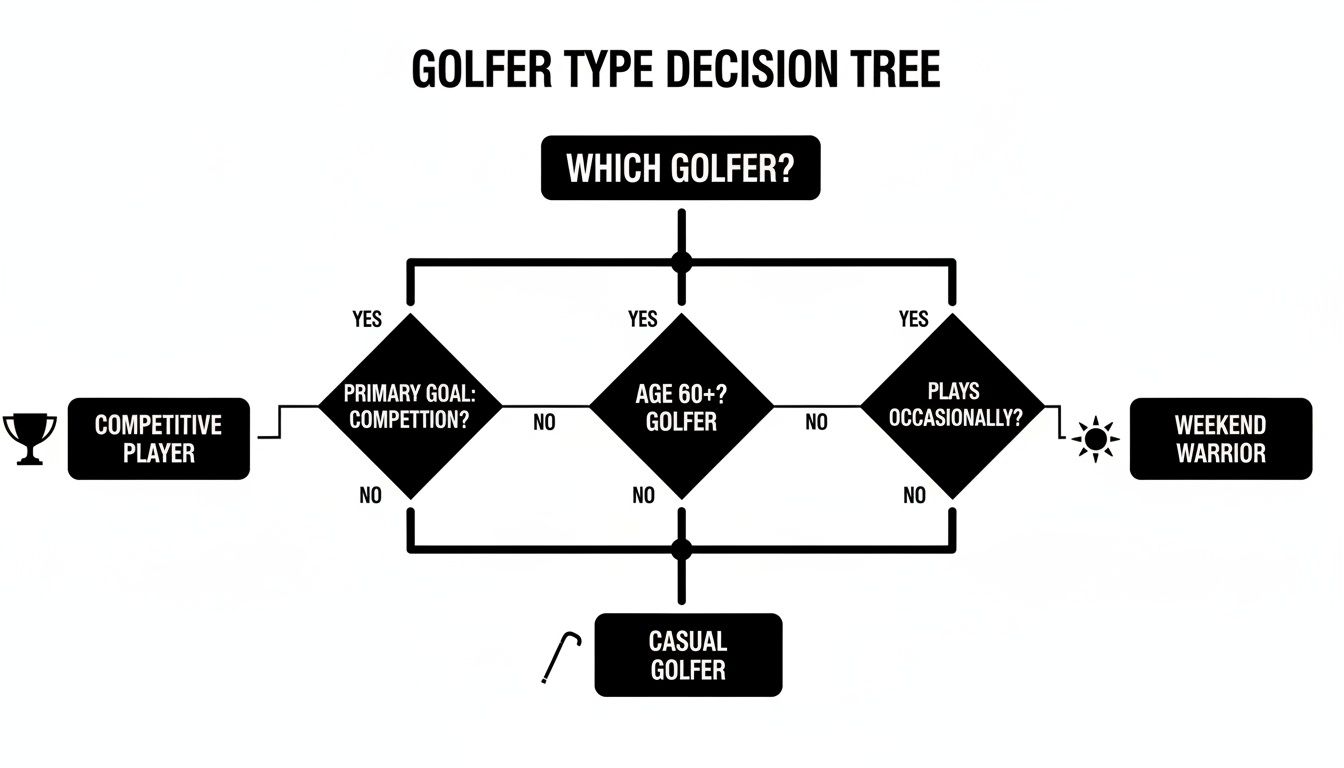
Whether you’re a competitive player trying to conserve energy, a senior golfer looking to reduce strain, or a weekend warrior who just wants a more enjoyable walk, a motor provides a clear advantage.
A Quick Guide to Installing Your Motor Upgrade
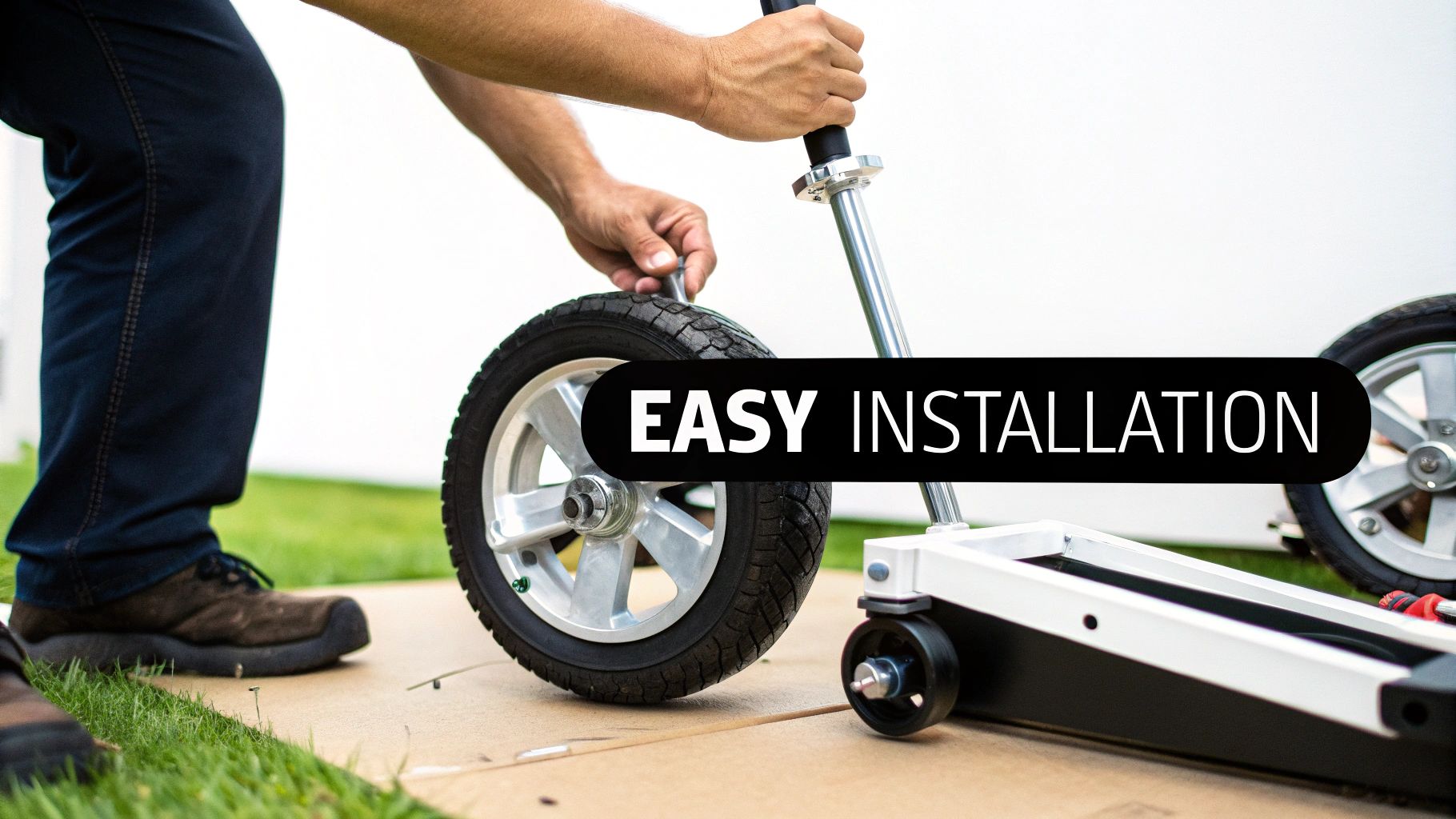
Worried about a complicated, tool-heavy setup? You can put that fear to rest. Most modern golf caddy motor kits are designed for a quick, DIY installation that even the least handy golfer can tackle in minutes. The entire process is intuitive, so you can get your cart upgraded and ready for the fairways fast.
This quick walkthrough will take you through the whole process, from prepping your cart to syncing the remote. You'll be ready to hit the links with total confidence in your new powered setup.
Preparing Your Cart and Attaching the Bracket
Before you get started, it's a good idea to give your push cart a quick wipe-down. Pay special attention to the axle and frame where the new parts will attach. A clean surface always makes for a more secure fit.
The first real step is getting the mounting bracket in place. This piece is the foundation of the whole system and usually clamps right onto your cart’s rear axle or frame. Just position the bracket as shown in the instructions, tighten the included screws, and give it a good shake to make sure it's locked down tight. It shouldn’t wiggle or shift at all.
Pro Tip: Make sure the motor's battery is fully charged before you even start the installation. That way, you can test everything—the wheels, the remote, the speed settings—the second you're done. It's a simple step that saves you from any "is it working?" guesswork later.
Securing the Motor and Syncing the Remote
With the bracket firmly attached, you're ready for the main event: adding the motorized wheel. Simply slide it onto the axle and lock it into place. Most systems use a quick-release or pin lock, and you should hear a satisfying click that tells you it's properly seated. This simple "drop-on" design is what makes the whole conversion so quick.
Once the wheel is on, the final piece of the puzzle is syncing the remote control. This sounds technical, but it’s usually as easy as pressing a button on the motor and another on the remote. The two will pair up in just a few seconds, giving you full command of your cart's speed and direction.
Here’s a quick recap of the whole process:
- Prep the Cart: Wipe down the axle and frame for a solid fit.
- Attach the Bracket: Position the universal mounting bracket and tighten it down firmly.
- Mount the Motorized Wheel: Slide the motor onto the axle until it clicks securely into place.
- Sync the Remote: Power on the unit and pair it with the remote control.
- Final Check: Give everything one last check to ensure all connections are tight before you head out.
For a more detailed visual guide, you can also check out our article on how to convert your push cart to electric. It’s a super straightforward process that will get you from the box to the first tee in under 30 minutes.
Keeping Your Motor in Top Shape for Years to Come
A little routine care goes a long way in making sure your golf caddy motor performs reliably, season after season. Just like any other piece of valuable golf equipment, a bit of consistent maintenance protects your investment and keeps minor issues from turning into round-ruining problems.
Think of it like a quick pre-round checklist. These small habits will keep your motor humming and your battery performing at its best for years, helping you get the most out of every single walk on the course.
Your Simple Maintenance Checklist
Being proactive with your gear is always easier than dealing with a breakdown mid-round. By folding a few simple steps into your routine, you can seriously extend the life and reliability of your motorized caddy.
Here are a few essential habits to get into:
- Clean the Motor Housing: After each round, especially on wet or muddy days, just wipe down the motor and wheel with a damp cloth. This gets rid of dirt, grass, and other gunk that can build up and interfere with performance.
- Check All Connections: Before you head out, give the mounting bracket and wheel a quick once-over to make sure everything is snug and secure. A tight fit is key for efficient power transfer from the motor to the ground.
- Inspect the Tires: Just like with any push cart, check the tire for proper inflation and any signs of wear. A well-maintained tire helps the motor operate efficiently without having to work harder than it needs to.
Battery Care and Troubleshooting Fixes
Proper battery care is probably the single most important factor for long-term performance. Always give the battery a full charge after each use, and if you're storing it for a while, keep it in a cool, dry place. The absolute worst thing you can do is leave it in a hot car or a freezing garage, as those extreme temps can really degrade the battery's lifespan.
Even with the best care, you might run into a small hiccup from time to time. The key is knowing the quick fix. For example, if your remote ever loses its connection, the fix is usually as simple as re-pairing it—often by just holding a button on both the unit and the remote for a few seconds.
If the motor ever seems sluggish, the first thing to check is always the battery. More often than not, what looks like a motor problem is really just a low battery that needs a full charge. Of course, having a solid warranty provides the ultimate peace of mind. The entire golf cart industry is projected to hit $2,000 million by 2030, which shows a huge, long-term user base that values reliable products. A strong warranty makes sure your investment in a modern golf caddy motor is protected. You can see more market projections on this growing trend in this detailed report.
Your Golf Caddy Motor Questions Answered
Making the leap to a motorized push cart is a big decision, and it’s natural to have a few questions. You want to feel confident that the investment is right for your gear, your game, and your budget. This section tackles the most common concerns golfers have before upgrading, giving you clear, direct answers so you can feel completely sure about your choice.
Let’s clear up any final uncertainties you might have and address potential issues head-on. By the end, you'll know exactly what to expect from your new golf caddy motor.
Will a Motor Fit My Existing Push Cart?
This is almost always the first question golfers ask, and for good reason—you already love your current cart. The great news is that the best motor conversion kits are designed with universal compatibility in mind. They use clever mounting systems and brackets engineered to fit the vast majority of popular three- and four-wheel push carts on the market today.
To make sure you get a perfect match, there are just a couple of things to check:
- Axle Shape and Size: Take a look at the manufacturer's specs to confirm the bracket fits your cart's axle, whether it's round, square, or something in between.
- Frame Clearance: Make sure there's enough room around the rear wheels for the motor unit to attach without bumping into any part of the cart’s frame.
Most top-tier systems, like the Caddie Wheel, are built to be brand-agnostic, working seamlessly with carts from Clicgear, Bag Boy, Sun Mountain, and many others.
Is It Hard to Control on Hills?
Worrying about a powered cart on hilly terrain is completely understandable, but modern systems are built specifically to handle slopes with total precision. A quality golf caddy motor isn't just about moving forward; it's about giving you complete command in every situation. Think of it less like a runaway train and more like a responsive vehicle that listens to your every command.
Advanced features are what make this possible. Remote controls with variable speed adjustments let you dial in the perfect pace, whether you're climbing a steep incline or cruising down a gentle slope. Even more important is the automatic braking function.
An automatic electronic brake is a game-changer. It prevents the cart from running away from you on downhill walks by maintaining a steady, controlled speed. This gives you the confidence to navigate even the steepest parts of the course without ever having to wrestle with your gear.
Plus, a reverse function adds incredible maneuverability, letting you easily back out of tight spots around bunkers or greens without having to awkwardly turn the entire cart around by hand.
Is It Worth the Money Compared to a New Electric Trolley?
This question really boils down to value. While a brand-new, fully integrated electric trolley is a fantastic piece of equipment, it also comes with a hefty price tag, often running from $800 to over $1,500. A motor conversion kit offers a much smarter path to the same core benefits.
By upgrading the push cart you already own, you're leveraging an asset you've already paid for. You get all the advantages of a powered caddy—reduced fatigue, better focus, and more enjoyment—for a fraction of what a whole new unit costs. It's a budget-friendly way to get the high-end experience without the high-end expense.
How Long Does the Battery Really Last?
Battery life is crucial, and it's good to have realistic expectations. While many units are rated for 36 holes, real-world performance depends heavily on the course itself. A flat, firm course will use far less energy than a hilly, wet one where the motor has to work much harder to keep up.
To get the most out of a single charge, try to keep your bag weight reasonable and maintain proper tire pressure on your cart. That said, a high-capacity battery rated for 36 holes provides a significant buffer, ensuring you can comfortably finish a full 18-hole round on even the most challenging course with plenty of power left over. That reliability means you’ll never have to worry about running out of juice on the back nine.
Ready to stop pushing and start playing? The Caddie Wheel offers a simple, powerful, and affordable way to upgrade the push cart you already love. Experience the freedom of a remote-controlled caddy and save your energy for what truly matters—your game. Discover how easy it is to transform your walk at https://caddiewheel.com.
Partager:
How Fast Are Golf Carts and What Affects Their Speed
The Definitive Guide to Electric Golf Bag Carts