
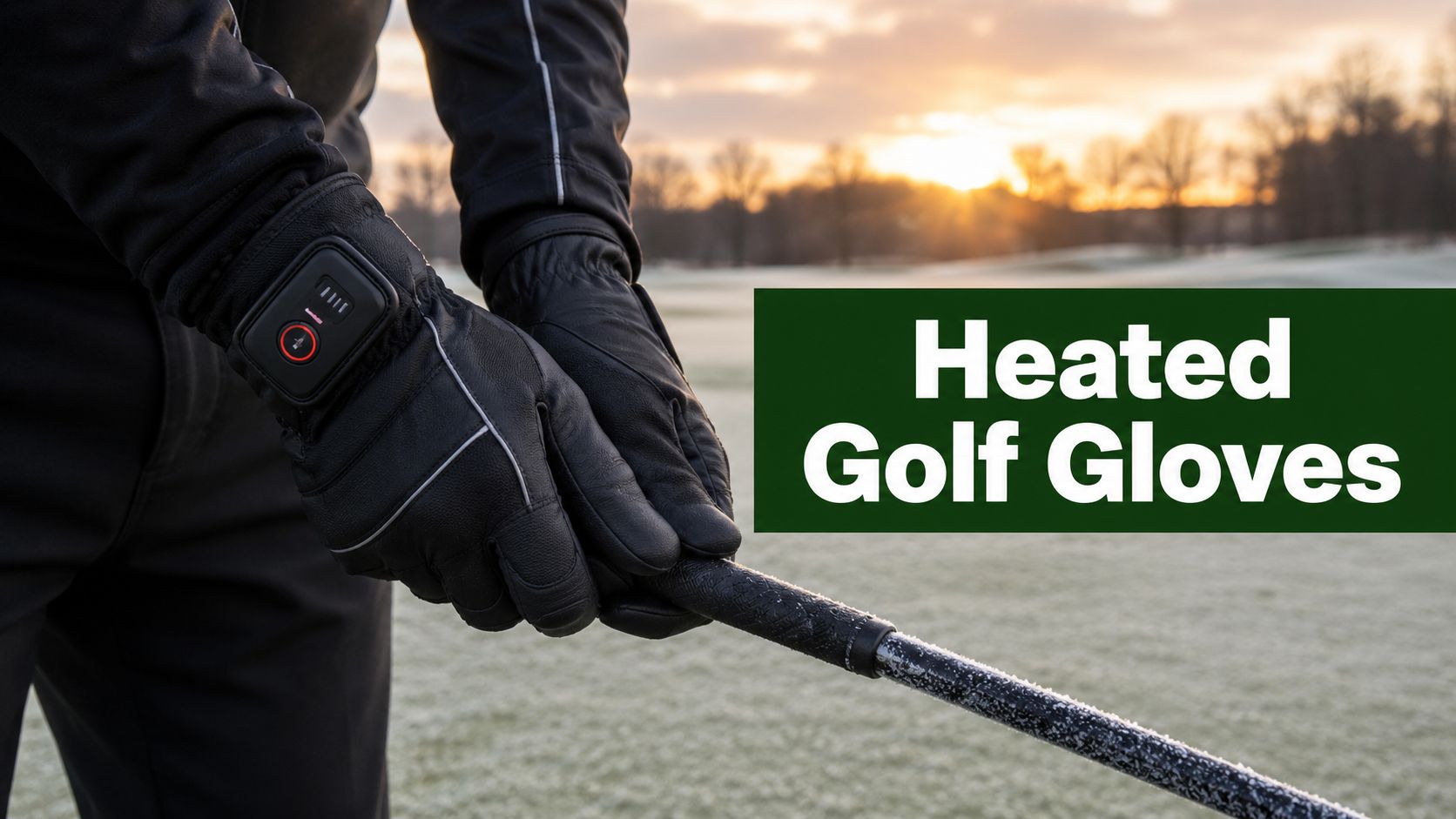
You're probably staring at a cold morning tee time and asking the same question a lot of walkers ask every winter: how do you keep your hands alive without losing all feel in the club?
Cold hands don't just feel miserable. They change how you grip, how confidently you start the club back, and how willing you are to keep walking once the wind picks up. For golfers who play through frost delays, damp fairways, and late-season twilight rounds, comfort becomes part of performance.
That's where heated golf gloves enter the picture. Not as a gimmick, and not as something only extreme-weather golfers use. They've moved into the broader wave of tech-driven golf gear, and the category is getting real market traction. The global market for golf gloves is projected to reach USD 451.7 million by 2030, with a significant portion of this growth driven by the rising demand for technology-assisted golf gloves, according to Grand View Research's golf gloves market outlook.
Embracing the Chill How Heated Gloves Transform Winter Golf
A winter round usually starts the same way. You step out of the car feeling fine, hit a few putts, then the first gust cuts through your fingers and suddenly the club feels like steel pipe. By the second or third hole, your hands want to curl into fists instead of staying soft on the grip.
Heated golf gloves change that first hour of the round more than people expect. The biggest benefit isn't drama. It's steadiness. Your fingers stay more cooperative, your hands don't stiffen as quickly, and you spend less mental energy trying to get warm.
For dedicated walkers, that matters even more. Walking can help you stay warm overall, but exposed hands still take the brunt of cold air, dew, and wind. That's why many cold-weather players build their setup around small comfort wins that add up over 18 holes, from smarter layers to cold-weather golf performance strategies for walkers.
Warm hands don't guarantee a good swing. Numb hands almost guarantee a bad one.
Why winter golfers are paying attention
The most important shift is that heated gloves now sit inside a larger move toward technology-assisted golf gloves. That tells you something useful. Golfers aren't just buying thicker fabric. They're looking for gear that actively solves a problem.
A good heated glove can help with:
- Early tee times when your hands haven't warmed up yet
- Walking rounds where exposure adds up hole after hole
- Practice sessions when standing still on the range feels colder than playing
- Shoulder-season golf in late fall and early spring when conditions change fast
What heated gloves really change
They don't turn January into July. They give you a better working environment for your hands.
That means:
- more comfort while waiting to hit
- less stiffness around the fingers
- a more relaxed hold on the club
- more willingness to keep playing instead of cutting the round short
For golfers who refuse to park the bag for half the year, that's enough to make heated golf gloves part of the regular rotation.
The Technology Behind the Warmth
At heart, a heated golf glove is a wearable heating system built around the same basic idea as a light electric blanket. Power flows from a small battery, through heating elements, into the areas of the glove that need warmth most.
Many golfers get intimidated by the electronics. You don't need to. The important question isn't how advanced the circuitry sounds. It's whether the glove delivers warmth without ruining feel, balance, and hand movement.

The power source
Most models use a compact rechargeable battery. One concrete example is the Gen 1 Arctic Reaction Heated Golf Glove, which uses a rechargeable Li-Polymer battery with three adjustable heat settings, as described on the Arctic Reaction product site.
That setup tells you three practical things:
- Rechargeable matters because disposable heat solutions get expensive and inconsistent.
- Li-Polymer batteries are used because they can stay relatively light and low profile.
- Three settings give you some control instead of forcing full heat all the time.
Usually, the battery sits near the cuff or wrist area. That placement keeps bulk away from the palm, where golfers are most sensitive to changes in grip feel.
The heating system
Inside the glove, heating elements spread warmth through selected zones. Product descriptions often talk in broad terms, but in practical use, what matters is placement and evenness.
Two common design approaches show up in heated wear generally:
| Heating approach | What golfers should know |
|---|---|
| Flexible heating panels | Tend to feel smoother and less noticeable under the glove material |
| Fine wire-based layouts | Can deliver targeted warmth, but poor placement can make them more noticeable |
The average golfer doesn't need to obsess over the engineering. You just want heat that feels natural, not lumpy or distracting during the swing.
The control layer
Most heated golf gloves use a simple on-glove button or small controller. That's better for golf than overcomplicated controls. When your hands are cold, tiny interface problems become big annoyances.
A broader way to think about this is through adaptive product design. The same principles that shape technology for independent living also apply here: comfort, simplicity, portability, and easy control matter just as much as raw function.
Practical rule: If you can't change the setting quickly with cold fingers, the glove is harder to use on the course than it looked in the product photos.
The materials around the electronics
The electronics are only half the story. The outer shell protects against wind and moisture. The insulation keeps generated warmth from escaping too quickly. The liner affects softness, sweat handling, and overall comfort.
That layered build is why one heated glove can feel nimble and another can feel clumsy. The battery may be the headline feature, but materials determine whether you'll want to play in the glove.
How to Choose the Perfect Heated Golf Gloves
Buying heated golf gloves gets easier once you stop treating them like normal gloves with a battery added on. They're a fit-sensitive piece of playing equipment. If the fit is off, the heating performance and the golf performance both suffer.
The first checkpoint is simple. Optimal performance requires a fit that mimics a second skin with no loose material across the palm or fingers, because direct contact improves thermal transfer, as noted in the FootJoy golf glove fitting guide.

Start with fit before anything else
Golfers often shop by warmth claims first. That's backwards. If the glove bunches in the palm or leaves extra space at the fingertips, you'll notice two problems right away:
- the club won't feel as secure
- the heating elements won't sit where they should
A snug fit shouldn't mean a cramped fit. You want close contact, natural finger bend, and no floating fabric on the hitting areas.
Then check the material strategy
Material choice changes both sensation and durability.
Leather-forward gloves
These usually give the best touch on the club. If you care most about feel, leather or leather-hybrid palms tend to make the most sense.
Synthetic-heavy gloves
These usually handle wet, dirty, and repeated winter use more easily. They may not feel quite as refined, but many golfers prefer them for rough conditions.
Hybrid builds
This is often the sweet spot. You get more weather resistance on the back of the hand and a more golf-friendly grip surface where the club sits.
Don't chase maximum heat blindly
A glove that sounds hottest on paper isn't always the best golf glove. Excess bulk, awkward battery placement, or uneven warmth can cancel out the benefit.
Use this quick decision lens:
- Mostly cold but dry rounds: prioritize feel and lighter construction
- Windy, damp conditions: prioritize weather protection and easy controls
- Practice-heavy use: prioritize comfort while standing still
- Walking-only winter golf: prioritize balanced warmth over all-day max heat
Read real-world feedback carefully
This category still has limits. User feedback from golf communities shows that early-generation heated gloves such as the Arctic Reaction Gen 1 may struggle in real play, with one Reddit user saying they “don't really work very well” for short-game practice on chilly mornings in a discussion about heated golf glove recommendations.
That kind of feedback is valuable because it corrects a common misunderstanding. Heated golf gloves aren't magic. They can help a lot, but they may not deliver constant, perfect warmth in every movement-heavy golf situation.
A buyer's checklist that actually helps
Before you buy, ask yourself:
- How do I use them most? On-course play, range sessions, or both?
- Do I care more about swing feel or standby warmth? Be honest here.
- Can I tolerate any bulk at the wrist? Battery placement matters.
- Will I play in wet cold or dry cold? Those are different tests.
- Am I willing to remove one glove for shots if needed? Many golfers do.
The best heated glove for golf usually isn't the one that feels warmest in your living room. It's the one you forget you're wearing on the course.
Maximizing Performance on the Course
The golfers who like heated gloves most are usually the ones who stop expecting them to behave like miracle gear. They use them at the right moments.
That matters because community feedback has shown a real limitation in early models. User feedback from golf communities reveals that early-generation heated gloves, such as the Arctic Reaction Gen 1, may struggle to provide consistent warmth during active short game practice, which highlights the value of using them strategically between shots, as discussed in this Reddit golf thread on heated glove experiences.
Use them as part of your routine
A lot of golfers assume heated golf gloves are meant to stay fully active through every swing, chip, and putt. Sometimes that works. Often, a smarter method works better.
Common on-course approaches include:
- Wear both while walking: Keep both hands warm between shots, especially on exposed holes.
- Remove one for the swing: Some players take off the trail-hand glove or the hitting glove right before the shot for better touch.
- Turn heat up while waiting: Tee boxes, delays, and green-side waiting time are when cold sneaks in fastest.
- Turn heat down while moving: Walking generates body heat, so you may not need the highest setting all round.
Match your approach to the type of cold
Not all cold feels the same on the course.
Damp and windy
This is the hardest combination. Moisture and moving air pull heat away quickly. In these conditions, heated gloves often help most before and after the shot rather than during constant hand motion.
Dry and still
This is friendlier glove weather. A moderate heat setting can feel more effective because the glove isn't fighting moisture and wind at the same time.
Range sessions
Practice can feel colder than play because you stand around more. If you buy heated gloves mainly for winter range work, judge them for that use case, not just for walking rounds.
Keep one goal in mind: preserve feel for the shot, preserve warmth the rest of the time.
Small habits that make a big difference
Golfers get better results when they treat heated gloves like temperature management, not just hand insulation.
Try this pattern:
- start warm before the first tee
- avoid waiting until your fingers go numb
- adjust the heat instead of leaving it maxed out
- use the gloves to maintain comfort, not to recover from frozen hands
That approach keeps the technology in the background, where it belongs.
Essential Care and Safety Tips
Heated golf gloves do two jobs at once. They're soft goods and electronics. That means you can't treat them like ordinary winter gloves stuffed in the side pocket of the bag all season.
Good care starts with restraint. Don't overclean them, don't overbend heated areas, and don't ignore visible wear near seams, wiring paths, or battery connection points.

Cleaning without damaging the heating system
Most heated gloves deserve gentle treatment. Even if a brand allows more aggressive cleaning, hand care is the safer habit.
Use a simple routine:
- Brush off loose dirt first: Dried mud and grit can wear surfaces when rubbed in.
- Use mild soap and water: Harsh cleaners can break down materials and finishes.
- Clean by hand: Focus on the palm, fingers, and cuff.
- Skip wringing: Twisting can stress internal components.
Let them air dry fully before charging or storing. If the gloves are wet inside, trapped moisture can create odor problems and may interfere with comfort the next time out.
Battery habits that protect the glove
Battery care matters as much as fabric care, especially in winter gear. Cold conditions already challenge battery performance, so it helps to understand broader cold-weather battery performance considerations for golf gear.
A few habits keep things simple:
| Habit | Why it helps |
|---|---|
| Charge before use | You start with full available warmth |
| Store in a cool, dry place | Moisture and temperature extremes are hard on batteries |
| Remove batteries for long storage | Reduces the chance of slow drain or connection issues |
| Check charging ports regularly | Dirt and corrosion can create frustrating failures |
What to inspect before a round
A visual check takes seconds and can save a glove.
Look for:
- fraying or punctures around flex points
- stiff or kinked areas where heating elements may be stressed
- loose battery connections
- unusual hot spots during a quick test run
If one area feels much hotter than the rest, stop using the glove until you inspect it closely.
Safe use on the course
Don't treat heated gloves roughly just because they're built for sport. Repeatedly crushing them under heavy gear, jamming them around sharp accessories, or folding them hard into a bag pocket can shorten their life.
The safest habit is also the easiest one. Dry them, flatten them, charge them properly, and store them like equipment you expect to keep for more than one season.
The Advantage for Walking and Senior Golfers
Walking golfers notice hand discomfort sooner because they spend more time exposed to the elements. You're not hiding in a cart between shots. You're on the course the whole time, handling the push cart, pulling clubs, marking putts, and standing in open air.
For senior golfers, that constant exposure can turn a manageable chill into hand stiffness that lingers across the round. Warmth matters because comfort in the hands affects grip pressure, confidence, and willingness to keep playing through the colder months.

Why walkers benefit more
A rider can warm up between shots more easily. A walker stays active, which helps the core, but the hands still absorb cold from air, moisture, and repeated exposure.
Heated golf gloves can make walking more sustainable in bad weather because they help reduce that steady drain on comfort. They fit especially well into a larger support setup for older players who already rely on smarter gear choices, mobility aids, and stability tools, as covered in this guide to golf aids for seniors.
The value isn't only warmth
For many golfers, especially older ones, the benefit is preserving normal hand function for longer.
That can mean:
- easier grip changes around the green
- less reluctance to practice putting on cold days
- fewer rounds cut short because the hands never got comfortable
- more confidence scheduling tee times outside the warmest part of the day
Better endurance through the season
Fitness-minded walkers often think about legs, lungs, and back strain. Hands rarely get the same attention until they become the weak link.
When your fingers stay more comfortable, the round feels less punishing. You're more likely to keep walking through late fall, winter, and early spring instead of shifting to occasional play. For golfers who treat walking golf as part of a healthy routine, that's a meaningful advantage.
Your Complete System for Effortless Year-Round Golf
Heated golf gloves solve one part of winter golf very well. They protect the smallest moving pieces that matter most when you grip a club. But cold-weather comfort doesn't stop at the hands.
A dedicated walker needs a total comfort system. Warm hands, manageable effort, steady pace, and less wear on the body. If your fingers feel good but your shoulders, back, and legs are spent from pushing a loaded cart through cold conditions, you've only solved half the problem.
That's why many serious walkers think in terms of energy management. Hands are one energy leak. Cart pushing is another. On long or hilly rounds, reducing physical drag can change the whole experience.
Why full-round efficiency matters
In electric golf assists, wattage represents the motor's raw power, and higher wattage helps the cart carry heavier bags and maintain consistent speed, which reduces the physical energy a golfer has to spend during the round, as explained in this guide to battery-powered golf push cart motor power.
That idea fits perfectly with heated gloves. One protects feel and comfort at the grip. The other protects the bigger engine, meaning you.
A better way to think about winter gear
Instead of asking, “Will heated gloves fix cold golf?” ask a better question: “What setup lets me walk comfortably and swing freely for the whole round?”
That setup usually includes:
- dependable hand warmth
- sensible layering
- dry storage habits
- less pushing strain
- enough energy left to swing well on the closing holes
Good winter golf isn't about overpowering the conditions. It's about removing enough friction that you can still enjoy the walk and commit to the shot.
Heated golf gloves make a lot more sense when you see them this way. Not as a novelty item, but as one part of a smarter system for year-round golf.
If you want the walking side of that comfort system dialed in too, Caddie Wheel helps turn a standard push cart into a powered assist setup that reduces strain and makes year-round walking rounds easier to sustain. Pair warm hands with less pushing effort, and you give yourself a better chance to play more often, finish stronger, and enjoy cold-weather golf a lot more.
Partager:
Your Guide to a Golf Push Cart Made in USA in 2026
Best Drink Holder for Golf Bag: 2026 Buyer's Guide