
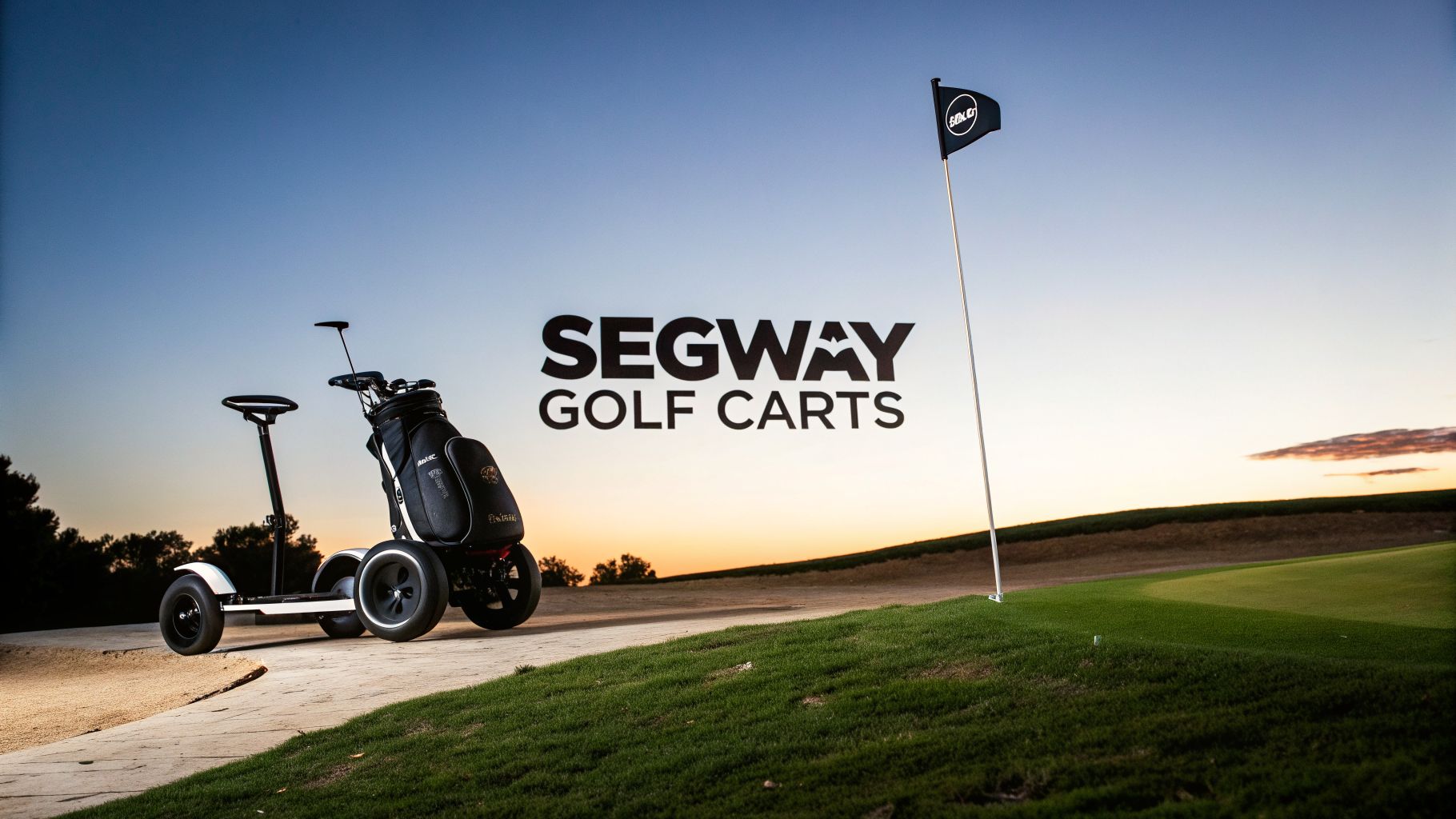
The term “Segway golf carts” often brings to mind a specific image: a golfer standing on a two-wheeled platform, effortlessly leaning to steer between holes. It’s a major departure from the traditional four-wheeled models, offering a nimble, self-balancing ride that lets you glide across the fairways.
Think of it as the difference between driving a car and riding a hoverboard. One is about simple point-to-point transport, while the other is an intuitive, dynamic experience. These modern single-person vehicles are truly changing how golfers get around the course.
What Are Modern Segway Golf Carts
While the classic stand-up vehicle is a popular example, the category has grown. Today, "Segway golf cart" broadly includes any personal mobility device on the course that uses self-balancing tech or offers electric assistance, freeing you from the conventional sit-and-drive model.
The whole idea is to change the pace and feel of the game. Instead of the stop-and-go rhythm you get with a traditional cart, these devices offer a continuous flow that keeps you more connected to the course and your round.
Two Main Styles on the Green
This technology shows up on the course in two primary forms. Figuring out the distinction is the first step to finding the right fit for your game.
- Ride-On Platforms: These are the classic Segway-style vehicles. You stand on a platform, hold onto handlebars, and use your body weight to direct where you go. They’re fast, fun, and provide a unique "turf surfing" experience that can speed up your pace of play quite a bit.
- Electric Follow Carts: This category includes robotic caddies that autonomously follow you around the course. Instead of riding, you walk freely while your clubs trail just behind you. This option gives you the health benefits of walking without the physical strain of pushing or carrying a heavy bag. You can learn more about how a golf caddy robot works and why it's a great choice for walkers.
More Than Just a Ride
Ultimately, both styles of Segway golf carts are designed to solve the same problem: reducing physical fatigue so you can pour your energy into your swing. The technology removes the burden of hauling a 30-pound bag over miles of hilly terrain.
By taking the physical load off your shoulders, these modern carts help you conserve stamina, maintain better focus through the back nine, and simply enjoy the walk a whole lot more.
This shift makes the game more accessible for players who might have mobility concerns and more enjoyable for anyone who wants a brisk, energetic round. Whether you choose to ride or have your clubs follow you, the goal is a smoother, less strenuous, and more engaging day on the links.
Choosing Your Ride: Ride-On Platforms vs. Follow Carts
When you start looking into modern Segway-style golf carts, the choice pretty quickly comes down to a single, fundamental question: Do you want to ride, or do you want to walk with a little help?
Your answer will point you toward either a ride-on platform or an electric follow cart. Each one offers a completely different way to experience the course, so it pays to know what you’re getting into.
Ride-on platforms give you that classic "surf the turf" feeling. They’re quick, fun to use, and can definitely speed up your round. But all that fun comes with a higher price tag and, more importantly, potential restrictions at courses worried about extra wear and tear on their fairways.
Electric follow carts, on the other hand, take a totally different approach. They let you keep that traditional, healthy experience of walking the course but get rid of the biggest drawback—the physical chore of pushing or carrying a heavy bag. This makes them the perfect middle ground for golfers who love the walk but could do without the strain.
This little decision tree breaks it down perfectly, showing the two main paths you can take for your round.

As you can see, your ideal cart really depends on how you prefer to play—actively walking the links or smoothly riding from shot to shot.
A Side-by-Side Comparison
To help make the choice even clearer, let's put these two options head-to-head on the factors that matter most to any golfer. This side-by-side look should help you figure out which technology best fits your personal needs, budget, and fitness goals.
Ride-On Platform vs. Electric Follow Cart
| Feature | Ride-On Segway Carts | Electric Follow Carts |
|---|---|---|
| Experience | Actively riding the cart; feels like "surfing the turf" | Walking the course hands-free with a traditional feel |
| Physical Effort | Minimal; conserves the most energy for your swing | Low; removes the strain of pushing or carrying a bag |
| Pace of Play | Generally faster than walking | Similar to a brisk, consistent walking pace |
| Cost | High initial investment ($3,000 - $10,000+) | Lower investment ($500 - $2,500) |
| Course Acceptance | May be restricted by some clubs due to turf concerns | Almost universally accepted everywhere |
| Portability | Bulky and often requires a ramp or a large vehicle | Lightweight and easily fits in a standard car trunk |
The table really spells out the trade-offs. Ride-on platforms are all about speed and a unique kind of fun, while follow carts are built to blend the health benefits of walking with modern convenience.
The Rise of Conversion Kits
Lately, the lower cost and easy portability of electric follow carts have made them incredibly popular. But there’s an even more accessible option catching on: electric push cart conversion kits. Kits like the Caddie Wheel offer a smart, affordable way to get into the world of assisted golfing.
Instead of buying a completely new piece of equipment, a conversion kit simply upgrades the push cart you already own and love. It essentially turns your trusty cart into a remote-controlled caddie.
This approach gives you the best of both worlds. You get all the benefits of a motorized caddy without shelling out for a brand-new, dedicated unit. To see just how this technology works, check out this detailed guide to golf carts that follow you.
Kits like the Caddie Wheel are designed for simplicity, making the switch to an effortless walk on the course both easy and budget-friendly. It’s no wonder they’re becoming such a compelling choice for so many golfers.
What to Look for in Today's Electric Caddies
When you’re picking out an electric caddy, whether it’s a full-on Segway golf cart or a slick conversion kit, it’s easy to get caught up in the style. But the real magic is in the technology that actually powers your game. Knowing what to look for helps you cut through the noise and find something that’ll genuinely work for you out on the course.
The market for these things is booming. Electric golf carts, including these nimbler models, are part of a massive USD 2.36 billion industry segment. That growth is all about making golf more user-friendly and sustainable. Segway’s original self-balancing tech, which first showed up around 2012, really kicked things off. It paved the way for today’s hybrid carts with variable-speed controls—a concept you’ll even find in the simple remote of an electric-assist wheel. If you want to dive deeper into the market, check out these industry insights on Technavio.

Battery Life and Power Management
Let's be honest, the battery is everything. A caddy that dies on the 14th hole is more frustrating than just pushing the cart yourself from the start. You need to look for clear specs on battery capacity, which is usually measured in how many holes it can last.
- 18-Hole Standard: Any electric caddy worth its salt should get you through a full round on a single charge. This is the absolute baseline.
- 36-Hole Capability: For serious golfers, premium models and efficient conversion kits like the Caddie Wheel offer enough juice for two full rounds. This is a lifesaver on long tournament days or when you decide to squeeze in another 18.
Just remember, the course itself plays a huge role. A hilly, challenging course will chew through a battery way faster than a flat, resort-style layout. Always think about the courses you play most when you’re looking at battery claims.
Control Systems and Maneuverability
How you drive your caddy is just as important as how long it runs. Different types of electric carts have wildly different controls, and each comes with its own feel and learning curve.
The best control system is one you don't have to think about. It should feel so natural that you can focus on your next shot, not on steering your gear down the fairway.
With ride-on platforms, you’re using gyroscopic sensors that react to you leaning your body. For electric follow carts or conversion kits, it’s usually a small, lightweight remote. You want something with simple, obvious functions—forward, reverse, stop, and variable speed—that don’t distract you. The Caddie Wheel’s remote, for example, is designed for one-handed use, so you can steer your cart effortlessly from a distance.
Portability and Durability
Finally, think about the day-to-day logistics. A beast of a machine isn't much use if it’s a total pain to get to the course in the first place.
- Weight and Size: Ride-on models are heavy. You'll often need a ramp to get one into an SUV or truck. On the other hand, electric push cart conversion kits are built to be light and compact, easily fitting into any car trunk right alongside your clubs.
- Build Quality: Look for tough materials that can handle the occasional bump and a bit of weather. A well-built product will have weather-resistant casings for the electronics and rugged, all-terrain wheels. That’s how you know it’s designed to last you for many seasons to come.
Matching these key features to what you actually need is the secret to investing in a solution that will make your time on the course better.
The Real Pros and Cons of Segway Carts
The idea of gliding across the fairways on your own personal transporter is pretty cool, but it’s smart to weigh the good against the bad before you pull the trigger on any kind of Segway golf cart. These things bring some incredible advantages to your game, but they also come with a few trade-offs you really need to think about.
The biggest win is the massive reduction in physical strain. For golfers with mobility issues or anyone just looking to save their energy for the swing, an electric cart is a total game-changer. You get to enjoy the course without the exhausting work of pushing a heavy bag, especially on those killer hills.
Ride-on models can also speed up the pace of play in a big way. Zipping directly to your ball trims valuable minutes off your round, which is a huge plus on a busy day. And let's be honest—there's a major fun factor. It’s a unique, modern experience that a traditional cart just can’t replicate.
Advantages of Electric Carts
- Reduced Physical Fatigue: Say goodbye to the strain of pushing or carrying a bag, saving all your energy for that perfect shot.
- Faster Pace of Play: Ride-on models can seriously shorten the time it takes to play 18 holes.
- Increased Accessibility: Makes the game more accessible for players who might otherwise struggle to walk the course.
- The Fun Factor: Offers a fresh and genuinely enjoyable way to get around the links.
But, there are definitely downsides. The most obvious one is the price tag. A brand-new ride-on platform is a major purchase, often costing thousands of dollars. That high barrier to entry keeps a lot of golfers from even considering one.
Drawbacks to Consider
Another huge issue is potential course restrictions. Not all golf clubs allow personal ride-on vehicles on their fairways because they’re worried about turf damage. You could drop a ton of cash on an expensive cart only to find out you can't use it at your home course—a frustrating and costly mistake to make.
Finally, you’re completely at the mercy of the battery. If you forget to charge it or it dies mid-round, you’re stuck with a very heavy and awkward piece of metal to haul back to the clubhouse.
The ideal solution balances modern convenience with practical reality. It should offer electric assistance without the high cost, course restrictions, and battery anxiety that come with a full ride-on platform.
This is exactly where an affordable upgrade kit like the Caddie Wheel finds its sweet spot. It gives you the electric convenience you're looking for by turning your existing push cart into a remote-controlled caddy. You get all the benefits of an effortless walk without the high price and limitations of a ride-on, making it a much more practical choice for way more players.
How Caddie Wheel Converts Your Existing Push Cart
If the high price tag and course restrictions of a full-blown segway golf cart seem like too much, there’s a much simpler way to get all the benefits of an electric caddy. Instead of buying a whole new rig, you can just upgrade the push cart you already have. This is where the Caddie Wheel really shines—it’s a smart, easy way to turn the cart you know and love into a remote-controlled powerhouse.
The idea behind it is brilliantly simple. Caddie Wheel was created by golfers who were just tired of the grind of pushing their own bags. They wanted to feel fresh on the back nine without dropping a ton of money on a brand-new electric cart. The result is a solution that respects the gear you’ve already invested in.
It’s the perfect middle ground for golfers who love to walk the course but could do without the physical toll. And as the golf cart market continues to boom, this kind of clever upgrade is getting more and more popular.

The Effortless Drop-On Design
The magic of the Caddie Wheel is its "drop-on" installation. You won't need a toolbox or a complicated wiring diagram. The whole process is designed to be ridiculously straightforward and takes just a few minutes, making it one of the simplest upgrades in golf.
- Attach the Bracket: First, you secure a universal "snap-in" bracket right onto your cart's axle. It’s designed to fit almost any three- or four-wheel push cart out there.
- Drop on the Wheel: With the bracket in place, the motorized Caddie Wheel unit just drops on and clicks securely into position. That's it.
- Plug and Play: Connect the power cable, and you're ready to roll. The entire process is built for convenience, not frustration.
This simplicity is a huge deal. It means you can pop the wheel on at the start of your round and take it off just as easily for transport or storage. You get total flexibility. If you want to see just how easy it is, check out this guide on the electric golf push cart conversion kit.
User-Friendly Features for the Course
Once it's installed, the Caddie Wheel lets you get back to focusing on your game, not your gear. The variable-speed remote gives you total control from a distance, so you can send your cart ahead to the next tee or have it meet you by the green. Plus, its powerful battery has enough juice for up to 36 holes, even on courses with serious hills.
The Caddie Wheel was born from a simple need: to make walking the course a pleasure again. It's not about replacing your cart; it's about enhancing it.
This approach is perfectly in tune with where the market is headed. The golf cart market is expected to grow from USD 2.01 billion in 2024 to USD 2.80 billion by 2030, with electric models leading the way. Here in North America, where about 30% of courses are hilly, power-assist devices that cut down push effort by 80% are in high demand.
And for players keeping an eye on their budget, the appeal is even stronger. Nearly 50% of push cart owners prefer an upgrade that costs under $500, which makes the Caddie Wheel a perfect fit. By converting the cart you already own, you get modern convenience without the financial hit of a brand-new machine.
Your Top Questions About Electric Golf Caddies, Answered
Even after you get the hang of the tech, a few practical questions always pop up when you're thinking about a Segway-style cart or an electric conversion kit. Let’s tackle some of the most common things golfers wonder about, from country club rules to how these things actually perform on the back nine.
Sorting out these details is the key to buying with confidence. When you know exactly what to expect, your new gear will improve your game instead of causing a headache with the pro shop.
Are Segway-Style Golf Carts Allowed Everywhere?
This is the big one, and the short answer is: not always. Many courses, both private and public, have rules against personal ride-on vehicles. They're often worried about the weight and potential for damage to their carefully manicured turf. It is absolutely critical to check with the pro shop before you show up with one.
On the other hand, electric-assist push carts and conversion kits like the Caddie Wheel are almost universally welcome. Why? Because they operate just like a normal push cart—you're just not doing the pushing. They fall under standard equipment rules and pose zero risk to the fairways.
What’s the Real-World Battery Life on an Electric Caddy?
A quality electric caddy, including the Caddie Wheel, is built to easily last a full 18-hole round. Many of the high-capacity models even have enough juice for 36 holes, which is perfect for those long tournament days or when you decide to sneak in a second round.
Keep in mind, real-world battery performance always comes down to two things: how hilly the course is and how much your golf bag weighs. A fully loaded bag on a steep, rolling course is naturally going to draw more power.
Is an Electric Push Cart a Smarter Investment?
It really boils down to what you're trying to achieve. If you want the proven health benefits of walking the course but without the physical grind, then an electric push cart or a conversion kit is a fantastic investment. It’s far more affordable, accepted on pretty much every course, and a heck of a lot easier to toss in the back of your car.
A ride-on platform is the better choice if your goal is to maximize speed and skip the walking altogether. But that convenience comes with a much higher price tag, more maintenance, and the constant worry about course restrictions. The global golf cart market, which includes all these mobility options, has exploded, hitting an estimated USD 2.3 billion in 2025. A big reason for this growth is that 70% of courses now prefer quieter electric options, and affordable models let players get more rounds in without feeling exhausted. You can dig into more data on the golf cart market from IMARC Group.
Ready to transform your walk on the course? The Caddie Wheel offers an effortless, affordable way to upgrade the push cart you already own. Get the power of an electric caddy without the high cost. Explore the Caddie Wheel today!
Partager:
Your Guide to Choosing the Best Electric Push Cart
The Modern Golfer's Guide to a Robot Golf Caddy