
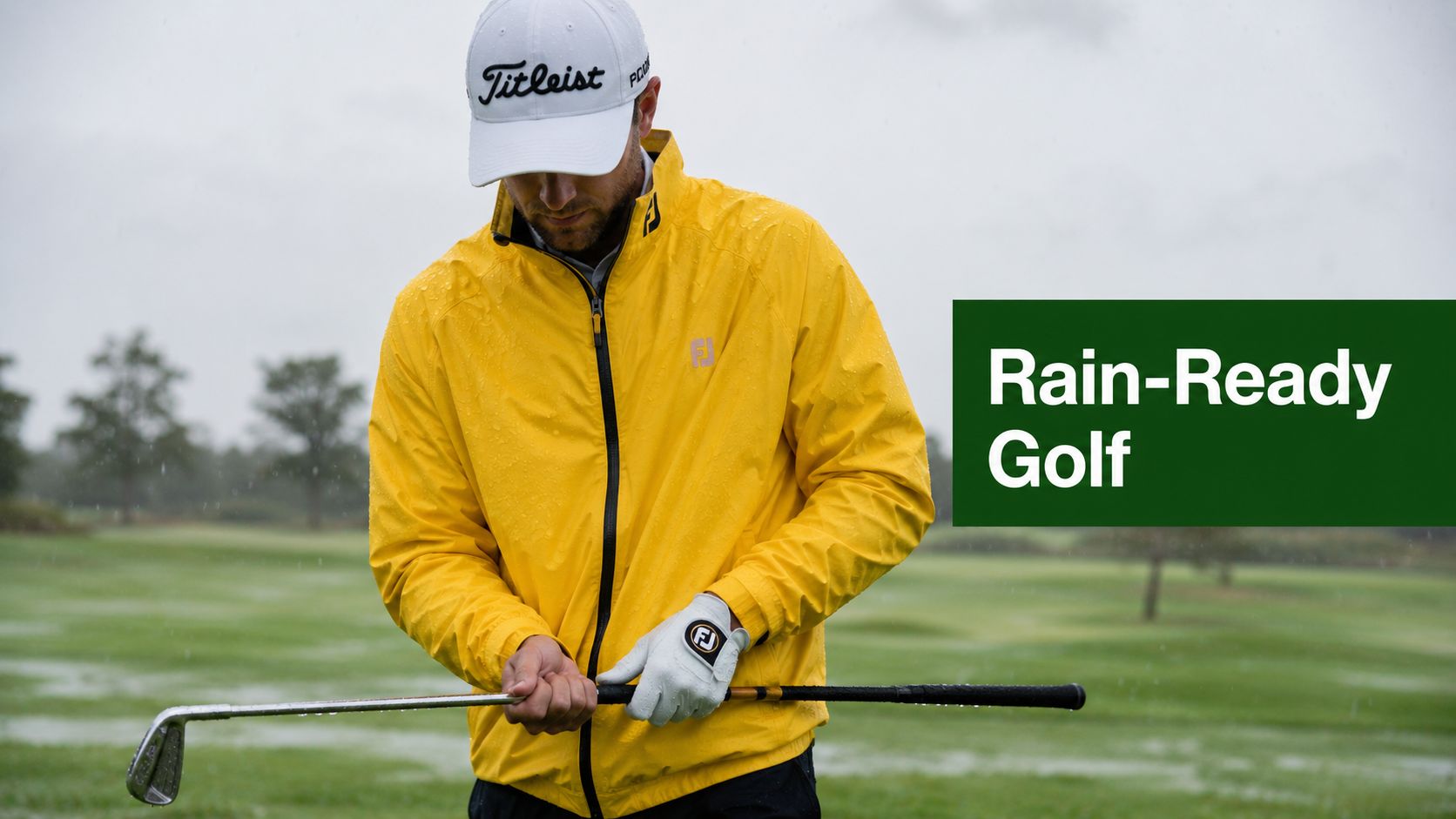
Don't Let Rain Wash Out Your Round. A dark sky and the sound of rain can send most golfers packing. But if you're already at the course with a tee time booked, or standing on the first tee while the drizzle turns steady, you know the key question isn't whether rain is ideal. It's whether you can still play well in it.
You can. You just can't play the same game you'd play on a dry, firm afternoon.
Rain changes everything that matters. Your grips get slick. Your footing gets less secure. Approach shots stop faster. Putts lose speed. Even a good swing can produce a result that feels muted if you haven't adjusted for the conditions. That's why the best tips for golfing in the rain aren't about pretending the weather doesn't matter. They're about making smart changes early and sticking to them for all 18 holes.
The upside is that rainy golf can sharpen your focus. Players who prepare better usually separate themselves fast when the course gets wet. A little extra discipline with gear, clubface care, course management, and energy use goes a long way.
Practical habits are of paramount importance. And if you walk, a motorized push cart assist like Caddie Wheel can help more than people realize. In wet weather, saving energy between shots often means better decisions over the ball. Use the following seven adjustments, and a soggy round becomes far more playable.
1. Use a Waterproof Golf Bag and Protective Covers
The round starts before the first swing. If your grips, gloves, spare layers, phone, and rangefinder are already damp by the third hole, you're playing defense all day.
A waterproof bag isn't just a nice upgrade for rainy days. It protects the parts of your setup that directly affect performance. Sealed seams, water-resistant zippers, and fabric that sheds water keep your clubs and accessories from turning into a wet mess halfway through the round.

A lot of golfers think an umbrella is enough. It isn't. Rain gets into side pockets, gloves soak through, and grips pick up moisture every time you pull a club. A proper bag setup gives you a dry place to reset after every shot.
What to protect first
The most important things to keep dry are simple.
- Grips and gloves: If these get saturated, control goes downhill quickly.
- Towels: One towel that stays dry is worth more than three soaked ones.
- Electronics and valuables: A sealed pocket matters when the rain picks up.
- Extra layers: Dry sleeves or a dry pullover can save the back nine.
If you use a push cart, add a rain hood or cart cover as well. Pairing that setup with a waterproof golf bag cover guide from Caddie Wheel gives you another layer of protection without making your clubs harder to access.
Practical rule: If water can sit on it, it can soak through it. Cover the bag before you need it, not after everything inside is already wet.
One more useful habit is to pack a microfiber towel high in the bag instead of burying it in a lower pocket. In steady rain, low pockets collect water fast. I've also seen players repurpose ideas from outside golf, and a 2026 guide to beach bag essentials reinforces the same basic lesson. Water management starts with the bag, not with last-second cleanup.
2. Master Your Grip Technique for Wet Conditions
Rain exposes bad grip habits immediately. If you hold the club the same way you do in perfect weather, there's a good chance it will feel unstable by impact.
Wet grips, wet gloves, and wet hands all reduce friction. One reliable adjustment is to hold the club a little more firmly than usual, while avoiding the kind of squeeze that locks up your forearms. Golf Support also notes that many players should dry clubs before every single shot and bring at least two towels because moisture on the grip directly reduces control during the swing, as outlined in these rain-golf grip and setup tips.

That sounds simple, but there's a trade-off. Grip too lightly and the club can shift. Grip too tightly and your tempo disappears. The sweet spot is firm enough to secure the handle, soft enough to keep the clubhead moving.
Build a wet-weather grip routine
Most golfers don't need a new grip style. They need a repeatable process.
- Dry before you decide: Wipe the grip before you choose the club and again before you set the face behind the ball.
- Use the right glove: Rain gloves tend to perform better in these conditions than standard gloves.
- Keep one towel protected: Store your backup towel under the umbrella or inside the bag hood.
- Recheck pressure at address: Many players start relaxed, then the club slips in transition because they never reset their hands.
If you walk with a motorized assist like Caddie Wheel, your hands stay free between shots. That makes it easier to dry grips properly instead of pushing a cart with one hand and rushing your setup with the other.
A quick visual on grip management helps here:
One overlooked point is club length at address. On softer ground, your shoes can settle into the turf. In those cases, choking up by roughly the amount you feel yourself sinking often helps restore solid contact. That's a small adjustment, but in wet conditions, small adjustments save a lot of poor strikes.
3. Adjust Your Shot Strategy and Club Selection
You catch a drive solid, watch it land in the fairway, and it stops like it hit a sponge. That is the round telling you to change the plan.
Rain shrinks the value of rollout, exposes poor distance control, and punishes any swing made with extra effort. The practical adjustment is simple. Take more club, make the same rhythm, and pick targets based on carry instead of hope. Golfers who keep forcing their dry-weather numbers usually come up short or miss big when tempo gets quick.
Build your decisions around carry distance
Soft fairways and wet greens change how the hole plays from tee to green. A shot that normally releases to the middle of the green may finish on the front edge. A layup that usually chases out to a favorite number may plug into softer turf and leave an awkward yardage.
Use that to your advantage.
- Approach shots: Choose the club that flies to the number you need, not the one that only gets there with release.
- Par 3s: Favor the club that carries to the front with a normal swing.
- Layups: Leave a full, confident carry for the next shot instead of trying to squeeze extra yards from wet fairway turf.
- Recovery shots: Lower-risk options gain value fast in the rain, especially from rough or muddy lies.
I see the same mistake every year. Players feel the course playing longer, then try to create distance by swinging harder. That usually adds one problem on top of another. More speed with less footing and wetter grips often leads to thin contact, a face left open, or a strike that loses more distance than the extra effort ever could.
Around the greens, expect slower putting surfaces and less release on chips and pitches. Putts need firmer speed. Short-game shots often need a slightly longer carry window because the first bounce checks sooner.
Cold rain makes distance control even tougher. If your hands start losing feel, heated golf gloves for cold-weather rounds can help you keep touch in your fingers and make cleaner club-selection decisions late in the round.
Mental energy matters here too. Wet-weather golf asks for more calculation on every shot. If you walk with a motorized push cart assist like Caddie Wheel, you save effort over 18 holes and keep more focus for the decisions that lower scores: the right club, the right landing spot, and a swing you can repeat under rain pressure.
4. Wear Appropriate Waterproof Clothing and Footwear
A bad rain outfit changes your swing long before it ruins your mood. If your jacket binds across the shoulders, your trousers get heavy, or your socks soak through by the fifth hole, your attention leaves the shot and goes straight to discomfort.
Good rain gear does two jobs at once. It keeps water out, and it still lets you swing freely. Golf-specific jackets and pants are worth the difference because they're built around rotation, posture, and walking.

Footwear matters even more. The Golf Science Journal reports that golfers wearing cleated or spiked waterproof shoes show a 40% reduction in lateral instability compared with non-cleated footwear in wet conditions, based on this analysis of atmospheric conditions and golfer performance. That's not a style point. That's balance, confidence, and cleaner contact.
Dress so you can still swing
The best rain setup usually looks less bulky than people expect.
- Start with a light base layer: You want warmth without trapping sweat.
- Add a waterproof outer layer: Choose a jacket that doesn't pull across the chest at the top of the backswing.
- Wear proper shoes: Spikes or cleats help you stay stable when the turf gets greasy.
- Use wet-weather gloves when needed: Some players keep a dry pair in reserve and swap as conditions change.
Rain gloves deserve special mention. The same Golf Science Journal source reports a 25% improvement in grip satisfaction scores for rain gloves compared with standard gloves in wet conditions. That's useful if your normal glove gets heavy and slick late in the round.
Cold hands can be just as disruptive as wet hands, especially in chilly rain. If that sounds familiar, Caddie Wheel's article on heated golf gloves for cold-weather rounds is worth a look. Staying warm helps you stay loose, and loose swings travel much better than tense ones.
5. Maintain Ball and Clubface Cleanliness Throughout Play
A wet round often turns on one small mistake. You hit a decent wedge, the face is slick, the grooves are half-packed with mud, and the ball comes out low with almost no check. That is not bad luck. It is a predictable result of poor cleanup between shots.

In rain, the ball and clubface collect water, grass, and mud faster than many players realize. Once that builds up, contact gets less predictable. Spin drops, launch changes, and putts can start offline if the ball is dirty. Good rainy-day players treat cleaning as part of the shot, not as an afterthought.
The goal is simple. Keep the face dry enough to strike the ball cleanly, and keep the ball free of anything that changes flight or roll.
Your between-shot job
Use the walk to the next shot well.
- Wipe the clubface right away: Mud is easier to remove before it dries into the grooves.
- Check the grooves fully: A quick swipe across the face often leaves debris behind.
- Inspect the ball before putts and short shots: Even a small patch of mud can affect start line and rollout.
- Carry two towels: Use one for the dirty work and keep one sheltered and dry for the final wipe.
- Protect the dry towel: Tuck it under the bag cover or inside a pocket until you need it.
On-course habit: Finish cleaning the club before you start thinking about the next shot.
I teach players to be more deliberate around the greens because that is where a wet face costs the most. A little moisture on a mid-iron is one thing. A damp, dirty wedge face can turn a controlled pitch into a flyer.
A motorized push cart helps more than people expect here. If the cart is doing the hauling, you can spend that walk cleaning grooves, drying the ball, and getting your glove ready instead of dragging extra weight through wet turf. That saved energy matters late in the round, especially when the rain has already made every step heavier.
One final point. A soaked towel does not dry anything well. It just smears water around. Keep one towel reserved for drying, protect it, and use it with intention. That habit saves shots.
6. Control Your Pace of Play and Pre-Shot Routine
Rain makes golfers rush. They hurry to get out from under the weather, swing before they're settled, and start playing emotionally instead of deliberately.
That's why your routine matters more in bad weather than in good weather. Not longer. Better.
The strongest rainy-day routines are shorter and cleaner. Fewer rehearsals. One clear target. One committed swing thought. That's enough. You don't want to stand over the ball while rain runs off your cap and your focus drifts.
Keep the process compact
A reliable wet-weather routine often looks like this:
- Assess the lie: Wet rough, soft fairway, and mud all change the shot.
- Choose the simple play: Rain isn't the time to chase low-percentage hero shots.
- Set the face and go: Once you're in, commit.
- Reset quickly after mistakes: Bad bounces happen more often in wet conditions.
The emotional side matters too. If you spend the whole round annoyed that it's raining, you'll burn energy you need for decision-making. Accept the conditions early. Then play the course that exists, not the one you wanted.
The golfers who handle rain best usually aren't the most talented. They're the ones who stay patient for the longest.
Fatigue influences routine. In dry weather you might not notice it until the closing holes. In the rain it arrives sooner because every walk is heavier, every towel is wetter, and every decision asks for more concentration. That's one reason many walking golfers benefit from motorized assistance. Less physical drag between shots often means steadier thinking over the ball.
If you're looking for practical tips for golfing in the rain that lower scores fastest, this one is near the top. Slow the mind down, even if the round itself feels messy.
7. Choose the Right Cart Solution to Conserve Energy and Stay Focused
By the 12th hole in steady rain, the walk starts affecting shots. Shoes pick up mud, the turf drags, and every small hill costs a little more than it did on the front nine. Good players often lose more to fatigue than to swing flaws in these conditions.
That matters because wet-weather golf already asks for extra discipline. You need cleaner contact, smarter targets, and better pace between shots. If pushing a loaded cart through soft ground is draining your legs and attention, you're giving away energy you could use over the ball.
A motorized push cart assist helps in a practical way. It reduces the effort between shots without taking walking out of the round. For many golfers, that's the sweet spot in bad weather. You keep moving, stay loose, and arrive at the next shot with more composure.
Caddie Wheel stands out for rainy rounds because it works with a standard push cart instead of asking you to switch to a larger, heavier setup. On a wet day, simpler gear usually performs better. Less fuss at the cart means more attention on towels, gloves, yardage, and club choice.
The benefits tend to show up in specific moments:
- On soft fairways: less push resistance means less leg fatigue over 18 holes.
- On long walks between shots: you save energy for commitment and tempo, not transport.
- Around hills and wet paths: the cart does more of the work where the course feels heaviest.
- Late in the round: mental sharpness holds up better when you're not grinding behind the cart all day.
If you want to see how this setup works in practice, this guide to an electric push cart option for walking golfers explains how a motorized assist fits onto an existing cart.
I've seen the trade-off firsthand. Some golfers prefer to carry less technology and accept the extra effort. Others know their focus slips once the course gets wet and heavy, so they use motorized assistance to protect their decision-making. In the rain, that choice can improve more than comfort. It can help preserve the patience and control that wet rounds demand.
Golfing in Rain: 7-Tip Comparison
| Item | Implementation Complexity 🔄 | Resource Requirements ⚡ | Expected Outcomes 📊 ⭐ | Ideal Use Cases 💡 | Key Advantages ⭐ |
|---|---|---|---|---|---|
| Use a Waterproof Golf Bag and Protective Covers | Low 🔄, buy/use; minimal setup | Moderate cost; occasional drying/maintenance ⚡ | High protection for clubs and gear; fewer replacements; ⭐⭐⭐ | Regular rain play; transporting expensive equipment | Protects equipment, preserves grip, reduces post-round care |
| Master Your Grip Technique for Wet Conditions | Medium 🔄, practice to build muscle memory | Low (time/practice; wet-friendly grips/towels) ⚡ | Better control and fewer slips; improved shot consistency; ⭐⭐ | Players facing frequent wet shots; competitive rounds | Reduces mis-hits, improves confidence, maintains distance control |
| Adjust Your Shot Strategy and Club Selection | Medium-High 🔄, planning and on-course adjustments | Low (knowledge, pre-round yardage checks) ⚡ | More consistent scoring and smarter course management; ⭐⭐ | Tournament play and courses with heavy rain or soft turf | Optimizes distances, reduces risk of overplaying, improves decision-making |
| Wear Appropriate Waterproof Clothing and Footwear | Low 🔄, select and wear correct gear | Higher cost for quality pieces; proper fit required ⚡ | Maintains comfort, safety and traction; sustained performance; ⭐⭐⭐ | Walking golfers, cold/rainy rounds, extended play | Keeps body temperature stable, improves footing, reduces distractions |
| Maintain Ball and Clubface Cleanliness Throughout Play | Medium 🔄, continuous diligence during round | Low cost (microfiber towels, cleaning tools); time investment ⚡ | More predictable contact and spin; fewer errant shots; ⭐⭐ | Muddy/wet conditions and precision-focused players | Improves shot consistency, extends equipment life, builds confidence |
| Control Your Pace of Play and Pre-Shot Routine | High 🔄, mental training and consistency | Low (practice time; mental techniques) ⚡ | Greater focus, reduced anxiety, steadier performance; ⭐⭐ | Adverse weather, competitive pressure, long rounds | Enhances mental resilience, preserves routine under stress |
| Choose the Right Cart Solution to Conserve Energy and Stay Focused (Motorized) | Low-Medium 🔄, attach/use motorized assist | Moderate purchase cost; battery charging required ⚡ | Significant fatigue reduction; better late-round performance; ⭐⭐⭐ | Walking golfers, seniors, long/wet rounds | Saves energy, keeps hands free, enables longer play with less strain |
Embrace the Challenge and Play On
Golfing in the rain is a real test. It asks for better planning, cleaner habits, more disciplined decision-making, and a steadier attitude than most fair-weather rounds ever demand. That's exactly why it can make you a better player.
The golfers who perform well in wet conditions usually aren't doing anything flashy. They're protecting their gear before it gets soaked. They're drying grips before every shot. They're taking more club and swinging with balance instead of force. They're reading slower greens correctly and accepting that the course won't give them the same rollout, bounce, or forgiveness they're used to.
That mindset is what separates miserable rainy rounds from satisfying ones. You're not trying to overpower the weather. You're adjusting to it faster than the people around you.
The practical side is straightforward. Keep your bag covered and organized. Wear waterproof layers that still let you move. Choose footwear that holds the ground. Clean your ball and clubface constantly. Simplify your pre-shot routine. Stay patient after the strange bounce or the heavy lie, because those moments are part of the challenge. The best tips for golfing in the rain are often the least glamorous, but they're the ones that hold up for all 18 holes.
Energy management belongs on that list too. Wet rounds are physically and mentally draining, especially if you walk. Every hill feels steeper with a loaded cart on soft ground. Every extra step with wet shoes costs a little more. A motorized push cart assist like Caddie Wheel can help preserve the energy you need for club selection, touch around the greens, and concentration late in the day. That's a meaningful advantage, not just a convenience.
There's also a bigger benefit to learning how to play in the rain. You become less dependent on perfect conditions. You stop seeing bad weather as an automatic write-off. And you build a version of your game that travels better, competes better, and handles adversity better.
So when the clouds build and the parking lot starts emptying out, don't assume your round is ruined. If you're prepared, rain doesn't have to wash out your game. It can sharpen it.
If you want to keep walking, save energy, and stay focused when the course gets heavy and wet, Caddie Wheel is a smart upgrade. It adds lightweight electric power assist to most standard push carts, helping you handle rainy rounds, hilly layouts, and long days with less strain so you can put more attention where it belongs, on your shots.
Partager:
Four D Pushcart: The Ultimate Golfer's Guide for 2026
Childs Motorized Golf Cart: A Parent's Safety Guide 2026