
A battery-powered golf cart is pretty much what it sounds like: an electric vehicle that runs on rechargeable batteries, designed to get you around the course. It’s the quiet, eco-friendly workhorse you see on virtually every fairway today, a far cry from the noisy, gas-guzzling carts of the past. For modern golf, they’ve become the undisputed standard, loved for their quiet efficiency and cheap running costs.
The Rise of the Modern Electric Golf Cart
What we now see as a standard fixture on every golf course has a surprisingly rich history, one rooted in making the game more accessible for everyone. The journey of the electric golf cart wasn't an overnight success; it was a slow burn, an evolution that transformed it from a niche vehicle into a high-tech staple of the modern game.
Long before they became a convenience for every player, these machines were born from a genuine need to make golf more inclusive. The story begins in the post-war era, a time of incredible ingenuity. Early electric carts were simple, often clunky, but they served a vital purpose: they opened up the game to players with physical limitations who might otherwise have been unable to walk the long, rolling fairways of a championship course. This initial focus on accessibility laid the groundwork for everything that followed.
From Niche Solution to Course Standard
The history of battery-powered golf carts really kicks off in the early 1950s, marking a huge step forward in recreational vehicles. In 1951, a company called Pargo introduced what’s believed to be the first electric golf cart, fundamentally changing how golfers navigated the links. This innovation was a game-changer for accessibility, especially after Trojan Battery teamed up with Autoette to pioneer the first deep-cycle golf cart battery, designed specifically to help a physically challenged golfer enjoy the sport more easily. You can find more cool tidbits about the early history of golf carts on joinsun.com. By the late '50s and early '60s, these carts started popping up on courses all across the United States.
This shift from a medical aid to a mainstream convenience was pushed along by a few key developments:
- Growing Environmental Awareness: As people started caring more about emissions and noise pollution, the quiet, clean operation of electric carts became a major selling point over their loud, smelly gas counterparts.
- Advancements in Battery Technology: This was the big one. Early lead-acid batteries were ridiculously heavy and didn't last long, but constant improvements made them far more practical and reliable for a full 18 holes.
- Lower Operational Costs: It didn't take long for course managers to do the math. Electric carts were cheaper to run and maintain. No oil changes, no fuel costs, and fewer moving parts to break down meant they were a financially savvy choice for large fleets.
The modern battery-powered golf cart is a testament to decades of technological progress. It represents a shift from simple mechanical function to sophisticated, efficient, and environmentally conscious design, forever changing the pace and accessibility of golf.
Today, the electric cart is more than just a ride; it's a fully integrated part of the golfing experience. It perfectly embodies the sport's unique blend of honoring tradition while embracing forward-thinking technology.
Choosing Your Power: Lead-Acid vs. Lithium-Ion
At the heart of every battery-powered golf cart is its power source, and the choice you make here is one of the most critical. The two main players in the game are the traditional lead-acid batteries and the more modern lithium-ion batteries. Getting a handle on their core differences is the key to picking the right setup for your needs, budget, and how you want your cart to perform on the course.
Think of it like choosing an engine for a car. A lead-acid battery is the trusty, old-school V8. It’s heavy, requires some regular tinkering like checking fluid levels, and it’s been the standard for decades because it’s affordable and reliable. It gets the job done.
On the other hand, a lithium-ion battery is like a sleek, high-performance electric motor. It’s incredibly light, needs practically zero maintenance, and pumps out consistent power from the first tee to the 18th green. While the initial ticket price is higher, its long-term advantages often make it the smarter financial move over time.
This chart highlights some key moments in the early days of the battery-powered golf car, an era completely dominated by lead-acid technology.
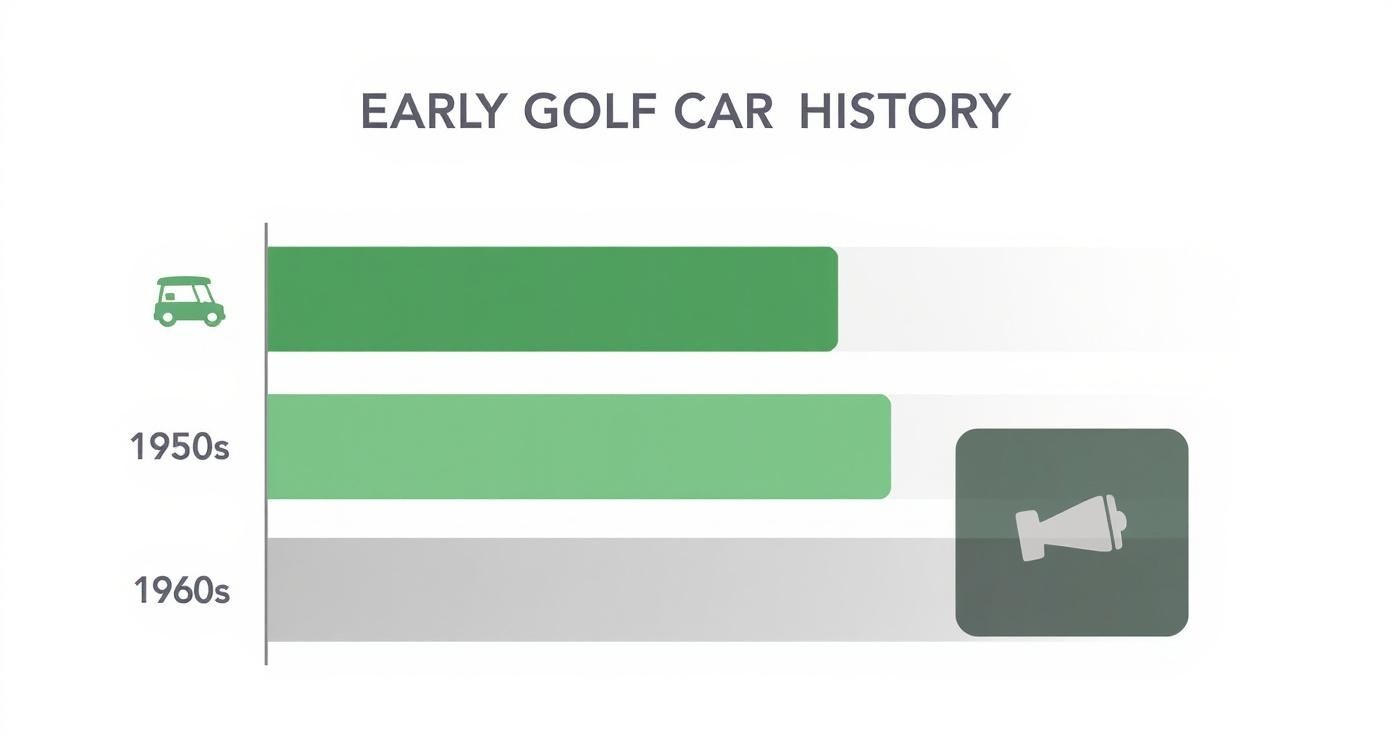
It’s easy to see how quickly the technology went from a niche idea in 1951 to a course staple by the 1960s, paving the way for the battery innovations we see today.
The Real-World Impact on Performance
The battery chemistry you choose has a direct impact on how your cart feels and handles out on the links. A typical lead-acid setup, which usually involves stringing together multiple heavy batteries, can add several hundred pounds to your cart. All that extra weight forces the cart to work harder, especially on hills, resulting in sluggish acceleration and a shorter overall range.
Lithium-ion batteries are just a fraction of the weight, often slashing a cart’s total weight by over 300 pounds. This is a huge deal, and you feel the benefits immediately:
- Quicker Acceleration: The cart feels much more responsive and zippy right off the line.
- Better Hill-Climbing: It tackles inclines without straining the motor.
- Reduced Turf Wear: A lighter cart is kinder to the fairways and greens.
- Greater Efficiency: The motor doesn’t have to work as hard, which stretches the cart's range on a single charge.
Even more, lead-acid batteries are notorious for "voltage sag," which means their power output dwindles as they run out of juice. Your cart will feel noticeably slower on the 18th hole than it did on the first. Lithium batteries, however, deliver consistent voltage right until they're nearly empty, so your cart performs just as strong at the end of your round as it did at the beginning.
Cost and Lifespan: A Deeper Look
On the surface, lead-acid batteries look like the wallet-friendly choice. Their upfront cost is much lower, which is definitely tempting if you’re on a tight budget. But that initial savings often evaporates when you look at the total cost of ownership over the battery's life.
A well-cared-for set of lead-acid batteries will probably last you 4 to 6 years before they need a complete—and expensive—replacement. They also demand regular upkeep, from checking and topping off water levels to cleaning corrosive gunk off the terminals and ensuring they get a full charge cycle to prevent long-term damage.
Lithium-ion batteries, by contrast, can last 10 years or more, easily doubling or even tripling the lifespan of their lead-acid cousins. They are virtually maintenance-free, which saves you a ton of time and hassle.
To help you see the differences side-by-side, here's a quick comparison.
Lead-Acid vs. Lithium-Ion Battery Comparison
| Feature | Lead-Acid | Lithium-Ion |
|---|---|---|
| Lifespan | 4–6 years | 10+ years |
| Weight | Very heavy (300+ lbs) | Lightweight (under 100 lbs) |
| Maintenance | Regular (watering, cleaning) | Virtually none |
| Performance | Power fades as it drains | Consistent power output |
| Upfront Cost | Lower | Higher |
| Long-Term Value | Lower | Higher |
| Charge Time | 8–10 hours | 2–3 hours |
As you can see, when you factor in replacement costs, maintenance, and the massive performance boost, the higher initial price of lithium often translates into far better long-term value. For a more detailed breakdown, you can dive deeper into our guide on different types of golf trolley batteries. This makes a lithium upgrade a smart financial play for most golf cart owners looking for the best experience on the course.
How to Maximize Your Golf Cart's Range
Every owner of a battery power golf cart has asked the same question: "How far can this thing actually go on one charge?" The number printed on the box is a nice starting point, but out on the course, real-world range is a completely different story.
Think of your battery’s charge like the fuel in a car's gas tank—your driving habits and the conditions you face will determine how quickly that gauge drops to empty. Getting a grip on the variables that drain your battery is the first step toward squeezing more holes out of every charge. It’s not just about the battery itself; factors like the course layout, the weight you're hauling, and even the air in your tires play a massive role.
The Hidden Range Killers on the Course
Your cart's range isn't a fixed number. It’s a dynamic figure that changes with every round, and a few key factors are constantly working against your battery. Being aware of them can make a huge difference in your cart’s endurance.
The most obvious culprit is terrain. A flat, wide-open course is a cakewalk for your battery, requiring minimal effort to cruise along. But throw in some steep, rolling hills, and you're forcing the motor to work much harder. Those inclines draw a ton of power and will drain your battery at a much faster rate.
Next up is total weight. This isn't just about your passengers; it includes heavy golf bags and any other gear you've got loaded up. A cart carrying four people and their clubs will have a noticeably shorter range than one with a solo driver and a light bag. Every extra pound is more mass the motor has to move.
Your driving style has a direct and immediate impact on battery consumption. Smooth, steady acceleration is far more efficient than jackrabbit starts and sudden stops, which demand huge surges of power from the battery.
Finally, simple maintenance can silently sap your range. Under-inflated tires are a major energy thief. When tires are low on air, they create more rolling resistance, forcing the motor to burn extra energy just to keep the cart moving. Keeping your tires properly inflated can boost your range by up to 10%.
For even more ways to get the most out of each charge, check out our detailed guide on boosting your electric golf cart range.
Actionable Strategies for a Longer Ride
Now that you know what's working against your battery, you can take practical steps to fight back and extend your cart’s range. These simple adjustments can help ensure you finish all 18 holes with power to spare.
1. Drive Smarter, Not Harder
Adopt a smooth driving style. Avoid flooring the accelerator from a dead stop and try to anticipate your stops so you can coast more and brake less. This gentle approach conserves a surprising amount of energy over a full round.
2. Lighten Your Load
While you can't always control how many people are riding along, you can be mindful of unnecessary weight. Clean out your cart regularly and only carry the gear you absolutely need for that day's round.
3. Perfect Your Tire Pressure
This is one of the easiest and most effective fixes out there. Check your tire pressure at least once a month and fill them to the manufacturer's recommended PSI. It’s a two-minute task that pays huge dividends in efficiency.
4. Plan Your Route
When you can, stick to the paved cart paths instead of driving on thick grass, which creates a lot more resistance. On hilly courses, try to take paths that offer a gentler slope, even if they're a little longer.
By putting these strategies into practice, you can take control of your battery power golf cart performance. It's all about working with your cart's limitations, not against them, to ensure you have the power you need right up to that final putt.
Essential Maintenance for Lasting Performance
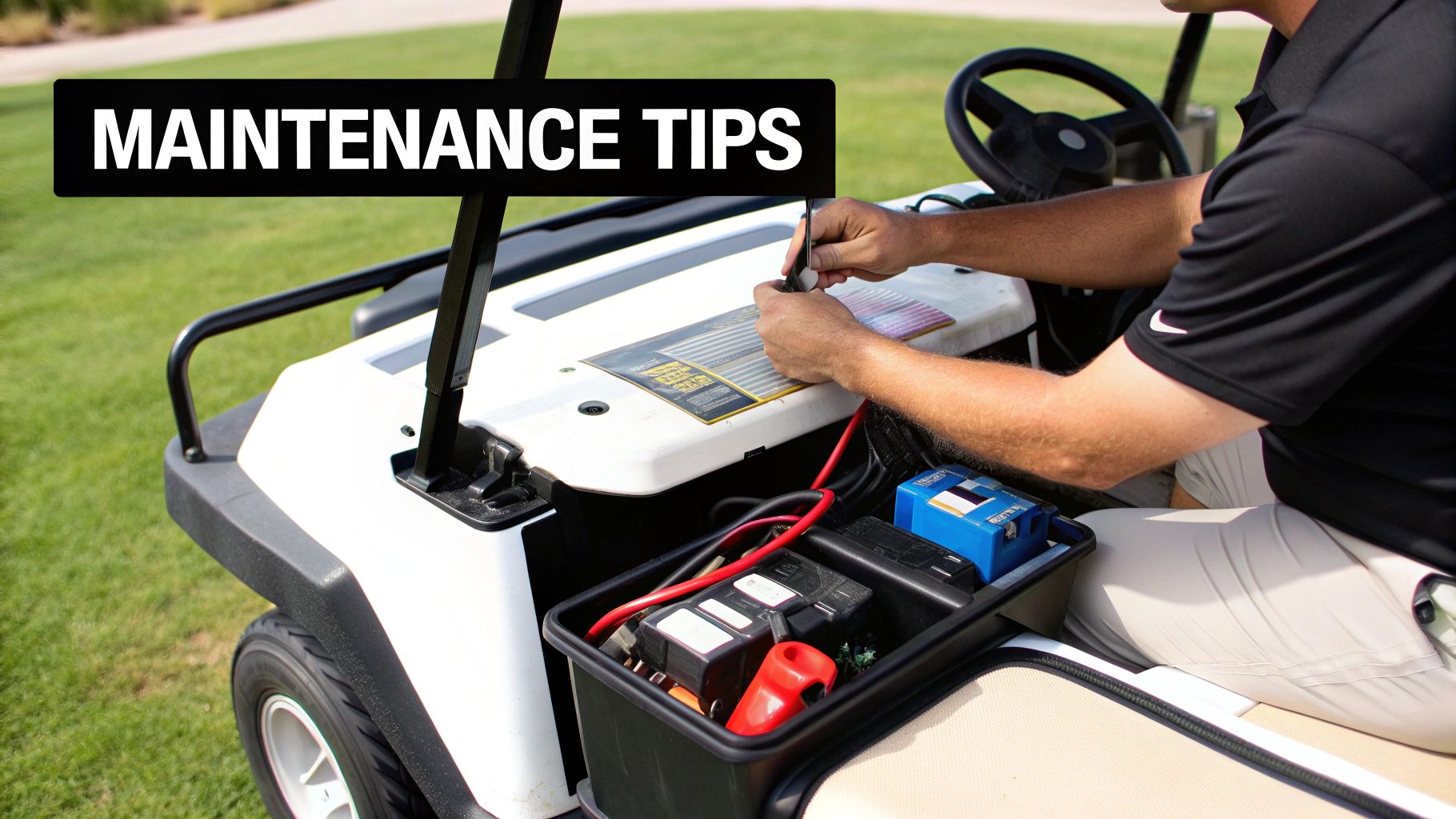
Think of your cart's battery system as its heart. Just like a car engine, it needs consistent, thoughtful care to keep it running strong. Proper maintenance is the single biggest factor in making sure your battery power golf cart performs reliably for years, not just a couple of seasons. Let's be honest—neglecting it is the fastest way to a dead battery and a hefty replacement bill.
Don't look at battery maintenance as a chore. See it as a simple routine to protect your investment. A few easy habits can stop common problems in their tracks, stretch your battery's lifespan, and make sure your cart is always ready when you are. This is about more than just cleaning terminals; it's about understanding why each step matters.
Mastering Your Charging Routine
If there's one thing you need to get right, it's the charging routine. I've seen more batteries fail prematurely from bad charging habits than from anything else, especially the old-school lead-acid ones. Getting this right is non-negotiable.
There’s a common myth that you should run your batteries all the way down before plugging them in. For golf carts, that’s terrible advice. The absolute best practice is to charge your cart after every single use, no matter how short the round was. This keeps the batteries from sitting in a discharged state, which is what really wears them out from the inside.
Here are the non-negotiables for a healthy charging habit:
- Charge After Every Use: Even if you just played a quick nine, plug it in.
- Use the Right Charger: Stick with the charger that came with your cart or one specifically designed for your battery type and voltage. The wrong charger can undercharge or, much worse, overcharge and fry your batteries.
- Let the Cycle Finish: Modern smart chargers are built to run a full cycle and then switch to a maintenance mode. Don't get in the habit of unplugging it early.
The golden rule of battery care is simple: a charged battery is a happy battery. Consistently plugging in your cart after each outing is the most effective way to preserve its capacity and extend its operational life.
Of course, proper care also means being aware of general battery safety considerations to prevent any hazards and ensure you get reliable performance for the long haul.
Essential Upkeep Tasks for Every Owner
Beyond charging, a few quick physical checks will keep your battery system in top shape. The specifics change a bit depending on whether you have lead-acid or lithium batteries, but the core ideas of keeping things clean and inspected apply to both.
For those with traditional lead-acid batteries, your most important job is checking the water levels. When you charge these batteries, some of the water in the electrolyte evaporates. If the water level drops too low and the internal plates are exposed to air, they get damaged for good.
- Check water levels monthly.
- Only use distilled water to top them off. Tap water is full of minerals that will build up on the plates and ruin your battery.
- Fill the cells after charging, never before. The liquid expands during charging, and filling it beforehand can lead to a messy, corrosive acid overflow.
No matter what type of battery you have—even maintenance-free lithium—you need to keep the battery compartment clean. Grime and corrosion on the terminals act like resistance, choking the flow of electricity and leading to poor performance and charging problems. To dive deeper into these steps, check out our complete guide to golf cart battery maintenance.
Your Seasonal Maintenance Checklist
To keep things simple, here’s a straightforward seasonal checklist. This will help you cover all the bases during golf season and properly prep your cart for storage when winter rolls around.
| Task | Frequency | Notes |
|---|---|---|
| Charge After Use | Every Time | The most important habit for battery health. |
| Check Water Levels | Monthly (Lead-Acid) | Use distilled water only; fill after charging. |
| Clean Terminals | Every 2-3 Months | Use a wire brush and a baking soda/water paste. |
| Inspect Cables | Every 2-3 Months | Look for fraying, cracks, or loose connections. |
| Check Tire Pressure | Monthly | Properly inflated tires reduce battery strain. |
| Off-Season Storage | Once a Year | Charge fully, clean, and store in a cool, dry place. |
By committing to this easy schedule, you turn battery care from something you react to into a proactive habit. That small investment of time will pay you back with a reliable, long-lasting, and powerful golf cart, round after round.
Finding the Right Electric Solution for You
Deciding how to get around the course isn't just about convenience anymore. It’s really about matching your gear to your style of play, your fitness goals, and what you’re willing to spend. Today, golfers have more choices than ever, from a fully loaded battery power golf cart to a trusty manual push cart. Each one offers a totally different experience on the course.
The traditional electric golf cart is the undisputed king of comfort and group play. It’s perfect for tackling long, hilly courses, carrying a foursome and their gear, and keeping the pace of play humming along. At the other end of the spectrum, you've got the manual push cart, a favorite among golfers who love walking the course for the health benefits. It's a great workout, but it can turn into a real grind on tougher terrain.
But what if you could have the best of both worlds? A solution that marries the physical perks of walking with the ease of electric power, all without the sticker shock of a full-sized cart. This is where a new wave of innovative options is changing the game for walkers.
Comparing Your Options On The Course
To make the right call, it helps to break down the pros and cons of each option. Think about what you value most during a round: is it speed, exercise, or a smart blend of both?
Here’s how the three main choices stack up:
- Traditional Golf Cart: You can't beat it for speed and convenience, especially when you're playing with friends. It completely eliminates physical strain, making it a great choice for players with mobility issues or those playing on sprawling, tough courses. The downside? It comes with the highest initial cost and ongoing maintenance.
- Manual Push Cart: This is your most affordable and physically engaging option. It provides fantastic low-impact exercise and lets you really soak in the course environment. The drawback is the pure effort required, which can lead to fatigue over 18 holes, especially on hilly layouts.
- Battery-Assisted Push Cart: This is the clever hybrid solution. It keeps you walking and active but takes the strain of pushing completely off your shoulders. An electric-assist wheel, for instance, powers your existing cart, letting you walk freely while the motor does all the hard work.
Ultimately, the right choice boils down to your personal golfing philosophy. Are you there for the social ride, the physical challenge, or an experience that smartly balances the two?
It can also be helpful to understand the power needs for different types of vehicles. Exploring various electric car charging solutions can offer some valuable insights if you're curious about managing larger battery systems.
Introducing a Smarter Way to Walk
For golfers who already own and love their push cart, there’s no need to ditch it just to get some powered help. The Caddie Wheel was designed for exactly this situation. It’s an innovative, lightweight motorized wheel that attaches directly to your existing three- or four-wheel push cart, instantly turning it into your personal electric caddie.
This approach gives you the best of both worlds. You get the health benefits and on-the-ground perspective of walking the course, but without the exhausting push. A simple remote controls the wheel, letting you manage speed, reverse, and brake with just the touch of a button. It's a seamless upgrade that makes the most of the gear you already have.
A Head-to-Head Look at Key Factors
Let's put these three options side-by-side to see how they compare on the factors that matter most to golfers.
| Factor | Traditional Cart | Manual Push Cart | Caddie Wheel Assist |
|---|---|---|---|
| Initial Cost | High | Low | Moderate |
| Physical Effort | None | High | Low |
| Convenience | High | Moderate | High |
| Exercise Benefit | None | High | High (walking) |
| Course Impact | Can cause turf wear | Minimal | Minimal |
| Best For | Groups, hilly courses | Fitness, flat courses | Walkers wanting ease |
At the end of the day, there is no single "best" option—only the best one for you. If you love walking but are tired of the fatigue that comes with shoving a cart up and down hills, a battery-powered assist like the Caddie Wheel offers a perfect compromise. It lets you save your energy for what really matters: your next shot.
Common Questions About Battery-Powered Golf Carts
Even after getting the basics down, you're bound to have some specific questions about your battery-powered golf cart. It happens to everyone. Below are some clear, no-nonsense answers to the questions we hear most often from cart owners. Think of it as your go-to guide for quick answers and a little extra confidence.
Our goal is to help you know your equipment inside and out. When you do, you'll make smarter decisions about maintenance, potential upgrades, and how you use your cart day-to-day.
How Long Do Golf Cart Batteries Typically Last?
This is a big one, and the answer isn't set in stone. The lifespan of your cart's batteries really boils down to two things: the type of battery you have and how well you take care of it. The difference between the two main options is pretty significant.
A set of traditional lead-acid batteries, even if you're on top of maintenance, will generally give you about 4 to 6 years of service. That's assuming you're diligent about checking water levels, keeping the terminals clean, and always following the right charging routine.
On the other hand, a modern lithium-ion battery is in a whole different league. These often last 10 years or more. While they do cost more upfront, their incredibly long life and zero-maintenance nature often make them the better value in the long run.
Can I Upgrade My Old Golf Cart From Lead-Acid to Lithium?
Yes, you absolutely can! In fact, it's one of the most popular and impactful upgrades you can make to an older cart. For most models, swapping out that heavy pack of lead-acid batteries for a sleek lithium unit is a manageable project that pays off immediately.
The process involves removing all the old, heavy batteries and replacing them with a single, much lighter lithium battery. You'll also need a new charger that's designed for lithium's specific needs. In some cases, the cart's controller might need a simple reprogramming or replacement to get everything communicating perfectly. The result? A lighter, quicker, and more efficient cart that needs practically zero battery maintenance.
Upgrading to lithium is more than just a battery swap; it’s a complete performance overhaul. You’ll experience quicker acceleration, better hill-climbing power, and a significant increase in range, breathing new life into an older cart.
What Is the Biggest Mistake People Make When Charging Their Cart?
Without a doubt, the single most common and destructive mistake is undercharging the batteries. This is especially damaging to lead-acid systems. Many people think they should run the battery way down before plugging it in, but that's the exact opposite of what you should do.
When you consistently fail to bring lead-acid batteries to a full 100% charge, a nasty chemical process called sulfation kicks in. Tiny lead sulfate crystals start building up on the battery plates. Over time, they harden, permanently choking off the battery's ability to hold a charge. This damage is irreversible and is the number one killer of lead-acid batteries.
To avoid this headache, just follow this simple rule:
- Plug your cart in after every single use, no matter how short the drive was.
- Let the charger run its full cycle without unplugging it early.
This simple habit is the key to keeping your batteries healthy and getting every bit of life out of them.
Does Cold Weather Affect My Golf Cart's Battery Performance?
It sure does. Cold weather has a direct and noticeable impact on any battery-powered golf cart. As the temperature drops, the chemical reactions inside the battery slow way down, which cuts into its efficiency and how much power it can deliver. You'll definitely see your cart's range decrease on a chilly day compared to a warm one.
Lithium-ion batteries tend to handle the cold much better than their lead-acid cousins, with a less dramatic drop in performance. Still, both types feel the chill to some degree. Many modern lithium batteries even have a built-in Battery Management System (BMS) that will actually prevent charging below freezing to protect the battery cells from permanent damage.
For the best performance and longest life, it's always a good idea to store and charge your golf cart in a moderate, protected space like a garage whenever you can, especially during those harsh winter months.
For golfers who love to walk but want to eliminate the fatigue of pushing a heavy cart, Caddie Wheel offers the perfect solution. Our powerful, lightweight electric assist wheel turns your existing push cart into a personal electric caddie, letting you walk the course with ease. Learn more about how you can upgrade your game at CaddieWheel.com.
Share:
Best Electric Golf Push Cart That Follows You
Golf Trolleys Batteries Your Ultimate Power Guide