
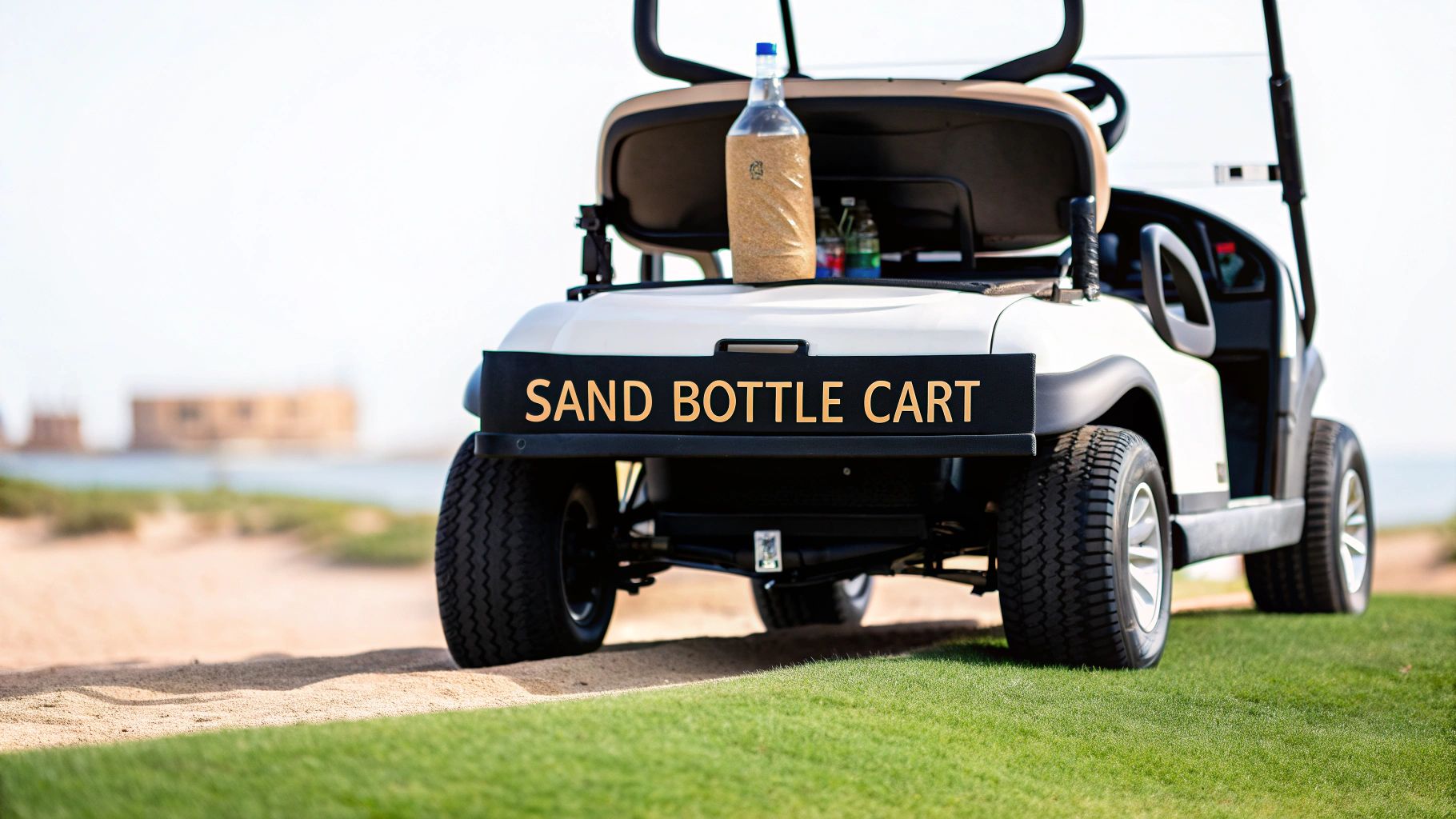
Ever noticed those simple, often white, bottles clipped to the side of a golf cart? They might look like a minor detail, but they play a huge role in keeping the course healthy and beautiful. This is the sand bottle, and it’s a vital tool for any golfer who cares about the game.
The Unsung Hero of a Perfect Fairway
The purpose of a sand bottle is straightforward, yet it’s absolutely essential to golf’s long-standing tradition of stewardship. Think of it as a first-aid kit for the fairway.
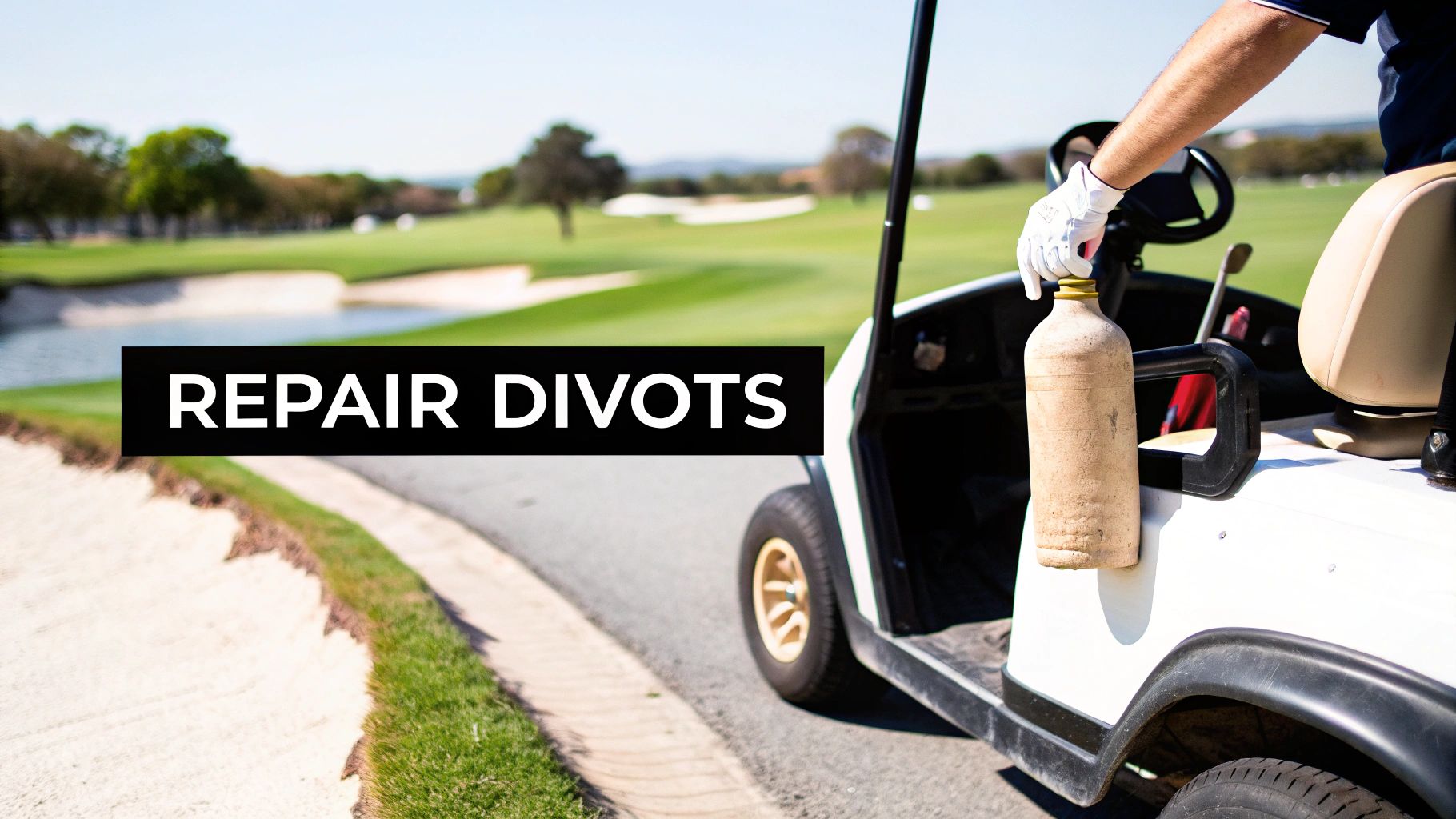
Every powerful swing that sends a ball soaring down the fairway can leave a small wound in the turf—a divot. If you leave them untreated, these bald patches of soil can mess with play, damage the grounds crew's equipment, and take weeks to heal on their own. The sand bottle offers an instant fix.
More Than Just Sand
The stuff inside a sand bottle isn't just ordinary playground sand. It's a special mix of sand and grass seed, hand-picked by the course superintendent to perfectly match the fairway's turf. When you fill a divot, you’re not just covering up a bare spot; you're actively helping the course heal.
This simple act does a few key things:
- Protects Grass Roots: The sand shields the exposed roots from the sun and air, stopping them from drying out and dying off.
- Encourages Regrowth: That seed mixture helps new grass sprout quickly, speeding up the turf's recovery time.
- Levels the Playing Surface: A filled divot means a smooth, consistent lie for the next golfer’s ball.
By using a sand bottle, you are directly contributing to the quality of play for every single person who comes after you. It’s a small effort with a massive collective impact on the course's condition.
An Act of Respect
Ultimately, carrying and using a sand bottle is about more than just maintenance—it's a core part of golf etiquette. It shows respect for the game, for the groundskeepers who work tirelessly, and for your fellow players.
To truly appreciate the effort that goes into a pristine course, you just have to play on one. The immaculate conditions at some of the top golf courses in the Algarve, for example, are a testament to the combined efforts of dedicated staff and respectful players. Embracing this simple practice ensures the course remains a beautiful and challenging place to play for years to come.
Why a Sand Bottle Is Your Most Important Accessory
When golfers talk gear, it’s usually about the latest driver, high-tech rangefinders, or a new pair of shoes. But one of the most impactful tools you can have on your cart is often overlooked: the humble sand bottle. It's far more than just a container of sand—it's a commitment to the health of the course and the quality of the game itself.
Think of it this way: an unrepaired divot is like a pothole on a beautifully paved road. It’s an unexpected hazard that can ruin a perfect drive. When your ball finds its way into one of those craters, what should have been a straightforward chip can quickly turn into a frustrating, unpredictable shot.
Preserving the Quality of Play
We’ve all been there. You hit a fantastic tee shot right down the middle of the fairway, only to find it resting in a deep, ugly divot left by a previous player. That perfect lie you earned is gone, replaced by a challenge that makes a clean strike nearly impossible. Suddenly, you’re scrambling to save par, all because a simple courtesy was ignored.
Using a sand bottle to fill your divots is the ultimate "pay it forward" gesture in golf. You're not just fixing your own mark; you're ensuring the player behind you gets the fair shot they deserve. This small act, when practiced by everyone, creates a consistently better playing surface for the entire course.
The consistent use of a sand bottle across a golf course can dramatically improve turf recovery times. A properly filled divot can begin healing in days, whereas an exposed one can take weeks, often resulting in permanent bare spots.
This isn't just about filling a hole. The special mix of sand and grass seed inside the bottle provides the perfect environment for the turf to regenerate quickly.
- Accelerates Healing: The sand mixture shields the exposed grass roots from the sun and wind, preventing them from drying out and dying off.
- Promotes New Growth: Most divot mixes contain grass seed, which helps new blades sprout and knit the turf back together in no time.
- Prevents Weed Intrusion: An open patch of soil is a welcome mat for weeds. Filling the divot blocks unwanted growth from taking over prime fairway real estate.
A Pillar of Golf Etiquette
Beyond the practical benefits, carrying and using a sand bottle is a core part of golf etiquette. It's a quiet, powerful signal that you respect the course, the hard work of the grounds crew, and your fellow golfers. It’s a clear sign that you’re a steward of the game.
Taking a few seconds to repair a divot shows you understand that the course is a shared space. When every player makes this small effort, the result is a pristine, enjoyable playing surface for everyone. In the end, a sand bottle isn't just a maintenance tool—it's the mark of a player who truly cares about the integrity of the game.
How to Choose the Right Sand Bottle for Your Cart
Picking the right sand bottle for your golf cart is a small detail that makes a big difference in being a responsible golfer. With so many options out there, it can feel a bit overwhelming, but focusing on compatibility, material quality, and how easy it is to use will point you in the right direction. Think of it like choosing the right club for a tough shot—the proper fit is everything.
A good sand bottle should be made from durable, weather-resistant plastic. You need something that can handle sun, rain, and the occasional bump without cracking. Ergonomics are important, too. Look for a model with a comfortable handle you can grip and use with one hand. When you're trying to fix a divot, you don't want to be fumbling around.
Evaluating Mounting Systems
The mounting system is probably the most critical piece of the puzzle. It's what keeps the bottle attached to your cart, and a flimsy mount will lead to annoying rattling or, even worse, a lost bottle halfway through your round.
You'll generally find two main options:
- Universal Clamps: These are the most flexible choice, designed to fit a wide range of cart frames and fenders. They're great if you use different carts, but you might need to tighten them up now and then.
- Model-Specific Brackets: These are tailor-made for popular brands like Club Car, E-Z-GO, or Yamaha. They offer the most secure, custom fit and often use pre-existing holes on the cart frame for a clean look.
Before you buy, double-check that the mount is compatible with your specific golf cart model. It’ll save you a ton of installation headaches later. The goal is for your sand bottle setup to feel like it came straight from the factory.
And when should you actually use it? It's pretty simple.
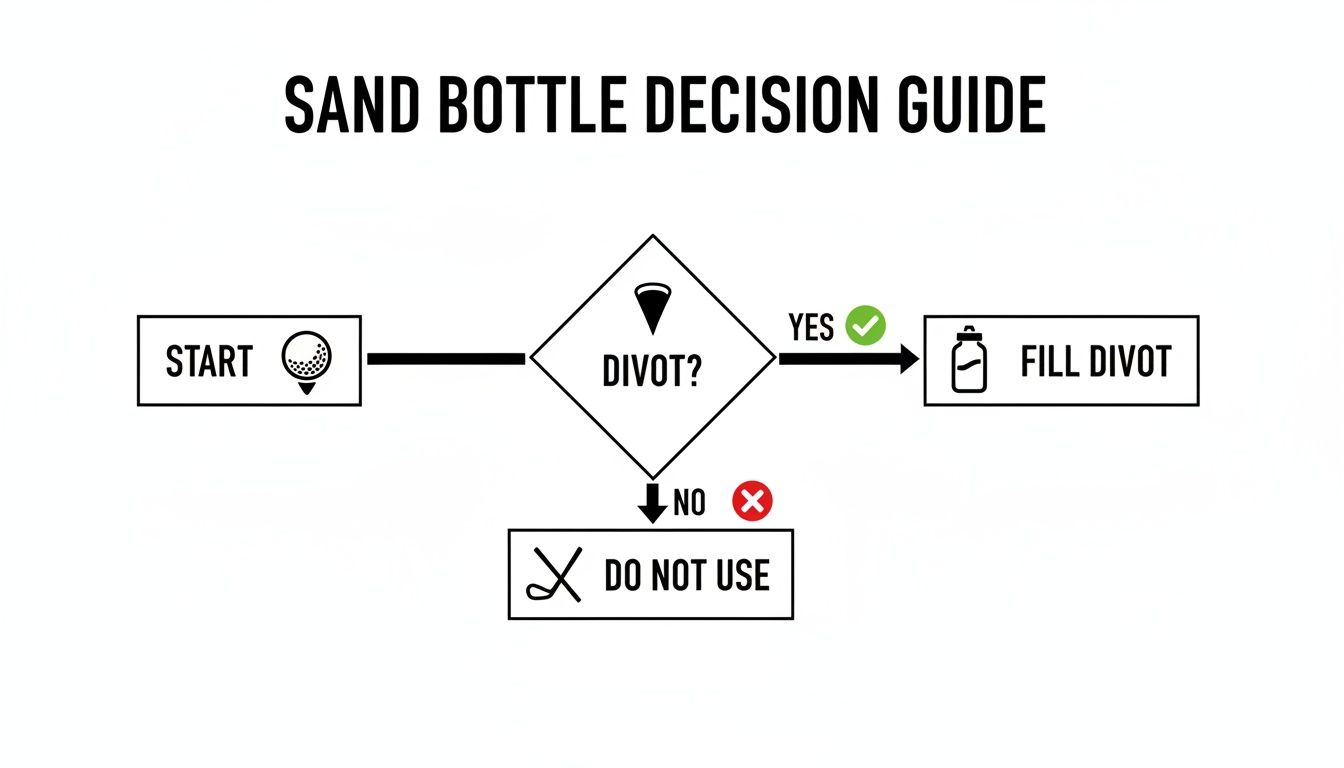
This flowchart nails the golden rule: if you make a divot, you fill it. It’s on every golfer to leave the course in better shape than they found it.
Dispenser Styles and Overall Functionality
How the bottle actually dispenses the sand mix also plays a big role in usability. Some are just simple open-top containers that you have to scoop sand out of. Others are much more practical, featuring a built-in funnel or a curved handle that directs the sand right where you want it. The funnel-style dispensers give you way more precision, helping you fill the divot cleanly without scattering sand all over the healthy grass.
The golf cart market is booming—Allied Market Research valued it at a whopping $1.9 billion in 2023—which means we're seeing more and better accessories than ever before. This growth gives golfers tons of choices for customizing their rides, from high-tech gadgets to essential tools like a solid sand bottle.
Key Takeaway: The best sand bottle is one that fits your cart securely, feels good in your hand, and lets you dispense the sand mix quickly and neatly. For the most stable setup, go with a model-specific mount and a funnel-style dispenser for accuracy.
While this guide has focused on traditional golf carts, the same principles apply if you prefer to walk the course. Many of the best golf push cart accessories include sand bottle options that can be adapted for push carts. No matter how you play, making divot repair a quick and easy part of your routine is what matters.
Installing and Maintaining Your Sand Bottle
So, you’ve picked out the perfect sand bottle for your golf cart. Now it’s time to get it installed and learn how to keep it in great shape. A solid installation and a little routine care mean this simple tool will always be ready when you need it, helping you protect the course with zero fuss.
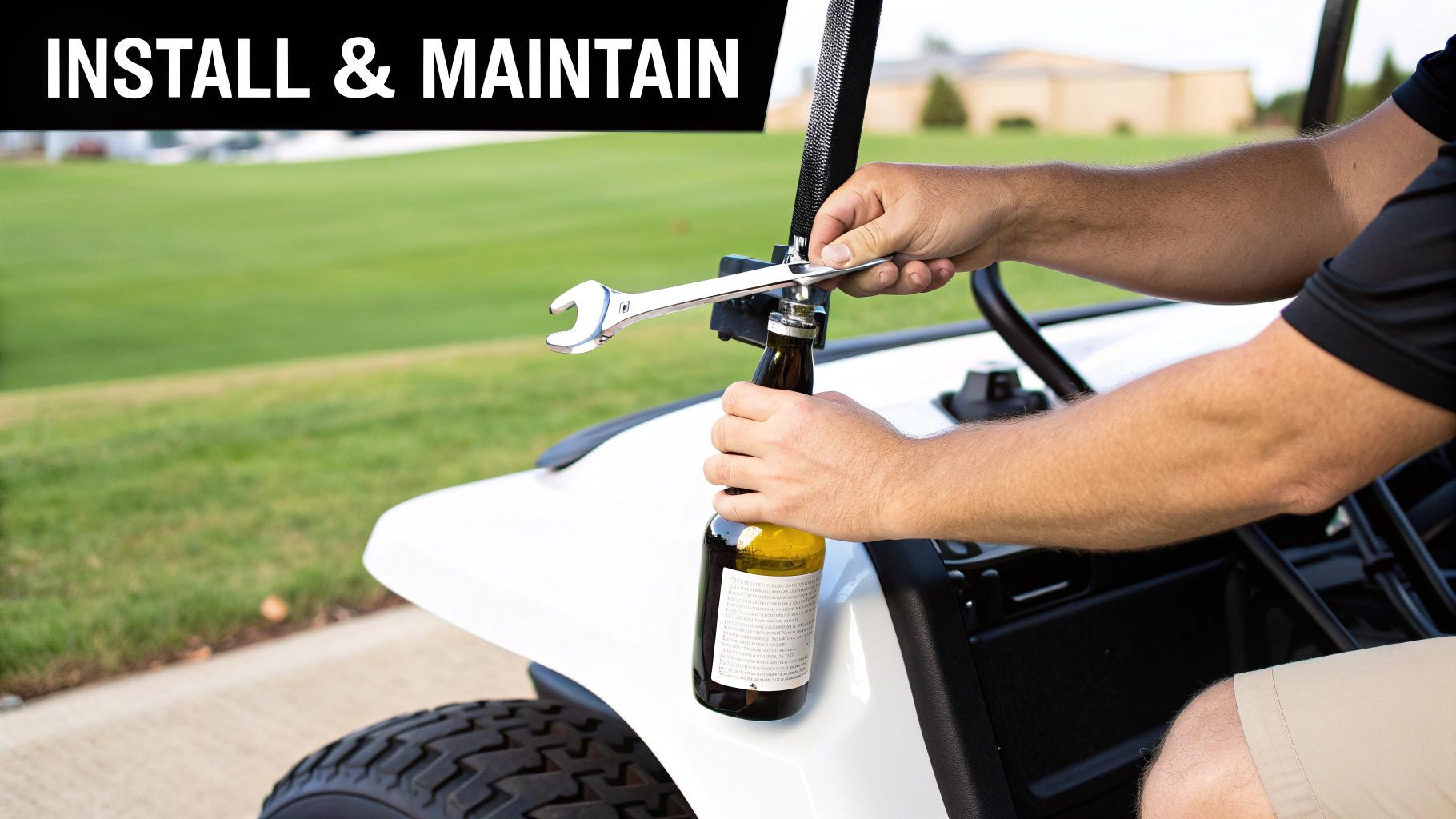
The good news is that most mounting systems are incredibly straightforward. You can usually get it done in less than a minute, often without needing any tools. Whether you’re clamping it to the fender, frame, or a rail, the goal is the same: a tight, secure fit that won’t rattle or budge while you’re driving. A loose bottle is more than just an annoyance; it’s a hazard that could fall off mid-round.
A Secure Fit The First Time
Getting the installation right from the start makes your sand bottle feel like a natural part of the cart. Just follow these quick steps for a pro-level setup:
- Pick Your Spot: Find a place where the bottle is easy to grab from the driver’s seat but doesn’t get in the way when you’re hopping in and out. The side fender or rear frame are usually the best bets.
- Clean the Surface: Grab a clean cloth and wipe down the mounting area. Removing any dirt or dust helps the bracket get a solid grip on the cart’s frame.
- Attach the Bracket: Follow the manufacturer’s instructions to secure the hardware. If you have a clamp-style mount, tighten it until it’s snug, but don’t go overboard and risk damaging the cart’s finish.
- Give It a Shake Test: With the bottle in place, give it a firm wiggle. You should feel minimal to no movement. If it rattles, go back and re-tighten the connections.
Putting in this little bit of effort upfront ensures your sand bottle is always exactly where you need it.
Long-Term Care and Maintenance
To keep your sand bottle working perfectly, it needs a little TLC now and then. The sand-and-seed mix provided by the course can sometimes be damp, which is a recipe for clogs. The last thing you want is a jammed dispenser when you’re trying to fix a divot.
A simple fix is to empty the bottle completely every few weeks and let it air dry. If you see any caked-on residue, a small brush or a quick blast of compressed air will clear out the dispenser nozzle and keep things flowing.
Pro Tip: Before every round, do a quick 30-second check. Make sure the bottle is at least half-full with the course’s divot mix and give the mount a quick tug to confirm it’s still tight. It's a small habit that makes a big difference.
This kind of proactive care isn’t just for your sand bottle; it’s crucial for all your gear. For a bigger picture on upkeep, you might find our guide on 6 essential golf cart maintenance tips for 2025 helpful. Taking care of your equipment is especially smart in major markets like North America, where the U.S. golf cart market was valued at $1.7 billion in 2024, with over $900 million of that spent on on-course carts alone. You can find more industry insights on this growing market in various reports.
Mastering the Art of Divot Repair
Having a sand bottle on your cart is one thing, but knowing how to use it right is what really counts. Proper divot repair is a simple skill that separates a thoughtful golfer from a careless one, and it's all about leaving the course in better shape than you found it. This small act of courtesy is a huge part of what makes for effective golf course management strategies that boost any club's reputation.
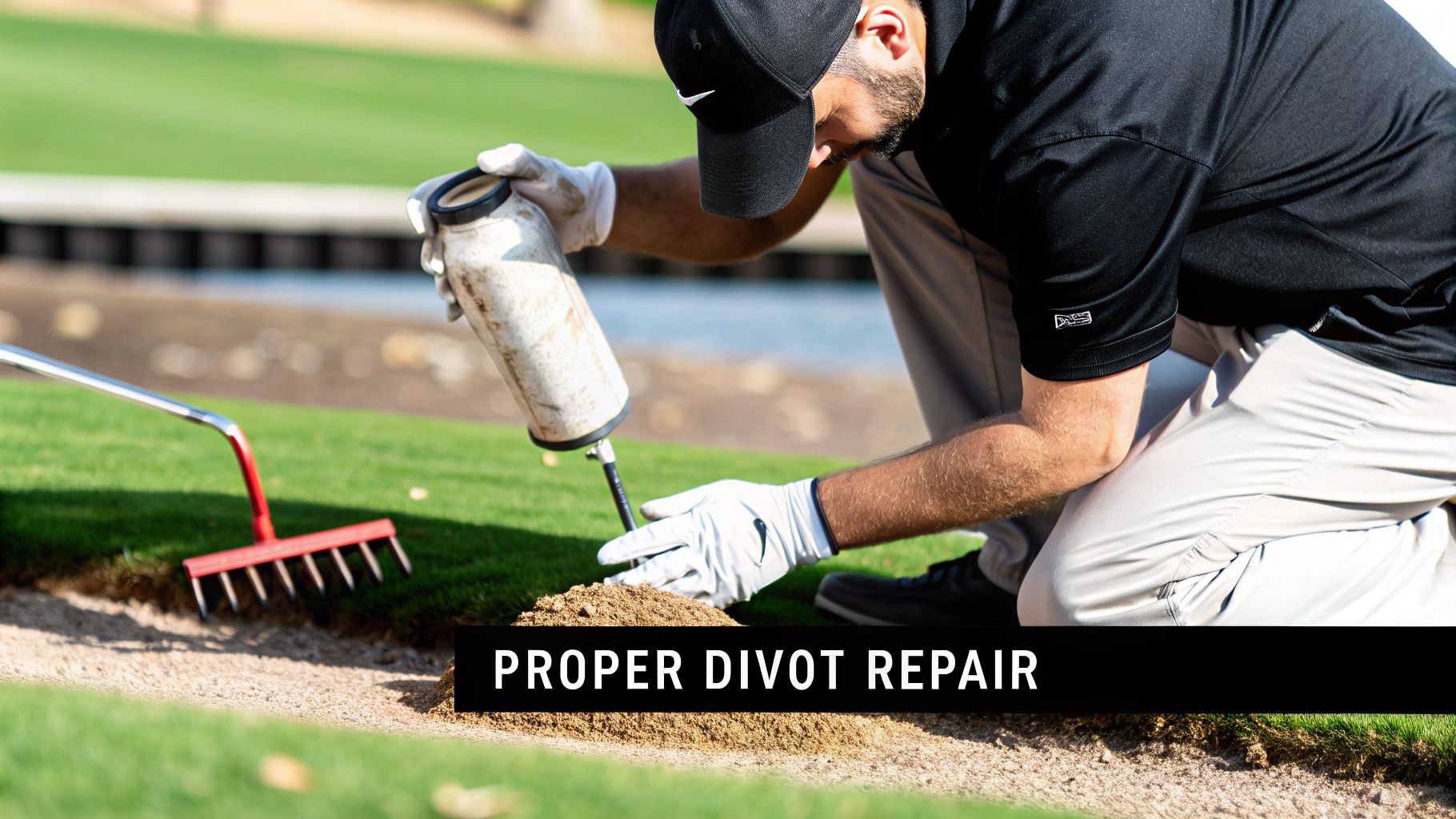
The technique itself is straightforward but requires a bit of finesse. After your shot, walk up to the divot and use your sand bottle golf cart accessory to pour the sand-and-seed mix directly into the scar. You want to fill it completely, but not create a mini-sandcastle on the fairway.
A classic rookie mistake is overfilling the divot. The goal is to get the mixture level with the surrounding turf. A little mound of sand might seem helpful, but it can actually damage the mowers and create an uneven lie for the next player once the grass grows back.
Once it's filled, just give the area a gentle tap with your foot or the back of your club to level it off. This simple step helps the new seed make good contact with the soil underneath, which is key for quick germination and a seamless repair.
Common Repair Mistakes to Avoid
Even with the best intentions, it's easy to get divot repair wrong—and sometimes a bad repair is worse than no repair at all. One of the most common mistakes is ignoring divots on tee boxes. These high-traffic areas get chewed up all day long, so fixing them is crucial to keeping them playable.
Another major error is grabbing the wrong material. Never, ever use sand from a bunker or soil from another part of the course. The special mixture in your sand bottle has been carefully selected by the course superintendent to match the existing turf and give it the best chance to heal properly.
Divot Repair Do's and Don'ts
To make it all stick, here’s a quick-glance table of the do's and don'ts for taking care of the turf. Keep these tips in mind, and you'll be known as a true steward of the game.
| Action | Do | Don't |
|---|---|---|
| Filling | Fill the divot until the sand is level with the turf surface. | Overfill the divot, creating a mound of sand. |
| Leveling | Gently tap the filled area with your foot to even it out. | Stomp on the divot, which can compact the soil too much. |
| Location | Repair divots on fairways and especially on tee boxes. | Ignore divots, assuming the grounds crew will get to them. |
| Material | Only use the sand and seed mixture from your course-provided bottle. | Use sand from bunkers or other unauthorized materials. |
Following these simple rules isn't just about good manners; it’s about preserving the quality of the course for everyone who plays after you. A little effort goes a long way.
Got Questions? We’ve Got Answers.
Even after you get the hang of using a sand bottle golf cart accessory, a few practical questions almost always pop up. Getting these small details right is about more than just good etiquette—it’s about making sure your repairs actually help the turf heal properly. Let's clear up some of the most common things golfers ask.
What Kind of Sand Should I Use in My Bottle?
This is easily one of the most important questions, and thankfully, the answer is simple: always use the divot mix provided by the golf course. You'll usually spot big bins of it near the first tee or around the clubhouse. Whatever you do, don't bring your own sand from home or—even worse—scoop some out of a bunker.
There are a few critical reasons for this rule:
- Consistency: The course superintendent has carefully chosen a specific blend of sand and grass seed that perfectly matches the fairway's turf. Using their mix ensures any repairs you make will blend in seamlessly.
- Weed Prevention: Bringing in outside sand is a big no-no because it can introduce foreign seeds and weeds, which can wreak havoc on the meticulously maintained course.
- Proper Healing: The course's mix is engineered for the best moisture retention and root protection. It gives the damaged turf the best possible chance to recover quickly and completely.
Think of it this way: using the official mix is a non-negotiable part of being a responsible steward of the course.
Can I Attach a Sand Bottle to My Push Cart Too?
Absolutely! While this guide is focused on motorized carts, the responsibility of fixing divots belongs to every single golfer. Many players who prefer to walk the course want to do their part, and thankfully, accessory makers have stepped up.
You can easily find sand bottle holders designed specifically for push carts. They often come with adjustable clamps that can latch onto the frame or handle of most major push cart brands. The goal is the same—to have a convenient way to carry and dispense divot mix while you enjoy your walk down the fairway.
Key Insight: Whether you ride or walk, the duty to repair your divots is universal. Rigging up a sand bottle on your push cart is a fantastic way to show respect for the course and for the golfers coming up behind you.
Where Is the Best Place to Mount a Sand Bottle?
The perfect spot for your sand bottle is all about balancing easy access with staying out of your way. You want to be able to grab it without a second thought, but not have it bump your leg every time you get in or out of the cart.
Here are the two most popular mounting spots:
- The Side Fender (Driver's Side): This is the go-to for a reason. It keeps the bottle right at your fingertips, letting you quickly grab it, fix a divot, and get back to your game with zero fuss.
- The Rear Frame: Mounting the bottle on one of the rear vertical frame supports is another solid choice. It keeps it completely out of your way while still being easy to reach when you step off the cart.
Just avoid mounting it anywhere that blocks your view or gets in the way of your golf bag. A secure, rattle-free fit in a spot you can reach without thinking is the ideal setup.
How Often Should I Refill My Sand Bottle?
A great rule of thumb is to check your sand bottle before every single round. The last thing you want is to run out of divot mix halfway through the back nine. Ideally, you should start every round with a bottle that’s at least half-full.
Most golfers find they need to top it off every round or two, depending on how many divots they’re making. The best way to handle it is to make refilling part of your pre-round routine, just like cleaning your clubs or making sure you have enough golf balls. A quick stop at the divot mix station on your way to the first tee is all it takes.
At Caddie Wheel, we believe in enhancing every aspect of your golf game, from conserving your energy on the course to practicing good stewardship. By making divot repair a seamless part of your routine, you contribute to a better experience for all players. Learn more about how our innovative products can elevate your round at https://caddiewheel.com.
Share:
The Ultimate Guide to Remote Caddy Golf
A Golfer’s Guide to Using a Phone Holder Golf Cart Mount