

Controlled braking is braking hard enough to stop quickly without locking the wheels, preserving your ability to steer safely around obstacles on the green. Its safety value is measurable, with ABS associated with a 13-percent reduction in fatal collisions with pedestrians in one long-term passenger-vehicle and light-truck study.
You may know the feeling from a downhill fairway. The cart starts gathering momentum, the grass changes from dry to damp, and a golfer or maintenance vehicle appears around the bend. Your first instinct is to grab the brake as hard as possible. The safer response is to manage pressure, traction, and direction together.
That distinction matters even at walking speed. A golf push cart or powered walking cart has a high center of mass, a loaded bag, small tires, and a changing surface beneath it. On uneven fairways and slopes, stopping is only half the job. You also need to keep the cart tracking where you intend.
Why Controlled Braking Matters on the Golf Course
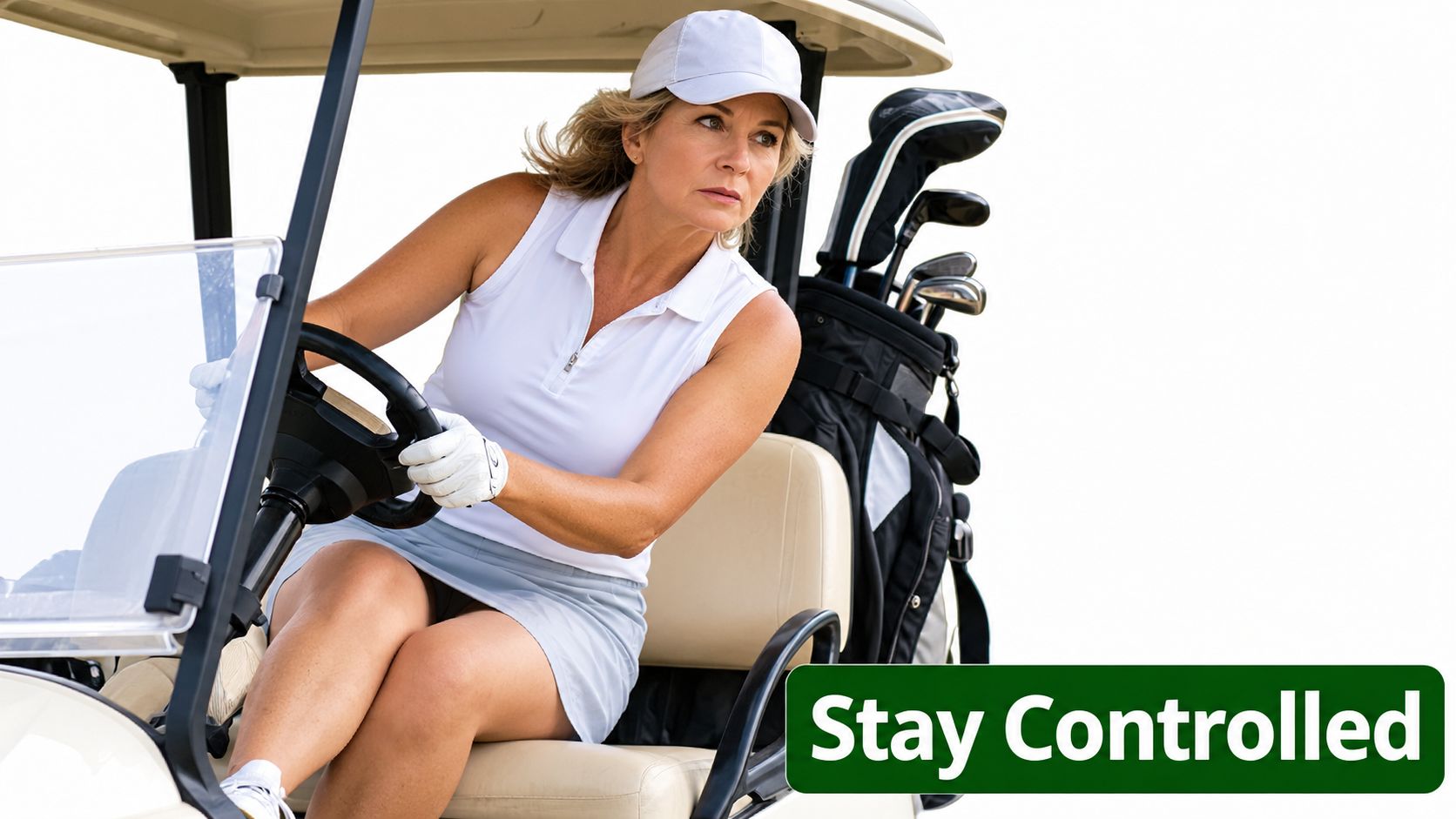
You're rounding a steep downhill section with your bag beside you when the path narrows near a bunker. The surface is firm in one patch and soft in the next. If you lock the wheels, the cart may stop resisting forward movement in a predictable way and begin to slide, yaw, or pull toward the low side of the slope.
Controlled braking gives you a better response. You apply enough pressure to reduce speed decisively, but you avoid turning the tires into skids. That keeps the wheels rotating and gives you a chance to steer around a person, a sprinkler head, a sand patch, or the edge of the fairway.
Why slopes change the decision
A downhill slope adds gravity to the cart's forward motion. Wet grass reduces the grip available at the tire, while loose sand can make braking feel inconsistent from one wheel to the next. A crowded path raises the cost of a mistake, because an abrupt swerve can be as dangerous as a delayed stop.
The practical sequence is simple:
- Look early: Scan the slope, path, surface, and people ahead before you need maximum braking.
- Reduce speed before the hazard: Braking early requires less force than trying to stop beside the obstacle.
- Keep the cart aligned: Small steering inputs preserve stability better than a sudden turn during heavy braking.
- Release pressure if the wheels begin to slide: A locked tire can't guide the cart reliably.
Practical rule: On a downhill, control speed before the steepest section. Don't wait until the cart feels fast.
The idea has a direct connection to full-size vehicles. Controlled braking evolved from mechanical linkages to hydraulic systems and then to electronically managed braking. Hydraulic systems replaced early mechanical arrangements because they transmitted pedal force more effectively to each wheel, becoming standard on most European automobiles by the 1950s and on most American models by the mid-1970s, as documented by Britannica's history of automobile brakes.
A well-designed backyard practice area can also help you rehearse low-speed control without the distractions of a full course. Resources on Modern Yard Landscapes putting greens offer useful context for thinking about surfaces, slopes, and short-game spaces where careful cart handling matters.
Understanding the Mechanics of Controlled Braking
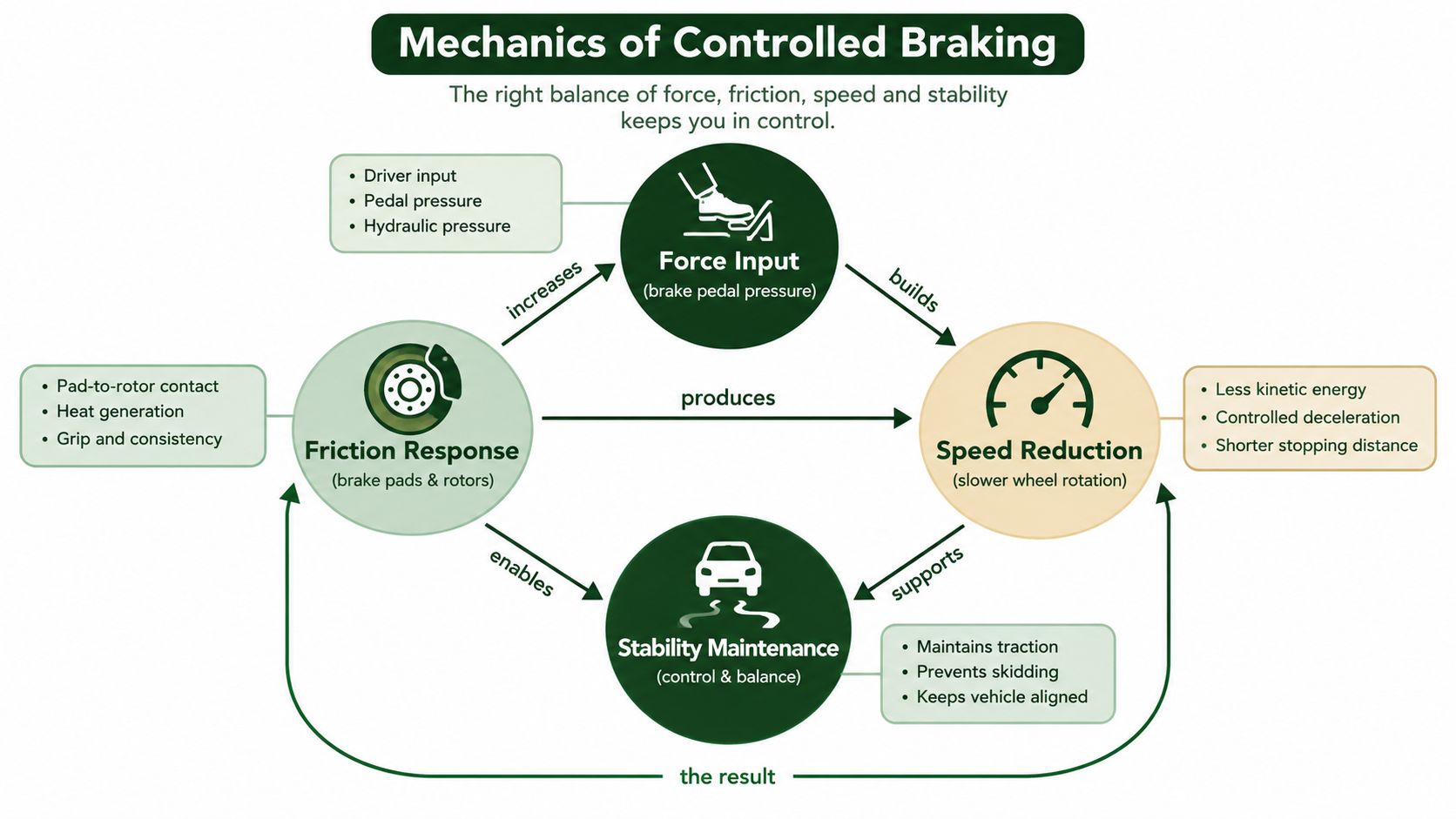
At its core, controlled braking balances brake force against available friction. Press harder and the cart decelerates more quickly, but every tire has a limit. Once braking demand exceeds the grip between tire and ground, the wheel can lock and slide instead of continuing to roll.
The driving definition is braking as hard as possible without locking the wheels while keeping steering movements small. New York's CDL guidance describes controlled braking in those terms, and that principle transfers well to a powered golf cart. Your goal isn't the biggest possible brake command. It's the strongest command the surface can accept while the cart remains stable.
Rolling grip versus sliding grip
A useful mental image is squeezing a sponge. Increase pressure steadily and the sponge responds predictably. Crush it suddenly and water escapes everywhere. Brake inputs work similarly. A smooth increase lets the tire build a useful contact force, while a panic command can overwhelm the surface before you have time to correct.
Vehicle dynamics references place peak braking force near a small amount of tire slip, with one traction-focused analysis reporting roughly 5% slip relative to the pavement. The same engineering material gives an example of approximately a 69/31 front/rear brake-force split at a friction coefficient of 0.85, illustrating how forward weight transfer changes the work each axle can do. Those figures come from vehicle analysis, not a promise about a particular golf cart, but the lesson applies: traction isn't distributed evenly during a hard stop. The University of Illinois vehicle-dynamics reference explains the relationship.
Threshold braking aims to stay just below lock-up through careful pressure control. ABS takes a different route. It detects impending lock and rapidly modulates brake force, so the driver normally presses firmly rather than pumping the pedal, as explained in this comparison of threshold braking and ABS use.
On a golf cart, especially one with electronic assistance, your job may feel less like manually finding the threshold and more like choosing the right speed and making short, deliberate brake inputs. Broader Live Tourney technology insights provide useful context for how connected golf equipment is changing the way players manage movement on the course. For component-specific background, see this guide to golf cart brakes.
The Safety and Performance Benefits
Controlled braking improves the quality of a stop in several ways. The most important benefit is directional control. A rolling tire can continue contributing to steering, while a locked tire has much less ability to guide the cart along the intended line.
That matters on an uneven fairway. One wheel may cross a rut while another remains on firm grass. If you apply a violent brake command, the difference in grip can pull the cart off line. Gradual pressure gives you more time to notice the change and adjust without a sharp steering movement.
ABS demonstrates why wheel-slip control matters at larger vehicle speeds. A preliminary NHTSA evaluation found that ABS reduced multivehicle crashes on wet roads by about 15 percent in state accident files. The agency's later long-term study associated ABS with a 13-percent reduction in fatal collisions with pedestrians, while also recording a 15% increase in some other collision types, a reminder that safety benefits depend on the crash scenario. The findings appear in the NHTSA evaluation of ABS.
Smoother inputs help the whole system
On an electric walking cart, controlled speed changes can also make the equipment feel more predictable. Repeatedly accelerating hard and then demanding abrupt stops creates a less settled ride and can place unnecessary stress on mechanical and electrical components. Smooth control doesn't eliminate wear, but it avoids treating every slope as an emergency.
Regenerative braking adds another layer. In systems designed for it, deceleration can send some energy back through the electrical system rather than wasting all of it as heat. That doesn't mean regeneration replaces friction braking, and it doesn't mean every cart uses it. It means the controller may combine motor resistance with mechanical braking to make speed management feel less abrupt. This guide to regenerative braking systems explains the operating principle.
Good braking also improves course etiquette. A cart that slows early and holds a steady line is easier for other golfers to predict than one that surges, skids, and stops suddenly beside the green. On busy paths, predictable movement protects everyone nearby and lets you focus on the next shot instead of recovering from a near miss.
Real-World Scenarios and Practical Application
A long downhill stretch ends at a sharp turn, and the turn hides the path beyond it. Start reducing speed before the slope steepens. Keep your body centered over the cart, hold the steering line with small movements, and use short brake inputs rather than waiting for the turn to force a panic stop.
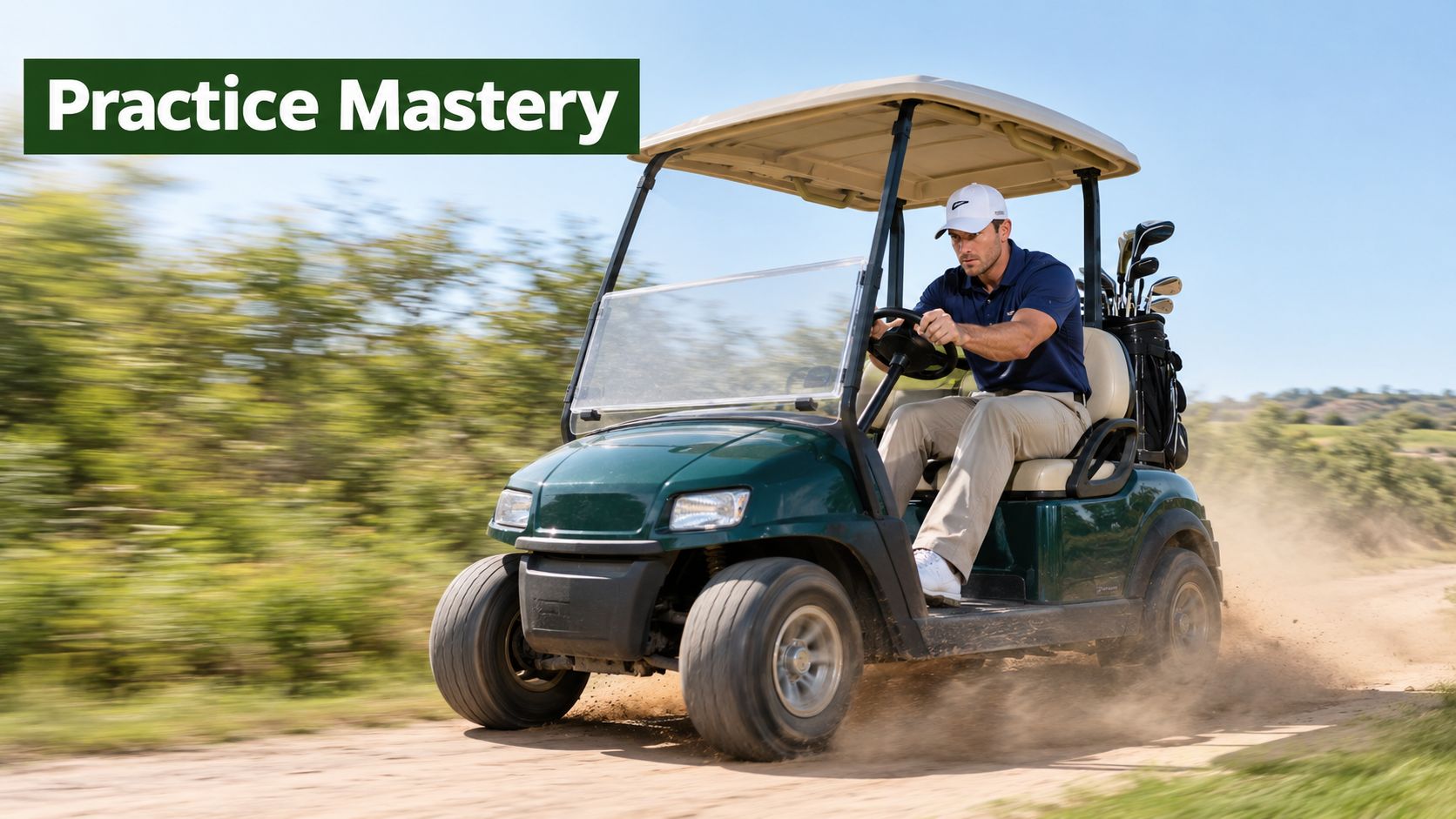
On wet grass, assume the available grip is lower than it appears. Approach the path or green at a reduced speed, brake while the cart is traveling as straight as possible, and avoid combining maximum braking with a hard turn. If the wheels begin to slide, ease the brake input enough to restore rolling contact, then steer around the hazard.
Three situations worth practicing
- A crowded area near the 18th green: Come off the accelerator early, leave room around people, and use light brake commands to settle the cart. Don't aim to stop at the last possible moment.
- A sloped fairway beside a bunker: Approach at an angle that keeps the cart stable, slow before the side slope becomes severe, and avoid sudden steering toward the low side.
- A precise stop beside the pin: Use a walking pace before you reach the stopping point. A gentle final brake input is more accurate than trying to eliminate speed in one command.
A dusty path presents a different problem from wet grass. Loose material can reduce consistency, so keep your line straight and allow more room. If the cart starts drifting, don't fight it with a large steering correction while braking hard. Reduce the brake demand, regain rolling traction, and then make the smallest correction needed.
The following demonstration can help you visualize the difference between a progressive input and a panic response. Watch the movement of the cart, the surface, and the timing of the brake command rather than focusing only on the final stop.
Practice on a flat, open area first. Then add a gentle slope, followed by a surface change. The aim is to build a response that begins with looking ahead and reducing speed, not with reacting after the cart has already exceeded a comfortable pace.
Maintenance Tips for Reliable Braking Performance
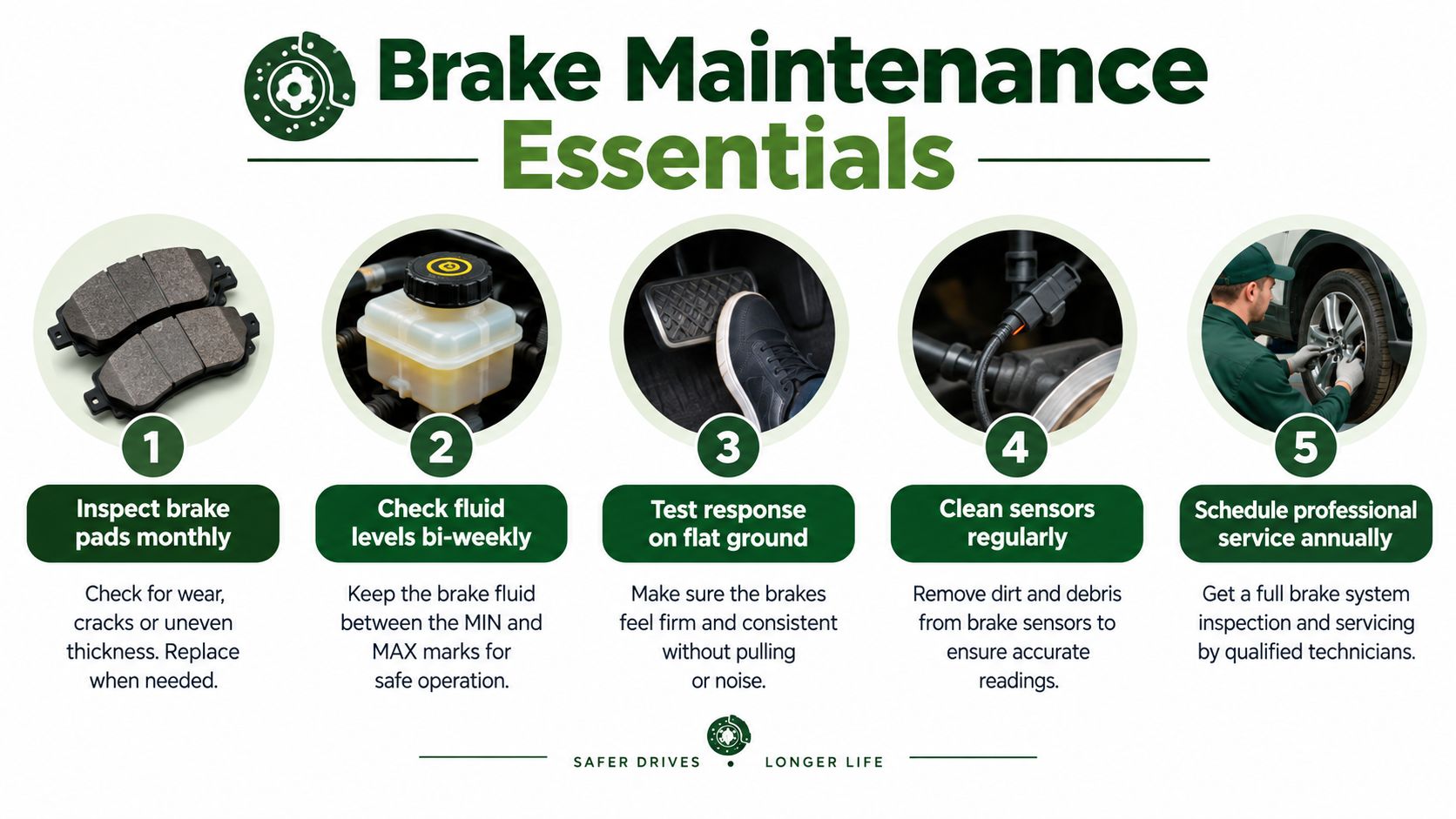
Technique can't compensate for a brake system or tire that isn't in sound condition. Before a round, inspect the parts that determine whether your input reaches the ground consistently.
A practical inspection routine
- Check the brake mechanism: Look for loose hardware, unusual movement, corrosion, or debris that could restrict travel. Guidance on golf cart brake brackets can help you identify the role of mounting components.
- Examine the tires: Uneven wear, damaged tread, or inadequate inflation can reduce the consistency of braking and steering. Follow the pressure guidance for your specific tire rather than guessing.
- Test on level ground: At low speed, apply the brake and note whether the cart stops straight, responds immediately, and releases cleanly. A pull, delay, scraping sound, or repeated vibration deserves attention.
- Inspect electrical connections: On an electronically assisted system, loose connectors or damaged wiring can affect the response of the brake control. Switch the system off before examining connections.
- Clear contamination: Remove grass, mud, and sand from accessible brake and wheel areas. Don't spray water or cleaner into electrical parts unless the manufacturer specifically permits it.
Fluid checks apply to systems that use brake fluid, while cable and mechanical systems need different inspections. Don't assume a checklist for a road car matches a walking cart. If braking changes suddenly, stop using the cart on slopes and arrange qualified service before continuing.
Putting It All Together for a Safer Round
The answer to what is controlled braking becomes practical when you combine three habits: look ahead, reduce speed early, and preserve rolling contact. On a golf course, the surface can change faster than your reaction time, so preparation beats a heroic last-second stop.
Use the technique differently according to the terrain. On a flat path, progressive pressure may be enough. On a downhill, slow before the steepest section. On wet or loose ground, leave extra room and keep steering inputs small. If an electronic system assists braking, treat it as support for your decisions, not permission to approach hazards faster.
Practice on mild terrain until the sequence feels natural. The best stop is quiet, straight, and uneventful. That gives you more attention for your swing, more confidence around other golfers, and fewer stressful moments during the round.
Caddie Wheel offers lightweight electric power assist for standard golf push carts, with a variable-speed remote that provides forward, reverse, and braking control. If you want steadier speed management on hills without replacing your existing cart, visit Caddie Wheel to review the system and compatibility details.
Share:
Electric Assist Motor Guide: Install, Use, and Maintain
Electric Assist Conversion Kit: The Complete Golfer's Guide