
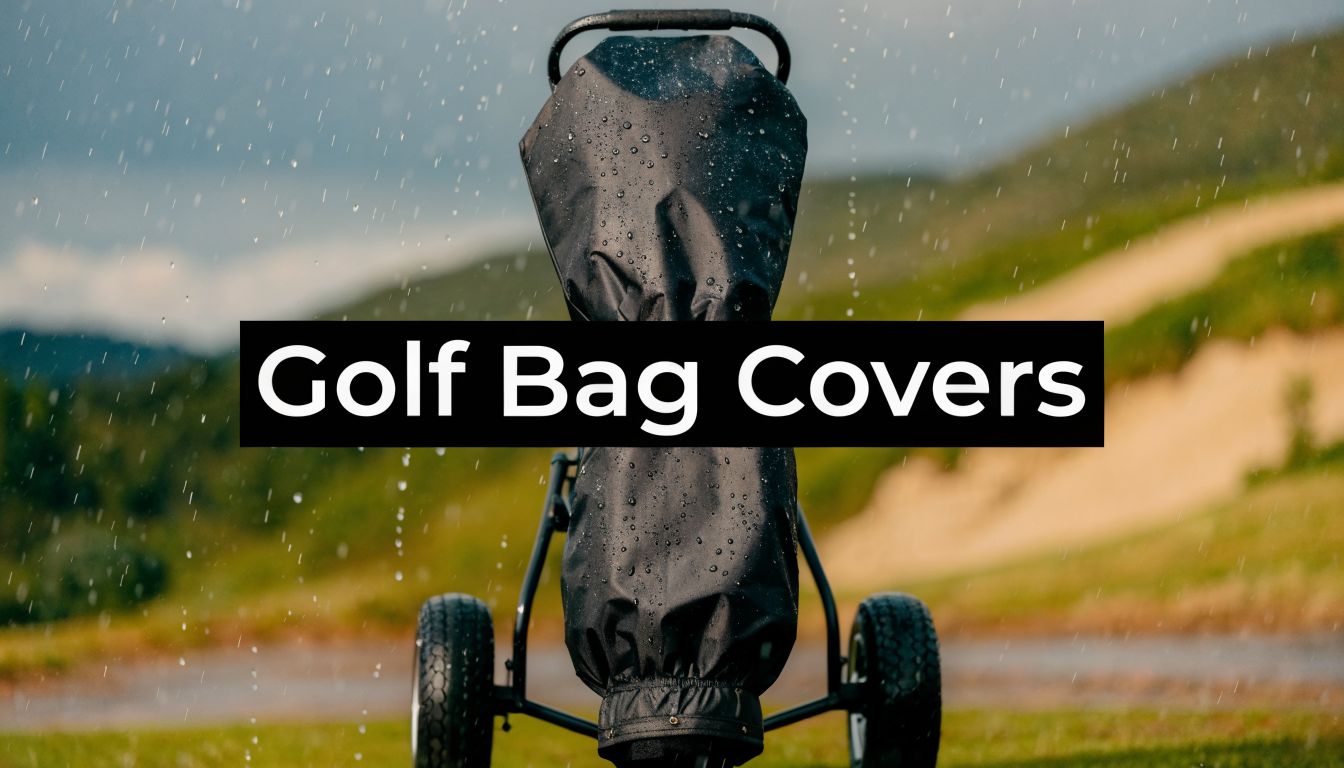
A round can unravel fast when the sky turns from gray to black on the 6th hole. One minute your push cart is rolling smoothly and your grips are tacky. Ten minutes later, your glove is soaked, the towel is useless, and every pocket on the bag feels like a leak waiting to happen.
Walking golfers feel this more than riders do. Your bag stays out in the weather the whole time. It catches sideways rain, splash off wet turf, and wind that lifts a loose cover at exactly the wrong moment. If you use a push cart, and especially if you move at a brisk pace, a bad cover doesn't just fail without a sound. It flaps, snags, blocks pockets, and makes a wet round even more annoying.
Stay Dry and Play On An Introduction to Golf Bag Covers
The old idea of a golf bag rain hood was simple. Keep some water off the club openings and hope for the best. That was fine until the rain got serious, the wind picked up, or you needed a ball marker, snack, rangefinder, or extra glove from a soaked side pocket.
Modern waterproof golf bag covers solve a different problem. They don't just shield the top. The good ones protect the full bag, keep pockets usable, and let a walking golfer stay in rhythm instead of fighting gear between shots. That's a huge difference when you're pushing through a steady drizzle over a full round.

If you're already comparing setups, it helps to understand how the bag itself affects cover choice. A stand bag and a cart bag don't behave the same once they're strapped to a trolley. This guide to best push cart golf bags is useful because it highlights the shapes, pocket layouts, and stand mechanisms that can make or break cover compatibility.
What a good cover actually saves
A proper cover protects more than clubs. It keeps grips from turning slick. It keeps your glove rotation dry longer. It helps protect whatever you carry in side pockets, which usually matters more in real play than golfers admit before they get caught in rain.
Practical rule: If a cover slows you down every time you need a tee, ball, or yardage tool, you won't use it well when weather gets ugly.
Why walking golfers should care more
Cart riders can often tuck a bag under a roof between shots. Walkers can't. The bag is exposed on every fairway, every green approach, and every wait on the next tee. That's why the right cover isn't just backup gear. It's part of the system, right alongside a solid push cart, a reliable umbrella setup, and a bag layout you can access without peeling the whole thing open.
When a Waterproof Cover Becomes Essential
A lot of golfers buy a rain cover only after one miserable round. That usually means wet grips, a towel that stopped helping three holes ago, and a scorecard that turned to pulp in a side pocket. The lesson comes quickly. Rain doesn't have to be heavy to cause problems.
The strongest argument for carrying one is simple. You don't need an all-day storm to justify it. A fast-moving shower, a windy drizzle, or a long dew-soaked morning can be enough to create a mess if your bag is exposed on a push cart.
It protects gear you actually rely on
The old detachable rain hood became common for a reason. Over 90% of golfers on the PGA and LPGA Tours carried Seaforth Rain Hoods in their bags, and that pro-level use helped establish detachable rain protection as a lasting standard in golf equipment, according to Seaforth Rain Gear.
That matters because pros are ruthless about what stays in the bag. If something is dead weight, it disappears. Rain protection stayed because it solved a real problem.
Here's where a cover earns its place:
- Grips stay playable. Wet grips change pressure and confidence. Even if you wipe them down, they rarely feel the same once they've been exposed for a while.
- Pockets stay organized instead of soggy. Balls, gloves, scorecards, snacks, and valuables all become harder to manage once pocket fabric starts taking on water.
- Clubheads and shafts stay cleaner and drier. Moisture and grime build up fast when rain mixes with turf splash.
- You keep moving. Nobody wants to stand over a push cart, wrestling a towel and digging through wet zippers while the group behind waits.
It matters outside heavy rain
Golfers in dry climates sometimes skip a cover because they assume it's only for the worst weather. That's usually a mistake. Sudden showers happen. Morning moisture hangs around longer than expected. Wind can drive light rain sideways into pockets that looked protected in the parking lot.
A cover is insurance you hope to ignore. The trouble is that when you need it, you need it right now.
There's also a mental side to it. When your gear is protected, you stop making rushed decisions. You're not running for trees, stuffing your glove under a towel, or trying to shield your bag with your body while also lining up a shot. That calm matters.
Walking rounds expose the weakness in half-measures
A loose hood over just the club opening isn't enough for many push-cart rounds. The bag sits in the open. It gets hit from above and from the side. If you walk exposed courses, hilly layouts, or places where weather changes quickly, a full bag cover goes from optional to smart equipment.
For regular walkers, I'd call it standard kit. Not glamorous. Not complicated. Just one of those items that keeps a playable day from turning into a slog.
Decoding Waterproof Materials and Ratings
A lot of covers look waterproof on a product page. Far fewer are waterproof when rain gets hard, wind pushes water into seams, and the lower half of the bag catches spray from wet turf. That's why material specs matter.
The number to pay attention to is the hydrostatic head rating. It sounds technical, but the basic idea is easy. The higher the rating, the better the fabric resists water being forced through it under pressure. On the course, “pressure” means sustained rain, wind-driven rain, water pooling on folds, and bag contact against a wet cart frame.

The rating that separates waterproof from merely hopeful
Premium waterproof golf bag covers use multi-layer laminated fabrics with hydrostatic head ratings of 10,000 mm or higher, and that level is especially important for push-cart users because it reliably blocks driving rain and ground splash through a full round, as explained by Golf Bag Factories.
Here's the practical version:
| Cover type | What it usually handles | Real-world result |
|---|---|---|
| Water-resistant fabric | Light drizzle, short exposure | Fine until wind, time, or seam leakage catch up |
| 10,000 mm or higher laminate | Sustained rain and splash | Holds up much better over a full walking round |
If you only remember one spec, remember that one.
What the fabric should be made of
The best covers usually rely on multi-layer laminated construction. That means the cover isn't just a thin sheet with a coating sprayed on top. It's built in layers that each do a job.
Look for features like these:
- Abrasion-resistant outer fabric such as nylon. This takes the rubbing from cart straps, wheel frames, and repeated folding.
- A waterproof film or membrane such as TPU or PU. This is the layer doing the actual blocking.
- A softer inner face or liner that helps reduce sticking, wear, and stress on the laminate.
- Sealed seams through tape or welded construction. A good fabric with bad seams still leaks.
The seam issue gets overlooked all the time. Water almost always finds the weak point first, and that weak point is often stitching.
Field test: Don't judge a cover by surface feel. Judge it by fabric rating, seam sealing, and whether the lower half stays dry after time on a wet course.
What usually fails in cheap covers
Budget covers often rely on thin fabric and vague wording like “weather resistant.” That can be enough for a short shower, but not for a round where the bag stays exposed for hours. They also tend to crease sharply when stuffed into a pocket, and those repeated fold lines become trouble spots over time.
If you walk often, don't buy based on color, branding, or how compact it looks in the package. Buy based on whether it keeps water out under real pressure and whether the seams are built to match the fabric. On a push cart, that difference shows up quickly.
Finding the Perfect Fit for Your Bag and Cart
A rain cover that doesn't fit your setup is worse than no cover at all. It shifts when you push, blocks the pocket you need most, catches on stand legs, or balloons in crosswind. The result is constant fiddling, which is exactly what you don't want in rain.
Push-cart golfers need to think about two separate fits. First, the cover has to match the shape of the bag. Second, it has to sit cleanly once that bag is strapped onto the cart. A cover can fit a bag in the garage and still be a nuisance on the course.

Attachment matters more than most golfers think
The most useful designs don't rely on a loose drape and a couple of snaps. High-performing universal rain covers use adjustable Velcro straps or elasticized bands to fit a range of 3- and 4-wheel carts, and a properly tensioned cover can stay taut at speeds up to 15 kph, which matters for golfers using electric assist systems, according to Craftsman Golf.
That tells you what to prioritize:
- Adjustability beats fixed sizing when your bag shape is a little unusual.
- Velcro and elastic give you tuning room for stand bags, cart bags, and different cart frames.
- Tension is not a minor detail. A taut cover sheds wind better and stays quieter.
If you want a quick reference for how different bags sit on trolley frames, this guide to a golf bag cart setup is worth a look. It helps visualize where upper brackets, lower supports, and bag shapes can interfere with a full cover.
Fit checks before you buy
Don't trust “universal” as a complete answer. Check these points first.
| What to check | Why it matters on a push cart |
|---|---|
| Bag top size and body shape | A narrow stand bag and a wider cart bag need different drape and tension |
| Pocket placement | Zippers are useless if the cover opening misses the pocket by a few inches |
| Stand leg clearance | Some covers bunch around hinges and make the bag sit awkwardly |
| Strap path on the cart | A cover has to coexist with the upper and lower cart straps |
| Bottom edge length | Too long and it catches. Too short and splash gets in |
Push-cart specifics that generic reviews miss
Walking golfers who use electric assist need to be stricter about fit. As pace increases, even a decent cover can start fluttering if the attachment points are weak or the shape is too loose. That flutter isn't just noise. It works water into gaps, wears fabric faster, and gets annoying in a hurry.
This is the one place I'll mention Caddie Wheel. It's a power-assist unit for standard push carts, so the relevant issue isn't branding. It's motion. Any golfer moving briskly with electric assist should care more about strap security and cover tension than a rider or a slow pusher on flat ground.
For golfers comparing materials and bag styles more broadly, it can also help to look outside golf. Product examples like advertising specialty water resistant bags can be useful for seeing how water-resistant construction, closures, and fabric choices are described in other bag categories. The same basic questions apply. How does it close, where does water collect, and what wears first?
If the cover shifts every time you turn the cart or reach for a club, it's not fitted well enough.
Key Features That Matter on the Course
A cover can be waterproof and still be frustrating. That happens when designers focus on rain protection but ignore the fact that golfers need access during the round. If you have to peel half the cover back every time you need a ball, glove, or rangefinder, the bag won't stay dry for long.
This is one reason the category has grown. The global market for advanced waterproof golf bags and integrated covers reaches 20 million units annually, with projected growth at a 5% CAGR, according to Market Report Analytics. Golfers keep buying better weather protection because they want gear that works in actual play, not just in product photos.

Features worth paying for
The best waterproof golf bag covers usually get the small details right.
- Multiple access points. One opening isn't enough if your glove, balls, and valuables all live in different places.
- Zip placement that matches real bag layouts. A zipper can be waterproof and still be useless if it opens into dead fabric instead of a pocket line.
- Compact storage. A cover that packs down neatly is more likely to stay in your bag all season.
- Secure top opening. Club access should be quick without exposing the whole bag every time.
- Attachment points you can operate with wet hands. Tiny fiddly fasteners are maddening in rain.
The pace-of-play test
A good cover should let you do four things without thinking too hard: pull a club, return a club, reach a main pocket, and move to the next shot. If any of those become clumsy, the cover starts costing you time and patience.
That's also why many walkers pair rain protection with a sensible umbrella setup. If your cart can carry the umbrella and the cover still gives pocket access, you spend less time juggling gear. This guide to a golf bag umbrella holder is useful if you're building a walking setup that works together instead of fighting itself.
Good rain gear disappears into the routine. Bad rain gear becomes the routine.
Small details that change the round
Clear windows, clip loops, better zipper pulls, and smart storage pouches can sound trivial in a shop. On the 14th hole in steady rain, they don't feel trivial at all. They're the difference between staying organized and feeling like you're unpacking luggage in a storm.
Common Mistakes and How to Avoid Them
The biggest mistake is buying a cover like it's a disposable extra. That mindset leads golfers straight to thin materials, weak seams, and fit problems they try to tolerate until the thing tears or leaks.
Cheap covers often work just well enough in light rain to convince you they're fine. Then the weather turns, the wind picks up, and every compromise shows up at once.
Mistakes that cost you on the course
Recent user reviews point to a 35% failure rate for some covers on dusty or windy courses, with tears and fading waterproofing appearing after 6 to 12 months, as noted in this review roundup discussion. That doesn't mean every cover is fragile. It means durability deserves more scrutiny than many buyers give it.
The common errors are predictable:
- Buying by price alone. Low-cost covers usually hide the compromise in seam quality, fabric thickness, or attachment hardware.
- Assuming universal fit means clean fit. Many “fits most bags” products technically go on the bag, but they don't stay stable.
- Ignoring climate. Dust, wind, and repeated sun exposure can wear a cover differently than steady wet conditions.
- Leaving it stuffed wet in a pocket. That shortens life fast and can leave the cover smelling rough and feeling degraded.
- Overstretching access points. Repeatedly yanking a tight zipper opening wider than intended is a good way to stress seams.
The one-size-fits-all trap
Stand bags are where this mistake shows up most. Their shape changes more from top to bottom, and their leg hinges create awkward pressure points under a cover. A generic model might fit enough to sell, but not enough to use comfortably.
Look closely at how the cover wraps around the upper third of the bag. If it's sloppy there, wind gets under it. If it's too tight there, you'll fight club access every hole.
Don't judge a cover on the day you install it in the garage. Judge it by how it behaves wet, windy, and in a hurry.
Another mistake golfers make after purchase
They treat waterproofing like a permanent property. It isn't. Fabrics age, coatings wear, folds get stressed, and grime works into the surface. If you expect years of service without any care, you're setting yourself up for disappointment.
Installation and Care for Lasting Protection
A good cover should go on quickly when the rain starts. If deployment is awkward, you'll delay, and that's when grips and pockets get soaked before the cover is even secure.
Fast deployment on the course
Use a simple routine:
- Store it in the same pocket every round. You don't want to search for it while the first drops hit.
- Start at the top opening. Get the club area aligned first so you're not twisting the whole cover later.
- Secure the upper attachment point. Once the top is stable, the rest of the fit gets easier.
- Pull the body down over the main pockets. Smooth out bunching as you go.
- Tension the lower straps or elastic. This is what stops flap and keeps spray out.
- Check the pocket access you use most. If your glove or rangefinder pocket is blocked, fix it now, not on the next shot.
Care that extends useful life
After the round, don't wad the cover into a dark pocket and forget it. Open it up. Let it dry fully. Wipe off grit, mud, and fertilizer residue with gentle cleaning. Those particles wear fabric and seams more than many golfers realize.
For storage, fold it loosely instead of forcing the same hard creases every time. Repeated sharp folds create weak spots. If the cover came with a storage pouch, use it only after the fabric is dry.
A little routine goes a long way. Clean it, dry it, and inspect seams and attachment points before the next bad-weather round. That's how waterproof golf bag covers stay useful instead of becoming one more item that looked good when new.
If you walk your rounds and want a push-cart setup that handles weather and hills with less strain, Caddie Wheel is worth a look. It adds electric power assist to standard push carts, which makes cover fit, bag access, and steady movement even more important on wet days.
Partager:
Upgrade Your Golf Cart Motors Electric Club Car
6 Volt Golf Cart Battery Charger: The Complete 2026 Guide