
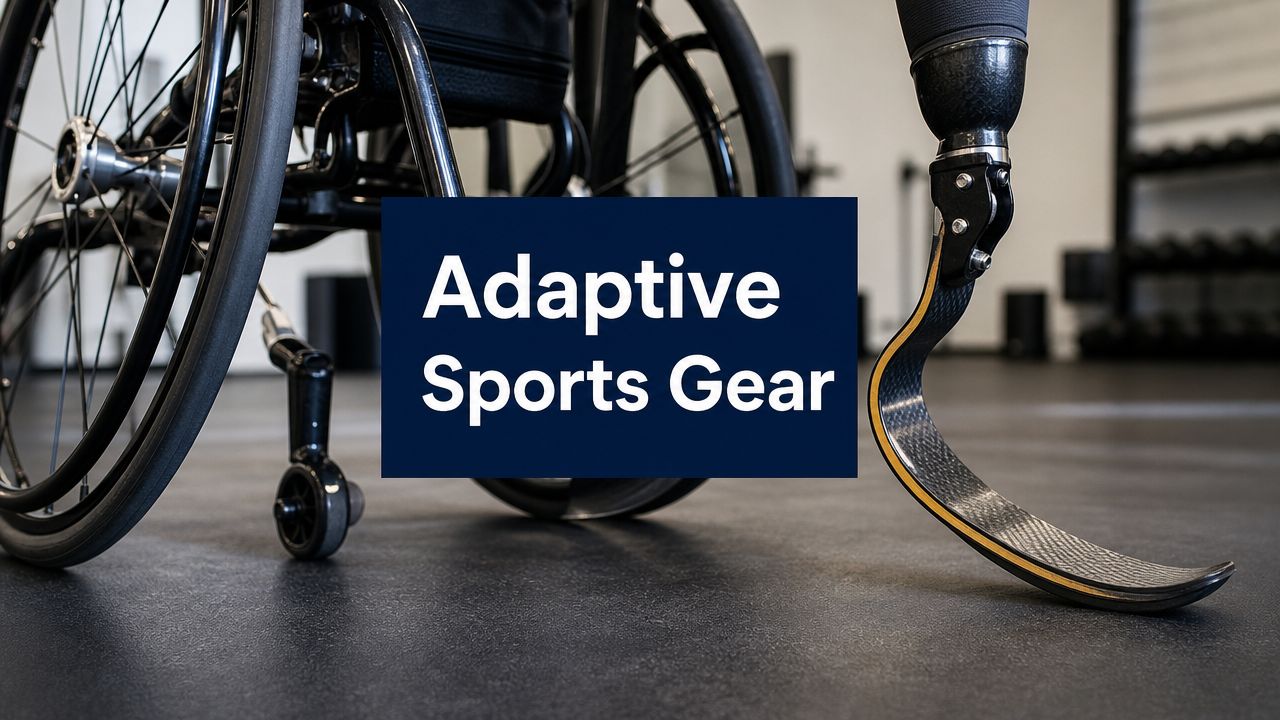
You might be here because the sport still matters, but your body, balance, stamina, or coordination has changed. Maybe you can still picture the round of golf, ski run, ride, or pickup game you want to enjoy, yet the equipment you used before no longer fits what you need now. That gap can feel discouraging. It can also be solvable.
Adaptive sports equipment exists to close that gap. It isn't just about getting someone onto a field or trail. At its best, it helps a person move more safely, conserve energy, participate with confidence, and keep doing a sport that feels like part of who they are.
That matters on a much larger scale than many newcomers realize. The global adaptive sports market was valued at USD 5.09 billion in 2024 and is projected to reach USD 10.97 billion by 2032, with North America holding 35% market share, according to Future Data Stats research on the adaptive sports market. In plain terms, adaptive sports equipment is no longer a tiny corner of the industry. More athletes, families, clinics, and community programs are looking for practical tools that support participation.
At the same time, many people still don't know where to start. If you're also managing pain, fatigue, or a recent setback, support from a clinician can make the process smoother. For readers who need that bridge between rehab and returning to activity, this guide on personalized sports injury treatment offers useful context for how recovery planning can connect with sport participation.
Unlocking Your Potential with Adaptive Sports Equipment
A lot of people assume adaptive sports equipment is only for elite competition or major physical disabilities. That idea keeps beginners from exploring options that could help right now. In practice, adaptive gear can support someone returning after injury, a person with a progressive condition, an older adult dealing with fatigue, or an athlete who needs one small change to stay active.
It starts with the barrier, not the diagnosis
A useful first question is simple: What is getting in the way of participation?
Sometimes the barrier is obvious. A runner may need a sport prosthesis. A skier may need a sit-ski. A basketball player may need a chair designed for speed and turning. But sometimes the barrier is subtler, such as grip weakness, reduced endurance, low vision, poor shock tolerance, or difficulty pushing equipment over uneven ground.
When you think this way, the search becomes clearer. You're not looking for a label. You're looking for a tool that solves a movement problem.
Adaptive sports equipment should feel like an enabler, not a reminder of what changed.
Why this field keeps expanding
The variety of equipment keeps growing because people want more than access. They want equipment that fits real bodies, real goals, and real sports. Families want options for recreation. Coaches want athletes to train safely. Recreational users want something simpler than a fully custom build if that's all they need.
That change also reflects a broader shift in attitude. Participation isn't a side benefit. It's part of health, identity, and community life. When people find the right equipment, they often gain more than a way to move. They gain a reason to show up again.
A good guide doesn't start by overwhelming you with gear names. It starts by helping you understand what makes equipment adaptive in the first place.
What Makes Sports Equipment Truly Adaptive
The word adaptive gets used loosely. Some people use it to mean any modified tool. In sport, that definition is too broad. True adaptive sports equipment is designed around the demands of a specific activity and the needs of a specific user.
According to a review indexed by PubMed on adaptive sport equipment design, the core goal is to help users circumvent participation barriers by matching device geometry and control interfaces to the specific demands of a sport, preserving efficient movement patterns for optimal performance.

More than access
A standard mobility aid helps with daily life. Adaptive sports equipment helps with sport performance.
Think about the difference between a standard wheelchair and a racing wheelchair. It's similar to the difference between a family sedan and a Formula 1 car. Both have wheels. Both move a person from one place to another. But one is built for ordinary travel, while the other is engineered for speed, handling, and a very specific environment.
That same logic applies across sports:
- A handcycle isn't just a bicycle replacement. It's shaped around upper-body propulsion and cycling mechanics.
- A sit-ski isn't just a seat on a ski. It has to manage balance, shock, edge control, and turning.
- A sports prosthesis isn't just for walking. It has to match impact, force transfer, and timing for the activity.
The best fit is functional
New users often ask, "What's the best adaptive equipment?" That's usually the wrong question. A better one is, What movement does this sport require, and how does this device help me do it well?
Use this lens when evaluating gear:
| Question | Why it matters |
|---|---|
| Does it match the sport? | A good daily-living device may still perform poorly in competition or recreation. |
| Does it match your body? | Seat position, reach, support, and control method affect comfort and safety. |
| Does it match your goal? | Casual participation, training, and competition can require different setups. |
Practical rule: If a piece of equipment helps you participate but constantly fights your natural movement, it probably isn't the right sporting solution.
Adaptive sports equipment works best when it supports movement quality, not just movement quantity. That's the difference between getting through an activity and enjoying it.
Exploring the Range of Adaptive Equipment Categories
Once you understand the design philosophy, the next helpful step is seeing the equipment array in organized groups. That keeps everything from blending together into one long list of unfamiliar gear.

Mobility-focused equipment
This category includes tools that help an athlete propel, steer, or stabilize their body during movement-heavy sports.
Examples include racing wheelchairs, handcycles, mono-skis, and all-terrain wheelchairs. These are often the first products people think of because they're highly visible and strongly tied to performance. They matter in sports where the equipment becomes part of the athlete's movement system.
For someone who wants to stay active while managing a temporary limitation, it can also help to look at broader strategies for maintaining fitness during injury recovery. That kind of planning can make it easier to choose sport equipment later with clearer goals in mind.
Prosthetic and orthotic sport solutions
Some adaptive setups center on what happens at the limb, joint, or point of force transfer. That includes sport prostheses, braces designed for athletic use, and customized supports that improve alignment or control.
These tools often help when a person has enough strength and motivation to play but needs a better mechanical connection to the activity. A runner may need a different response than a golfer. A paddler may need different wrist support than an archer.
Sensory and feedback aids
Not all adaptation is about power or propulsion. Sometimes the key issue is information.
TechOWL notes that inclusive design often uses specialized components and activity-specific modifications such as auditory bells in balls or grip-assist gloves, which reduce coordination burden and improve safety and usability in real play, as described in this overview of adaptive sports equipment examples.
That can include:
- Auditory balls for athletes with low vision
- Tactile markings on courts or training areas
- Visual contrast changes that make targets easier to track
- Cueing tools that improve timing and orientation
These changes may look small, but they can completely change whether a sport feels confusing or usable.
Activity-specific modifications
Some of the most effective adaptive sports equipment doesn't look dramatic at first glance. It may be a grip-assist glove, a seated throwing frame, a modified paddle, or a change in the rules and format of play.
A seated version of a sport can reduce the balance demand. An oversized or slower-moving ball can give an athlete more time to react. A grip aid can help a person hold a club, paddle, or racket with less strain.
Small modifications often create the biggest leap in confidence because they reduce failure points early.
When newcomers feel overwhelmed, I encourage them to stop asking, "Which category am I in?" and start asking, "What task in this sport is hardest for me right now?" The answer usually points toward the right equipment family.
How to Choose the Right Adaptive Equipment for You
Shopping for adaptive sports equipment can feel like comparing apples, bicycles, and prosthetic sockets all at once. The goal isn't to find the single best product on the internet. It's to find the setup that fits your body, your sport, your environment, and your tolerance for upkeep.

Start with your real use case
Many poor purchases happen because people shop for an idealized version of themselves. They picture peak-energy days, perfect weather, and unlimited time. Most of us live somewhere else.
Ask yourself:
- Where will you use it? Indoor court, trail, snow, course, track, or mixed surfaces.
- How often will you use it? Weekly training demands more durability than occasional recreation.
- What support do you need most? Propulsion, balance, grip, shock absorption, seating, or fatigue management.
If your main goal is walking a golf course with less pushing strain, your solution may look very different from someone training for wheelchair racing. A golfer comparing retrofit options may also find it useful to review how a powered assist changes push-cart use in this guide to a battery powered golf push cart.
Fit first, features second
People often get drawn to features before confirming fit. That's backwards.
A technically impressive device can still fail if the seat width is off, the controls require too much dexterity, the transfer height is awkward, or the posture it creates increases pain. If possible, work with a therapist, coach, seating specialist, or experienced adaptive program that can watch you move in the equipment.
Use this checklist when comparing options:
| Selection point | What to check |
|---|---|
| Fit | Seat, reach, support, pressure areas, transfer ease |
| Control | Steering, braking, grip demands, hand placement |
| Surface match | Grass, pavement, trail, snow, sand, indoor court |
| Portability | Transport, storage, setup time, weight handling |
| Service needs | Repairs, replacement parts, routine maintenance |
Try before you commit
Whenever possible, test equipment under real conditions. A demo in a parking lot tells you less than a trial on the terrain or course where you'll use it.
Pay attention to what your body says after the activity, not just during it. Fatigue, shoulder irritation, hand soreness, or difficulty loading the device into a vehicle can all matter as much as first impressions.
The right equipment usually feels less like a gadget and more like a natural extension of your movement.
Think beyond purchase day
Ownership includes maintenance, transport, battery charging if applicable, and the ability to get service when something wears out. If you're choosing between a custom setup and a simpler retrofit, convenience may matter more than advanced customization.
That doesn't mean simpler is always better. It means the best choice is the one you'll keep using.
Navigating Funding and Sourcing for Your Equipment
Cost stops many people before the search really begins. That's understandable. Adaptive sports equipment can involve customization, paperwork, and more than one decision-maker. Still, this is a problem you can work through methodically.
A practical barrier is that funding is often fragmented across organizations with different deadlines and eligibility rules, as explained by Adaptive Sports Center's guide to grants and funding for adaptive sports equipment. For many families and athletes, the challenge isn't just knowing that help exists. It's knowing where to start and how to avoid wasting energy on poor-fit applications.
Build a funding file before you apply
Don't begin with the application. Begin with your documentation.
Create one folder with your diagnosis or functional limitation paperwork, a short statement of need, a clinician note if available, product information, price quote, and a clear explanation of how the equipment will be used. If you need a caregiver or coach to help, add their contact details and role.
This saves time because many programs ask for similar information in slightly different formats.
Look in several directions at once
Funding often works best when you pursue multiple smaller pathways rather than waiting for one perfect approval.
Consider these avenues:
- Medical and therapy documentation: A therapist or physician can sometimes help explain medical need and functional benefit.
- Sport-specific nonprofits: Some organizations support equipment for particular disabilities, injuries, or sports.
- Regional community programs: Local adaptive recreation groups may know about loan closets, used gear, or state-based assistance.
- Family support resources: Broader guides to housing and care grants can also help families think more strategically about overlapping support needs, especially when sport access is part of a larger care picture.
Source with realism, not urgency
People under pressure sometimes buy the first available product. That can lead to poor fit, difficult transfers, and expensive modifications later.
Take time to compare seller support, return policies, replacement parts, and whether the device can grow with your needs. If you're evaluating golf-related mobility options, a market overview like this roundup of places to buy a lightweight golf push cart can help you understand the base platform before you add adaptive features.
Good funding strategy is rarely fast. It is organized, documented, and persistent.
If a grant path feels confusing, that's normal. The key is to break the process into smaller tasks and keep moving.
Adaptive Equipment in Action From the Trail to the Green
The easiest way to understand adaptive sports equipment is to see what it allows people to do in the world. One athlete uses a handcycle to get back onto trails. Another returns to snow through a sit-ski. Another plays basketball in a chair built for turning, speed, and contact.

A handcycle is a good example of how sport-specific design changes experience. On a trail, propulsion method, frame position, and stability all shape whether the ride feels controlled or exhausting. The equipment isn't just helping the rider move. It's helping the rider participate in the actual demands of the terrain.
Fully custom versus modular options
Not every athlete needs a fully dedicated device. That's one of the most important distinctions for recreational users.
Maine Adaptive highlights the tradeoff between fully custom devices and modular, retrofittable equipment, noting that for recreational athletes with intermittent support needs, evaluating how a drop-on assist integrates with existing gear is essential in this beginner's guide to adaptive sports equipment.
That matters because many people sit in the middle. They don't need a full specialty chair or all-new system for every activity. They need targeted assistance that reduces one key barrier.
Examples include:
- A removable support or grip aid for occasional hand weakness
- A retrofit power assist for an existing piece of sport equipment
- A modular seating change that improves stability without replacing the whole setup
A practical golf example
Golf is a strong example of this middle ground. Some players can still walk the course and swing effectively, but pushing a cart across hills, rough patches, or long stretches drains energy they need for the round itself.
In that case, a modular solution may make more sense than switching to a fully separate mobility device. A product like Caddie Wheel attaches a motorized wheel to a standard push cart to reduce pushing effort while preserving the walking experience. For golfers comparing broader options in this category, this guide to adaptive golf equipment for 2025 provides additional context.
A short product demonstration helps make that idea easier to picture in real use:
The big takeaway is that adaptive sports equipment exists on a spectrum. At one end, you have highly specialized custom builds. At the other, you have clever add-ons and modifications that keep a familiar sport accessible with less friction.
If you already own usable gear, retrofitting may be the smartest first question, not the backup plan.
Your Next Steps and Essential Resources
The path usually looks less complicated once you break it into decisions. Start with the barrier that matters most. Then look for equipment that matches the sport, your body, and the amount of support you need. After that, focus on fit, trial use, upkeep, and funding.
This isn't only about recreation. Move United reports that adults with disabilities are 300% more likely to have heart disease, stroke, or diabetes, and that each additional year of adaptive sport participation is associated with about a 4% increase in the likelihood of employment, based on the research summarized on Move United's adaptive sports research page. That gives equipment access a wider meaning. It can support health, routine, confidence, and long-term participation in community life.
A short resource list can help you take the next step:
- Move United: Useful for research, program discovery, and understanding the broader value of participation.
- Local adaptive sports programs: Often the best place to trial equipment, meet coaches, and ask practical questions.
- Rehab professionals and occupational therapists: Helpful for fit, transfer safety, body mechanics, and documentation.
- Grant directories and nonprofit programs: Best approached with organized paperwork and a clear statement of need.
- Sport-specific communities: These groups often know which solutions are easy to live with, not just easy to market.
The right equipment doesn't have to look dramatic to change your experience. It just has to solve the problem that is keeping you on the sidelines.
If you're a golfer who wants to keep walking the course with less strain, Caddie Wheel offers one practical adaptive option by adding motorized power assist to many standard push carts instead of requiring a completely separate setup.
Partager:
Golf Cart Parts Unlimited: The Ultimate Power Upgrade
Golf Cart Mule: Your Guide to Motorized Course Helpers