
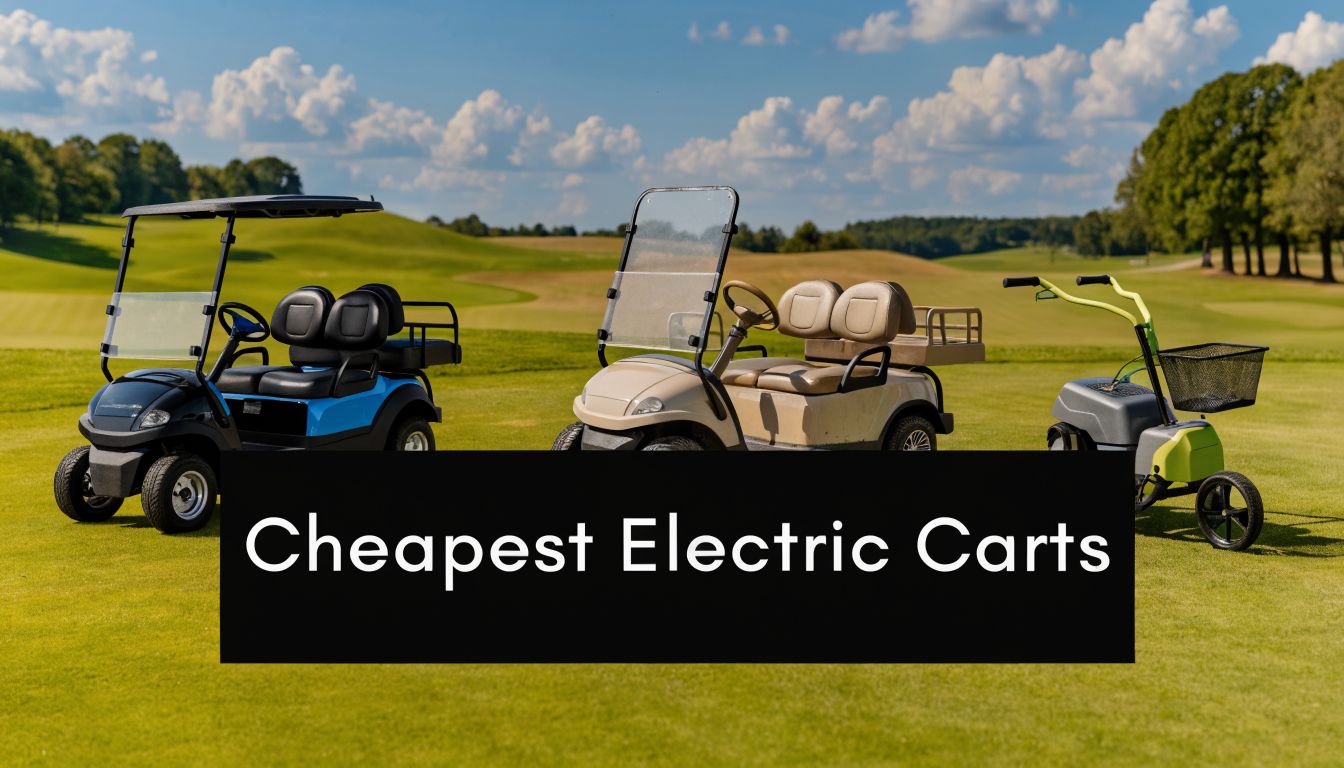
You’re probably looking at the same trade-off most golfers hit sooner or later. You want electric help. You don’t want to keep pushing up hills, dragging a bag through a long back nine, or paying premium-cart money just to make golf easier.
That’s why searches for the cheapest electric golf carts have become so common. The tricky part is that “cheap” can mean three very different things. It can mean a brand-new entry cart from a value brand. It can mean an older used cart that still has life left in it. Or it can mean skipping a full riding cart entirely and motorizing the push cart you already own.
The smartest buy depends less on sticker price and more on how you play. A neighborhood cruiser, a course-only cart, and a walking setup solve different problems. Treat them as the same category and it’s easy to overspend.
Navigating Your Options for an Affordable Electric Cart
The market has opened up in a way buyers didn’t have a few years ago. The global electric golf cart market was valued at $1.55 billion in 2024 and is projected to reach $2.58 billion by 2033, while typical prices now span from $5,500 on the low end to over $20,000 for luxury models, according to Grand View Research’s electric golf cart market report. More competition has pushed affordable options into view.
That’s good news if you’ve been priced out of premium names. It also means there are more ways to buy wrong.
Some golfers should buy new because they need predictable ownership and modern batteries. Others are better off with a used E-Z-GO or Club Car because they want proven frames and easier parts access. And for walking golfers, the overlooked budget move is often not a full cart at all. It’s a conversion-style electric assist added to a push cart.
A quick look at electric golf carts for sale across different categories makes that range obvious. You’re no longer choosing between “expensive” and “more expensive.” You’re choosing between different ownership models.
Practical rule: Buy for your use pattern first. Buy for the price second.
If you ride from home to the course, street-legal equipment matters. If you only play walking rounds, a compact assist setup may deliver more value than a two-seat cart sitting in the garage most of the week. If you enjoy tinkering, an older refurbished cart can make sense. If you don’t, cheap can get expensive fast.
The goal isn’t to find the lowest number on a listing. It’s to find the lowest-cost option that fits how you play, store, charge, maintain, and use the thing.
Understanding the Main Categories of Budget Electric Carts
The affordable end of this market breaks into three clear buckets. New basic 2-seater models now start at $4,000 to $5,000, refurbished carts can be found for $1,500 to $2,500, and electric push cart conversion kits typically run $700 to $900, based on Golf Cart Search’s pricing guide.

New budget carts
This category usually comes from value-focused brands trying to undercut the old guard. The attraction is simple. You get a new chassis, newer battery tech, and often more comfort features than budget buyers used to expect.
In real terms, these carts suit buyers who don’t want someone else’s wear and tear. They also appeal to neighborhoods and mixed-use owners who want a cleaner look and fewer immediate repairs.
The catch is support. A low upfront price doesn’t always come with a strong dealer network, easy warranty handling, or abundant replacement parts. That doesn’t make these carts a bad buy. It means you need to vet service availability before you fall in love with the spec sheet.
Used and refurbished carts
Used carts usually win on raw value if the seller did the refurbishment correctly. A well-kept older E-Z-GO, Club Car, or Yamaha can still be a useful machine for golf, neighborhood trips, or property use.
This route works best for buyers who understand condition matters more than age alone. A refreshed battery pack, solid frame, and competent electrical work matter more than shiny seats and fresh paint.
A cheap refurbished cart can be a smart buy. A badly refurbished one is a repair project wearing new upholstery.
The weak point is hidden history. Battery age, charger condition, prior flooding, frame corrosion, and amateur wiring all show up later, not on the listing photo.
Power-assist wheel conversions
This is the category many “cheapest electric golf carts” articles barely mention, even though it fits a huge share of golfers better than a full cart does. Instead of buying a riding cart, you add powered assistance to an existing push cart.
That changes the economics. You keep walking, keep your current setup, and avoid the cost and space demands of a full-size vehicle. For golfers who don’t need seats, lights, a roof, or neighborhood transport, that’s often the cleanest budget solution.
What each category really buys you
Here's the simplest way to understand it:
- New budget cart: You’re paying for freshness, convenience, and fewer immediate unknowns.
- Used or refurbished cart: You’re paying for a proven platform at a lower entry price, but taking on more inspection risk.
- Power-assist conversion: You’re paying for walking support, not vehicle ownership.
Those are not interchangeable purchases. They solve different problems. Buyers get into trouble when they search one phrase, compare all three only by price, and ignore what the setup is meant to do.
Comparing Cost Performance and Features Side-by-Side
Price matters, but budget buyers usually regret the wrong ownership model more than they regret spending a little more up front. A walking golfer, a neighborhood user, and a buyer who wants a simple 18-hole run are shopping for different tools even if they all search for the same phrase.
| Category | Initial Cost | Ideal For | Key Advantage | Primary Drawback |
|---|---|---|---|---|
| New budget electric cart | Higher budget entry within the affordable segment | Buyers who want a fresh cart with modern features | Fewer immediate wear issues | Support and service quality vary by brand |
| Used or refurbished premium cart | Lower than many new carts | Buyers comfortable inspecting condition | Proven platforms and easier parts access | Hidden maintenance risk |
| Power-assist conversion | Lowest entry point for electric help | Walking golfers with an existing push cart | Low cost and compact ownership | Not a substitute for a full riding vehicle |

A useful side-by-side comparison looks at four things together: what you pay to get in, what you get on the course, what it takes to keep running, and how much hassle comes with ownership. That last part gets missed all the time.
For a broader look at how different models fit different buyers, this review of golf carts for different use cases helps frame the field before you narrow the list.
New budget carts
A new entry-level electric cart appeals to buyers who want a clean starting point. No mystery battery history. No worn steering parts from years of fleet use. No guessing whether the previous owner patched the wiring well or just well enough to sell it.
That convenience has value, especially for buyers who are not interested in wrenching.
New budget carts also tend to pack in visible features fast. Screens, lights, USB ports, upgraded seats, and street-style touches can make the sticker look attractive next to an older used cart. The key question is whether the support network matches the feature list. A cheap part is still expensive if it leaves the cart parked for weeks.
This category fits buyers who want a riding cart first and a deal second. It is less convincing for someone who only needs occasional on-course assistance and has limited storage space.
Key decision point: Buy a new budget cart only if local parts, warranty handling, and service access are clear before the sale.
Used and refurbished carts
Used premium-brand carts often win on platform quality. Frames, steering components, and basic chassis design are usually better understood by local shops, and parts are easier to source than they are for some newer value brands.
That familiarity lowers risk, but it does not remove it.
A used cart can be the strongest dollar-for-dollar option if the batteries are healthy, the charger is correct for the pack, and the refurbishment was mechanical rather than cosmetic. In the field, I see buyers get into trouble when they pay for fresh seats and shiny paint while ignoring tire date codes, suspension wear, and battery age.
This category works well for buyers who can inspect carefully, ask the right questions, or pay a technician to do it. It works poorly for buyers who assume “reconditioned” means fully sorted.
What usually holds up well here:
- Known platforms: Shops have seen them before.
- Parts access: Repairs are usually more straightforward.
- Predictable resale: Recognizable brands are easier to move later.
Where the risk sits:
- Refurb quality is inconsistent: Some sellers rebuild. Others detail.
- Battery condition changes the effective price: A cheap cart with a weak pack is not cheap for long.
- Electrical shortcuts show up later: Poor wiring repairs rarely fail in the seller’s driveway.
Power-assist conversions
This is the third category many buyers should price out before spending full-cart money. A power-assist wheel conversion gives electric help to a push cart you already own, which changes the value equation right away.
The performance target is different. You are not buying passenger space, suspension, body panels, or neighborhood transportation. You are buying less strain over 18 or 36 holes, a smaller storage footprint, and lower maintenance exposure.
For a walking golfer, a power-assist wheel should be measured against the problems it solves, including fatigue, storage hassles, and the cost of buying more machine than the job requires.
That is why this category deserves a place beside new and used riding carts instead of outside the comparison. Total spend is lower, upkeep is lighter, and there are fewer components that can fail. One option in this category is Caddie Wheel, which adds motorized assistance to many standard push carts rather than replacing them with a separate electric trolley or full riding cart.
The limitation is simple. A conversion does not replace a two-seat cart for property use, guest rides, or road-style utility. It suits golfers who already prefer to walk and want electric help without taking on full vehicle ownership.
Feature trade-offs that matter more than the spec sheet
Charging routine
A full cart usually needs a dedicated home charging spot and more discipline about battery care. A power-assist setup is easier to plug in, store, and carry. For apartment dwellers, condo owners, or anyone tight on garage space, that difference is practical, not minor.
Storage and transport
A cheap riding cart can still create expensive friction if you need off-site storage, trailer transport, or a cluttered garage reworked around it. A power-assist setup and push cart are much easier to live with. Used carts sit in the middle. They still need space, but they may justify it better if the platform is solid and gets used beyond the course.
Type of golf you actually play
Buyers who play riding-only facilities or use a cart around the neighborhood get more value from a full vehicle. Golfers who mainly walk get more value from motorized assistance that supports walking instead of replacing it. That distinction matters more than a flashy spec sheet because it decides whether the purchase solves your real problem or just adds another machine to maintain.
Analyzing the True Cost of Ownership
A cart that looks cheap on listing day can become expensive by month six. The gap usually shows up in batteries, repair visits, replacement parts, and the simple hassle of keeping the thing usable.
This is the point where buyers need to stop treating every electric option as the same category. A new budget riding cart, an older used cart, and a power-assist wheel can all look affordable up front, but they age very differently. For a broader pricing baseline, this overview of electric golf cart prices by category helps frame the purchase as more than a one-time transaction.
The costs that show up after the sale
Full carts carry ongoing costs whether you use them heavily or not. Batteries age. Tires dry out. Chargers fail. Electrical issues take time to diagnose, and that time often means arranging pickup, transport, or a service call. A used cart can still be a strong value, but only if the battery condition, service history, and parts support are clear before money changes hands.
I tell buyers to treat battery condition as part of the sale price, not a side note.
A low advertised number often hides one of two realities. The pack is already weak, or the cart has been deferred-maintenance cheap for a while. Either way, the first year can erase the savings fast.
Why the third category matters
Power-assist wheel conversions belong in this conversation because they change the total cost structure. You are not maintaining a whole vehicle. You are maintaining a smaller drive system that works with a push cart you may already own.
That removes several expenses from the equation. No steering components. No suspension work. No seat hardware. No body panels cracking in storage. No vehicle-sized battery replacement bill. For a golfer who walks and only wants help on hills or long transitions, that difference can outweigh the appeal of a bargain-priced riding cart.
The trade-off is clear too. A power-assist setup will not replace a neighborhood runabout or a two-seat course vehicle. It lowers walking effort. It does not add passenger space or utility use.
Used, new, and assist-wheel TCO in practical terms
A used full cart usually wins on entry price, but it carries the highest risk of surprise spending. That is fine for a buyer who can inspect wiring, test the charger, check battery age, and handle minor repairs without paying shop labor on every issue.
A new budget cart costs more up front, but the bill is more predictable if the seller has local support and a parts channel that functions. Without that support, the extra purchase price does not buy much peace of mind.
A power-assist wheel often lands in the middle on purchase cost and on the low end for ownership hassle. That makes it easy to overlook. For walking golfers, though, it can be the cheapest electric option to live with over time because there are fewer systems to fail and fewer large components to replace.
That distinction matters more than the sticker.
A simple way to pressure-test your budget
Use these questions before you buy:
- Will this be used beyond golf? If yes, a full cart may justify its higher running costs.
- Do you already prefer walking? If yes, an assist system may solve the actual problem for less money.
- Can you handle repairs yourself? If not, a cheap used cart gets expensive faster.
- Do you have local service access? If not, warranty language matters less than buyers expect.
- Are you replacing fatigue or buying utility? Those are different purchases with different cost logic.
This short video gives a practical look at the kind of battery and cart issues buyers should think about before deciding.
A more useful budget question
A better question is, “What is the cheapest electric solution I can own without regret?”
That framing forces a real TCO check. Count the battery, likely repairs, storage friction, transport needs, and whether the machine matches how you play. In plenty of cases, the cheapest electric golf cart to buy is not the cheapest electric setup to keep.
Which Cheap Electric Cart Fits Your Use Case
The right answer depends on what the cart is replacing. If it’s replacing a car for short neighborhood trips, that points one way. If it’s replacing leg fatigue on a hilly course, that points another.

One reason this topic gets muddled is that many guides ignore walking setups entirely. Yet Breaking Eighty’s electric golf caddy coverage notes that this category serves 30% of golfers who prefer to walk, and that a push cart plus power wheel can come in under $1,300 total.
The neighborhood cruiser
This buyer wants more than a golf machine. They want a practical runabout for local roads, community use, or short hops to and from the course.
A new budget cart usually makes more sense here than a walking assist. So can a well-sorted refurbished cart if street-legal requirements are already handled and local support is available. The key is buying for mixed use, not buying a course-only cart and hoping it becomes something else later.
The dedicated walking golfer
This player likes walking and doesn’t want to stop. They just want to remove the tiring part of pushing a loaded cart over hills, long green-to-tee transitions, or back-to-back rounds.
For that golfer, a power-assist conversion is often the cleanest answer. It preserves the walking round, avoids full-cart storage, and keeps spending focused on the main problem.
If you still want the exercise but not the strain, buying a full riding cart can be a mismatch.
The DIY buyer on a tight budget
This golfer is comfortable inspecting battery date codes, checking wiring, looking for frame rust, and dealing with parts. They’re not scared by a cart that needs some sorting.
That buyer can still do well with a used E-Z-GO or Club Car. The advantage isn’t just lower initial cost. It’s the ability to spot the difference between a workable project and a polished headache.
The player on hilly courses
Hills expose weak batteries and marginal drivetrains fast. They also expose the difference between wanting a ride and wanting assistance while walking.
If your course is steep and you’re still committed to walking, an assist-wheel setup is worth serious attention. If you’re done with walking on those climbs and want seated transport, move up to a full cart and accept that it’s a different ownership category.
The low-hassle buyer
Some golfers don’t want to diagnose anything. They want to charge, use, and move on.
That person should be careful with very cheap used carts. A newer budget cart may suit them better if local service exists. If they’re walkers, a simple assist solution is often even better because there’s less hardware to maintain and less to go wrong.
A Practical Checklist for Buying a Budget Electric Cart
Cheap is only good if the cart survives the first season without turning into a repair habit. Before you buy, slow the process down and check the things that determine value.
Start with your real use pattern
Write down how the cart will be used most often. Not occasionally. Most often.
- Course-only use: Focus on battery health, maneuverability, and storage.
- Neighborhood plus golf: Verify local street-legal requirements before shopping by style or color.
- Walking support only: Ask whether a full cart is overkill when an assist setup would solve the problem more directly.
Most bad purchases start with a buyer solving the wrong problem.
Inspect full carts like an owner, not a shopper
A clean seat and glossy body tell you very little. Spend your attention where the money goes after purchase.
- Check battery condition: Ask battery age, charging habits, and whether performance has dropped during normal use.
- Look at the frame: Rust, corrosion, and rough repairs matter more than cosmetic flaws.
- Inspect wiring quality: Amateur electrical work is one of the fastest ways to inherit recurring problems.
- Drive it properly: Test acceleration, braking, steering feel, and hill behavior if possible.
If the seller avoids basic ownership questions, that’s useful information.
Treat refurbishment claims carefully
“Refurbished” isn’t a standard. One seller means rebuilt and tested. Another means cleaned up for photos.
Ask exactly what was replaced, what was serviced, and what remains original. If the answer is vague, price the cart as if more work is coming.
Buying standard: A used cart earns trust with specifics, not with fresh paint.
Match battery type to your tolerance for maintenance
Some buyers care most about low entry cost. Others care more about charge convenience, consistent performance, and replacement timing. Be honest about which type you are.
A cheap cart with a marginal battery pack can still be reasonable for light use if you know that going in. It’s a poor choice if you expect reliable daily use without near-term spending.
Verify service and parts before you pay
This matters more with newer budget brands. A low price is less attractive if simple parts become a hunt or warranty work requires too much friction.
Before buying, confirm:
- Where repairs happen
- Who supplies routine parts
- How warranty claims are handled
- Whether local shops will work on that brand
Don’t figure this out after the cart is in your garage.
Give walking setups a fair comparison
If you already own a good push cart, step back and compare the full-cart purchase against the smaller solution. A powered assist setup won’t replace a neighborhood vehicle, but it may be the smarter first move if your only issue is walking fatigue.
That’s especially true for golfers who want less strain without giving up the rhythm of walking the course.
Common Questions About Cheap Electric Golf Carts
How long do batteries last in cheap electric golf carts
Battery life depends heavily on chemistry, charging habits, and use intensity. The main practical issue for budget buyers is not just lifespan, but how much performance is left at purchase time. In cheaper models, battery replacement can become the expense that changes the whole deal, so asking about age and real-world performance is more important than asking only whether the cart “holds a charge.”
Can a cheap golf cart be street legal
Sometimes, yes. But a standard golf cart isn’t automatically street legal just because it has lights or a windshield. If neighborhood use matters, verify local low-speed vehicle requirements before buying. It’s much easier to buy a cart already suited to that role than to retrofit one later and hope it qualifies.
Is a power-assist wheel strong enough for hills
For many walking golfers, yes. But it’s important to think of it as assist technology, not a full riding vehicle. It’s designed to reduce the strain of pushing your setup, especially on long or hilly rounds. If your actual need is seated transport or carrying passengers, a full cart is the right category. If your goal is to keep walking with less fatigue, assist systems make more sense.
Should I buy new or used if my budget is tight
Buy used if you can inspect condition well or trust the seller. Buy new if you value lower uncertainty and can confirm support after the sale. If your needs are limited to walking rounds, neither may be the most economical choice.
If you already own a push cart and want electric help without committing to full-cart ownership, Caddie Wheel is worth a look. It’s built for golfers who want to keep walking, reduce pushing strain, and choose a lower-cost path than buying a full electric golf cart.
Partager:
Find Your Perfect Umbrella Holder for Golf Cart
Power Wheel Gears: A Guide for Motorized Golf Caddies