

Think of an electric golf bag cart as your personal robot caddy. Its job is simple: carry your clubs so you can walk the course without the physical grind of pushing or lugging a heavy bag around for 18 holes. A quiet, battery-powered motor does all the heavy lifting, saving your energy for what actually matters—your next shot.
What Are Electric Golf Bag Carts and Why Use One?
Picture this: you're walking a beautiful course on a perfect day, completely dialed in on your game, not dreading the next big hill. That’s the real promise of an electric golf bag cart. It turns a physically demanding part of golf into a relaxing stroll, letting you get all the health benefits of walking without the exhaustion.

This one upgrade can make the game way more enjoyable and accessible for a huge range of players. Maybe you're a senior golfer looking to ease the strain, a competitive player trying to save energy for the back nine, or just someone who loves walking but hates the push. In any case, an electric caddy is a clear win.
The Core Benefits of Going Electric
The number one reason golfers make the switch is to save energy—both physical and mental. Let's be honest, pushing a 30-pound bag over several miles, especially on a hilly course, takes a serious toll. When a motor handles that work, you show up to every shot feeling fresher and more focused. This almost always leads to better play, especially late in the round when fatigue usually kicks in.
It's no surprise the market is booming. The global electric golf cart industry, valued at USD 1.55 billion, is expected to hit USD 2.58 billion by 2033. This growth is all about golfers wanting quiet, eco-friendly ways to play that reduce physical strain. If you want to dive deeper, you can explore the electric golf cart market trends and see the projections for yourself.
To give you a better idea of who benefits most, here’s a quick breakdown.
Electric Caddy Benefits at a Glance
| Golfer Profile | Primary Benefit |
|---|---|
| The Senior Golfer | Reduces joint strain and fatigue, extending playing years. |
| The Competitive Player | Conserves physical and mental energy for better late-round performance. |
| The Weekend Warrior | Makes walking 18 holes more enjoyable and less of a chore. |
| The Fitness Walker | Allows for the health benefits of walking without the burnout from pushing a heavy bag. |
Ultimately, these carts remove one of the biggest barriers for walking golfers, keeping you in the game longer and making every round more enjoyable.
Two Paths to a Powered Game
When you start looking into electric options, you'll find two main ways to get there. Each one motorizes your game a bit differently, catering to different budgets and needs.
- All-in-One Motorized Caddies: These are the fully integrated systems where the frame, motor, and battery are all one unit. They tend to have more bells and whistles but come with a higher price tag.
- Power-Assist Conversion Kits: These are clever add-ons, like the Caddie Wheel, that let you upgrade the standard push cart you already love. You just attach a motorized wheel and—voila—you have electric power without buying a whole new cart.
The real magic of an electric cart is that it removes the one barrier that stops many people from walking the course. It keeps you active and engaged in the game without the burnout.
In the end, both options do the same thing: make your round of golf a better experience. The right choice just depends on what gear you already have and what you’re looking for in a caddy. As we dig in deeper, you'll see how these differences affect features, cost, and overall convenience.
Understanding the Two Main Types of Electric Carts
When you start digging into the world of electric golf bag carts, you'll see pretty quickly that it’s not a one-size-fits-all market. Your decision is going to boil down to two very different approaches, and each one has its own set of strengths. The right choice for you will hinge on your budget, what gear you already own, and what you’re really looking for in terms of convenience on the course.
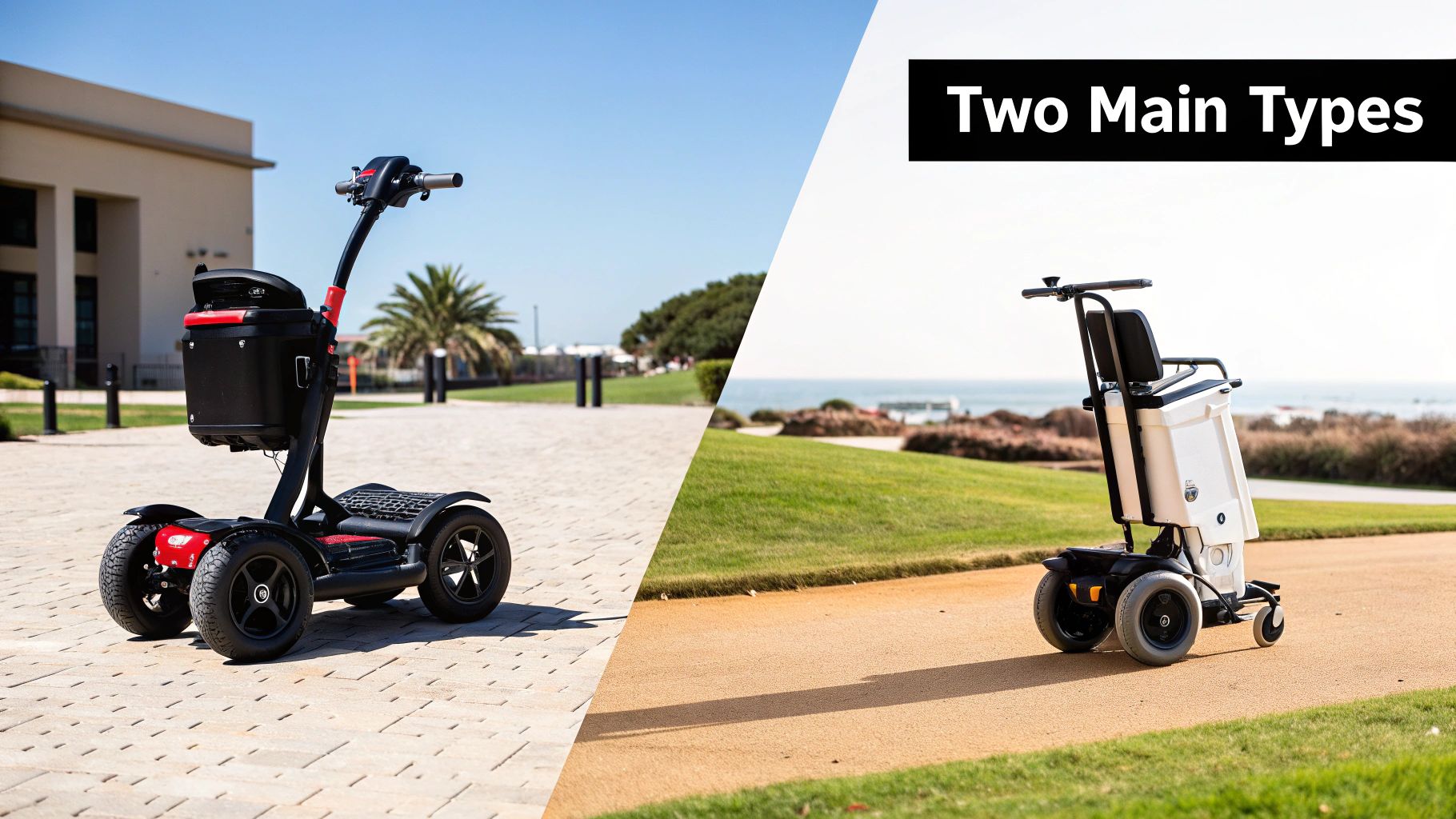
It’s a bit like buying a computer. You can get a pre-built desktop where every single part was chosen and assembled for you. Or, you could just upgrade your current machine with a powerful new graphics card. Both paths get you better performance, but they get there in completely different ways. The same logic applies to electric caddies.
The All-in-One Motorized Caddy
The first route you can take is the all-in-one motorized caddy. This is the whole package—a complete, fully integrated unit where the motor, battery, and frame were all designed from day one to work together as a single system. This is what most people picture when they think of a high-end electric cart.
These caddies are often loaded with advanced features. You'll find many with sophisticated remote controls, "follow-me" tech that actually tracks your steps, or even built-in GPS screens. Because they're engineered as one cohesive unit, they tend to feel incredibly stable and robust out on the fairways.
Of course, this integrated design comes with a couple of trade-offs. They usually have a higher price tag, often costing $1,200 or more. They can also be heavier and bulkier, which might make tossing one into the car or finding a spot for it in the garage a bit of a workout. For golfers who want the latest tech and are starting from square one, this is often the go-to choice.
The Power-Assist Conversion Kit
The second path is the power-assist conversion kit, which is a clever way to turn the push cart you already trust into a motorized beast. This approach is all about upgrading what you already own and love, making it a super popular choice for golfers on a budget or those who are just really attached to their current setup.
A perfect example of this is the Caddie Wheel. Instead of buying an entirely new cart, you simply add a motorized wheel to your existing one. Installation is usually a breeze, often requiring no tools at all, so you can get up and running in minutes.
This route comes with some serious perks:
- Affordability: Conversion kits are a whole lot easier on the wallet than a brand-new, fully integrated caddy.
- Lightweight Profile: By adding just the motor and battery, you skip the weight of a whole new frame, keeping your setup lean and mean.
- Flexibility: You get to keep the push cart you're already used to—the one with the handle at just the right height, the console you love, and the brake system you know how to use.
The big idea behind a power-assist kit is simple: add the power without making you replace the cart. It respects the investment you've already made in your gear while giving you the modern convenience you're after.
Ultimately, this approach is a practical and efficient way to motorize your game. If you're weighing your options, you can learn more about how to choose between the different types of electric golf walking carts in our detailed guide. This flexibility makes power-assist kits a fantastic entry point into the world of electric golf, offering a perfect balance of performance and value for a huge range of players. Your choice will shape your on-course experience, so understanding these differences is the first step toward a more effortless round.
Key Features to Look for Before You Buy
Choosing the right electric golf bag cart is a real investment in your game, so it pays to know exactly what you’re looking for. The market is flooded with options, but only a handful of features truly separate the good from the great. If you dial in on the essentials—battery life, motor power, controls, and portability—you’ll find a model that feels like it was made just for you.
Think of it like buying a car. You wouldn't just pick one based on the color, right? You'd pop the hood, check the mileage, and see how it handles. Applying that same mindset here will ensure your new electric caddy is a reliable partner for countless rounds to come.
Battery Life and Range
The battery is the absolute heart of any electric caddy. Its performance is what determines how far you can go and whether you’ll finish a round with juice to spare. A word of advice: don’t just take a manufacturer's "18-hole" or "36-hole" rating at face value.
Those numbers are almost always based on perfect conditions—a flat, dry course with a lightweight bag. But we all know golf courses are rarely that simple.
- Hilly Terrain: Climbing steep inclines drains a battery way faster than cruising on a flat fairway. A cart that boasts 27 holes on a flat course might run out of steam before you finish 18 on a hilly one.
- Battery Type: Most modern carts run on Lithium-ion (Li-ion) batteries. They’re lighter, charge faster, and have a much longer lifespan than the old, clunky lead-acid batteries. If you have the choice, always go for Li-ion.
- Bag Weight: A heavy tour bag packed with gear is going to make the motor work harder, which in turn reduces your battery's range.
Here's a pro tip: think about the toughest, hilliest course you play regularly. A "36-hole" battery is a much safer bet for that kind of track. It's the best way to guarantee you'll never get stranded mid-round.
Motor Power and Hill Climbing
There’s almost nothing more frustrating than an electric caddy with a weak motor. When your cart slows to a crawl on an uphill slope, it completely defeats the purpose of having a motorized assistant in the first place. This is where motor wattage really matters.
Generally, a higher wattage means more torque and better hill-climbing chops. While there isn't one magic number, a beefy motor ensures your cart keeps a steady pace no matter what the terrain throws at you. This is especially critical for power-assist kits like the Caddie Wheel, which are engineered to deliver consistent force to your existing push cart frame.
Controls and Remotes
How you actually interact with your cart is a huge part of the experience. The controls can range from a simple dial on the handlebar to a sophisticated remote packed with features. What you prefer really depends on how much hands-on (or hands-off) control you want on the course.
- Simple Interfaces: Many models, especially conversion kits, are all about ease of use. A system like the Caddie Wheel's remote is a perfect example—it gives you variable speed, forward, reverse, and braking. It’s everything you need and nothing you don’t.
- Advanced Systems: High-end, all-in-one caddies might throw in features like "follow-me" tech, preset distance functions, or even built-in GPS screens. These are cool perks, but they definitely add complexity and drive up the cost.
Think about your personal style. Do you want to set a speed and just walk, or do you prefer to have fine-tuned control at your fingertips? For most golfers, an intuitive remote that fits comfortably in a pocket is the sweet spot.
Weight and Portability
Don't forget about what happens off the course. You have to lift this thing into and out of your car, haul it to the garage, and set it up before every single round. A cart that’s too heavy or awkward can become a real pain fast.
This is one area where power-assist kits really shine. Instead of a bulky, fully integrated unit, you’re just adding a motorized wheel and a compact battery to your current push cart. This keeps the overall weight much, much lower. Always check the total weight and folded dimensions to make sure it will fit in your vehicle and be easy for you to handle.
Wheel Design and Stability
Finally, take a look at the wheels. The number of wheels and their tread design have a direct impact on how the cart performs on different surfaces.
- Three vs. Four Wheels: Four-wheel carts tend to offer better stability, which is a big deal on sidehills. Three-wheel designs are often a bit more maneuverable.
- Tread Pattern: A deeper, more aggressive tread provides much better grip on wet grass or loose ground, preventing the cart from slipping and sliding around.
It might seem like a minor detail, but on a dewy morning or after a pop-up shower, having stable, reliable wheels makes a world of difference. The shift toward electric options is a major trend in golf, with electric models now holding a commanding 81.64% share of the overall golf cart market, thanks to their quiet operation and low maintenance. As the market grows toward a projected $3.70 billion by 2034, this focus on practical, performance-driven features will only become more important. You can discover more insights about the golf cart market on Fortunebusinessinsights.com.
Spotlight on Caddie Wheel: The Smart Upgrade for Your Cart
If you’re a golfer who already owns and loves your manual push cart, the thought of dropping a ton of money on a brand-new, fully integrated electric caddy can be a tough pill to swallow. It often feels like a pretty unnecessary expense.
This is exactly where a power-assist conversion kit comes in as a much smarter path forward. The Caddie Wheel is a perfect example of this practical approach. It was designed with a simple philosophy: add the power, not the complexity.
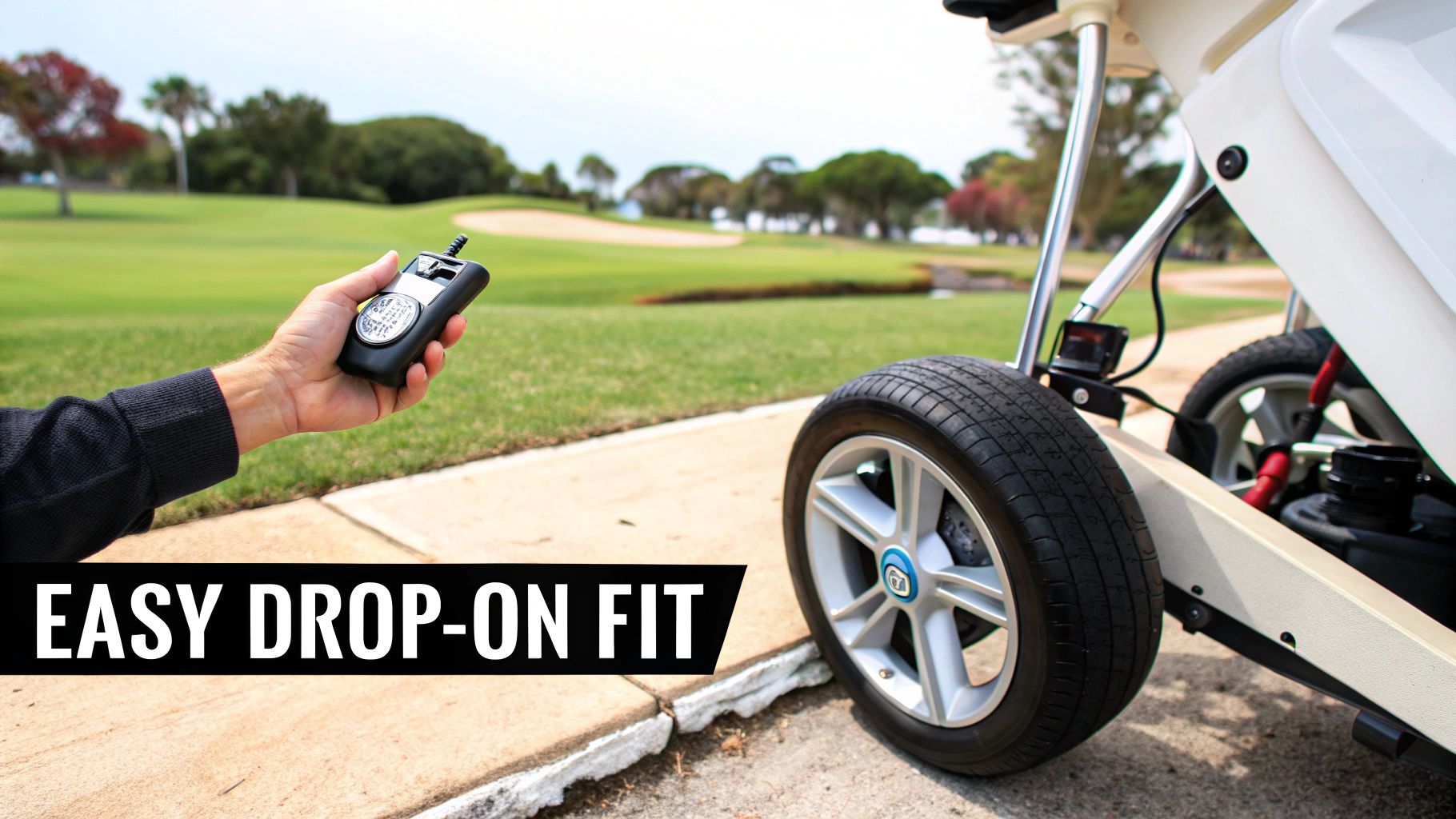
The Caddie Wheel turns your trusted push cart into one of the best electric golf bag carts on the market without making you learn a whole new system. It respects the investment you’ve already made in your gear, giving you that modern, motorized convenience you need to tackle any course with way less effort.
A Design Built by Golfers, for Golfers
What really sets the Caddie Wheel apart is its origin story. This thing wasn’t dreamed up in some corporate lab by engineers who've never walked 18 holes. It was created by avid golfers who got tired of the strain of pushing their carts up steep hills and just wanted a simple, effective solution that didn't break the bank.
You can feel that firsthand experience in every part of its design. The creators understood the real-world frustrations we all face, which is why they put ease of use, reliability, and broad compatibility above everything else. It’s an authenticity that builds trust because you know the product was made to solve the very problems you encounter on the course.
The Simple Drop-On Installation
Let's be honest, one of the biggest hurdles for any new piece of golf equipment is a complicated setup. The Caddie Wheel completely sidesteps this problem with its signature simple drop-on design. No tools, no confusing manuals, and you definitely don't need to be technically savvy.
The process is refreshingly straightforward:
- Attach the Bracket: A snap-in bracket is designed to fit securely onto the axle of your existing push cart.
- Mount the Wheel: The motorized Caddie Wheel unit just slides onto the bracket and locks right into place.
- Connect and Go: Plug in the battery, and you're ready to hit the links.
This whole installation takes just a few minutes, meaning you can convert your manual cart into a powerful electric caddy right before a tee time.
Intuitive Controls and Powerful Performance
The Caddie Wheel’s remote control is a perfect example of functional simplicity. It gives you all the essential controls you need without overwhelming you with a bunch of unnecessary buttons or complicated menus.
With the pocket-sized remote, you get:
- Variable Speed Control: Easily match the cart’s pace to your walking speed.
- Forward and Reverse: Navigate tight spots or back away from obstacles with no problem.
- Braking Capability: Maintain total control on downhill slopes for that extra bit of safety.
This intuitive system lets you focus on your game, not on fiddling with your equipment.
The core idea behind the Caddie Wheel is to enhance your game, not distract from it. The remote gives you complete control with minimal effort, letting you walk the course freely while your cart does all the heavy lifting right beside you.
The momentum behind electric propulsion is undeniable. The broader golf cart and electric vehicle market is projected to reach an incredible USD 10.12 billion by 2032. Accessories like the Caddie Wheel are a key part of this trend, transforming standard push carts into motorized allies—perfect for senior players or anyone looking to reduce strain on hilly courses. You can read the full research on the neighborhood electric vehicle market on 360iresearch.com to learn more about this growth.
The high-capacity battery is another standout feature, engineered to last for up to 36 holes on a single charge. This long-range capability gives you the confidence to play back-to-back rounds without ever worrying about running out of power. When you're ready to get started, you can find the complete Caddie Wheel unit and specifications on our product page. Its universal design ensures it works with most three- and four-wheel push carts, making it one of the most versatile electric golf bag carts out there.
Keeping Your Electric Caddie in Top Shape
Your electric golf cart is a serious piece of gear, and just like your clubs, a little routine care will keep it running smoothly for years. Don't worry, proper maintenance isn't a huge chore. It’s really just about building a few smart habits around charging, cleaning, and how you handle it on the course.
Think of it like changing the oil in your car. A few minutes of preventative care now saves you from headaches later and ensures your caddie is always ready to roll when you are.
Master Your Battery Care Routine
The battery is the heart and soul of your electric cart. Its health directly impacts your cart's power, range, and overall lifespan, so treating it right is the single most important thing you can do.
Make it a habit to charge your battery after every single round—even if you only played nine holes. Lithium-ion batteries love staying topped up, and this guarantees you’re never caught with a dead cart on the first tee. Try to avoid letting the battery drain completely, as that can stress it and shorten its life over time.
When it's time to pack the clubs away for the winter, charge the battery to about 50-60% and store it somewhere cool and dry. Extreme heat or cold is the enemy of battery health. For a deeper dive, our complete guide to golf cart battery maintenance has everything you need to know.
Simple Cleaning and Inspection Habits
Keeping your cart clean does more than just make it look sharp; it prevents dirt and grass buildup from gumming up the works. A quick wipe-down after a round only takes a minute.
- Frame and Body: Grab a damp cloth and wipe down the frame to get rid of any caked-on mud, grass, or sand.
- Wheels and Axles: Make sure to clear out any debris tangled around the wheels and axles so they can spin freely. This is a big one for power-assist units like the Caddie Wheel.
- Electrical Connections: Give the battery connections a quick look every now and then. They should be clean, dry, and snug. A loose connection is a common cause of power cutting out unexpectedly.
Here's a great habit to get into: a quick two-minute inspection before you head to the first tee. Check that the wheels are aligned and that all the folding joints and locks feel secure. It's an easy way to catch a minor issue before it becomes a real problem on the back nine.
Pro Tips for Smarter On-Course Use
How you drive your cart on the course makes a difference, too. Navigating smart saves battery life and reduces wear and tear on the motor and frame.
Instead of charging straight up a steep hill, look for a more gradual path. Use your remote to steer the cart around obstacles like big tree roots or the edge of a bunker, rather than trying to power through them. These small adjustments put less strain on the motor, helping you squeeze more holes out of a single charge and extending the life of your cart.
Choosing the Right Electric Cart for Your Game
Making the final call on an electric golf bag cart really comes down to knowing your own game, your course, and your priorities. Once you have a handle on that, you can confidently match your needs to the perfect solution—whether that’s a fully integrated unit or a smart upgrade like the Caddie Wheel.
The best way to find your fit is to think about what kind of golfer you are. Every player has a different reason for wanting to add a motor to their game, and once you identify your own motivation, the decision becomes crystal clear.
The Senior Golfer
For many senior players, the goal is simple: reduce physical strain to stay on the course for many more years. The constant push-and-pull of a heavy bag can be tough on the joints and absolutely drain your energy by the back nine.
An electric cart is a true game-changer here. It completely removes that physical burden, letting you enjoy the walk without the usual aches and pains. Ease of use is a huge factor, which makes the simple, intuitive remote of the Caddie Wheel a fantastic choice. It delivers effortless control without a bunch of confusing features.
The Fitness Walker
Some golfers love walking the course for the exercise but find that wrestling a heavy cart up and down hills just ruins the experience. Their goal is a good workout from the walk itself, not from battling their gear.
This is where a power-assist kit really shines. It saves your energy for the walking part, allowing you to keep a comfortable pace and focus on the health benefits. You still get all your steps in, but you finish the round feeling refreshed, not completely wiped out.
The Budget-Conscious Golfer
For players who want all the perks of an electric caddy without the sticker shock, a power-assist conversion kit is the undisputed winner. A brand-new, all-in-one electric caddy can be a serious investment, often running over $1,200.
A conversion kit like the Caddie Wheel offers a practical and cost-effective alternative. It delivers the same core benefit—motorized assistance—for a fraction of the cost by upgrading the push cart you already own.
This decision tree helps visualize the key maintenance steps for keeping your cart in top shape.
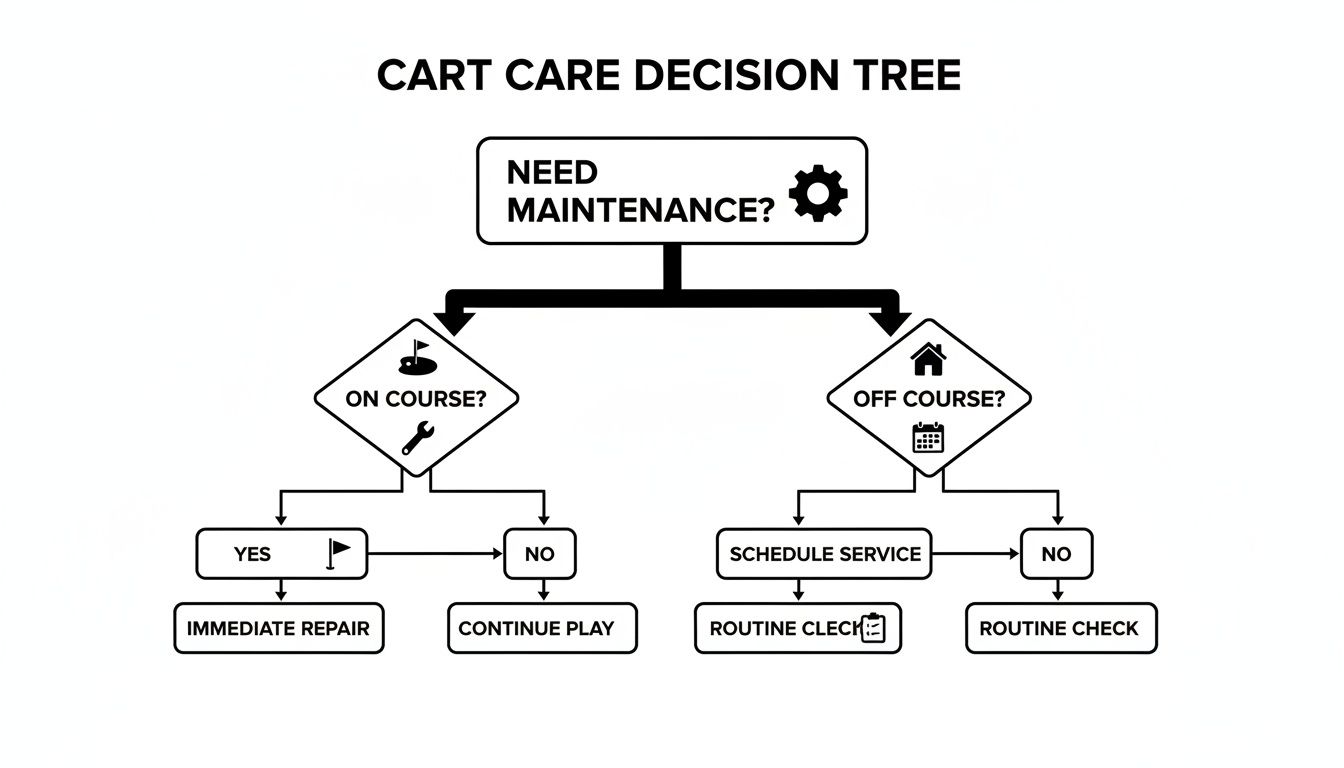
As the flowchart shows, proactive care is simple and essential, both on and off the course. For those truly passionate about the game, perfecting your skills often extends beyond the fairway; many are now enhancing their homes with dedicated artificial turf for putting greens.
Still Have Questions? We've Got Answers
Even after seeing all the benefits, you might have a few lingering questions about how an electric caddy would actually fit into your game. That's totally normal. Below, we've tackled some of the most common things golfers ask, so you can feel confident you're making the right move.
How Hard Is It to Install a Conversion Kit?
This is probably the biggest hesitation for golfers thinking about a power-assist kit, and the answer is refreshingly simple: it's incredibly easy. Modern kits like the Caddie Wheel are designed to be completely tool-free, and the whole setup takes just a few minutes.
You literally just snap a bracket onto your push cart’s axle and slide the motorized wheel into place. It’s a drop-on design that means you can convert your cart right in the parking lot before a round without any technical headaches.
Will a Power-Assist Kit Fit My Current Push Cart?
Compatibility is another big one, and this is where conversion kits really shine. Most power-assist units are built with universal brackets meant to fit a huge range of popular three- and four-wheel push carts already on the market.
It's always smart to double-check the manufacturer's compatibility list or quickly measure your cart's axle before buying. That said, the flexible design of these kits means they can successfully upgrade the vast majority of carts that golfers already own and love.
The whole point of a conversion kit is to make the gear you already have better, not force you to buy all new stuff. This broad compatibility makes it a super accessible upgrade for almost any walking golfer.
How Do Electric Caddies Handle Rain?
Worried about getting caught in a sudden downpour? You can relax. Most modern electric golf caddies are built to be weather-resistant. Key components like the motor and the battery casing are sealed to keep moisture out, so you can finish your round even if the weather turns sour.
Now, you shouldn't go driving it into a pond, but playing in light to moderate rain or on dewy morning fairways is perfectly fine. Just give the unit a quick wipe-down with a towel after your round to keep it in great shape.
Is the Remote Control Complicated to Use?
The last thing anyone wants on the course is to be fumbling with a confusing gadget. The best electric caddies get this, and they prioritize simple, intuitive controls. The remotes are typically small enough to operate with one hand and fit easily in your pocket.
They stick to the functions you actually need, and nothing more:
- Variable Speed Control to match your exact walking pace.
- Forward and Reverse for easy maneuvering.
- Braking for safety on those downhill slopes.
This no-nonsense approach means you can manage your cart without a second thought, keeping your mind on the game, not on the gear.
Ready to make every round more enjoyable? The Caddie Wheel turns your trusted push cart into a powerful, remote-controlled caddy in minutes. Experience the freedom of walking the course without the strain. Upgrade your game today at caddiewheel.com.
Partager:
Your Guide to Choosing the Best Golf Caddy Motor
How to Choose Portable Battery Charger for Golf Caddies: A Quick Guide