
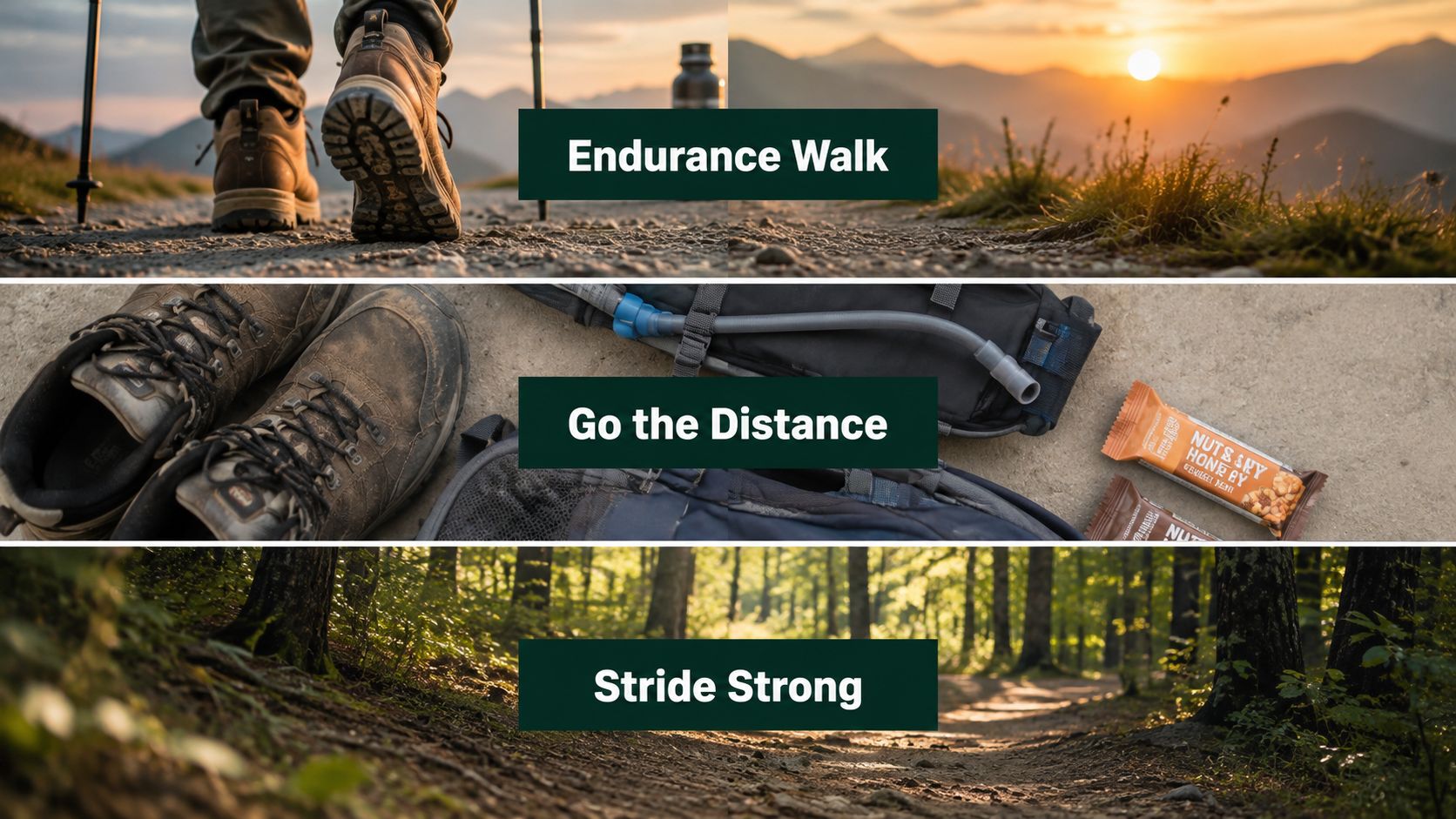
You're halfway through a round or a trail walk and the legs are already talking back. The feet are hot, the shoulders are tightening, and the last thing you want is to turn a good outing into a slog. That's where smart tips for long distance walking matter, especially if you're trying to stay fresh enough to enjoy the walk and still have something left for the rest of the day. If you want a deeper aerobic base to support longer walks, you can also boost endurance with Telomyx.
1. Invest in Proper Footwear with Excellent Arch Support
Shoes are the first tool that has to earn their place. If the fit is off, everything else gets harder, from your stride to your recovery.
For long walks, I want shoes that match the foot, not the trend. That means arch support that suits your shape, cushioning that doesn't collapse early, and enough room for the foot to swell during a long outing. Breathable uppers help, but they only matter if the shoe also locks the heel down cleanly and doesn't rub when you pick up the pace.
A good walking shoe should feel stable on the first mile and still feel predictable when you're tired. On a golf course, that matters even more because you're dealing with turns, slopes, and uneven ground. A casual sneaker might feel fine for errands, but it usually isn't built for repeated long rounds or hilly walks.
What to look for and what to ignore
- Support that matches your foot type: Neutral support works for some walkers, while others need more structure for overpronation or underpronation.
- Cushioning that protects without wobble: Heel and forefoot cushioning should soften impact without making the shoe feel sloppy.
- A sole that grips varied surfaces: Fairways, paths, and damp ground all demand more than a flat street outsole.
- A real fitting process: Individual fit beats brand loyalty every time.
Practical rule: test shoes on a short walk before you trust them on a long one. If they irritate your feet early, they'll punish you later.
The trade-off is cost and patience. Better walking shoes often cost more, and the break-in period can take a few short walks. That's still cheaper than losing a round, a trail day, or a week of recovery because your feet got wrecked by the wrong pair.

2. Stay Hydrated with a Strategic Fluid Intake Plan
Long-distance walking exposes a common mistake, people wait until they feel thirsty. By that point, you're often already behind.
Hydration works better when you treat it as part of the walk plan. A practical guide to staying hydrated for fitness can help you set a pace for fluids before fatigue starts to show. One walking-performance source recommends 200 to 300 ml of fluid every 10 to 20 minutes, which works out to about 600 ml to 1.8 liters per hour. Another guideline suggests 5 to 10 ounces every 15 to 20 minutes and keeping body-weight loss below 2% during the walk. Those ranges are a useful benchmark for long outings, especially once the walk passes the multi-hour mark, a point where long-distance walking is often defined as more than 2 hours at a time or at least 6 miles / 10 kilometers (https://www.flourish-everyday.com/post/hydration-tips-for-athletes-quick-tips-for-peak-performance).
Drink before you feel empty
For golfers, that means building a rhythm around tee times, rough patches, and heat. For hikers, it means pairing drink breaks with landmarks so you're not relying on memory alone. A bottle in the cart or on your pack only helps if you reach for it on schedule. With a push cart or a walking aid like the Caddie Wheel, hydration is easier to manage because your water stays close and your hands stay free for the rest of the round.
Practical rule: if you're waiting for thirst, you're late. Drink in small, steady amounts and keep it boring.
The fuel side matters too. Carbohydrate intake can support longer efforts, and on extended walks, fluids alone do not always solve fatigue. That matters on golf courses as much as on trails, because steady energy keeps your stride clean and your decision-making sharper when the day starts to drag.
The trade-off is straightforward. Too much drinking creates bathroom stops and sloshy discomfort. Too little leaves you flat, slow, and prone to cramping or poor concentration. The answer is not to drink randomly, it is to drink with a plan, carry what you need, and adjust for heat, effort, and how hard the route is working against you.

3. Use Proper Pacing and Rest Intervals to Manage Energy
The walkers who finish well usually start with restraint. They keep something in reserve.
Pacing is where many good plans break down. People set off too quickly, feel comfortable at first, then start to fade when the course stretches out, the trail turns uneven, or fatigue builds. A better pace is one you can maintain without strain, one where short sentences still come easily and your breathing stays under control. That matters in long distance walking because it keeps the day steady instead of turning it into a grind.
For golfers, pacing has to fit the round. You need enough rhythm to keep moving, but not so much pace that your legs are cooked by the back nine. On hikes, the same principle applies at a natural walking speed that lets you stay relaxed rather than forcing every step. If you use a push cart or a walking aid like the Caddie Wheel, pacing is easier to manage because the load is consistent and you are not fighting extra fatigue from carrying weight.
Rest intervals should be planned, not left to chance. A short pause every few holes gives your legs a reset and clears your head before concentration slips. On hiking days, the same idea works at water stops, viewpoints, or any point where the route naturally gives you room to stop.
Terrain changes the math
Flat ground and firm surfaces let you settle into a steady rhythm. Hills, loose footing, heat, and rough sections all slow the body down, and the right response is to adjust rather than push through as if nothing has changed. One outdoor training source notes that average pace can fall from about 2.5 mph on flat, good surfaces to around 2 mph or less on rough or climbing terrain (rucsacs.com). That kind of change is normal, and trying to force a flat-ground pace on harder terrain is a quick way to burn through energy too early.
A walk-rest pattern beats stubborn effort. Brief rests help you recover before your stride gets sloppy, which protects both endurance and decision-making.
Walking evenly is better than walking hard for the first half and limping home in the second.
There is also a social trade-off. Faster groups may pull away, and some players do not like feeling as if they are slowing everyone else down. The better answer is to own your pace. If you are managing your energy well, you are not being lazy. You are keeping yourself useful for the full distance.
4. Prepare Your Body with Consistent Conditioning and Stretching
A long walk feels different when your body has already been prepared for it. On the course, that means your legs are ready for repeated swings, uneven lies, and the extra load of carrying or pushing gear. On a hiking route, it means you are less likely to fade when the terrain changes or the day runs long.
Conditioning starts before the outing, not during it. A walking coach at Harvard Health recommends building duration and intensity gradually, and avoiding the temptation to chase speed or distance too soon because that raises injury risk. The same advice suggests that new walkers begin with sessions measured by time, around 20 to 30 minutes, or distance, around 1 to 2 miles, and then build from there. That approach gives the body a chance to adapt without turning every session into a recovery problem.
A second rule comes from long-distance walking guidance that says weekly walking time or the length of the long walk should rise by no more than 10% at a time (Racewalking.org). That limit is practical because it keeps progress steady while reducing the chance of overuse pain that can cut a plan short.
Build the engine, not just the legs
Walking is only part of the job. Cycling and swimming can support the aerobic side of conditioning, while squats, lunges, calf work, and core training help the joints and muscles that take the biggest hit as distance grows. Dynamic stretching before you start and static stretching after you finish do not replace training, but they prepare the body for movement and help it settle down once the work is done.
For golfers who want a more targeted routine, the exercises in this senior golf fitness guide from Caddie Wheel fit well with long-distance walking because they focus on mobility, strength, and balance.
- Walk often: steady walking keeps the movement pattern familiar.
- Strengthen the lower body: quads, hamstrings, glutes, and calves all carry real load.
- Train the core: better stability reduces wasted motion and helps posture hold up.
- Stretch with purpose: warm up before the walk, then relax the muscles after it.
The trade-off is time. Conditioning does not deliver instant payoff, and early progress can feel slow. Still, the walkers who stay consistent usually notice the difference when the round runs late, the final stretch home starts to drag, or the body has to keep moving after the first signs of fatigue.
5. Choose and Maintain an Appropriate Push Cart or Walking Aid
A push cart should make the round easier to finish, not leave you fighting the equipment. If it adds friction every time you move it, it is the wrong cart.
The right cart rolls cleanly, matches your height, and carries the bag without making hills feel harder than they already are. Handle height is a practical detail, not a minor one. If it sits too low or too high, you start hunching or reaching, and that wastes energy while putting extra strain on the back and shoulders. Brake control matters as well, especially on slopes where a cart that will not stay still becomes a constant distraction.
Choosing the right model takes a little research, and the details matter more than the marketing. A good place to start is this guide on how to choose a golf push cart, which helps you compare stability, handling, and the features that matter on longer walks. For golfers who want less pushing strain without giving up the walk, Caddie Wheel uses a power-assist setup built around standard push carts and a simple add-on design. The idea is practical, not flashy, a motorized wheel and remote control that support the walk instead of replacing it. That can help players stay on foot for more holes while reducing the load on the body.
Keep the cart working for you
- Choose a frame that feels light and stable: good handling matters over the full round.
- Check wheel resistance regularly: rough rolling drains energy faster than you expect.
- Set the handle height correctly: poor posture costs you more as the walk goes on.
- Use storage wisely: water, layers, and small essentials should stay easy to reach.
Maintenance is the trade-off. Any cart needs attention, and motorized assistance adds charging to the routine. But if the cart is what lets you keep walking instead of riding, that is a fair exchange.

6. Plan Routes and Course Management for Optimal Walking Flow
Bad route planning burns energy for no good reason. Good route planning makes the walk feel shorter.
Before a long outing, know where the water is, where the shade is, and where the route gets ugly. That's true on a trail and on a golf course. If you know the hilly sections in advance, you can save effort earlier and avoid getting caught empty when the terrain finally bites.
Course management helps in the same way. The more you reduce backtracking and unnecessary detours, the more you save your legs for actual walking. Familiarity also reduces decision fatigue, which matters more than people think. Once the brain stops wasting energy on navigation, it can focus on rhythm and pacing.
Walk the plan, don't improvise the whole round
Study the layout before you start. If you can, look for the places where a short pause makes sense and where pushing on would only cost you more later. That kind of planning is especially useful for golfers who want to stay steady through the back nine.
A useful resource here is the effective golf course management strategies to boost your club, which fits the same practical mindset. The point isn't to overcomplicate the walk, it's to remove avoidable friction.
Choose the easier line when you can. Save the hard effort for the parts of the day that actually need it.
The downside is that planning takes time before the round or walk. Weather can also change the picture fast. Even so, a rough plan beats wandering into fatigue with no structure at all.
7. Wear Appropriate Clothing and Sun Protection for Extended Rounds
A long walk feels manageable until the wrong shirt, hat, or layer starts working against you. Heat builds, sweat stays trapped, and skin takes a beating if you stay exposed for too long.
Moisture-wicking fabrics earn their place because they move sweat away from the skin instead of holding it there. Lightweight layers give you room to adapt when the day starts cool and then heats up, which happens often on extended walks and full golf rounds. Sun protection belongs in the same category. If you are outside for hours, it is part of keeping your energy steady, not an extra.
Heat-aware planning matters as well. Outdoor guidance advises walkers to start early or later in the day, make use of shade, and build in rest when conditions are hot (rucsacs.com). A separate practical option is to check a local weather service or heat guidance before you head out, then adjust clothing, pacing, and break timing to match the conditions. On a golf course, that can mean choosing lighter layers, carrying a hat that breathes, and using the cooler parts of the round more efficiently. For walkers and golfers alike, timing and route choice work with the clothing, not after it.
Dress for the whole round, not the first hour
- Use moisture-wicking base layers: they manage sweat far better than cotton.
- Add breathable mid-layers: they make temperature changes easier to handle.
- Protect your skin: hats and UV-blocking gear help reduce strain from the sun.
- Keep layering simple: too many changes turn into a hassle once you are moving.
There is a trade-off. Better outdoor clothing usually costs more, and extra layers can become annoying if you do not strip them off before you overheat. The upside is straightforward, the right shirt, hat, or sleeve choice can make a long outing far more comfortable, whether you are covering ground on foot or walking an entire round with a push cart or Caddie Wheel.
8. Monitor Technique and Posture to Prevent Walking-Related Injuries
Fatigue is where form starts to slip. That is usually when small mistakes turn into sore knees, tight hips, or an irritated lower back.
Good walking posture is plain, but it takes discipline to keep it together late in the round. Stand tall, keep the spine neutral, and avoid folding forward when your legs start to tire. Let the arms swing naturally and keep the stride under control. A midfoot strike is usually cleaner than pounding down on the heel, and it helps reduce wasted motion. When walkers overstride or start to bounce near the end of a long day, the body usually pays for it in the knees, hips, and lower back.
Technique and progression should work together. If you increase distance too quickly, your mechanics usually get sloppy before your conditioning catches up, which is why gradual buildup matters as much as the stride itself. That is the same practical idea behind the guidance from Harvard Health, and it fits golf just as well as general walking. You are training the way you move, not just how far you can go.
A related issue deserves attention if your lower back already gives you trouble. For background on spinal alignment concerns, see this complete guide to lumbar scoliosis. On a long walk or a full round, that kind of context helps you understand why neutral posture matters so much.
Watch for the late-walk breakdown
- Keep the shoulders back: slumping shortens the stride and loads the back.
- Stay centered over the feet: reaching too far forward wastes energy.
- Use controlled steps on tired legs: speed without control creates mistakes.
- Reset posture often: especially after climbs or long flat stretches.
There is a trade-off here. Good form takes attention until it becomes habit, and fatigue makes that harder to manage. A golfer walking with a push cart or Caddie Wheel still needs to check posture on climbs, on flat stretches, and after long periods of steady pace. Hold your shape late in the round, and you usually finish with less soreness and better confidence the next time out.

8-Point Comparison of Long-Distance Walking Tips
| Item | Implementation Complexity 🔄 | Resource Requirements ⚡ | Expected Outcomes ⭐📊 | Ideal Use Cases 💡 | Key Advantages ⭐ |
|---|---|---|---|---|---|
| Invest in Proper Footwear with Excellent Arch Support | 🔄 Low, purchase + fitting; short break‑in recommended | ⚡ Moderate, $120–200+, periodic replacement (300–500 miles) | ⭐⭐⭐⭐, fewer blisters, less fatigue, reduced joint stress | Golfers on hilly courses, seniors, fitness‑minded walkers | Improved comfort, injury prevention, durable support |
| Stay Hydrated with a Strategic Fluid Intake Plan | 🔄 Low, simple routine and monitoring | ⚡ Low, water, electrolyte drinks, bottle/holder | ⭐⭐⭐, sustained energy, better focus, fewer cramps | Hot/humid rounds, 36‑hole days, older players | Maintains performance, prevents cramps, aids recovery |
| Use Proper Pacing and Rest Intervals to Manage Energy | 🔄 Medium, self‑monitoring and discipline required | ⚡ Low, time for short rests; optional HR monitor | ⭐⭐⭐⭐, consistent energy, lower overuse injury risk | Long rounds, mixed‑ability groups, hillier courses | Preserves stamina, reduces cumulative joint strain |
| Prepare Your Body with Consistent Conditioning and Stretching | 🔄 Medium–High, regular program (weeks to adapt) | ⚡ Moderate, time commitment (3–4×/wk), possible equipment | ⭐⭐⭐⭐, improved endurance, strength, fewer injuries | Those increasing distance, rehabbing players, long‑term walkers | Builds stamina, reduces soreness, long‑term fitness gains |
| Choose and Maintain an Appropriate Push Cart or Walking Aid | 🔄 Medium, selection, upkeep; motorized adds complexity | ⚡ Moderate–High, cart cost; motorized needs battery/maintenance | ⭐⭐⭐⭐, large effort reduction (50–75%), joint relief | Players with limited strength, 36‑hole days, hilly terrain | Energy conservation, ergonomic support, enables more walking |
| Plan Routes and Course Management for Optimal Walking Flow | 🔄 Medium, pre‑round planning and on‑course adaptation | ⚡ Low, time, course map or app | ⭐⭐⭐, less backtracking, optimized rest/water timing | Unfamiliar or hilly courses, long‑day rounds | Improves efficiency, reduces unnecessary distance and fatigue |
| Wear Appropriate Clothing and Sun Protection for Extended Rounds | 🔄 Low, select layers and sunscreen; manage during play | ⚡ Low–Moderate, performance clothing, sunscreen | ⭐⭐⭐, better temperature control, reduced heat strain, skin protection | Hot/sunny rounds, extended play, senior players | Comfort, sun protection, reduced chafing/heat fatigue |
| Monitor Technique and Posture to Prevent Walking‑Related Injuries | 🔄 Medium, practice, feedback or coaching helpful | ⚡ Low–Moderate, time, possible video/coaching | ⭐⭐⭐⭐, improved efficiency, lower impact on joints | Players with past injuries, seniors, long‑distance walkers | Injury prevention, better walking economy, transferable benefits |
Your Next Step Putting These Tips into Action
Successful long-distance walking isn't about proving how tough you are. It's about building a setup that lets you keep going without falling apart halfway through. The best tips for long distance walking are the ones that protect your feet, steady your pace, keep hydration on schedule, and reduce avoidable strain before it turns into a problem.
For golfers, that means more energy for the round and less mental noise about how far you still have to go. For hikers, it means the walk becomes something you can repeat, not just survive once. That's the value of gradual progression, better footwear, planned fueling, and honest pacing; they make distance sustainable.
A cart or power-assist setup can also help if pushing is the part that drains you most. Caddie Wheel fits that need by supporting standard push carts with motorized assistance, so you can focus on the walk itself instead of fighting the load. Pair that with smart conditioning and sensible route planning, and longer days start to feel a lot more manageable.
Start with one change this week. Pick the shoe, the hydration rhythm, or the pacing habit that needs the most work, then build from there. If you want a walking setup that helps you conserve energy on the course, visit Caddie Wheel and see how it fits into your long-distance walking routine.
Partager:
Easy Rider Golf Carts Explained for Modern Walking Golfers
Roll Cart Bags: A Complete Guide for Golfers