
For today's golfer who loves walking the course, three-wheel push carts are the undisputed champion. They hit that perfect sweet spot between stability, easy handling, and effortless pushing. It’s a massive leap forward from the old, back-straining two-wheel pull carts and a much nimbler option than their beefier four-wheel cousins.
Why Walkers Are Switching to Three-Wheel Carts
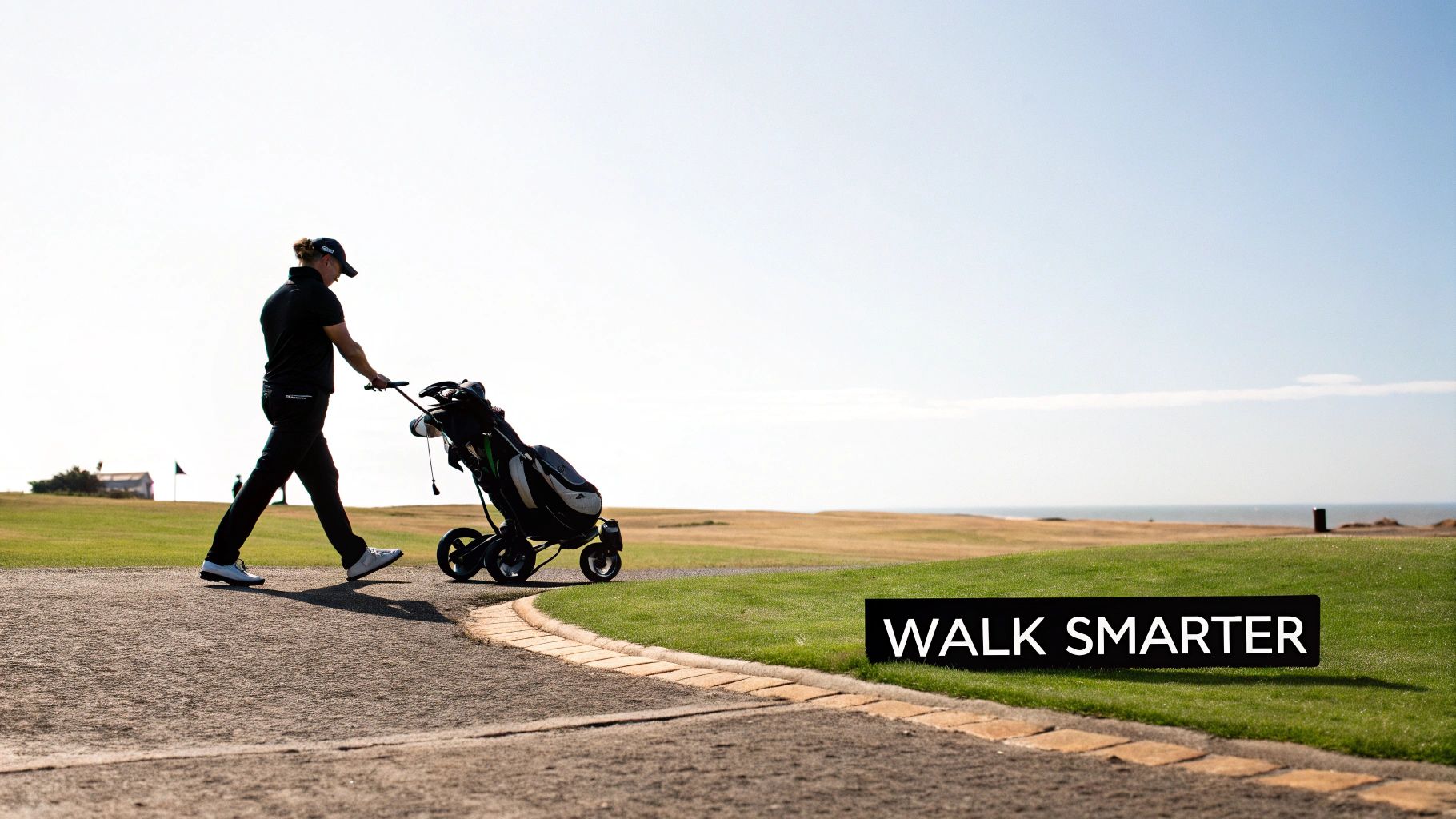
There’s a real movement back to walking the course, and it’s easy to see why. You connect with the rhythm of the game and get in a great workout. But let’s be honest—lugging a 30-pound bag for four or five miles can turn a beautiful walk into a grind, leaving you gassed on the back nine when every shot counts.
This is exactly where the modern push cart saves the day, and the three-wheel design has clearly become the fan favorite. Think of it as the perfect all-rounder. It has the solid base you need for hilly lies and uneven terrain, but it’s still agile enough to navigate tight cart paths and sharp corners with ease. Unlike those old two-wheelers that you had to drag behind you, a three-wheel cart lets you push your gear forward with minimal effort.
A Smarter Way to Walk the Course
The shift to these carts isn’t just about making the walk easier; it’s about playing better golf. When you’re not wasting energy hauling your clubs, you can keep your focus sharp and your swing smooth for all 18 holes. It's common to hear golfers say their scores dropped after switching to a push cart, simply because they weren't physically drained by the time they reached the 16th tee. That ergonomic edge is a game-changer for everyone, no matter your age or fitness level.
The real magic of the three-wheel design is its blend of stability and maneuverability. It gives you a rock-solid platform for your bag without feeling like you're trying to steer a bus around the greens.
This unique combination makes a three-wheel cart more than just an accessory—it's essential equipment. It does more than just carry your clubs; it boosts your endurance, sharpens your focus, and ultimately leads to a better, more enjoyable round. Whether you're a senior player who needs a little help or a fitness-focused golfer who wants to walk without the burden, this design is the best all-around solution on the course.
The Smart Design Behind the Modern Push Cart
To really get why today's three wheel carts are so brilliant, you have to remember what we used to deal with. For years, golfers were stuck dragging clunky, two-wheel pull carts. These things forced you to twist and yank your heavy bag, putting a ton of uneven strain on your shoulders, back, and hips—not exactly the best way to warm up for a powerful swing.
That constant pulling motion wrecked your posture and just plain wore you out. The arrival of the three-wheel push cart changed the entire game. By switching from a pull to a push, the whole dynamic flipped. Pushing the cart forward uses the bigger muscle groups in your legs and core, which encourages a much more natural, upright walking posture and spreads the effort evenly.
The Power of the Triangle
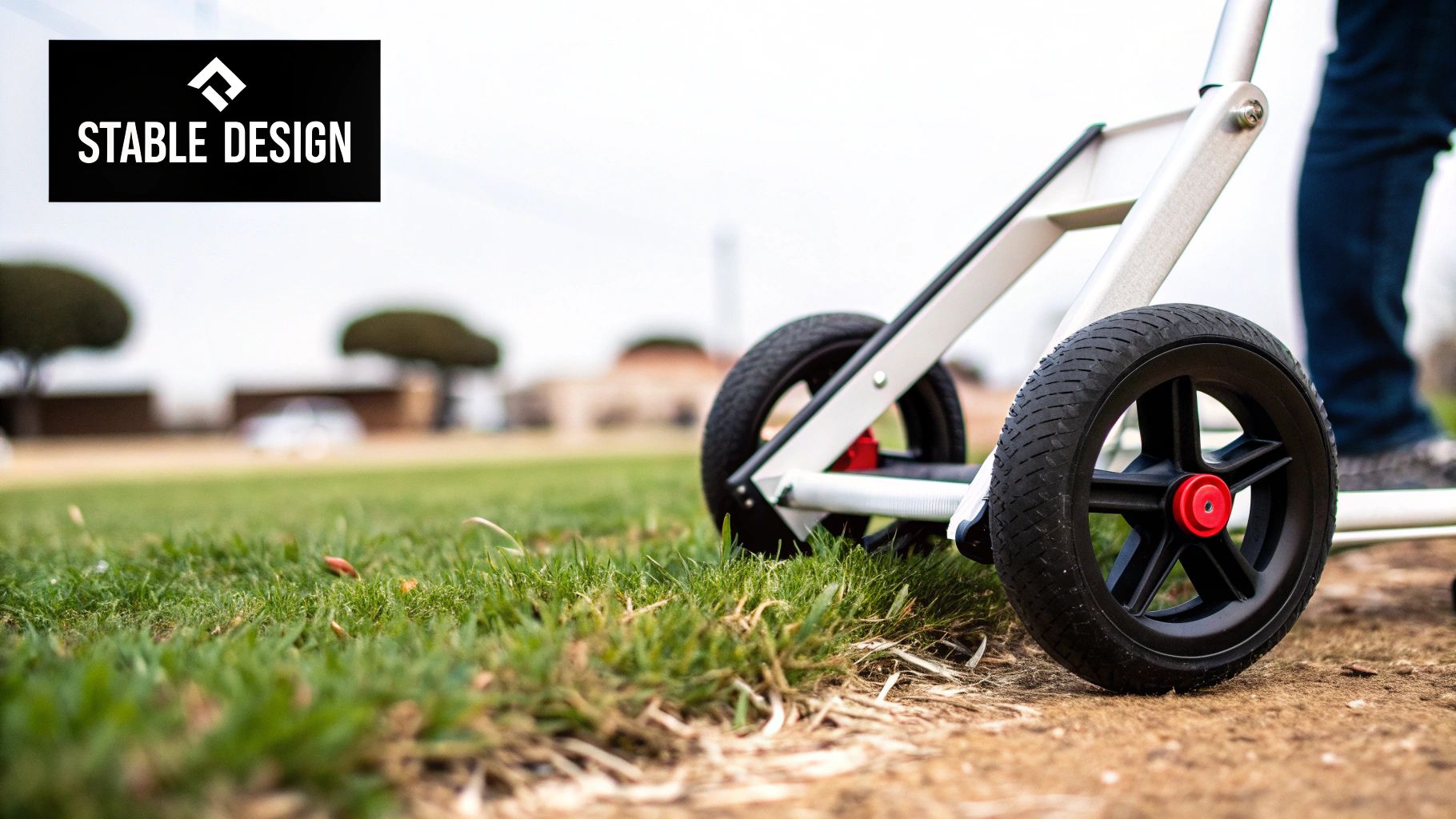
The secret sauce for the three wheel cart is simple geometry. Its design creates an incredibly stable triangular base, hitting the perfect balance between solid support and nimble handling. Think of it as a tricycle versus a bicycle; that third wheel creates a platform that just doesn't want to tip, even when you've loaded it down with a heavy tour bag.
This triangular footprint is the key to its effortless feel. It glides over fairways, rough, and cart paths with barely any effort from you. You’re no longer fighting to keep the thing upright; you’re just steering it. To get a better feel for the mechanics behind this, you can learn more about what defines a modern push cart in our detailed guide.
The triangular base of a three wheel cart is its engineering sweet spot. It delivers the stability needed for varied terrain without sacrificing the nimble handling that makes walking the course a pleasure, not a chore.
This clever setup is what makes these carts the peak of ergonomic efficiency. They cut down on physical strain, save your energy for your shots, and make walking 18 holes a genuinely enjoyable part of the day.
Finding the Balance Between Agility and Stability
So, if three wheels are great, are four even better? Not always. While a four-wheel cart might have a slight advantage in pure stability thanks to its rectangular base, it often comes at the cost of maneuverability. Trying to navigate tight corners, winding paths, or weaving around bunkers can feel a lot clunkier with a four-wheel model.
The three-wheel design nails that perfect middle ground, offering:
- Superior Agility: The single front wheel, especially if it swivels, gives you a much tighter turning radius.
- Effortless Pushing: With less contact on the ground and often a lighter frame, they take less energy to get rolling and keep moving.
- Ample Stability: For the vast majority of course conditions, from gentle slopes to uneven lies, a quality three-wheeler is more than stable enough.
At the end of the day, the three wheel cart delivers the best all-around performance. It’s a masterful blend of engineering that combines stability, ergonomics, and easy handling into one efficient package, making it the top choice for today's walking golfer.
Breaking Down the Features of a Great Three-Wheel Cart
Choosing the right three-wheel cart isn’t about grabbing the most expensive one off the rack. It’s about understanding how certain features actually perform out on the course. Get this right, and your cart will feel like a natural part of your game. Get it wrong, and it’ll feel like a constant, nagging frustration.
When you start looking at different models, you'll see a huge variety in designs. Every single element, from the size of the wheels to how it folds up, plays a huge part in your day-to-day experience. Let’s dig into the key features you need to look at, using some simple analogies to make their impact obvious.
Wheel Size: The Mountain Bike Effect
Think about the difference between a tough mountain bike and a sleek road bike. A mountain bike’s big, rugged tires glide over rocks, roots, and bumpy trails without a problem. A road bike's skinny tires would get stuck in a second. The wheels on a three-wheel cart work exactly the same way.
- Larger Wheels (11-12 inches): These are your all-terrain beasts. They roll smoothly over thick rough, uneven cart paths, and soggy fairways with very little effort. If your home course is hilly or has a lot of different terrain, bigger wheels are a non-negotiable.
- Smaller Wheels (9-10 inches): They still get the job done, but smaller wheels are much better suited for flat, perfectly manicured courses. You’ll find yourself putting in a bit more muscle to push them over bumpy ground.
A cart with larger wheels simply gives you a smoother, more stable ride. That means less jostling for your clubs and more energy saved for your next shot.
Folding Mechanism: One-Click Umbrella vs. A Complex Tent
How a cart collapses is one of its most important features, but it's something people often forget to check. The best folding mechanisms are fast and intuitive. Poorly designed ones, on the other hand, feel like a frustrating puzzle you have to solve after every single round.
Picture the difference between popping open a one-click umbrella in a downpour versus fumbling around with the poles of a complicated tent. That’s the feeling you want to avoid.
A great folding mechanism should be a background feature—something you use in seconds without even thinking about it. If you have to pull out the manual every time you put it in your trunk, it's not the right cart for you.
Keep an eye out for models that advertise a "one-step" or "one-click" fold. These systems are built for pure convenience, letting the cart collapse into a compact shape with a single, easy motion. That speed is a massive quality-of-life upgrade, especially when you're wiped out after walking 18 holes.
Weight and Frame Material
The material of the cart’s frame has a direct impact on its weight, how long it will last, and frankly, how much of a workout it is to push. Most modern three-wheel carts are built with lightweight aluminum, which hits that perfect sweet spot between strength and low weight. Heavier steel frames are pretty rare these days, as they take a lot more energy to push around, especially up hills.
An aluminum frame, which usually means the cart weighs between 15 and 18 pounds, is what you should be looking for. This ensures the cart is sturdy enough to handle a fully loaded bag without feeling like you're pushing a boulder. This idea lines up with a much bigger trend in transportation, where efficiency and compact design are king. In fact, the global market for three-wheelers, valued at a whopping USD 11.58 billion in 2024, is booming thanks to the demand for lightweight, efficient ways to get around crowded areas. You can find more insights on this market trend on the IMARC Group's website.
Braking System and Smart Storage
Finally, let’s talk about the practical, on-course features that just make your round easier. The braking system is a big one for safety, particularly if you play on hilly courses.
- Hand Brakes: Located right on the handle, these are incredibly convenient. You can hit the brake instantly without breaking your stride, giving you much better control on slopes.
- Foot Brakes: Found near a rear wheel, these are simple and they work, but you have to stop and use your foot to lock or unlock them.
Beyond the brakes, look for smart storage. A well-designed console with spots for your phone, scorecard, and a drink is an absolute must. Many carts also come with extras like a storage net for your accessories, an umbrella mount, and even a small insulated pouch for snacks or a cold one. These thoughtful touches keep your gear organized and right where you need it, letting you focus on your game.
Finding the Right Cart for Your Golfing Style
The best three-wheel cart isn't about having the most features; it's about having the right features for how you play. The key is figuring out how those specs translate into real-world benefits on the course. Once you do that, your cart stops feeling like just another piece of gear and starts feeling more like a trusted caddie.
Every golfer has different priorities. A serious tournament player needs something completely different from a senior golfer enjoying a relaxed weekend round. When you match your personal style to the right set of features, the cart actively improves your game instead of just hauling your bag around.
This decision tree breaks down how to prioritize features based on your most common golfing situations.
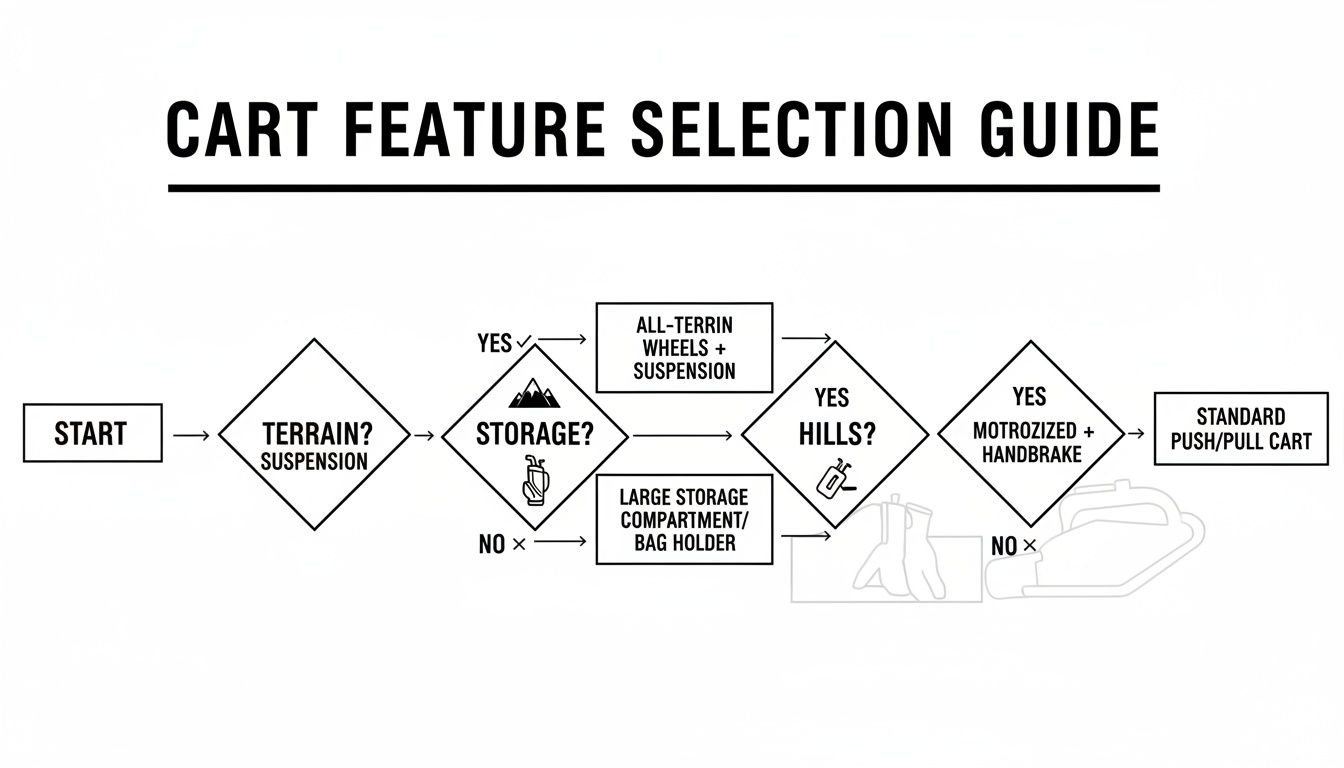
As you can see, thinking about your typical course conditions and how you’ll store the cart are the best places to start your search.
The Fitness-Focused Golfer
For golfers who walk the course for the exercise, the mission is simple: get a great workout without the back and shoulder pain that comes from carrying a bag. A lightweight aluminum cart is the perfect partner here. It adds almost no resistance, letting you focus on your stride and posture.
Thanks to the effortless glide of a three-wheel design, you can finish 18 holes feeling refreshed and energized, not completely wiped out.
The Senior Golfer
For senior players, it’s all about stability and ease of use. A three-wheel cart delivers a sturdy, predictable base that gives you confidence on uneven ground. Little things make a big difference, like a high-mounted hand brake that gives you instant control on slopes without having to awkwardly bend over.
Simple, one-click folding mechanisms are another huge plus, taking all the struggle out of loading the cart into a car trunk.
The right cart empowers a golfer to keep walking the course comfortably and safely for years. It’s about extending a player's enjoyment of the game by removing physical barriers and boosting confidence with every step.
The Competitive Player
When you’re playing in a tournament, you can't afford any hiccups. Reliability and smart organization are everything. A competitive player needs a cart with plenty of well-designed storage: a secure spot for a rangefinder, a console for a scorecard and phone, and an oversized holder for drinks.
Durability is just as important. The cart has to perform flawlessly under pressure without any frustrating glitches. This need for reliable, efficient transport is something we see growing beyond the golf course, as electric three-wheelers gain traction for low-cost commuting. You can find more on this trend from SkyQuest Technology. For the serious golfer, though, a well-equipped three-wheel cart is a critical tool for staying focused from the first tee to the final putt.
Upgrading Your Cart with Motorized Add-Ons
One of the smartest long-term plays you can make with a quality three-wheel cart is embracing its potential to evolve. Your manual push cart doesn't have to stay manual forever. A growing number of savvy golfers are discovering motorized conversion kits, which can turn a trusty push cart into a powerful, remote-controlled electric caddie.
Think of it like adding a small outboard motor to a perfectly good rowboat. The boat works just fine on its own, but with the motor, you can cruise across the lake and handle choppy water without getting tired. Motorized add-ons do the exact same thing for your cart, making hilly, challenging courses feel as easy as a flat, park-like layout. This is a game-changer on the back nine, where physical fatigue often leads to costly mental mistakes.
How Motorized Conversions Work
The beauty of these systems is their simplicity. They typically consist of a motorized wheel unit that attaches directly to your cart's frame, usually near the rear axle. A lightweight, high-capacity battery pack provides the juice, and a small handheld remote gives you complete control over speed and direction. This setup lets you walk freely while your cart glides effortlessly beside you or a few paces ahead.
The best part? You can add this capability to the cart you already own and love. There's no need to shell out for an entirely new, expensive electric trolley. You can dive into our detailed guide on motorized push carts to see just how seamlessly these systems integrate with popular models.
The ability to motorize a standard three wheel cart makes it a future-proof investment. You can start with an affordable, high-performing manual cart and upgrade it later as your needs or preferences change, without having to start from scratch.
Key Features to Look For
When you start looking at motorized add-ons, a few critical features should be at the top of your list:
- Battery Longevity: Make sure the battery can comfortably last for at least 18 holes. The better ones will have enough power for a full 36 holes on a single charge.
- Motor Strength: The motor needs to be strong enough to power up steep inclines without slowing to a crawl, even when your bag is fully loaded.
- Ease of Installation: Look for systems with a simple, intuitive attachment process. The last thing you want is something that requires special tools or permanent modifications to your cart.
The technology behind these compact, powerful batteries has come a long way, mirroring what's happening in the larger electric vehicle world. Just look at India, where sales of electric three-wheelers hit a record 699,073 units in FY2025—a boom driven by massive improvements in battery performance. You can read more about this trend on the IMARC Group's website. That same progress is what allows a small battery to carry your clubs through a long day on the course.
Simple Maintenance to Keep Your Cart Rolling Perfectly
Think of your three-wheel cart as a long-term investment in your game. And just like any good investment, a little bit of upkeep ensures it pays dividends for years. We're not talking about complex, time-consuming repairs here—just a few simple habits that keep everything rolling smoothly.
Taking a couple of minutes after every few rounds is all it takes to prevent minor annoyances from turning into major headaches out on the course. This is how you protect your gear and make sure it’s always ready when you are.
Your Quick Maintenance Checklist
A quick wipe-down and inspection is the secret to keeping your cart in top form. It’s surprisingly simple.
- Clean the Frame and Wheels: Grab a damp cloth and wipe away any grass, dirt, or sand. This stops grime from building up in the hinges and axles, which is what causes sticking and premature wear.
- Check Tire Pressure: If your cart has air-filled tires, give them a quick check to make sure they're properly inflated. This is the key to a smooth roll and makes the cart feel almost effortless to push.
- Lubricate Moving Parts: A quick shot of silicone lubricant on the hinges, axles, and folding joints works wonders. It gets rid of squeaks and guarantees a seamless open-and-close every single time.
Regular maintenance is the single best way to get the most out of your cart. These small actions prevent corrosion and wear, making sure your cart is always ready for your next round.
This commitment to low-cost upkeep is one of the biggest advantages of three wheel carts. Their appeal often comes down to lower ownership and maintenance costs compared to bigger electric or gas carts. It’s a trend seen across different industries, where smart, preventative care can slash operational costs by up to 70%. You can discover more about these market trends on Straits Research.
For a deeper dive into keeping your gear in pristine condition, check out our guide on 6 essential golf cart maintenance tips.
Still Have Questions About Three-Wheel Carts?
Even with all the benefits laid out, you might still be weighing a few things before pulling the trigger on a three-wheel cart. Let's tackle some of the most common questions head-on, so you can make your choice with total confidence.
Are Three-Wheel Carts Stable on Hilly Courses?
Absolutely. It's a common misconception that four wheels are always better, but modern three-wheel carts are engineered to be rock-solid. Their triangular footprint creates a surprisingly low center of gravity, giving them a sturdy base that handles most slopes and uneven lies without a problem.
Unless you're regularly playing on extreme sidehills or in the middle of a hurricane, a quality three-wheeler provides more than enough stability for 99% of courses. Honestly, most tipping issues come from a lopsided bag, not the cart itself.
How Compact Do They Get for Storage?
This is where three-wheel carts really shine. Their design often allows them to fold down into a much tighter, more efficient package compared to a lot of their four-wheel counterparts.
Most modern three-wheelers are designed with slick one-click folding mechanisms. They collapse into a small, trunk-friendly shape in just a few seconds, making transport and storage ridiculously easy.
This means they slide right into almost any car trunk with plenty of room left over for your clubs and other gear. If you're tight on space at home or in your vehicle, their compact nature is a huge plus.
What’s the Typical Weight?
You can expect most modern three-wheel carts to weigh somewhere between 15 and 18 pounds. Manufacturers have gotten really good at using lightweight but tough materials like aircraft-grade aluminum for the frames. This keeps the weight down without sacrificing an ounce of strength, making the cart a breeze to lift in and out of your car and practically effortless to push around the course.
Is Assembly a Huge Hassle?
Not at all. The vast majority of three-wheel carts show up at your door almost completely put together. Usually, the only thing you need to do is snap the wheels into place, which takes less than a minute and requires zero tools. The whole process is designed to be dead simple so you can get out on the course right away.
Ready to make walking the course feel like a luxury? Upgrade your push cart with the Caddie Wheel and conquer any hill with remote-controlled power. Discover how easy it is to install at caddiewheel.com.
Share:
Transform Your Game With Electric Pull Carts Golf
Discover price of electric golf carts: What to Know in 2025