
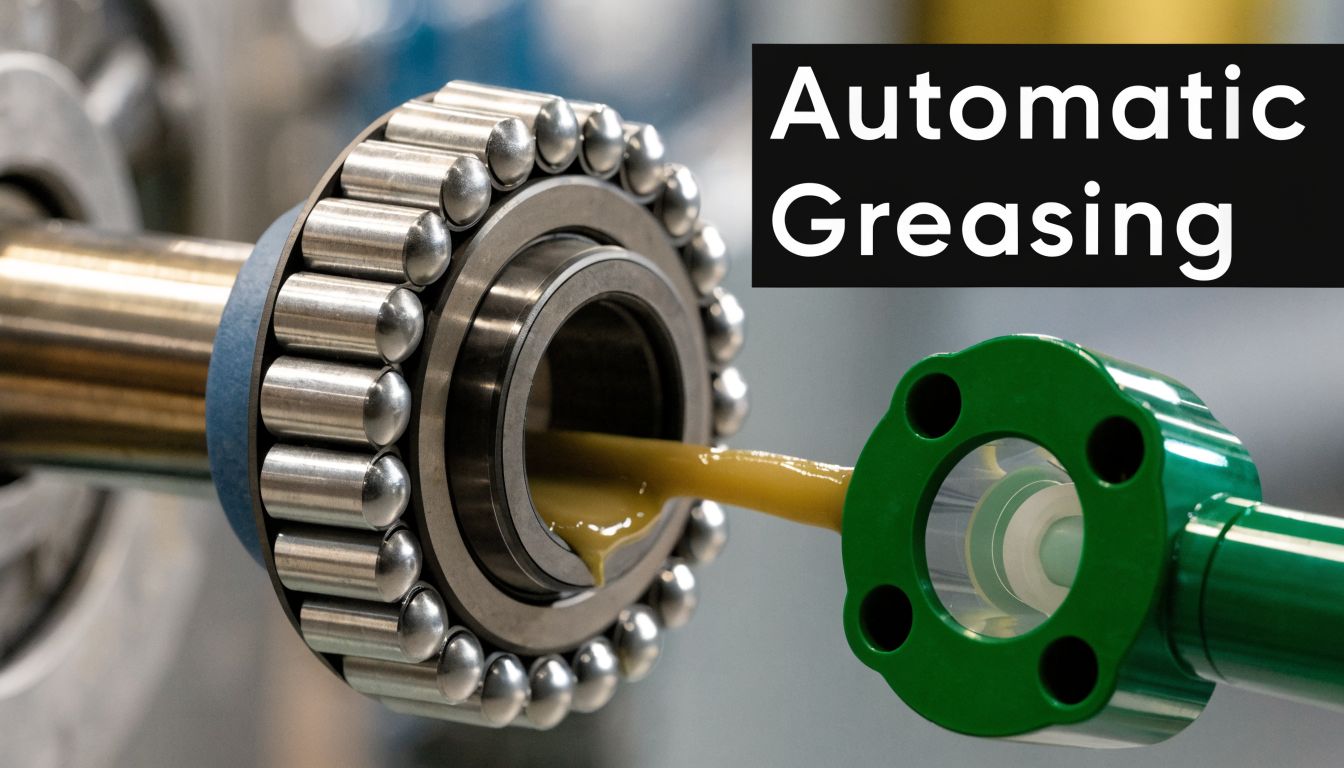
You grease a machine on Friday because that’s when you usually remember. By Tuesday, one bearing is already noisy. Another point got too much grease. A third got none because it sits behind a guard and nobody wanted to shut the machine down again just to reach it.
That’s how lubrication problems usually start. Not with dramatic failure. With inconsistency.
Manual greasing works when the machine is simple, access is easy, and someone follows the schedule every time. Real life rarely looks like that. People get busy. Service intervals drift. Grease guns vary. Operators miss fittings. On compact equipment, the problem is even more awkward because owners often assume “small machine” means “small maintenance risk.” It doesn’t. A small bearing still fails if it runs dry.
An automatic greasing system solves a very old mechanical problem with a very practical idea. Instead of depending on memory and perfect timing, the system feeds lubricant in measured amounts at planned intervals while the machine is working. That changes lubrication from a stop-and-do chore into a controlled process.
For heavy equipment, this idea is familiar. For smaller machines like golf carts, light utility vehicles, compact trailers, and workshop tools, guidance is much thinner. Most articles jump straight to excavators, haul trucks, and industrial lines. That leaves many owners stuck between two bad choices. Either they keep doing inconsistent manual greasing, or they buy a system designed for a much larger machine.
Introduction
A lot of lubrication advice assumes you’re running a mine, a factory, or a fleet yard. Many readers aren’t. You may be looking after a golf cart, a powered push cart, a compact mower, a small trailer, or a shop machine that only runs part of the day. The challenge is different, but the physics are the same. Moving parts still create friction. Friction still creates heat and wear. Bearings still need the right lubricant, in the right amount, at the right time.
The trouble with manual greasing isn’t just labor. It’s timing. Bearings don’t care when you have a free afternoon. They care whether a film of lubricant is present when the load arrives. If grease shows up too late, metal starts rubbing where it shouldn’t. If too much grease gets packed in, that can create its own problems.
Manual greasing often fails not because people are careless, but because the method itself depends on perfect consistency.
An automatic greasing system changes the job from “remember to grease it” to “verify the system is doing what it was designed to do.” That’s a much safer place to be, especially on machines with hard-to-reach points, intermittent use, vibration, dirt exposure, or owners who don’t want maintenance to become a weekly ritual.
For smaller equipment, the goal isn’t to copy an industrial setup part for part. The goal is to borrow the principle. Metered delivery. Repeatable timing. Fewer dry starts. Less guesswork. If you understand that principle, choosing the right setup gets much easier.
What Is an Automatic Greasing System
An automatic greasing system is a device that stores grease, moves it through lines, and delivers measured amounts to specific lubrication points on a schedule or command. The easiest way to picture it is as an IV drip for machinery. Instead of waiting until a part looks dry and then giving it a large shot of grease by hand, the system gives small, controlled doses when they’re needed.

That sounds modern, but the underlying idea is old. Elijah McCoy, a Canadian-born African-American inventor, patented the first automatic lubricator for steam engines in 1872, using a small reservoir to deliver a steady flow of oil so machinery didn’t have to stop for manual lubrication. His design became so respected that buyers asked for the authentic version, helping give rise to the phrase “authentic McCoy,” as described in this history of Elijah McCoy’s lubricator.
What the system is really doing
At a practical level, the system handles three jobs:
- Stores lubricant so you’re not carrying a grease gun to every point.
- Moves lubricant under pressure to where it’s needed.
- Meters delivery so each point gets an intended amount instead of a random amount.
That last part is where many people get confused. An automatic greasing system is not just a pump that blasts grease everywhere. A good system is controlled. It’s meant to feed each bearing, bushing, pin, or pivot in a predictable way.
Why small doses matter
Large manual grease shots can be too much, too late, or both. Small recurring doses are often better because they maintain a more stable lubricant film. On working equipment, that means the machine doesn’t wait until the next service stop to get protected.
Practical rule: Think less in terms of “how much grease can I push in today” and more in terms of “how consistently can I maintain lubrication over time.”
That principle applies whether you’re maintaining a loader pin, a cart wheel hub, or a lightly loaded bearing on a small machine.
Core Components and How They Work Together
An automatic greasing system looks more complicated than it is. Once you break it into parts, it starts to make mechanical sense. I usually explain it the way I’d explain a body system. One part stores the supply. One part pushes it. One part decides when to send it. The rest carry and divide it.

The reservoir and pump
The reservoir is the tank. It holds the grease supply and lets you check at a glance whether the system has enough lubricant to keep working.
The pump is the heart. It creates the pressure needed to move grease through lines and toward the delivery points. In modern systems, pumps are commonly electric or pneumatic. The important point isn’t just that the pump can move grease. It has to move the right grease, at the right pressure, with enough consistency for the layout you’ve chosen.
The controller and lines
The controller is the brain. It tells the system when to run. That may be based on time, machine operation, or a programmed cycle through a PLC on more advanced equipment.
The distribution lines are the arteries. They carry grease from the pump to the metering devices and then on to the bearings or pivots. On a poor installation, these lines are where trouble starts. Sharp bends, abrasion, poor routing, and loose support all create future failures.
If you’re working with a high-performance bearing grease, compatibility matters just as much as line routing. A useful reference is this guide to best practices for Kluber NBU 15, especially when you’re thinking about grease selection and precision applications.
The metering units and endpoints
The metering units or injectors are the most important part for accuracy. They determine how much grease each lubrication point receives. Without proper metering, one point may starve while another gets flooded.
That’s especially relevant on compact wheeled equipment where hub geometry and bearing arrangement affect how grease should be applied. If you want a practical example of how a wheel hub is built up, this overview of a golf cart wheel hub assembly helps show where lubrication decisions matter.
Here’s the simple flow:
- Reservoir holds grease
- Pump pressurizes it
- Controller starts the cycle
- Lines carry grease outward
- Metering devices divide the flow
- Bearings and moving joints receive lubricant
Once you see it that way, the system stops feeling mysterious. It’s just a controlled path from storage to friction point.
Comparing Types of Automatic Greasing Systems
Not every automatic greasing system works the same way. The biggest mistake buyers make is treating all systems as interchangeable. They’re not. Some are simple and compact. Others are built for long line runs, large machines, or critical lubrication points where one missed feed is unacceptable.

Single-line parallel systems
In a single-line parallel system, one main line carries grease to multiple metering units. Each unit dispenses a set amount to its assigned point when the line is pressurized.
This layout is attractive because it’s relatively straightforward and scalable for moderate machine sizes. It also maps well to smaller applications where you want one compact pump feeding a handful of points.
A documented example from a Groeneveld manual shows that a single-line system with a pneumatic pump and a 9:1 pressure ratio can generate up to 1125 psi from a standard 125 psi air input, allowing lubrication of multiple points while machinery remains in operation, as described in the Groeneveld single-line system manual. That same source explains the value of dynamic lubrication while the machine is running.
Dual-line parallel systems
A dual-line parallel system uses two main lines and is often chosen for larger or more demanding installations. One line is pressurized, then the other, which helps the system serve a wide network of lubrication points over longer distances.
For big industrial layouts, dual-line systems offer reliability. For a consumer-scale machine, they’re often more system than you need. More plumbing, more complexity, more room to overbuild.
Series progressive systems
A series progressive system sends grease through divider valves in sequence. One outlet feeds, then the next, and so on through the block. This is useful where confirmation of flow path matters because the sequence depends on the internal movement of the divider assembly.
These systems are popular on machinery where lubrication is critical and monitoring the sequence has value. They can be very precise, but they also demand thoughtful planning. On a small machine with only a few points, that precision can be excellent. It can also be unnecessary complexity if the duty cycle is light and access is easy.
Comparison of Automatic Greasing System Types
| System Type | Mechanism | Best For | Pros | Cons |
|---|---|---|---|---|
| Single-Line Parallel | One main line feeds multiple metering units | Small to mid-size machines, simpler layouts | Compact, easier to understand, cost-conscious | Less ideal for very large distributed systems |
| Dual-Line Parallel | Two alternating main lines feed many points | Large industrial equipment, long line runs | Handles larger networks, robust in demanding layouts | More complex and often excessive for compact machinery |
| Series Progressive | Divider blocks feed points in sequence | Critical applications needing controlled distribution | Strong control over delivery sequence | Planning and troubleshooting can be more involved |
A helpful way to think about it is this: choose the simplest system that can reliably serve all lubrication points under the machine’s real operating conditions. Don’t size the system for fantasy growth. Don’t undersize it because the machine “looks small.”
That same caution applies when evaluating drivetrain loads on compact vehicles. A hub, axle, and reduction drive can impose very different demands, which is why understanding a golf cart gearbox can help you decide whether a modest single-line setup is enough or whether a more controlled approach makes sense.
The Major Benefits for Your Equipment
Initially, an automatic greasing system may seem like a convenience tool. It is convenient, but that’s not the main reason to install one. The deeper value is consistency. Machines last longer when lubrication stops depending on memory, mood, and access.

Longer component life
The strongest case is wear reduction. Modern automatic greasing systems have been shown to help components achieve up to and above 3 times their normal operational lifespan compared with traditional manual greasing methods, according to this overview of automatic grease systems.
That kind of gain makes sense mechanically. Bearings and pins don’t wear out solely because they’re old. They wear out because the lubrication film fails, contamination enters, or grease quantity becomes inconsistent. If the system keeps a stable supply where friction happens, parts spend less time in borderline conditions.
Less downtime and less scrambling
Here’s the second benefit owners notice. Fewer surprise service jobs.
A manual routine often creates bursts of attention followed by neglect. An automatic system smooths that out. Instead of waiting until a wheel starts growling or a pivot develops play, the machine receives lubrication during normal operation. That reduces the chance that a simple maintenance miss turns into a teardown.
If you’re thinking more broadly about reliability planning, this article on maintenance strategies for industrial teams is a useful companion because lubrication strategy works best when it fits the larger maintenance approach.
For a quick visual look at the idea in action, this video is useful:
Cleaner lubrication habits
Automatic systems also cut waste. Manual greasing invites over-greasing because many people assume more is safer. It usually isn’t. Excess grease can attract dirt, create mess, and hide developing problems.
A good lubrication system doesn’t just add grease. It controls when grease is added and how much gets there.
That matters on compact equipment too. Small machines have less room for mess, less tolerance for contamination around seals, and fewer excuses for deferred maintenance.
How to Choose the Right System
Choosing the right automatic greasing system starts with one blunt question. What problem are you trying to solve? If the answer is “I want zero maintenance forever,” no lubrication system will deliver that. If the answer is “I want repeatable lubrication at the right points without relying on perfect manual habits,” now you’re making a sound decision.
Start with the machine, not the catalog
For larger equipment, selection usually follows a few practical criteria:
- Number of lubrication points determines whether a simple layout is enough or whether distribution becomes more involved.
- Operating environment matters because dirt, moisture, vibration, and temperature affect line routing, grease choice, and hardware protection.
- Duty cycle changes everything. A machine that runs all day needs a different rhythm than one used in short bursts.
- Access difficulty often decides whether automation is worth it. Hard-to-reach points make manual routines unreliable.
- Criticality of the component should influence system sophistication. If one dry point can stop the machine, that point deserves more attention.
Those same questions work for compact machinery, but the answers lead somewhere different.
Why small machines need different selection logic
There’s a major gap in practical guidance for compact equipment. Most available advice focuses on heavy machinery, even though lubrication mistakes still drive failures on smaller equipment. One cited source notes that 60-80% of bearing failures stem from lubrication issues, and also points out the lack of good system-selection guidance for compact machinery like motorized golf push carts in this discussion of small-application lubrication gaps.
That matters because a small machine shouldn’t automatically get a miniature version of a quarry-truck system. The selection logic is different.
For compact and consumer-level machinery, I’d focus on these filters:
-
Intermittent use
If the machine sits for stretches and then runs briefly, a highly complex setup may not be justified. Simplicity wins.
-
Low point count
Many smaller machines have only a few meaningful lubrication points. That often favors compact single-line thinking or even highly localized solutions, not elaborate networks.
-
Packaging space
Small equipment rarely gives you open mounting real estate. Reservoir size, hose routing, and protection from snagging matter more than on a large chassis.
-
Owner skill level
Consumer and light-commercial equipment is often maintained by owners, not plant technicians. The best system is one the owner can inspect confidently.
Selection test: If the system takes longer to understand than the machine takes to service manually, you may be overbuilding it.
Good fits and bad fits
A good fit for a small machine usually looks like this: compact reservoir, short line runs, modest point count, easy refill access, and visible confirmation that the system is cycling.
A bad fit looks like oversized pump hardware, too many fittings, exposed lines near moving parts, or a setup that requires specialist troubleshooting for a machine with light duty.
That’s the central shift in thinking. Industrial lubrication principles absolutely scale down. Industrial hardware doesn’t always need to.
Installation and Maintenance Best Practices
A well-chosen automatic greasing system can still perform badly if it’s installed carelessly. Most field problems come from ordinary mistakes. Poor line routing, wrong metering choices, contaminated grease during filling, or neglecting basic inspection.
Installation habits that prevent future trouble
Use these rules during installation:
- Protect the lines: Route hoses away from pinch points, heat, sharp edges, and road debris. A line that rubs today leaks later.
- Mount where you can service it: If the reservoir is hard to check, people won’t check it.
- Match output to the point: Metering has to suit the bearing or joint. Too little and the point starves. Too much and you create mess or seal problems.
- Keep the fill process clean: Dirt introduced during refill becomes part of the lubrication problem.
A simple maintenance routine
You don’t need a complex service program to keep the system healthy. You need a repeatable one.
- Check reservoir level: Make this part of your regular walkaround.
- Inspect lines visually: Look for kinks, abrasion, wet spots, or loose fittings.
- Confirm the controller cycles: If the pump isn’t running on schedule, the rest of the system doesn’t matter.
- Watch the machine’s behavior: Heat, noise, and fresh play at a joint often show up before total failure.
For readers who manage maintenance across more than just lubrication, this checklist-style guide to mastering 10 facility systems is useful because it reinforces the discipline behind preventive inspections.
If your application centers on wheel-end reliability, a practical reference like these wheel bearings kits can help you connect lubrication planning to the parts most likely to show wear first.
Most lubrication failures give a warning. The problem is that people often mistake the warning for the failure.
Frequently Asked Questions
Can I use my normal grease in an automatic greasing system
Sometimes yes, but don’t assume so. The grease has to be compatible with the pump, the metering hardware, the line size, and the operating temperature. A grease that works fine in a hand gun may not flow the same way in an automated setup. Before filling the reservoir, confirm the system’s grease requirement and avoid mixing incompatible products.
How long does it take for the system to pay for itself
That depends on the machine, the labor involved in manual greasing, and the cost of a failure on that specific equipment. On a heavily used machine with awkward grease points, the return can arrive quickly because avoided downtime and reduced wear matter a lot. On a lightly used consumer machine, the payoff is often less about labor and more about convenience, consistency, and avoiding one expensive bearing or hub rebuild.
Can I add more lubrication points later
Often yes, but only if the original system has enough pump capacity, the right distribution approach, and room for expansion in the layout. This is worth deciding before purchase. If you think you may add points later, choose a system with that future in mind. Retrofitting is possible, but it’s easier when the initial design leaves room for it.
Is an automatic greasing system overkill for small equipment
Not always. It’s overkill when the machine has very few points, easy access, and an owner who follows a manual routine consistently. It’s not overkill when those same points are easy to forget, exposed to dirt, or costly to replace. On compact machinery, the question isn’t “Is this industrial technology?” The question is “Will controlled lubrication reduce avoidable wear on my machine?”
If you’re upgrading a push cart and want a simpler way to walk the course with less effort, Caddie Wheel offers an easy electric power-assist solution that fits standard golf push carts without bulky complexity.
Share:
Best GPS Navigation Holder for Your Golf Cart
Expert Guide: Umbrella Holder for Golf Bag Insights