
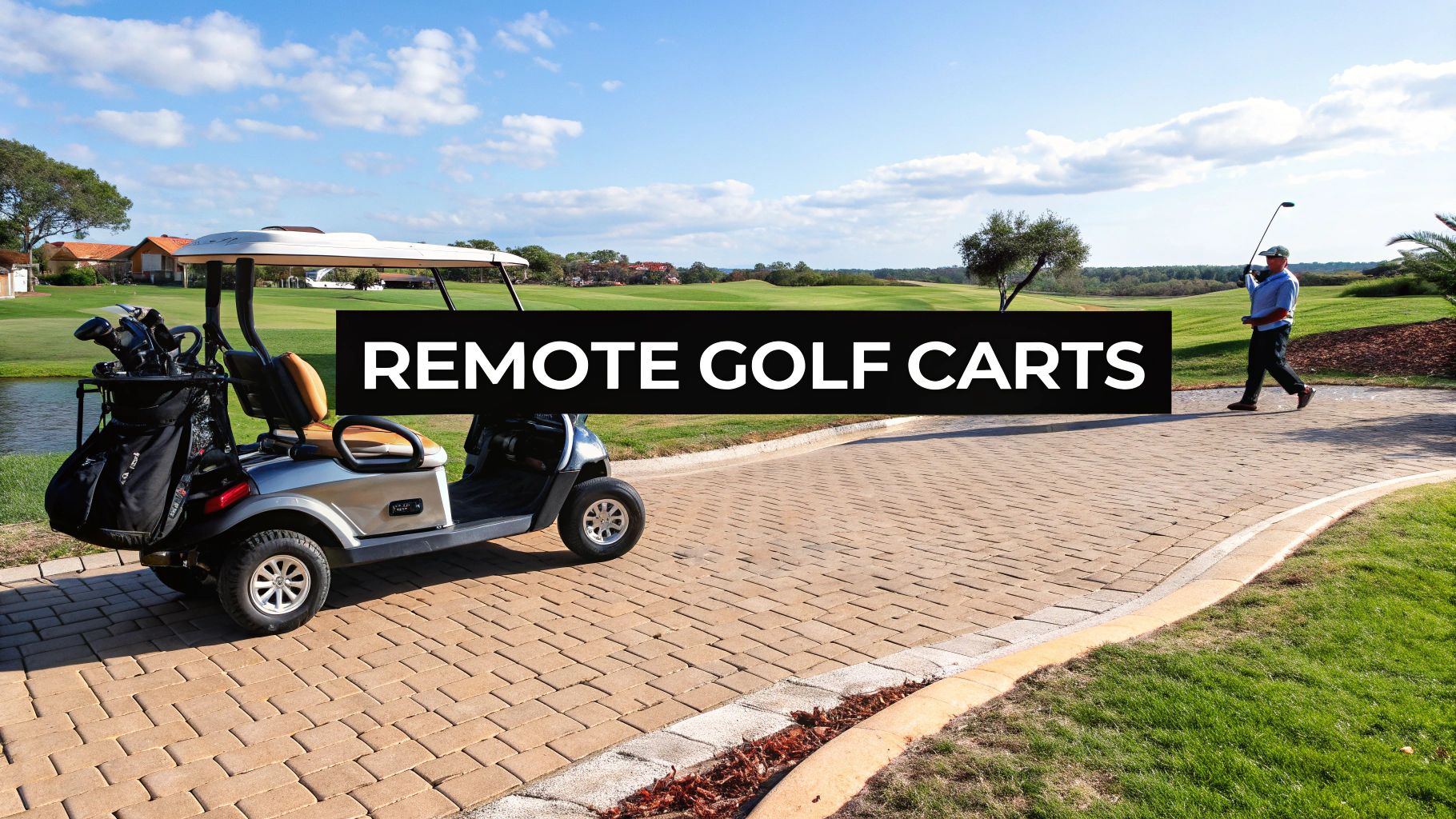
Tired of dragging your golf bag around for 18 holes? An electric remote golf cart is exactly what it sounds like: a smart trolley that carries your clubs for you, guided by a simple remote you hold in your hand. This lets you walk the course freely and save your energy for the shot, turning what can be a grueling trek into a relaxed walk in the park.
This technology is genuinely changing how golfers of all ages and abilities are approaching the game.
The Smarter Way to Walk the Course
Picture yourself strolling down the fairway, completely dialed in on your next shot. You're not thinking about the ache in your back or the strain of shoving your bag up another hill. This is the reality that electric remote golf carts deliver. They let your clubs glide right alongside you, keeping your energy reserved for what actually matters—your swing and your enjoyment of the round.
This guide will break down how this tech works, from the all-in-one models to the clever add-on systems that can motorize the push cart you already own. By cutting down on physical fatigue, you can sharpen your focus, boost your stamina, and see a real difference in your performance from the first tee to the final putt.
Conserving Energy for a Better Game
There’s no doubt that walking the course is great for your health, but pushing or lugging a heavy bag for four-plus hours can be utterly exhausting. Ask any regular golfer, and they'll tell you that physical fatigue, especially on the back nine, is a recipe for bad decisions and sloppy swings. An electric caddie takes that entire burden off your shoulders.
- Reduced Physical Strain: You get to skip the repetitive stress on your back, shoulders, and legs that comes with pushing a cart.
- Improved Focus: With more energy in the tank, your mind stays sharp, helping you nail your club selection and shot execution.
- Enhanced Stamina: You’ll finish the 18th hole feeling as fresh as you did on the first tee, which often translates directly to lower scores.
By letting the cart do the heavy lifting, you unlock all the good stuff about walking golf—getting in your steps while keeping your mental game at its peak. To dive deeper, check out our guide on the 7 unmissable benefits of walking a golf course in 2025.
A Growing Trend in Modern Golf
The move toward these smart carts isn't just a tiny fad; it's a real and growing trend. The market for dedicated remote-control trolleys was recently valued at around USD 285 million and is expected to grow fast. This boom shows a clear demand from golfers who want a more enjoyable and less physically taxing way to play the game. You can dig into more stats about this expanding market over at 24marketreports.com.
The whole idea is simple: let technology handle the grunt work so you can focus on the art of the game. An electric remote cart is like having your own personal caddie, always ready to go and never complaining about how many extra balls you packed.
Even with a robotic caddie handling your gear, staying hydrated is key to playing well. A simple solution like a handheld water bottle for staying hydrated can make a huge difference during your round. Now, let’s get into what you need to know to find the right robotic caddie for your game.
Choosing Your Path: Standalone Carts vs. Add-On Systems
So, you’ve decided to let a motor do the heavy lifting. Smart move. Now you’ve hit the first big fork in the road: do you buy a fully integrated, all-in-one standalone cart, or do you upgrade your trusty push cart with an add-on power system?
Each path offers a totally different experience. The right one for you really boils down to your budget, the gear you already own, and what you value most out on the course.
Think of a standalone electric cart like buying a brand-new car right off the lot. The frame, motor, battery, and remote are all engineered to work together perfectly from the get-go. This all-in-one design often means a slick, polished look and can even include high-tech features like gyroscopic stability control or "follow" modes that track you without you touching the remote.
But, like a new car, this approach has its downsides. Standalone carts are a serious investment, often running into thousands of dollars. They’re also heavier and bulkier, which can turn loading them into your car or finding storage space at home into a real workout.
The Power of an Upgrade: Add-On Systems
Now let's look at the other path: an add-on power-assist system. This is less like buying a new car and more like dropping a powerful new engine into the reliable ride you already love. These systems are designed to attach directly to your current manual push cart, instantly turning it into a remote-controlled caddie.
This route gives you incredible flexibility. You get to stick with the push cart you've broken in—the one with the cup holder in just the right spot—while giving it the muscle to cruise up any hill. Add-on units like the Caddie Wheel are built with a simple drop-on mechanism, making installation a breeze. You can see just how easy it is by reading our guide on how to convert a push cart to electric.
This approach makes electric cart technology accessible to way more golfers. It puts powerful, remote-controlled convenience within reach without forcing you to ditch your favorite gear for a costly, all-new setup.
Add-on systems are far more affordable, lighter, and much easier to transport. While they do require a one-time setup to attach a mounting bracket, the process is quick and doesn't require a toolbox full of special tools. It's an easy win for any golfer.
This decision tree helps map out your options when you're ready to move on from a manual push cart.
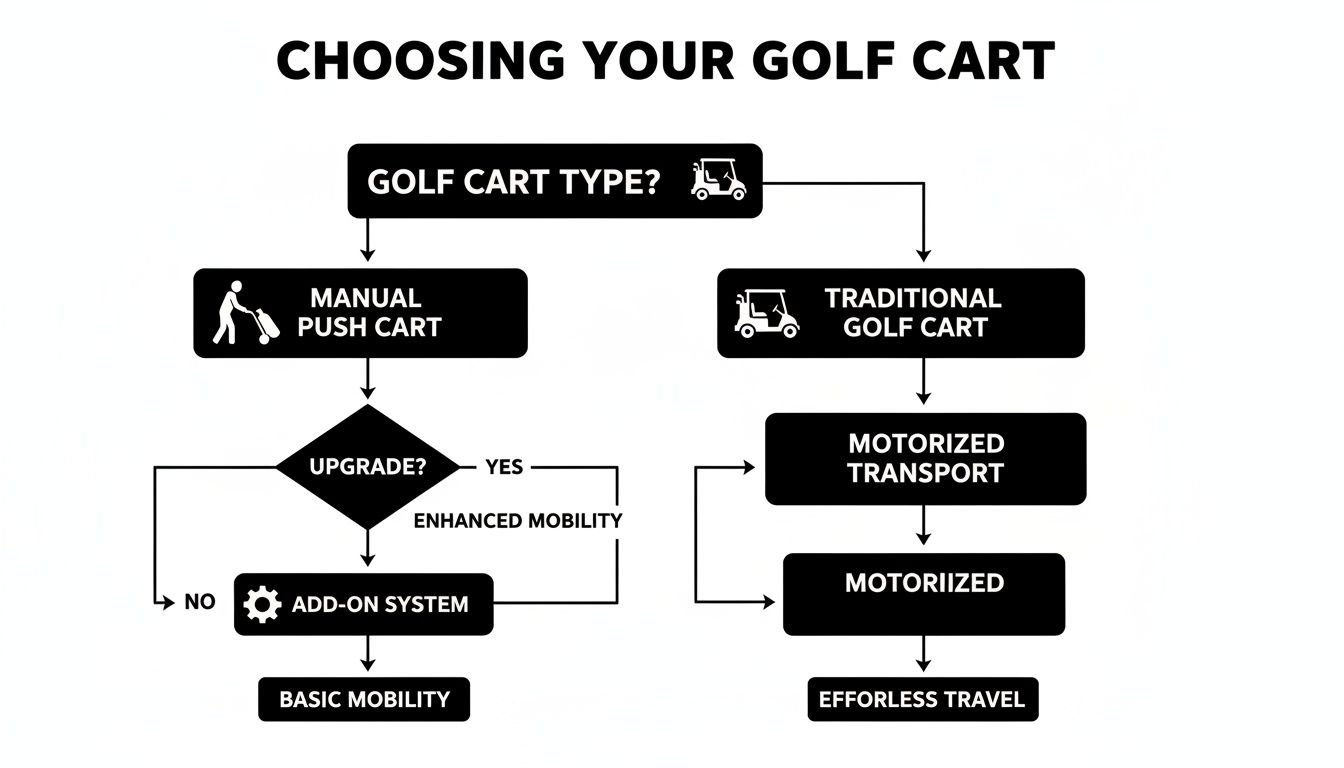
As the visual shows, you can either stick with manual effort or embrace motorized help. The add-on system is the perfect bridge between the two worlds.
A Head-to-Head Comparison
To make the choice even clearer, let's put these two types of electric remote golf carts side-by-side. Seeing the key differences laid out helps highlight where each one really shines. This will help you weigh what matters most to you, whether it's cutting-edge tech or down-to-earth affordability.
Standalone Carts vs. Add-On Power Assist Systems
| Feature | Standalone Electric Cart | Add-On Power Assist (e.g., Caddie Wheel) |
|---|---|---|
| Initial Cost | High (Often $1,500 - $3,000+) | Low (Typically under $1,000) |
| Equipment | Requires purchasing a complete new cart | Upgrades your existing, familiar push cart |
| Portability | Heavy and bulky, can be difficult to lift and store | Lightweight and compact, easy to detach and transport |
| Installation | None required—it's ready out of the box | A simple, one-time bracket installation is needed |
| Compatibility | Not applicable—it's a self-contained unit | Designed to fit a wide range of popular push cart models |
| Advanced Features | May include "follow" modes or GPS integration | Focuses on core remote functions: speed, direction, braking |
At the end of the day, standalone carts are for the golfer who wants the absolute latest tech and is ready to make a significant investment in a whole new piece of equipment.
On the other hand, add-on systems deliver a practical, powerful, and cost-effective solution for the vast majority of walkers who just want to take the strain out of pushing their bag.
The Essential Features That Define Performance
Once you've settled on either a standalone model or an add-on system, it's time to get into the nitty-gritty. This is where we look at the specs that make or break your experience on the course. Getting these details right is the difference between a helpful partner and a frustrating piece of tech you end up fighting with.
At the heart of any electric remote golf cart is its power source. A weak battery can die mid-round, leaving you to muscle a heavy, dead-weight cart up the back nine. This is one area you absolutely can't afford to skimp on.
Battery Life and Range
The first and most important question to ask is simple: "How many holes will it last?" The benchmark for a quality battery in this space is 36 holes on a single charge. That gives you the confidence to play a full round—and maybe even a second one—without constantly checking the battery indicator. An 18-hole battery might sound fine, but on a slow day or if you decide to play a few extra holes, you'll be sweating it.
The type of battery is just as critical. Lithium-ion batteries are now the gold standard, and for good reason:
- Lighter Weight: They're a world away from old lead-acid batteries, making the entire cart much easier to lift into your car.
- Faster Charging: Most lithium-ion batteries will recharge in just 4-6 hours, so it’s ready to go for your round the next day.
- Longer Lifespan: They can handle far more charge cycles, which means better value and reliability over the long haul.
Motor Power and Hill Climbing Ability
Let's face it, not all courses are flat, manicured parkways. A links-style course is one thing, but a hilly layout with serious inclines demands real power. The motor is the engine of your cart, and its strength determines whether it conquers hills or gives up halfway.
A powerful motor keeps your cart moving at a steady pace, even when it's climbing a monster hill. It prevents that annoying scenario where you have to step in and give it a "helping hand," which completely defeats the purpose. As you compare models, look for systems known for their robust motors that can handle steep gradients without a problem. For a deeper look at what separates a good motor from a great one, check out our guide on how to choose the best electric motor for a golf cart.
A reliable motor isn’t just about convenience; it’s about trust. You need to know that your electric remote golf cart can handle every part of your home course without hesitation, from the first tee to the last green.
Remote Control and Usability
The remote is how you communicate with your cart, so if it's confusing, the whole experience falls apart. A clunky remote with a dozen tiny buttons is a distraction you don't need when you're lining up a putt. The best systems are designed for pure simplicity.
You want a rugged, no-nonsense remote with clear controls for the essentials:
- Speed Control: Easy adjustments to match your walking pace.
- Directional Steering: Simple forward, reverse, left, and right commands.
- Braking: A must-have for stopping on hills and keeping control.
A simple remote that feels good in your hand or clips securely to your belt lets you focus on your game, not the gadget. While some high-end models offer fancy "follow" modes, most golfers find that reliable core functions are what truly matter.
Weight, Portability, and Durability
Finally, think about the practical side of owning an electric cart. How easy is it to get from your garage to the first tee? The cart's overall weight and how easily it packs down are huge factors. A heavy, awkward unit is a real pain to wrestle into a car trunk, especially after walking 18 holes.
Look for models built with lightweight materials like aluminum and powered by those lighter lithium-ion batteries to keep the overall weight manageable. For add-on systems like the Caddie Wheel, the ability to quickly detach the motor unit from the push cart frame is a massive plus, making both transport and storage a breeze. Durability is just as important—you want a cart made from quality parts that can handle the bumps and scrapes of a golf season, protecting your investment for years to come.
Upgrading Your Push Cart in Minutes
The thought of bolting a motor onto your trusty push cart probably brings to mind a messy garage project, complete with a sprawling toolbox and a whole lot of frustration. Forget that picture entirely. Modern add-on systems are designed for the complete opposite experience—this is less of a technical chore and more of a quick, satisfying upgrade you can knock out minutes before your tee time.
Let's use a system like the Caddie Wheel as our guide to show just how ridiculously simple it is to convert your manual cart into a remote-controlled powerhouse. The whole idea behind these units is to make them accessible for every golfer, not just the ones who are handy with a wrench.
From Box to Fairway: The Setup Process
When you open the box, you’ll find a refreshingly simple set of parts. There’s no confusing tangle of wires or a bag filled with a dozen different nuts and bolts. Instead, you'll see the core components: the motorized wheel unit, a compact battery, a mounting bracket, and the remote.
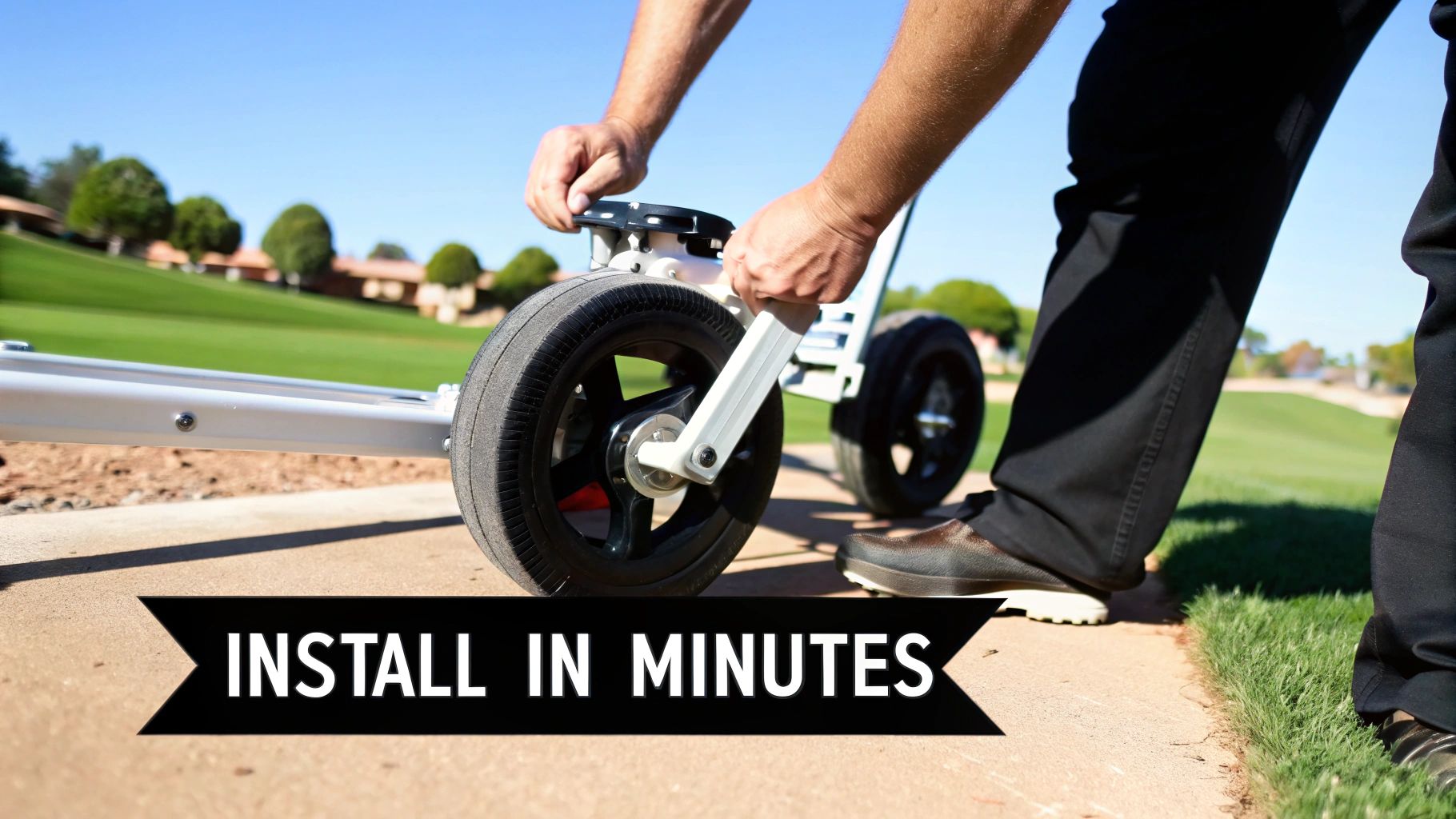
The first—and really, the only—"installation" step is attaching the mounting bracket to your push cart’s frame. This is a one-and-done job that typically involves a few simple clamps or screws made to fit snugly on your cart's lower axle or tubing.
Think of the bracket as a permanent dock for your motor. Once it's on, the hardest part is over. The rest is just a simple "drop and go" every time you head out to play.
Getting that bracket on usually takes just 10-15 minutes, and you won't need any special tools. Once it's secure, you'll never have to touch it again.
Drop-On Simplicity for Daily Use
With the bracket in place, your pre-round routine is a breeze. The motorized wheel unit, like the one from Caddie Wheel, is designed to just drop right onto the bracket and click into place. No fumbling with wires or clips each time. You just set it, hear the click, and you're good to go.
The battery pack attaches just as easily, usually sliding into a dedicated holder on the unit itself. From there, you just power it on and sync the remote, which is typically a one-button process.
Out on the course, operating the cart is designed to be completely intuitive so you can keep your mind on your next shot. A good remote will give you everything you need and nothing you don't:
- Variable Speed Control: Simple buttons to speed up or slow down, letting you match your walking pace perfectly.
- Directional Buttons: Straightforward forward, reverse, left, and right commands to navigate around bunkers and greens without any fuss.
- Instant Braking: A dedicated stop button is a must-have. It gives you immediate control, which is crucial for pausing safely on hilly terrain.
This whole process, from unboxing to rolling down the first fairway, is intentionally streamlined. It’s built to squash any worries about complicated setups, proving that this powerful tech isn't just for gearheads—it's for anyone who wants a more enjoyable walk on the course.
Who Really Gets the Most Out of a Remote Caddie?
An electric remote golf cart is way more than just a cool toy—it’s a problem-solver that makes a real difference for certain golfers. While pretty much anyone can appreciate the convenience, for some players, it completely changes their ability to enjoy the game.
Let's break down three types of golfers who will see the biggest return on this technology. Each one faces a different challenge on the course, but the solution is the same: saving your energy for the shots that count.

The Senior Golfer Playing for the Long Haul
First up, the senior golfer. This player loves the game and knows how good walking the course is for their health. But after years of playing, pushing a 30-pound bag up and down hills is more than just a workout—it’s a recipe for aches and pains.
For this golfer, an electric remote golf cart isn't a luxury; it’s a lifeline to the game. It lets them keep walking and getting great exercise without the painful stress on their joints and muscles.
By taking the push out of the equation, they can play more often, finish 18 holes without feeling wiped out, and add years to their time on the course.
This technology bridges the gap between wanting to walk and being able to walk comfortably. It keeps senior players active in the sport they love without risking exhaustion or injury.
The Fitness-Focused Player Fighting Back-Nine Fatigue
Next, we have the fitness golfer. This player walks the course on purpose, tracking their steps and embracing the physical side of the game. They’re in good shape, but they’ve noticed a frustrating trend: their swing starts to fall apart on the back nine.
The quiet killer is fatigue from pushing the cart. It slowly drains their strength, leading to lazy swings, bad decisions, and a scorecard they'd rather forget. An electric caddie becomes a serious performance tool here.
They still get all the cardio benefits of walking a few miles, but their arms and core stay fresh for every shot. By saving that crucial energy, they can maintain a powerful, consistent swing from the first tee to the 18th green. It’s the best of both worlds—a great workout and a lower score.
The Golfer Whose Home Course Is a Mountain
Finally, think about the golfer whose home course is full of beautiful but brutal hills. For them, every round can feel like a hiking trip. Shoving a cart up a steep fairway on the 15th hole is exhausting, and it’s nearly impossible to focus on that delicate chip shot right after.
An electric remote cart completely transforms the course for this player. Those hills that used to be a nightmare just become part of the scenery. The motor does the heavy lifting, turning an uphill battle into an enjoyable walk.
This has a massive impact on both physical and mental stamina. Instead of dreading the next big climb, the golfer can think about strategy and where to land their next shot. The cart handles the tough terrain, so they arrive at their ball ready to play their best, no matter how hilly the layout.
Your Final Checklist Before You Buy
Alright, you’ve done the homework. You know the tech, you've weighed the different types, and you can spot the key features from a mile away. Now it’s time to pull it all together and make sure you walk away with the perfect cart for your game.
Think of this as your final gut check. Answering these questions honestly will steer you directly to the right electric caddie. This isn't just about buying a new gadget; it’s an investment in making every round more enjoyable and less of a grind. Running through this list will save you from any buyer's remorse and guarantee your new partner is a perfect fit for you and your course.
Core Compatibility and Performance Questions
First up, let's nail down the essentials. These are the non-negotiables that determine if a cart will even work for your setup and the courses you play.
- Cart Compatibility: If you're looking at an add-on unit, is it 100% confirmed to fit your specific brand and model of push cart? No guesswork here.
- Course Terrain: Does this thing have the muscle to handle the steepest hills on your home course without breaking a sweat? Look for real-world reviews or power specs.
- Battery Range: Will the battery reliably get you through your typical round? For total peace of mind, a 36-hole battery is the gold standard.
The secret to a good purchase is simple: match the cart’s capabilities to your real-world needs. A powerful motor and a long-lasting battery aren't just bullet points on a feature list—they're what make a remote caddie a truly reliable partner on the course.
Personal and Practical Considerations
Next, let’s think about how this cart fits into your life off the course. Practicality is just as critical as how it performs on the back nine.
- Budget: What’s your realistic, all-in number? Don't forget to factor in any shipping costs or extra accessories you might want.
- Portability and Storage: How much do weight and size matter to you? Be honest about how you'll be hauling it to the course and where it will live in your garage or home.
- Warranty and Support: What kind of warranty comes with it, and what have you heard about their customer support? A solid 12-month warranty and easy-to-reach support can be a lifesaver and add huge long-term value.
By taking a few minutes to tick off these boxes, you can confidently pick an electric remote golf cart that genuinely makes your game better. For a lot of golfers, a versatile and well-supported add-on system hits that perfect sweet spot of performance, value, and convenience.
Frequently Asked Questions
Alright, as you get closer to pulling the trigger, a few last-minute questions always pop up. It's totally normal. Dropping some cash on new golf tech is a big deal, and you want to be sure you're making the right call. Let's tackle some of the most common questions we hear from golfers who are new to the electric caddie game.
Think of this as tying up the loose ends. We'll clear up any final hesitations so you can feel 100% confident in your choice and get back to thinking about your swing.
How Much Maintenance Does an Electric Caddie Require?
This is honestly one of the best parts—they’re surprisingly low-maintenance. If you’re picturing anything like a gas-powered cart with engine troubles and oil changes, you can relax. The upkeep is incredibly simple.
Your main job is just keeping it clean and looking after the battery. A quick wipe-down to get mud and grass off the frame and wheels after a soggy round is usually all it takes. For the battery, just follow the manufacturer's charging guidelines—which usually means plugging it in after each round and storing it somewhere cool and dry. No complex mechanics, no greasy parts, just simple, easy ownership.
Can I Use My Remote Cart in the Rain?
Absolutely. Any decent electric remote cart, whether it's a full unit or an add-on like the Caddie Wheel, is built to be water-resistant. They're designed for real-world golf, and that includes morning dew, pop-up showers, and misty days. The important bits, like the motors and battery housing, are sealed up to keep moisture out.
Now, "water-resistant" isn't the same as "waterproof." You wouldn't want to drive it into a pond or leave it out in a monsoon overnight. But for any normal playing conditions you'd actually be out in, a little rain is no problem at all.
How Long Does the Battery Take to Charge?
This is a key question for anyone with a busy schedule, and the answer is refreshingly simple. For most modern lithium-ion batteries, which have become the standard, a full charge will typically take somewhere between 4 to 6 hours.
This quick turnaround is a game-changer. You can finish a round in the afternoon, pop the battery on the charger when you get home, and it’ll be fully juiced and ready for your tee time the next morning.
There's no need to plan your charging days in advance or stress about whether you'll have enough power. It just fits right into your routine, easy as charging your phone.
What Is the Lifespan of the Battery?
The life of your battery really comes down to its type and how well you treat it. The lithium-ion batteries found in most quality electric caddies are rated for a certain number of charge cycles. A "cycle" is just one full drain and recharge.
You can expect a good lithium-ion battery to last for 500 to 1,000 charge cycles. If you play once a week, that battery could easily last you for many, many seasons. To get the most out of it, try not to run it completely dead all the time, and don't let it sit empty for months on end in the garage. Simple habits like that will ensure you get years of reliable power from your investment.
Ready to make every walk on the course effortless? The Caddie Wheel turns your trusted push cart into a remote-controlled powerhouse, letting you save your energy for the perfect swing.
Share:
Ultimate Guide to review golf carts: Pros, Cons, and Picks
How Much Is a Golf Cart? A Complete Buyer's Guide