
A fireproof lithium battery container is a purpose-built safety box designed to do one critical job: contain a battery fire and stop a nasty event called thermal runaway dead in its tracks. Think of it as your ultimate line of defense, built to handle the insane heat, flames, and toxic fumes that get unleashed when a lithium battery fails catastrophically.
Why Lithium Batteries Need a Fireproof Container
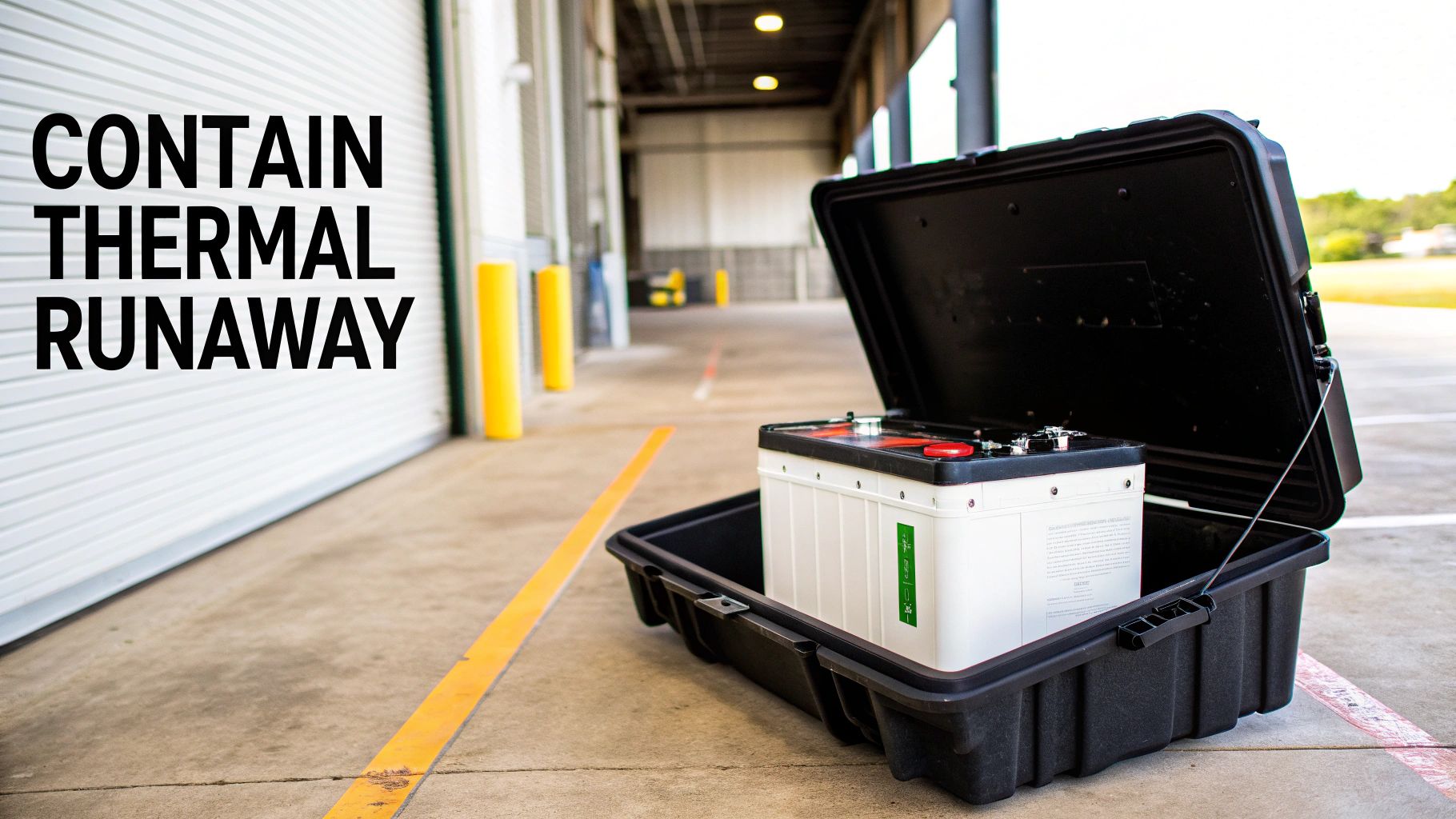
Lithium batteries are incredible pieces of technology. They cram an enormous amount of power into a surprisingly small and light package, which is exactly why they're perfect for everything from our phones to high-performance electric golf caddies. But that high energy density is also what makes them risky if they get damaged, are defective, or aren't charged correctly.
This inherent risk has a name: thermal runaway.
Imagine it as a chemical chain reaction, like dominoes toppling over one after another, but with fire. If just one cell inside a battery pack starts to overheat—maybe from a short circuit, getting dropped, or being overcharged—it can hit a point of no return. This triggers a self-sustaining reaction that generates even more heat, which then causes the next cell to fail, and the next, and so on.
The end result is a scorching, fast-moving fire that can blast past 1,000°F (538°C). These fires are notoriously tough to put out with regular fire extinguishers and spew toxic, flammable gases into the air.
The Domino Effect of Thermal Runaway
To really get why containment is so vital, you have to understand the stages of thermal runaway. A failing battery doesn't just smolder; it decomposes violently and incredibly fast. Here’s how it usually plays out:
- Off-Gassing: The first sign of trouble. The battery starts venting flammable electrolyte vapors, which can create an explosion hazard.
- Smoke and Fire: Those vapors ignite, erupting into intense flames and thick, nasty smoke.
- Explosion: Sometimes, the pressure builds up so fast that the battery casing itself ruptures and explodes.
This isn't a slow burn. It's a sudden, volatile event that can ignite nearby flammable materials in seconds, turning a small battery problem into a full-blown disaster in your home, garage, or car.
Fireproof vs. Fire-Resistant
When you're looking for a safety solution, it’s crucial to know the difference between "fire-resistant" and "fireproof." They sound similar, but they are worlds apart in what they can handle.
A fire-resistant bag is designed to slow down an external fire, buying you precious minutes to react. But it's absolutely not built to handle the sustained, internal inferno of a lithium battery in thermal runaway.
A true fireproof lithium battery container, however, is engineered specifically to contain the entire event from the inside out. Its job is to absorb that extreme heat, safely manage the release of gases through filtered vents, and completely stop flames from escaping. For genuine safety, this distinction is everything. Gaining a deeper knowledge of things like the impact of temperature and charging rates on lithium-ion cell degradation really drives home why these specialized containers are so important.
As powerful gear like the Caddie Wheel becomes more popular, so does the need for smart safety practices. It all starts with having the right power source, and you can learn more about picking the best golf trolley batteries for your setup. This growing reliance on lithium power has also fueled a huge demand for safety products. In fact, the global market for battery fire containment bags is expected to hit $1.2 billion by the end of 2025, pushed by new safety rules and a greater awareness of thermal runaway risks.
Making Sense of Safety Standards and Certifications
When you start shopping for a fireproof lithium battery container, you'll run into a dizzying alphabet soup of codes and acronyms on the product labels. These aren't just for show—they're your proof that a container has been pushed to its absolute limits by independent experts and is ready to protect you when it matters most. Understanding these certifications helps you cut through the marketing fluff and choose a product based on proven, real-world performance.
Think of these standards as a brutal final exam for safety gear. A container doesn't get a passing grade just for looking tough. It has to survive a series of intense, destructive tests designed to mimic the worst-case scenario: a catastrophic battery failure.
These tests are no joke. They often involve deliberately triggering a thermal runaway event inside the container to see if it can handle the insane heat, contain violent flames, and safely manage the release of toxic gases. Only the products that come out on top earn the right to display these critical safety markings.
Key Certifications to Look For
While plenty of standards are floating around, a few key players are recognized as the gold standard in battery safety. When you spot these on a container, you can feel confident you're looking at a higher level of reliability. Let's break down what the most important ones actually mean.
-
UN 38.3 Transportation Testing: This is one of the most basic but essential certifications, required for shipping lithium batteries by air, sea, or land. It puts the battery through eight intense trials—including crushing, impact, and extreme temperatures—to make sure it's durable enough for travel. A container that also meets these standards is built to withstand the physical abuse of being on the move.
-
UL 9540A Thermal Runaway Test: This is a big one. Developed by the experts at Underwriters Laboratories, this test is specifically designed to evaluate how a battery system behaves during a full-blown thermal runaway. A fireproof lithium battery container that's passed UL 9540A testing has proven it can actually contain an out-of-control battery fire and stop it from spreading.
-
FAA Ratings for Air Travel: The Federal Aviation Administration (FAA) doesn't mess around when it comes to batteries on planes. While their rules focus on the batteries themselves (based on Watt-hours), they strongly endorse using fire containment bags. Look for containers explicitly marketed as "FAA compliant" or designed for air travel, as these are built to meet the strict safety expectations of airlines.
The push for tougher standards like these reflects a huge industry shift toward safety. The global market for tech designed to fight lithium battery fires, currently valued at $1.7 billion, is expected to skyrocket to $12 billion by 2035. This explosive growth is fueled by regulations like UL 9540A that demand proven safety. You can learn more about this expanding market and its fire protection innovations.
Translating Jargon into Practical Assurance
So, what does all this mean when you're picking out a container for your Caddie Wheel batteries? It means you can actually trust a product's safety claims. A certification is an unbiased, third-party guarantee that the container will do what it's supposed to do.
A container without recognized certifications is a total gamble. It might be made of fire-resistant materials, but you have zero proof it can actually handle the intense, sustained inferno of a thermal runaway event.
At the end of the day, these standards and certifications are your best friend as a consumer. They turn a confusing purchase into a clear-cut decision, letting you choose a fireproof lithium battery container based not just on its features, but on a solid foundation of verified, tested safety. This is how you ensure the product you're counting on is truly ready to perform under pressure.
How to Choose the Right Container for Your Needs
Picking the right fireproof lithium battery container isn't a simple grab-and-go decision. The best choice really hinges on how you use your batteries, where they live, and what you’re trying to protect them from. It's a bit like packing for a trip—a small daypack is great for a quick hike, but you'd never take it on a week-long trek into the mountains.
In the same way, the container you’d use for a small drone battery on a flight is worlds apart from the heavy-duty box needed to store your Caddie Wheel batteries in the garage. The real goal is to line up the container's features—like its material, size, and fire rating—with your actual day-to-day needs. This way, you get practical safety that fits your life, not the other way around.
This handy decision tree can help you visualize whether your main priority is at-home storage or safe travel.

As you can see, the path splits right away depending on where you'll be using the container, pointing you toward totally different materials and sizes.
Material Matters: The Great Debate
The material of your container is its most critical feature, directly influencing its weight, toughness, and how well it can protect against a fire. Each type has its own strengths and is built for different situations.
- Fiberglass Bags: These are often coated with silicone, which makes them light, flexible, and super easy to pack. They've become the default choice for air travel because they add an essential layer of fire resistance for smaller batteries in carry-on luggage without adding a bunch of weight or bulk.
- Hard Composite Cases: These strike a great balance, offering far better impact protection than a bag while still being portable enough to carry around. They're perfect for road trips or for keeping batteries organized and safe at home, especially if you need to move them occasionally.
- Steel or Metal Boxes: When it comes to maximum, stationary protection, you just can't beat a solid steel box. These are the gold standard for garage or workshop storage, providing the highest level of physical containment and fire protection for bigger, more powerful batteries.
Comparing Fireproof Lithium Battery Containers
To make it even easier to find the right fit, this table breaks down the common container types for everything from daily transport to long-term storage.
| Container Type | Primary Material | Best Use Case | Key Advantages | Potential Drawbacks |
|---|---|---|---|---|
| Fireproof Bags | Silicone-Coated Fiberglass | Air travel, carry-on, small batteries | Lightweight, flexible, very portable | Minimal impact protection |
| Hard Cases | Composite Plastics, Polymers | Car transport, organized home storage | Good impact & fire resistance, portable | Bulkier than bags |
| Metal Boxes | Steel or Aluminum Alloy | Long-term garage/workshop storage | Maximum fire & physical protection | Heavy, not designed for portability |
Ultimately, your choice should align with your lifestyle. If you travel frequently, a bag is a no-brainer. For robust home storage, a metal box provides the ultimate peace of mind.
Sizing Up Your Needs Correctly
Getting the size right is about more than just checking if the battery fits inside. The right dimensions allow for proper airflow and help prevent damage, whether the container is too tight or too loose.
First, grab a tape measure and get the exact dimensions of your battery—length, width, and height. A good rule of thumb is to find a container that gives you at least one inch of clearance on every side. That buffer zone is critical; it lets heat escape during storage and stops the battery from banging around during transport, which could lead to physical damage.
A container that’s too snug can trap heat and put unnecessary stress on the battery and its terminals. On the flip side, a container that's way too big lets the battery slide around, risking impacts that could cause a dangerous internal short circuit.
If you're storing multiple batteries, make sure there’s enough room to keep them from touching, ideally with dividers if the container has them. Never just stack batteries on top of each other. And if you’re in the market for a new battery for your electric caddy, always double-check its dimensions and power capacity to ensure it fits your existing safety gear. You can learn more about finding the right replacement lithium battery to match your needs.
Matching Fire Rating to Battery Power
Last but certainly not least, you have to match the container's fire rating to your battery's energy capacity, which is measured in Watt-hours (Wh). A small, fire-resistant bag made for a 50Wh drone battery simply isn't built to handle the intense energy of a thermal runaway from a 300Wh e-bike battery.
Look for containers that clearly state the maximum Watt-hour capacity they are engineered to contain. While there isn't one single universal rating system, any reputable manufacturer will provide this guidance based on their own testing. The higher your battery's Wh rating, the beefier your fireproof lithium battery container needs to be. For large batteries like those in a Caddie Wheel, always go for a hard case or a metal box with a clearly stated capacity limit for maximum safety.
What’s New in Battery Containment Tech?
Today’s best fireproof lithium battery containers are a world away from the simple metal boxes of the past. Think less of a basic lockbox and more of a sophisticated, active safety system engineered to handle a worst-case scenario. Instead of just trying to hold back a fire, these advanced containers are built with some impressive tech to neutralize the threat from the inside out.
This shift from simple storage to smart safety is happening fast, and for good reason. The global market for these specialized containers is growing rapidly, pushing manufacturers to innovate. Currently valued at around $500 million, this market is expected to jump by roughly 15% each year, potentially hitting $1.8 billion as batteries power more of our lives. You can get a deeper look into this trend by checking out the full analysis on lithium battery storage container growth.
All this growth is fueling constant improvements, turning a basic safety product into a high-tech guardian for your batteries.
Integrated Fire Suppression Systems
One of the biggest leaps forward is building automatic fire suppression systems directly into the containers. It’s like having a tiny, specialized firefighter living inside the box, ready to jump into action the second things go wrong. These systems are a true game-changer for battery safety.
Here’s how it works: when a battery starts to enter thermal runaway, the system kicks in automatically. It floods the container with a fire-suppressing agent specifically formulated for lithium-ion chemical fires. This instantly cools the failing battery, smothers any flames, and can stop the thermal runaway chain reaction before it spreads to neighboring cells.
- Heat-Activated Nozzles: Many systems use nozzles that automatically release the suppression agent once the internal temperature hits a specific danger point.
- Specialized Agents: This isn’t your garage fire extinguisher. These containers use non-conductive agents designed to tackle the unique chemistry of a battery fire.
This active response massively cuts down the intensity and duration of a potential fire, offering a level of protection that passive containment just can’t touch.
Advanced Ventilation and Off-Gassing Management
During a thermal runaway event, a failing battery spews out a thick, toxic, and highly flammable cloud of gas. If that gas gets trapped inside a sealed container, the pressure can build up and cause a violent explosion. Modern containers are designed to prevent exactly that with advanced ventilation.
These aren't just holes drilled in the side. They’re sophisticated, one-way vents engineered with special filters.
These vents are designed to safely release the immense pressure and toxic fumes from a battery failure while simultaneously preventing any flames or sparks from getting out. This filtration is critical for preventing a secondary fire or explosion in the surrounding area.
This intelligent gas management is a cornerstone feature of any top-tier fireproof lithium battery container. It turns a potentially explosive event into a controlled, managed release, protecting both your property and your safety.
Smart Monitoring and Material Breakthroughs
The newest generation of containers is also getting smarter. Some high-end models now come with IoT-enabled sensors that give you real-time updates on what’s happening inside. Imagine getting an alert on your phone the instant the container detects a dangerous temperature spike or vented gases. This early warning gives you precious time to act before a situation spirals out of control.
On top of that, the materials themselves are evolving. Manufacturers are moving beyond plain steel to use advanced composites and aerogels. These materials offer incredible heat insulation—capable of withstanding temperatures well over 1,000°F—but weigh a fraction of what traditional metals do. This makes the containers both safer and easier to carry around, giving you the best of both worlds.
Safe Storage and Transport Best Practices
Owning a fireproof lithium battery container is a massive step toward safety, but it's only half the battle. Think of it like a seatbelt—it only works if you use it correctly. True peace of mind comes from pairing the right gear with smart, consistent habits for storing and moving your batteries.
These best practices aren’t complicated, but they are absolutely essential. They drastically reduce the risk of a thermal event in the first place and give your container the best chance to do its job if the worst happens. Adopting these habits is how you get to enjoy powerful devices like the Caddie Wheel without worry.
Home Storage Rules to Live By
Where and how you store your batteries at home can make all the difference in their safety and lifespan. The goal is simple: create a stable, low-risk environment far from potential hazards. Your living room couch or a cluttered closet just isn't the right place for a high-energy battery.
Instead, find a dedicated spot that has the right conditions. A garage with a concrete floor is a fantastic choice because it’s non-combustible and usually stays cooler than the rest of the house. No matter where you choose, make sure the area is cool, dry, and well-ventilated to prevent heat from building up.
Here are the must-know do's and don'ts for safe home storage:
- DO store batteries on a non-flammable surface like concrete or a sturdy metal shelf.
- DON'T ever leave batteries in direct sunlight or near a heat source like a furnace or water heater.
- DO keep the storage area clear of flammable materials—think gasoline, paint thinners, or oily rags.
- DON'T stack batteries on top of each other or let their terminals touch other metal objects, which could cause a dangerous short circuit.
A critical safety rule: Never charge a lithium battery inside a fully sealed, unventilated container. Charging generates heat, and trapping that heat is a recipe for disaster. Always charge in an open, monitored area, and only put the battery in its container after it has fully charged and cooled down.
Safe Transport On the Road and In the Air
Taking your lithium batteries on the go introduces new challenges, from bumpy roads to strict airline rules. Securing your batteries properly is the number one way to prevent the kind of physical damage that can trigger thermal runaway.
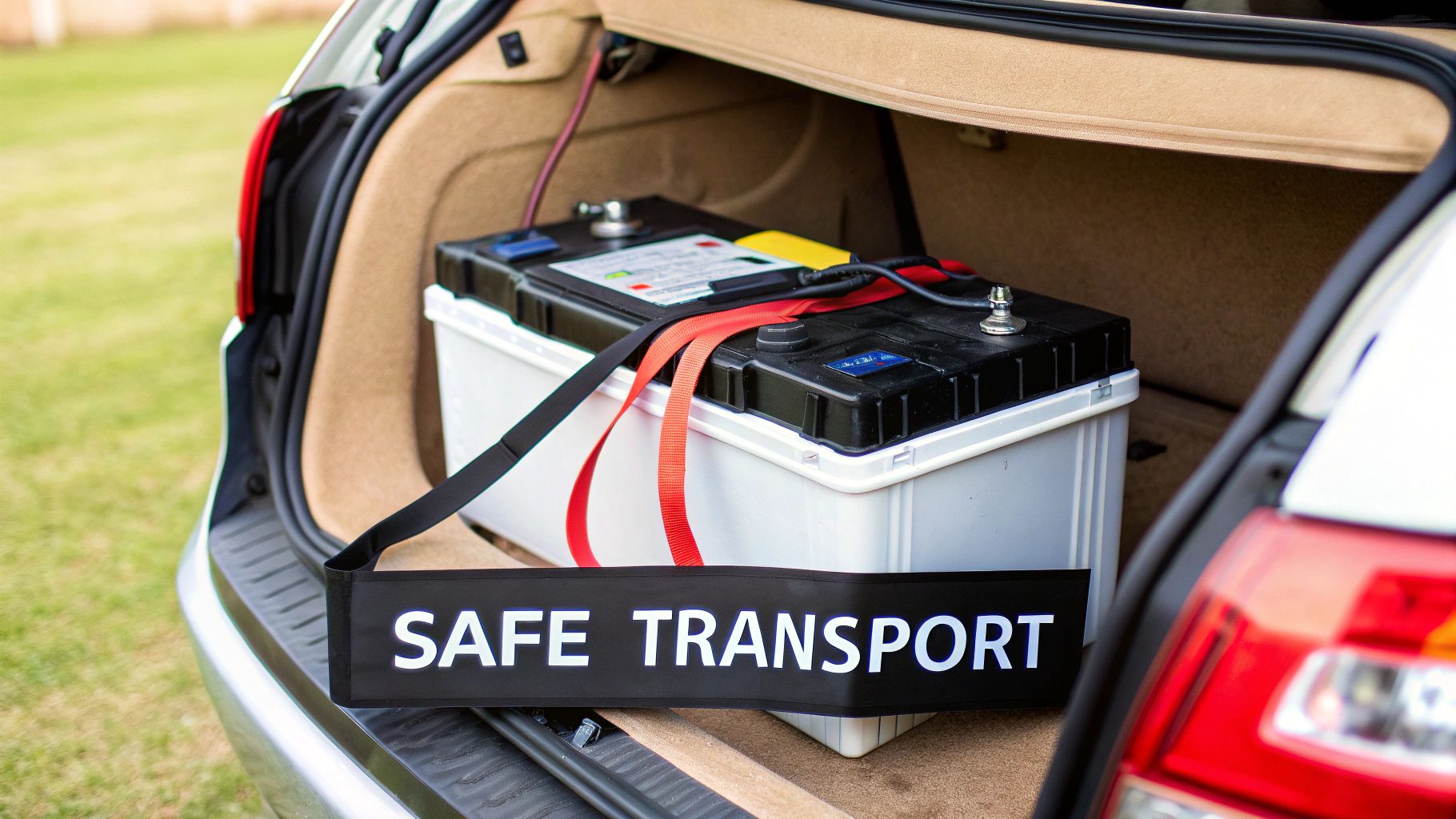
When you're driving, always place your battery inside its fireproof lithium battery container and make sure it can’t slide, roll, or tumble around. Wedging it between soft luggage isn’t good enough; use straps or place it in a snug spot where it won't budge, even during a sudden stop. This prevents impacts that could damage the battery's delicate internal structure.
For businesses shipping these items, understanding carrier-specific rules is non-negotiable. E-commerce sellers, for example, must comply with strict guidelines. You can learn more about obtaining your UPS Hazmat certification for lithium battery shipping to ensure you're fully compliant.
Air travel is a whole different ballgame, governed by strict FAA regulations based on the battery’s energy capacity, measured in Watt-hours (Wh).
FAA Air Travel Quick Guide:
- Batteries Under 100Wh: Generally allowed in your carry-on luggage. This covers most batteries for phones, cameras, and laptops.
- Batteries 101-160Wh: You can bring up to two of these, but you must get airline approval beforehand. This category often includes bigger batteries for drones or professional camera equipment.
- Batteries Over 160Wh: Strictly forbidden in any passenger luggage—no exceptions.
Always pack spare batteries in your carry-on, never in your checked baggage. Using a fire-resistant bag adds another layer of safety that airline staff will appreciate, but it doesn't change these fundamental Watt-hour rules. Before you head to the airport, always double-check your airline’s specific policies.
Properly caring for your equipment, including knowing the ins and outs of a lithium battery charger for your golf cart, is all part of this same safety-first mindset.
A Few More Questions About Battery Safety
Even with the best gear in hand, it's natural to have a few questions pop up. A top-notch fireproof lithium battery container is your first line of defense, but knowing exactly how to use it in different situations is what gives you real peace of mind. Here are some clear, no-nonsense answers to the questions we hear all the time.
Think of this as the final piece of the puzzle. You know why you need a container and how to pick the right one. Now, let’s get into the day-to-day details so you can feel completely confident in your setup.
Can I Charge My Battery Inside a Fireproof Container?
This is a big one, and the answer is almost always a hard no. You should never charge your lithium batteries inside a standard, sealed fireproof container. When a battery charges, it naturally creates heat. Sealing it up in a container with no way for that heat to escape is asking for trouble—it can trap heat, lead to overheating, and seriously increase the risk of a fire.
The best and safest way to charge is in an open, well-ventilated space on a surface that won't catch fire, like a concrete garage floor or a metal workbench. Stick around while it's charging. Once it's full and has had a few minutes to cool down, then you can move it into its fireproof lithium battery container for storage or transport.
The only time this rule doesn't apply is if you have a container specifically built for charging. These are highly specialized cases with built-in ventilation or even cooling systems to manage heat. They’re not the norm and will be clearly advertised for that purpose.
What Is the Difference Between a Fireproof Bag and a Hard Case?
The choice between a bag and a hard case really boils down to how you'll use it—portability, durability, and the overall level of protection you need. One isn't automatically better than the other; it's all about finding the right tool for the job.
-
Fireproof Bags are usually made from flexible, lightweight materials like silicone-coated fiberglass. Their biggest advantage is that they're easy to pack and carry, making them perfect for air travel or tossing smaller batteries into a backpack. They offer solid fire resistance for their size and weight.
-
Hard Cases are built tough, constructed from materials like steel, aluminum, or rugged composites. They give you far better protection against physical damage like drops, impacts, and punctures. This makes them the ideal choice for storing larger, heavier batteries—like the one for your Caddie Wheel—at home or in the garage.
Here's an easy way to think about it: A bag is for mobility, and a hard case is for maximum security. You’d grab a bag for your camera batteries on vacation, but you'd rely on a hard case to protect your powerful Caddie Wheel battery at home.
When Should I Replace My Fireproof Battery Bag?
A fireproof bag is built to be tough, but it won't last forever. Giving it a quick inspection now and then is the key to making sure it can still do its job. Look for any signs of wear and tear—rips in the fabric, seams that are coming apart, or a zipper that doesn’t seal up tight anymore. Any damage could weaken its ability to contain a fire, so if you see something, it's time to replace it.
Most importantly, if a bag is ever involved in a battery fire or thermal runaway, its job is done. It has sacrificed itself to protect your property. Even if it looks mostly fine from the outside, the extreme heat has compromised the protective materials. It must be thrown out and replaced immediately. As a general rule of thumb, it’s also smart to consider replacing a bag you use often every few years, as daily use and exposure to the elements can slowly wear down the materials over time.
Are All Containers Automatically Approved for Air Travel?
Absolutely not. This is a common and potentially dangerous misunderstanding. While using a fireproof bag for air travel is a smart safety step that airlines love to see, the bag itself doesn't give you a green light to fly with any battery.
What really matters to the airlines is the battery's power capacity, measured in Watt-hours (Wh). The container it's in doesn't change the rules. The Federal Aviation Administration (FAA) has very specific guidelines:
- Batteries under 100 Wh are generally allowed in your carry-on luggage.
- Batteries between 101-160 Wh might be allowed, but you must get approval from the airline first.
- Batteries over 160 Wh are completely banned from passenger planes.
A fireproof bag adds an excellent layer of safety, but it never overrides these core FAA rules. Always check the Watt-hour rating on your battery and confirm the airline's policy before you even think about packing.
At Caddie Wheel, we believe enjoying the game should be simple and safe. When you have the right knowledge and the right gear, you can protect your power source and play with total confidence. Learn more about the Caddie Wheel and enhance your round today.
Share:
Your Ultimate Guide to Remote Control Golf Bags
A Complete Guide to AC Motors for Golf Carts