

Walking the course is supposed to be a pleasure, not a balancing act. That’s exactly why a growing number of golfers are ditching their wobbly, unpredictable carts for the grounded feel of four-wheel push golf carts. They offer rock-solid balance on uneven terrain, putting an end to frustrating tip-overs and letting you focus on your next shot.
Why Walkers Are Switching to Four-Wheel Carts
The biggest reason golfers are making the move to four wheels comes down to one simple word: stability. Think about the difference between a three-legged stool and a four-legged chair. The stool gets the job done, but the chair gives you a much more reliable and secure base—especially on an imperfect surface like a golf course.
That wider, more balanced platform distributes your bag's weight evenly across four points. The result? The cart glides effortlessly over side hills and rough patches that would make a three-wheeler wobble or even topple over completely. For anyone who regularly plays hilly or challenging courses, this difference is a game-changer.
Conserving Energy for the Game
All that stability means you spend less physical and mental energy over 18 holes. Instead of constantly correcting the cart's path or worrying about it tipping on a slope, you just push and walk. You get to save that precious energy for your swing, which can make a huge difference on the back nine when fatigue starts to creep in.
The key advantages driving this switch are pretty clear:
- Superior Balance: The four points of contact with the ground drastically reduce the risk of the cart tipping over, especially when you’re walking across a hill.
- Effortless Navigation: They just track straighter with less effort, which makes for a much more relaxed and enjoyable walk between shots.
- Ideal Upgrade Platform: That stable frame is the perfect foundation for adding modern electric-assist upgrades, which add their own weight and torque to the system.
The core appeal of a four-wheel design is confidence. You can park it on a slope without a second thought, navigate tricky terrain without hesitation, and focus entirely on your game, not your gear.
Ultimately, this simple design shift transforms a good walk into a great one. By providing a dependable and sturdy platform for your clubs, four-wheel push golf carts remove a common point of frustration, making your round more enjoyable and way less strenuous.
The Physics of a Perfectly Balanced Golf Cart
Ever tried to sit on a wobbly three-legged stool? You know that feeling of constantly needing to shift your weight to stay balanced. Now, picture a sturdy four-legged dining table. That’s the difference between a three-wheel and a four wheel push golf cart out on the course.
The superior stability isn't some high-tech secret; it's just simple, reliable physics at work.
Think of your fully loaded golf bag as the centerpiece. On a three-wheel cart, its weight is distributed across a triangle. It works, but any decent bump or side-hill lie can easily pull its center of gravity outside that triangle. The next thing you know, you're picking up clubs and balls scattered all over the fairway.
Creating a Rock Solid Foundation
Now, let's place that same bag on a four-wheel cart. The base is a rectangle, which dramatically expands the footprint and creates a much larger "stability zone." This four-point foundation makes it incredibly difficult to tip, even when you're navigating the trickiest parts of the course.
This wider, more forgiving base gives you a few key advantages you'll feel on every single hole:
- No More Side-Hill Tipping: A four-wheel cart handles cross-slopes with confidence, staying planted where three-wheelers would start to lean.
- Glides Over Rough Terrain: It absorbs bumps and rolls over uneven ground smoothly, keeping your bag secure and your round frustration-free.
- Less Physical Effort: You're not constantly making tiny, subconscious corrections to keep the cart upright, which saves a surprising amount of energy over 18 holes.
A cart’s stability is foundational to an enjoyable walking round. It minimizes physical strain and, just as importantly, reduces mental fatigue by removing the constant worry of your bag falling over.
This inherent balance is exactly why the push cart market is booming, with an expected growth of USD 198.3 million by 2028. Walkers are catching on. Four-wheel models are a huge part of this trend because they handle heavy bags on hilly courses without the tipping issues that plague many three-wheel designs. For seniors and fitness-focused golfers, these carts can reduce physical strain by up to 40% compared to carrying. You can dig into the numbers in this insightful report on golf cart market growth.
The Ideal Platform for Power
This exceptional stability also makes four-wheel carts the perfect base for electric-assist upgrades. When you add a motor, you introduce new weight and forces into the equation. A four-point base handles that extra load without breaking a sweat, ensuring the cart tracks straight and stays balanced.
It’s the ideal marriage of a stable frame and motorized power, creating a dependable, effortless experience on the course.
Comparing Four Wheel and Three Wheel Carts
Choosing between a three-wheel and a four-wheel push cart is a classic debate for walking golfers. It’s more than just adding an extra wheel—it’s about aligning the cart’s design with your game, your body, and the courses you play most often. The decision really boils down to a fundamental trade-off: rock-solid stability versus nimble agility.
I like to think of it like picking a car. A four-wheel cart is the reliable SUV of the golf world. Its wide, rectangular base plants it firmly on the ground, giving you a smooth, stable ride over any terrain. This makes it the undisputed champion for hilly courses or for golfers who carry a fully loaded tour bag.
On the other hand, a three-wheel cart is more like a zippy sports car. It’s typically lighter, quicker to respond, and can turn on a dime, which is a huge advantage on flat courses with tight, winding paths between holes.
Stability Versus Maneuverability
The standout feature of four wheel push golf carts is their incredible balance. With four points of contact on the ground, they distribute the weight of your bag far more evenly, which drastically cuts down the chance of it tipping over on a tricky side-hill lie. For anyone whose home course has serious elevation changes, this isn't just a nice-to-have feature; it's a necessity. You can park it on a slope and walk away without a second thought.
That stability, however, means it has a slightly wider turning radius. A three-wheel cart, especially one with a swiveling front wheel, is the king of maneuverability. It can dance around tight corners and weave through obstacles with barely any effort. If your course is mostly flat but has narrow paths cutting through the trees, the agility of a three-wheeler will feel much better. For a deeper dive, you can explore the specific perks of three wheel carts in our guide.
The graphic below breaks down the simple physics that set these two designs apart.
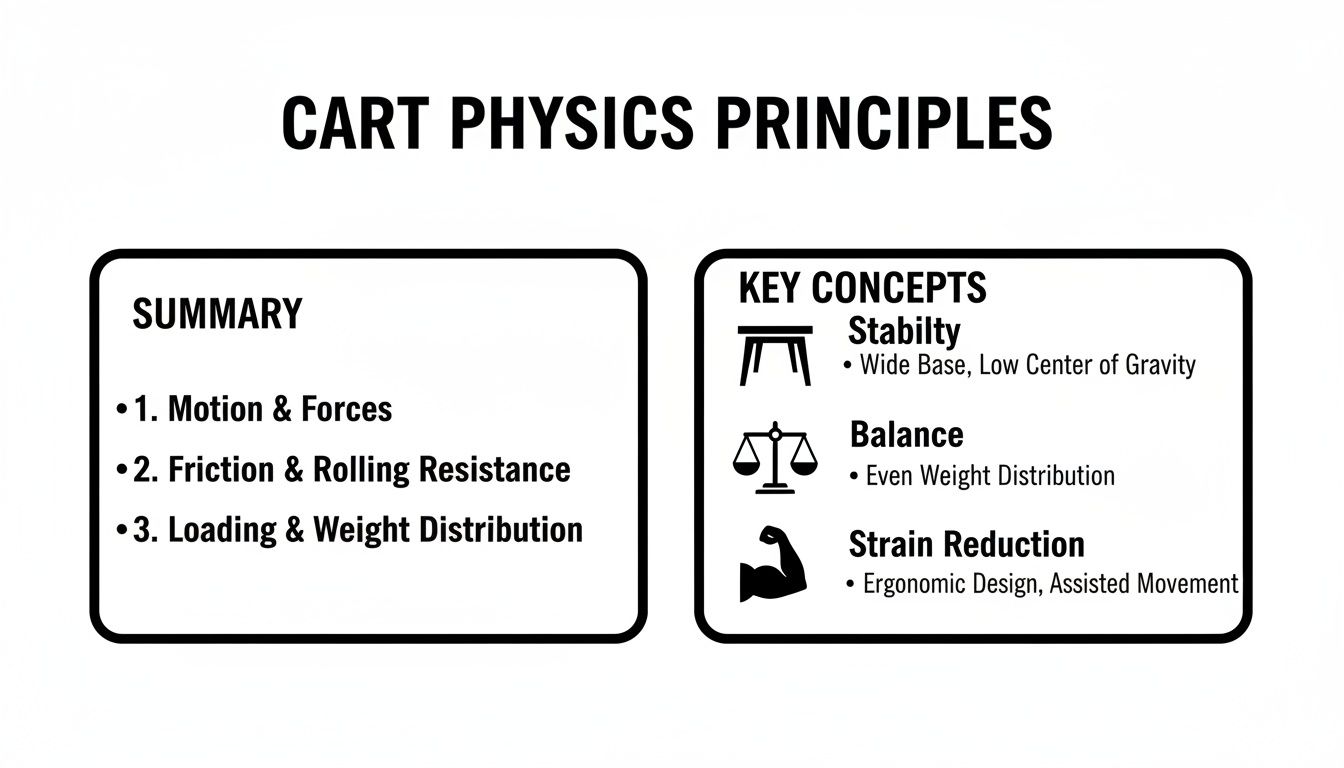
As you can see, the four-wheel design is all about stability and balance, which ultimately means less physical strain on you over 18 holes.
To help you visualize the key differences and decide which cart aligns best with your golfing style, here's a side-by-side comparison.
Four Wheel vs Three Wheel Push Cart Showdown
| Feature | Four Wheel Push Carts | Three Wheel Push Carts |
|---|---|---|
| Stability | Excellent. Four contact points provide a wide, secure base, ideal for hills and uneven ground. | Good. Offers solid balance on most surfaces but can be less stable on steep side-slopes. |
| Maneuverability | Good. Solid and predictable, but has a wider turning radius. | Excellent. Highly agile, especially with a swiveling front wheel, perfect for tight paths. |
| Best For | Hilly courses, heavy bags, and golfers who prioritize stability above all else. | Flatter courses, golfers who need to navigate tight spaces, and those who want a lighter feel. |
| Footprint | Generally larger, which contributes to its stability. | Typically more compact and streamlined. |
| Weight | Can be slightly heavier due to the extra wheel and sturdier frame. | Often lighter, making it easier to push and lift. |
This table highlights the core strengths of each design. Your choice depends on what you value most during your round: the unshakeable confidence of a four-wheeler or the nimble freedom of a three-wheeler.
Storage and Transport Considerations
In the past, four-wheel carts had a reputation for being clunky and a pain to fit in the car. Thankfully, that's ancient history. Modern designs have completely changed the game, with many featuring slick, one-step folding mechanisms that collapse the cart into a surprisingly small package, often just as compact as their three-wheel cousins.
Here’s a quick summary to help you make the final call:
- Go with a four-wheel cart if: Stability is your number one priority, you play on hilly courses, or you lug around a heavy golf bag.
- Opt for a three-wheel cart if: You value quick maneuverability, play on flat courses with tight paths, or you want the absolute lightest option you can find.
Ultimately, both designs are fantastic for making walking the course more enjoyable. But if you’re thinking about adding an electric-assist motor down the road, the superior, stable foundation of a four wheel push golf cart makes it the smarter and more secure choice.
Essential Features of a High-Quality Push Cart
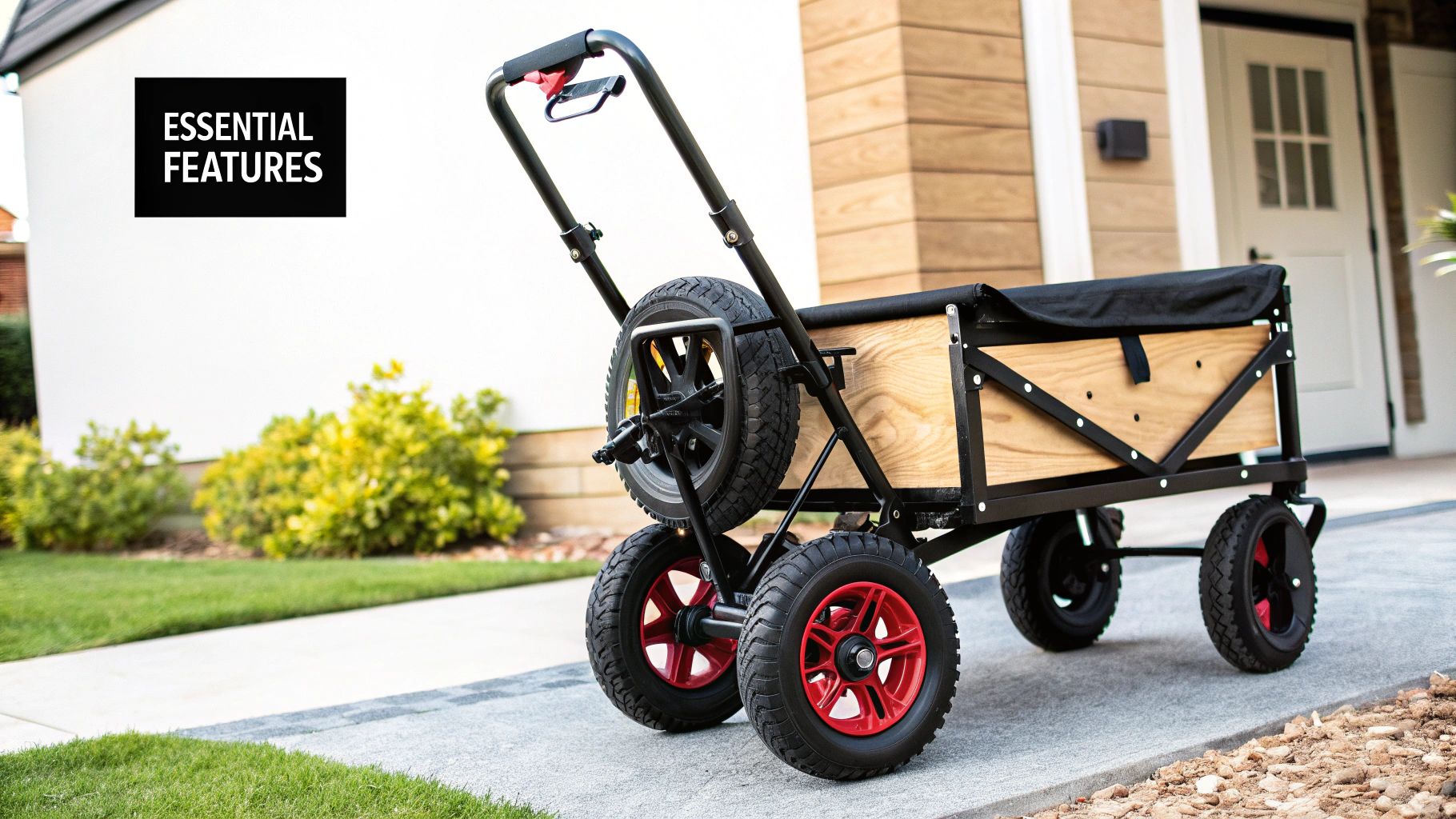
While having four wheels is a great start for stability, it’s the smaller details that separate a truly great cart from one that’s just a pain to use. Getting these features right ensures you’re investing in something that actually helps your round, not complicates it. Think of it like buying a car—the engine is key, but it’s the comfort and thoughtful features inside that make the drive enjoyable.
The most critical feature, hands down, is the folding mechanism. Modern four wheel push golf carts have come a long way from the clunky, multi-step contraptions of the past. Look for a cart with a simple, one-step or one-click fold. Trust me, you’ll appreciate this when you're tired after 18 holes and just want to pack up and go.
A compact folded size is just as important. It’s the difference between effortlessly tossing your cart in the trunk with room to spare and playing a frustrating game of trunk Tetris every time you leave the course.
Brakes, Handles, and On-Course Organization
Next up, let's talk about the braking system. A solid brake is non-negotiable, especially if you play on hilly courses where a runaway cart is a legitimate nightmare. Most high-end carts have a hand-operated lever right on the handle, which is far more convenient than fumbling for a foot brake with your spikes on. It’s a small detail that provides huge peace of mind.
Another must-have is an adjustable handle. Golfers come in all shapes and sizes, and a handle you can customize to your height prevents you from hunching over or reaching up awkwardly. This little ergonomic touch makes a massive difference in reducing strain on your back and shoulders over a long round.
Finally, take a hard look at the console and storage. A well-designed console keeps all your essentials organized and right where you need them.
- Dedicated Holders: Does it have specific spots for your phone, scorecard, pencil, and tees?
- Deep Storage: A mesh basket or a deep console bin is perfect for stashing a rangefinder, snacks, or an extra jacket.
- Beverage Access: An easy-to-reach drink holder is essential for staying hydrated out there.
These features transform your cart from a simple bag hauler into a functional caddie, keeping you organized so you can focus on your next shot.
Future-Proofing Your Investment
It's also a smart move to pick a cart with a sturdy frame that’s ready for an electric-assist upgrade like the Caddie Wheel. A robust build means it can handle the extra weight and power of a motor without getting wobbly. This kind of foresight makes your investment future-proof, giving you the option to easily add power down the road.
The push cart market is booming, expected to hit USD 2.4 billion by 2032, largely because of these kinds of feature upgrades. Four-wheel models are gaining serious traction, showing a 15% lower risk of tipping over. They also cut down the energy you spend by 35% compared to carrying your bag—a huge deal for the 40% of U.S. golfers who prefer to walk. You can learn more about the rise of advanced push carts.
How to Electrify Your Four Wheel Push Cart
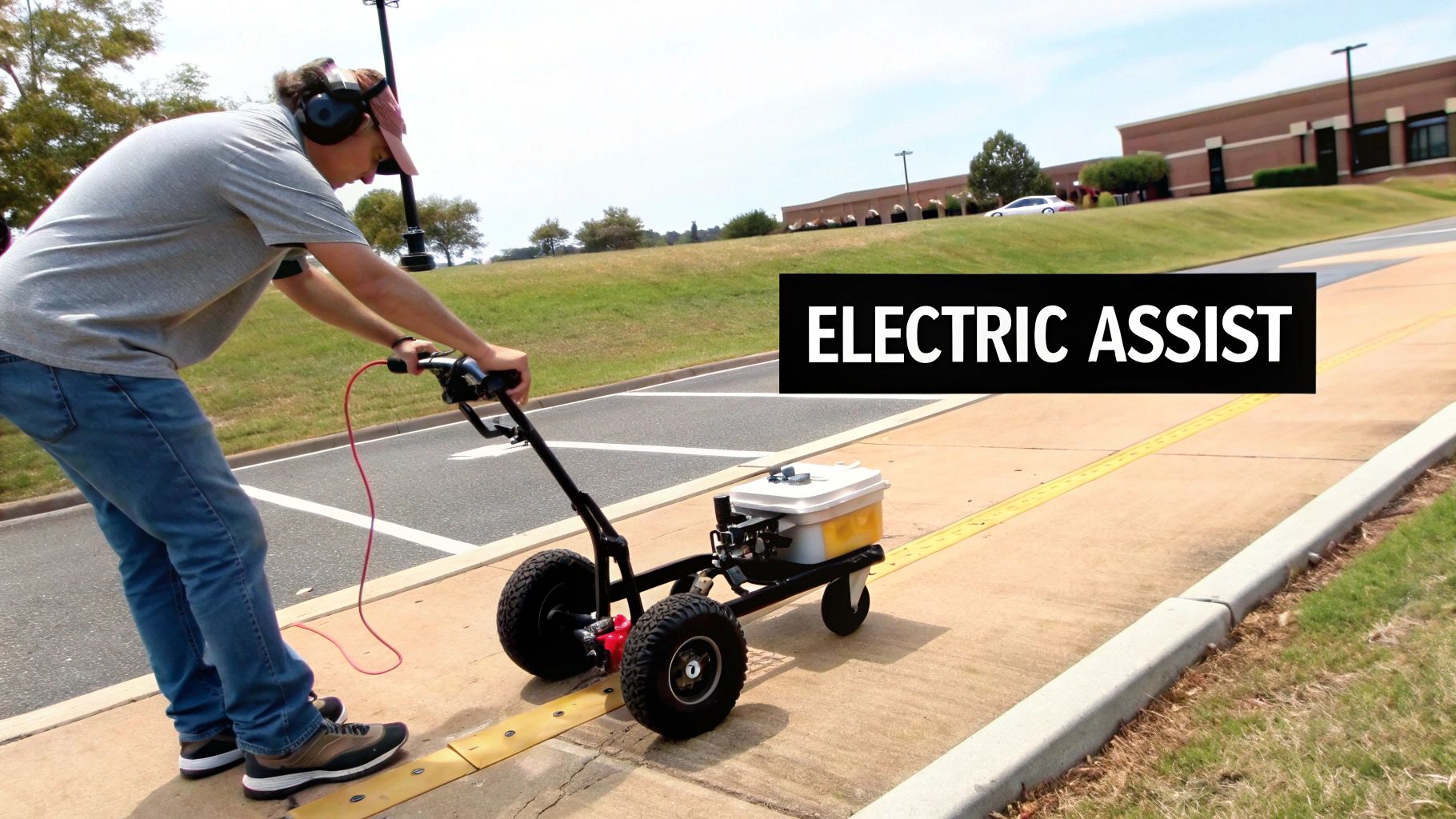
Loving the idea of a motorized round doesn’t mean you have to shell out for an entirely new, expensive electric caddy. There's a much smarter and more affordable path: 'drop-on' power assist systems. These clever kits are designed to convert the manual cart you already own into a remote-controlled powerhouse.
Think of it like adding a turbocharger to your favorite car. You get to keep the frame, storage, and folding mechanism you're already familiar with, but you gain the effortless glide of a motor. It’s a win-win that saves you money and lets you stick with the cart you know and love.
Solutions like the Caddie Wheel were built for exactly this purpose. They offer a simple upgrade that attaches right to your cart's axle in minutes—often without needing a single tool. This kind of simplicity makes going electric a realistic option for any golfer.
The Benefits of a Simple Power Upgrade
Once you hit the course with an electrified cart, the advantages are immediately obvious. A simple remote control puts total command in the palm of your hand, letting you manage speed and direction from a distance.
Hills that used to feel like a serious workout suddenly become a breeze to climb. This conserves your energy for what really matters—your next shot.
The impact on your stamina is huge. Many golfers find they can comfortably walk 18 or even 36 holes without feeling that familiar end-of-round fatigue. A stable four wheel push golf cart is the perfect base for this technology, as its wide stance easily handles the added torque and weight without ever feeling tippy.
The real beauty of electrifying your existing cart is efficiency. You get all the perks of a motorized caddy—less strain, more energy, and a better pace of play—at a fraction of the cost and with a tool-free installation.
The market for these electric-assist options is booming, with the electric cart segment expected to hit USD 450.6 million by 2030. Four-wheel models are in a great position to ride this wave, since their stability is a massive asset on slopes—a key feature on the 45% of U.S. courses with significant elevation changes.
Adding a motor is a straightforward DIY project that can completely change how you experience the game. For a step-by-step walkthrough, check out our guide on how to easily convert your push cart to electric. This single modification transforms your trusty four-wheeler into a powerful and efficient on-course assistant.
Keeping Your Golf Cart in Top Condition
A little bit of routine care goes a long way in protecting your investment and making sure your four wheel push golf cart performs reliably for years to come. Think of it less as a chore and more as a quick post-round ritual that stops bigger issues from ever popping up.
The single most important thing you can do is keep the frame and wheels clean. Grass, dirt, and sand love to build up in the moving parts, causing friction that makes the cart a pain to push. A simple wipe-down with a damp cloth after each round is usually all it takes to keep it rolling smoothly.
Performing Quick Safety Checks
Before you even head to the first tee, get into the habit of giving your cart a quick once-over. This simple routine is your best defense against surprises on the course and keeps everything in solid working order.
- Check Key Bolts: Give the main bolts on the frame and wheel axles a quick look to make sure they're snug. Vibrations from rolling across the course can loosen them over time.
- Test the Brakes: Click the brake on and off a few times. You want to feel it lock the wheels firmly and then release completely without sticking.
This two-minute check is all it takes to keep your cart safe, dependable, and ready for action.
Taking just a few moments for upkeep not only extends the life of your cart but also ensures it's always ready for your next round. Consistent care is the key to long-term performance.
For those who’ve upgraded with an electric-assist unit, battery care is a whole different ball game. Always follow the manufacturer’s instructions for charging, and try to avoid leaving the battery in extreme heat or cold. Storing it properly during the offseason is the secret to maximizing its lifespan, so your cart is always powered up and ready to go. For more in-depth advice, check out these 6 essential golf cart maintenance tips to keep your gear in pristine condition.
Got Questions About Four-Wheel Carts? We’ve Got Answers.
Making the switch to a new piece of gear always brings up a few questions. When it comes to four-wheel push golf carts, most golfers have the same handful of concerns about how they’ll handle on the course and fit into their routine. Let’s clear those up with some straightforward, practical answers.
A lot of golfers see that wider base and immediately wonder about agility. They assume it's going to feel clunky or hard to steer compared to a zippy three-wheeler.
Are Four-Wheel Carts Harder to Turn?
Not really, and here’s why: while some older models might have been a bit rigid, today’s four-wheel carts almost always feature swiveling front wheels. This gives them fantastic maneuverability that easily rivals their three-wheel cousins.
For most golfers, the massive upgrade in stability on hills and awkward lies is a trade-off they're happy to make. Any tiny difference in turning radius is quickly forgotten when your cart isn't threatening to tip over on a sidehill.
The next big question is usually about transport and storage. Nobody wants to play a frustrating game of trunk Tetris after every round just to get their gear home.
The good news is that manufacturers have poured a ton of effort into designing compact, one-step folding mechanisms. Many modern four-wheel carts are built from lightweight aluminum and collapse into a surprisingly small package—sometimes even smaller than comparable three-wheel models.
It's always smart to double-check the folded dimensions and weight before you buy, but you’ll find that most are designed to slide right into a standard car trunk without a fight.
Can I Add an Electric Motor to It?
Absolutely. In fact, they're perfect for it. Most electric assist kits on the market, like the Caddie Wheel, are designed with universal compatibility in mind. They usually have a simple drop-on bracket system that makes installation a breeze.
Four-wheel push golf carts are especially well-suited for these upgrades. Their wide, stable base is the ideal platform to handle the extra weight and torque from a motor. You get a secure, balanced, and reliable motorized setup without any risk of it becoming top-heavy or unstable.
Finally, what about upkeep? Is this another piece of equipment that needs constant tinkering?
- Routine Cleaning: The most important job is just keeping it clean. A quick wipe-down to get rid of grass and dirt ensures the wheels and folding joints always operate smoothly.
- Safety Checks: Every now and then, give the main bolts a check to make sure they’re tight and confirm the brake is working correctly.
- Motorized Care: If you do add a motorized kit, you’ll just need to follow the best practices for charging and storing the battery.
Honestly, these carts are about as low-maintenance as it gets. A few minutes of basic care here and there will keep your cart in fantastic shape for countless rounds to come.
Ready to experience a more stable, effortless walk on the course? The Caddie Wheel transforms your sturdy four-wheel cart into a remote-controlled powerhouse, letting you conquer hills and conserve energy for your best game. Upgrade your round today at CaddieWheel.com.
Share:
Your Guide to a Wheel Hub Motor Kit for Golf Carts
Lightweight golf push carts: The Ultimate Guide to Easy Green Transport