
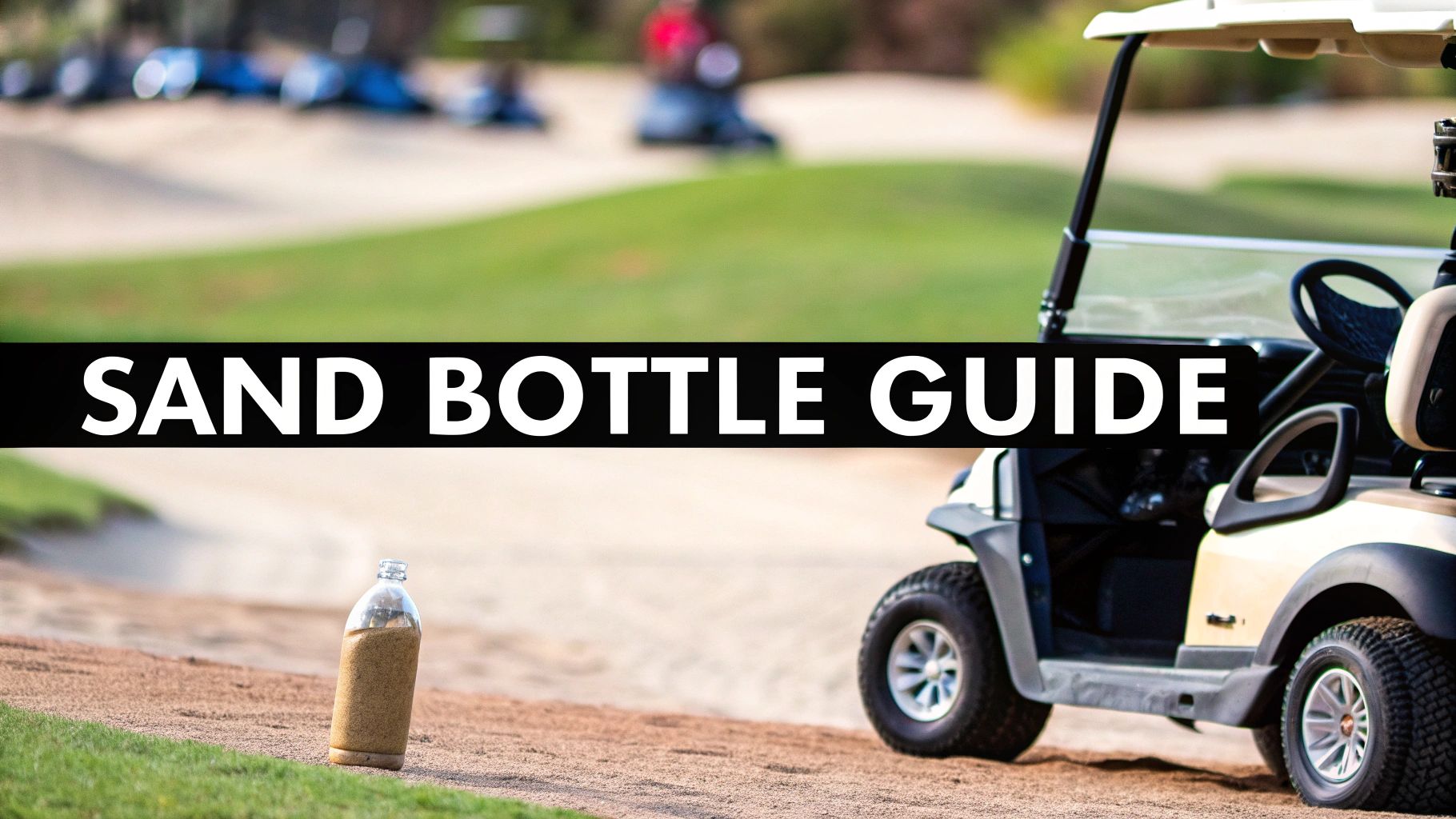
Ever wonder about those little plastic jugs attached to the side of a golf cart? That’s a golf cart sand bottle, and it’s one of the most important—and underrated—accessories in the game. It’s a simple tool with a crucial job: repairing divots, those little patches of turf your club slices out during a swing.
Using a sand bottle helps maintain the course's health and ensures the playing surface stays fair and consistent for everyone who follows you. It's a small act that makes a huge difference.
Why a Sand Bottle Is Your Most Important Accessory
Think of it like being a good guest at a friend’s house—you clean up after yourself and leave the place looking great. On the golf course, every player shares the responsibility of being a good guest. A fairway peppered with unfilled divots doesn’t just look neglected; it creates an unpredictable and unfair playing surface for the next group.
Filling a divot with the sand-and-seed mix provided by the course is a cornerstone of golf etiquette. It’s a tiny bit of effort that pays huge dividends, directly contributing to the health, beauty, and playability of the turf.
The Growing Importance of Course Care
Golf is more popular than ever, which means courses are seeing a lot more foot—and cart—traffic. In fact, the global golf cart market hit about $1.71 billion recently and is only expected to grow. While that's great for the sport, it also means more divots are being taken every single day.
This surge in popularity makes the humble sand bottle more critical than ever. It’s not just another accessory; it’s a tool for sustainability that helps courses keep up with the increased play.
A well-maintained course is a collective effort. Your commitment to repairing divots ensures that the game remains enjoyable and fair for every single player, from the first tee to the eighteenth green.
More Than Just an Accessory
It’s easy to get caught up in the latest high-tech gadgets, but the sand bottle is a true fundamental. It represents a commitment to the game's core traditions of respect and sportsmanship.
Clipping one onto your cart is one of the easiest ways to show you care about the course and your fellow golfers. If you’re looking for more ways to outfit your ride, check out our guide on the best golf cart accessories retailers.
Ultimately, the goal is simple: leave the course in better shape than you found it. By embracing this responsibility, you're not just a golfer—you're a true steward of the game.
Choosing the Right Sand Bottle for Your Cart
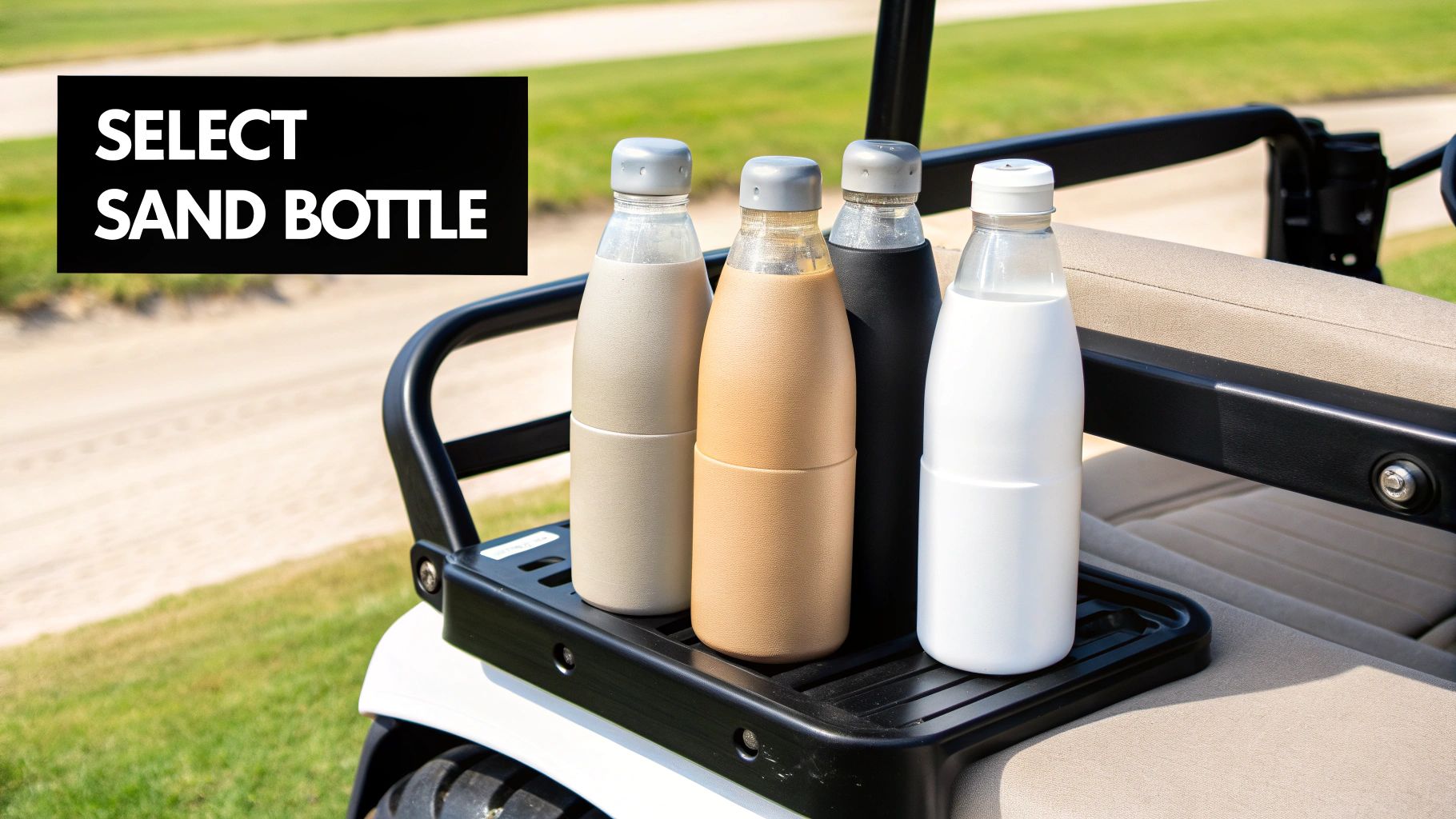
Picking out a golf cart sand bottle might seem like a small decision, but it's more important than you think. Think of it like choosing a putter—sure, they all serve the same basic purpose, but the right one just feels better and works more seamlessly with your game. A good bottle makes divot repair a quick, mindless task, which means you're more likely to do it every single time.
Your first thought should be about the material. The standard-issue bottles you see everywhere are made from basic plastic. They're cheap and they work. But if you play a lot, it’s worth considering an upgrade to a premium model made from UV-resistant plastic. This tougher material won't get brittle or crack after sitting out in the sun all season.
After that, you have to nail down the mounting system. This is probably the most critical part of the decision. A bottle that’s a pain to attach, rattles around, or falls off mid-round is worse than having no bottle at all.
Finding the Perfect Fit: Your Mounting Options
How the sand bottle attaches to your cart is everything. A wobbly, insecure bottle is just an annoyance waiting to happen. Most mounting hardware falls into one of three camps, each tailored for different cart setups.
- Universal Clamps: These are the jacks-of-all-trades. Designed to grip onto different frame shapes and sizes, they're a great pick if you often use rental carts or aren't sure about your cart’s specs.
- Brand-Specific Brackets: Big names like Club Car, E-Z-GO, and Yamaha often design their carts with pre-drilled holes for accessories. A bracket made specifically for your cart model will give you the most secure, factory-finish fit.
- Rail Mounts: If your cart has an accessory rail, a rail-mounted bottle is a fantastic choice. It slides on easily and gives you the freedom to position it exactly where you want it for quick access.
Before you hit "buy," always double-check that the mount is compatible with your cart's make and model. A snug, secure fit means the bottle will always be right where you need it and won't vanish somewhere on the back nine.
Comparing Sand Bottle Features
To help you decide, here's a quick comparison of what you'll find on the market.
| Feature | Standard Plastic Bottle | Premium Model | Key Consideration |
|---|---|---|---|
| Material | Basic plastic | UV-resistant, durable polymers | UV resistance prevents cracking and extends lifespan. |
| Mounting Style | Often universal clamp | Brand-specific or rail mounts | A secure fit is non-negotiable to prevent loss or rattling. |
| Overall Value | Low initial cost, may need replacing sooner | Higher upfront cost, built for longevity | For frequent golfers, investing in a premium model pays off. |
Ultimately, a standard bottle is fine for the occasional golfer, but a premium model is a smart investment for anyone who spends a lot of time on the course.
Handle Design and Capacity
Don't forget about ergonomics. How the bottle feels in your hand actually matters when you're using it multiple times per round. The two most common styles are the T-handle and the pistol grip. T-handles are simple and get the job done, but many golfers find a pistol grip feels more natural and gives them better control when pouring the sand mix.
Capacity is the final piece of the puzzle. Most bottles hold plenty of mix for a standard 18 holes. However, if you're an aggressive iron player who takes a lot of divots, a slightly larger bottle could save you a refill trip. Just like when you’re picking out other gear, finding the best golf push cart accessories often comes down to these small details and personal preferences.
How to Install and Use Your Sand Bottle Correctly
Once you've picked out the perfect sand bottle for your golf cart, the next step is getting it installed and ready for the course. Think of it like adjusting your driver's seat before a road trip—a few minutes of setup makes sure everything is comfortable, easy to reach, and safe. After all, a poorly mounted bottle is just a distraction, but one that’s placed correctly becomes a seamless part of your game.
The goal is simple: find a spot that’s easy to grab from either the driver or passenger side but doesn't get in the way of your legs or your swing. For most carts, that sweet spot is on the frame right near the fender. This lets you grab it, fill a divot, and pop it back in without any hassle.
Your Step-By-Step Installation Guide
Mounting your sand bottle is a quick job that usually takes less than five minutes. Most kits come with all the hardware you’ll need, but it never hurts to have a screwdriver or a small wrench handy just in case.
- Find Your Spot: Hop in your cart and do a practice run, reaching for where you think the bottle should go. Pick a spot on a sturdy frame rail that feels natural and won’t interfere with your movements.
- Attach the Bracket: Wrap the clamp or bracket around the frame. Go ahead and tighten the screws until the bracket is firmly in place—you don't want it wiggling or sliding around mid-round.
- Test the Fit: Slide the sand bottle into its holder. It should feel snug and secure, not rattling, but still easy enough to pull out and put back.
More carts are on the course today than ever before. In fact, the global golf cart market is on track to hit $2.85 billion, thanks to thousands of courses and a growing number of players. This boom makes having secure, reliable accessories more important than ever, both for your convenience and for safety on crowded fairways. You can find more insights on the golf cart market on Persistence Market Research.
How to Properly Fill a Divot
With your bottle installed, you’re officially a steward of the course. But repairing a divot isn't just about dumping sand; there’s a bit of a technique to it that helps the turf heal quickly and correctly.
Imagine you're frosting a small cupcake. You want just enough to fill the space and make it level, not so much that it spills over the sides. The same idea applies here.
Pro Tip: Don't overfill the divot. A big mound of sand can actually dull or damage the blades on fairway mowers, which just creates more work for the grounds crew. A slightly mounded fill that’s level with the grass is all you need.
The whole process takes just a few seconds.
- Step 1 Scoop and Pour: Use your bottle to pour the sand and seed mix directly into the divot you’ve made.
- Step 2 Fill to Level: Keep pouring until the mix is level with the surrounding turf or just slightly mounded on top. Don't worry, the sand will settle over time.
- Step 3 Tamp It Down: Gently tap the area with the sole of your shoe or the back of your club. This helps the mix settle into the soil and creates a firm base for new grass to take root.
By following these simple steps, your golf cart sand bottle goes from being just another accessory to a powerful tool for keeping the course in great shape.
Proper Care for Your Sand Bottle and Divot Mix
Having a sand bottle on your cart is great, but it’s only useful if it actually works when you need it. A clogged or damp bottle can turn a simple act of course care into a frustrating mess. Luckily, a few easy habits will keep your equipment in top shape every round.
Think of your sand bottle like any other piece of golf gear—it needs a little attention. Over time, moisture and fine dust can cake up inside the neck, blocking the mix from pouring out. A quick rinse with water and letting it dry completely every few rounds is all it takes to keep it flowing freely.
Keeping Your Divot Mix Pristine
The real secret to a functional sand bottle isn’t the bottle itself, but what's inside. Clumpy, wet divot mix is completely useless for repairs. Always make sure you screw the cap on tight after each use, especially if there's even a hint of rain in the forecast.
Whenever you can, store your cart under a cover or in a garage. This simple step protects the divot mix from morning dew and unexpected showers, ensuring it’s always dry and ready to go. Keeping your equipment in great shape is a core part of the game; for more tips, explore these essential golf cart maintenance tips.
Understanding the Course-Specific Blend
Ever wonder what’s actually in that mix? It’s not just plain old sand.
Every course provides a specific blend of sand, soil, and grass seed that is scientifically formulated to match the exact type of turf on its fairways. This custom mix is the key to promoting fast, healthy, and seamless regrowth.
Using the blend provided by the course is non-negotiable for proper care. It ensures your repair work actually helps the turf heal instead of introducing foreign materials that could do more harm than good. You'll almost always find refill stations conveniently located near the clubhouse or the first tee.
The infographic below breaks down just how simple the three-step repair process is when you've got the right mix.
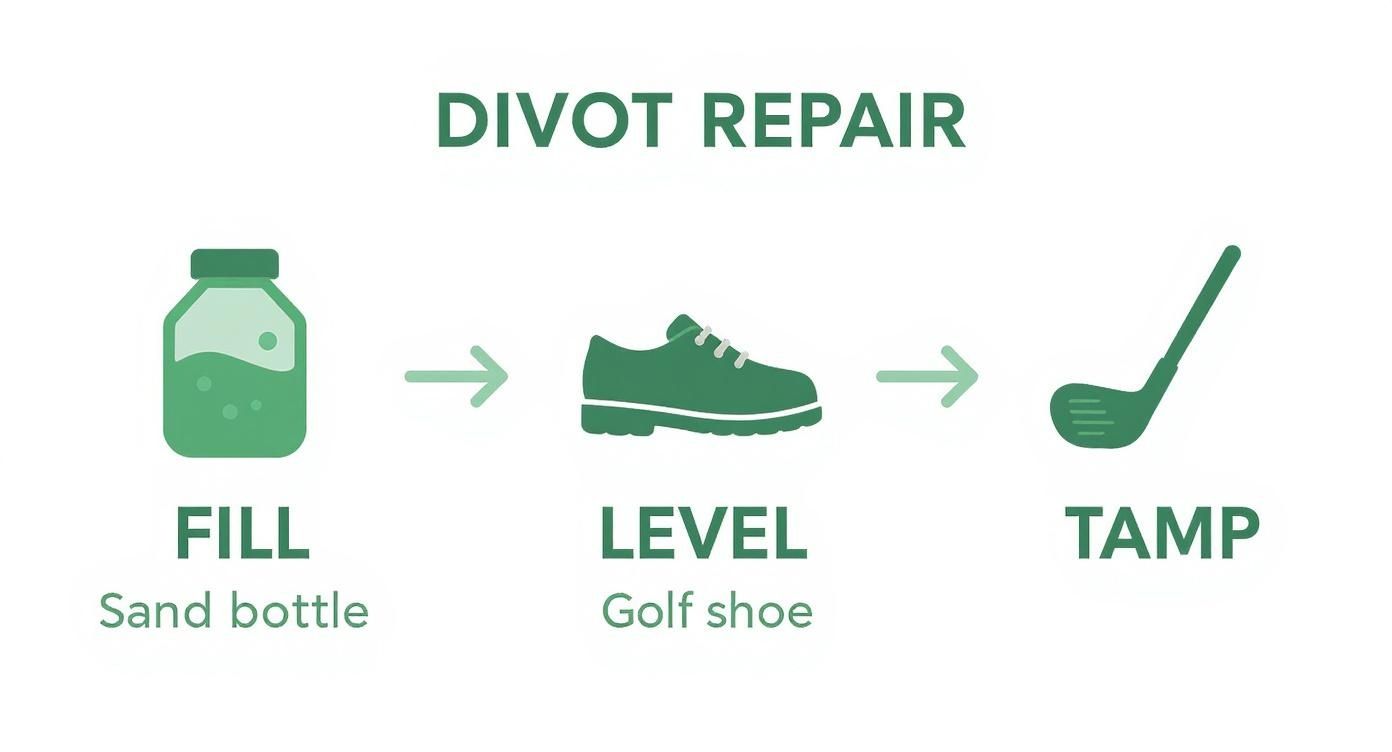
As you can see, a proper divot repair is a straightforward sequence—fill, level, and tamp—that anyone can master. Taking a few seconds to do it right ensures the course stays in pristine condition for every golfer who comes after you.
Mastering the Etiquette of Divot Repair
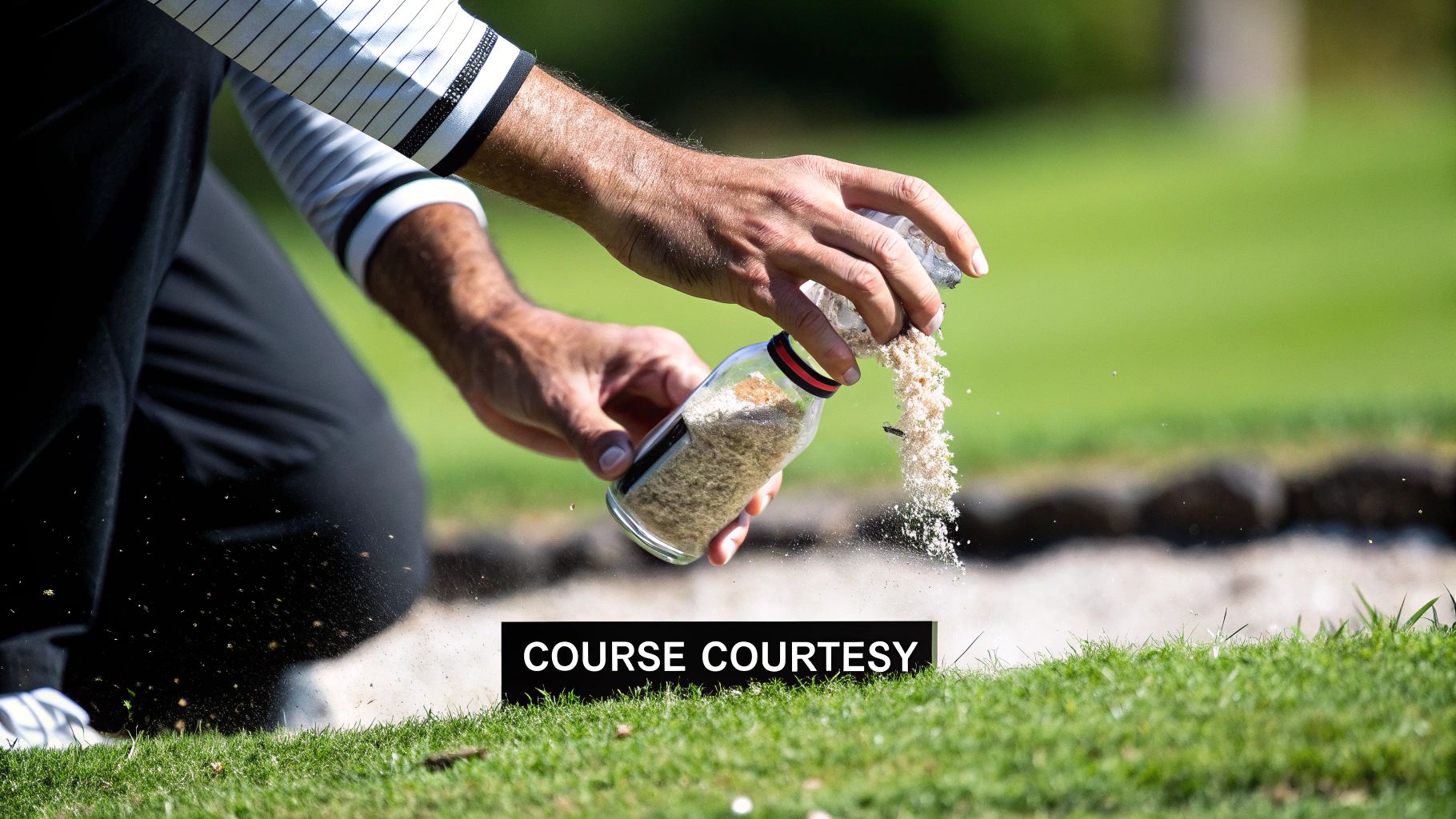
Using a golf cart sand bottle isn't just another task on the course; it's a quiet statement about the kind of golfer you are. Think of it as your signature—a sign of respect for the course, the grounds crew working tirelessly behind the scenes, and every single player who will walk those fairways after you. It’s a small act, but it’s a massive part of golf’s unwritten code.
There's a reason nearly every course requires divot repair and provides a specific sand-and-seed mix. It’s all about shared responsibility. When you take the time to fill a divot, you aren't just fixing a little patch of grass—you're upholding the integrity of the game for everyone.
Knowing When and How to Act
Great on-course etiquette goes beyond just filling a hole; it's about understanding the right way to do it. The proper method can actually change depending on where you are on the hole, and knowing the difference shows a real understanding of turf care.
Here are a few best practices to keep in mind:
- On the Fairway: This is where your sand bottle is king. A solid iron shot will usually blast the turf out of the ground, making it impossible to replace. The sand-and-seed mix is the perfect solution, creating a bed for new grass to grow.
- On the Tee Box: If you take a shallow divot and the piece of turf (often called a "pelt") is still intact, it's usually better to just put it back. Gently place the turf back in its spot and press down firmly with your foot to help the roots reconnect.
This kind of situational awareness is what separates a good golfer from a great steward of the game.
Remember the golden rule of golf: Always leave the course in better condition than you found it. Making a habit of fixing your divots—and maybe one or two others you spot along the way—is one of the best ways to live up to that tradition.
The golf cart market is booming—it’s projected to hit $3.21 billion soon—which means more players are riding and more traffic is hitting the links. This just makes it more critical for every golfer to do their part. You can learn more about the trends shaping the golf cart market to see just how much the game is growing. Mastering these small courtesies is how we keep our courses pristine for everyone to enjoy.
What Are the Alternatives to a Traditional Sand Bottle?
While a mounted golf cart sand bottle is the go-to for most riders, it’s certainly not the only tool for the job. The best divot repair solution really comes down to how you play the game. After all, a golfer who loves to walk the course has totally different needs than someone who always rides.
For walkers, the most popular alternative is easily the portable sand pouch. These lightweight bags clip right onto your golf bag or even a belt loop, putting the divot mix right at your fingertips. They're incredibly convenient and make it easy to care for the course without breaking your stride.
Of course, that portability comes with a trade-off. A pouch holds a lot less mix than a cart-mounted bottle, so you might find yourself needing a refill mid-round if you're taking a lot of turf.
Other Divot Repair Solutions
Beyond the simple pouch, a few other options have popped up to cater to different preferences and equipment setups. These tools offer their own unique benefits, from hands-free operation to specialized designs just for walking golfers.
- Handheld Divot Tools: Some companies offer small, scoop-like tools designed for carrying sand from the communal bins you often see on tee boxes. They’re compact, but they do require you to find a sand source on the course first.
- Integrated Push Cart Dispensers: This is a more elegant solution for walkers. Some modern push carts actually feature built-in sand dispensers, which is the ultimate in convenience. It blends course care right into your equipment.
The goal is always the same: leave the course better than you found it. The method you choose—whether it's a bottle, pouch, or dispenser—is less important than your commitment to the act itself.
Choosing Your Method
So, which one is for you? Ultimately, selecting the right tool comes down to your personal playing style.
A cart rider will almost always be best served by a traditional golf cart sand bottle simply due to its large capacity and ease of use. It’s a no-brainer.
Walkers, on the other hand, have more to think about. A clip-on pouch is a fantastic, low-cost starting point for just about anyone. But for the serious walker who really values convenience, investing in a push cart with an integrated dispenser might be the perfect long-term solution.
A Few Common Questions About Sand Bottles
Even after you get the hang of using a golf cart sand bottle, a few specific questions always seem to pop up. Getting those answered ahead of time means you can handle course care like a pro and sidestep any common mistakes. This section tackles the questions we hear most often from golfers about using their sand bottles the right way.
Think of it as the "local rules" for course maintenance—a few simple guidelines to make sure everyone's on the same page. Knowing these little details helps you act quickly and correctly, whether you're teeing off on the first hole or walking up the final fairway.
Where Do I Get the Mix for My Bottle?
This is easily one of the most common—and most important—questions. You should never grab your own sand from a hardware store or, even worse, the beach. Golf courses always provide the right sand and seed mixture for free, and there's a good reason for that: it's scientifically blended to match their specific type of turf.
You'll usually find large refill stations in a few key spots:
- Near the clubhouse or pro shop.
- Close to the first tee box.
- At comfort stations or halfway houses out on the course.
Using the course-provided mix is absolutely crucial. It ensures your repair will blend in perfectly with the existing grass and encourage healthy, quick regrowth. Bringing in a foreign mix can introduce unwanted grass types or even damage the turf.
Do I Still Need to Repair Divots if I Walk?
Absolutely. Taking care of the course is a responsibility every golfer shares, not just the ones riding in a cart. While a cart-mounted sand bottle is perfect for riders, walkers have some great alternatives to make sure they can do their part.
Many walkers carry smaller, portable sand pouches that clip right onto their golf bags. On top of that, you'll often see communal sand containers on tee boxes, making it easy for any player to grab a scoop and fill divots they see nearby.
The simple act of repairing a divot is a fundamental part of golf etiquette, no matter how you get around the course. Every player shares the responsibility of leaving the course in pristine condition for the next group.
Should I Replace the Turf or Use Sand?
Now this is the mark of an experienced, considerate golfer: knowing when to use sand versus when to replace the piece of turf itself. The right move depends entirely on where you are on the course and what the divot looks like.
On the fairways, you should almost always use the sand and seed mix. A full swing with an iron usually shatters the turf into small pieces, making it impossible to put back effectively. The sand mix gives new grass the perfect foundation to grow.
On tee boxes, the opposite is often true. If you take a clean, intact slice of turf (often called a "pelt"), it's better to just place it back where it came from. Press it down firmly with your foot to help the roots reconnect with the soil below.
At Caddie Wheel, we believe every round of golf should be more enjoyable and less strenuous. By taking care of the push, our electric power assist lets you focus on your game and the beauty of the course. Learn more about the Caddie Wheel and walk your next round with ease.
Share:
Battery Powered Golf Push Cart Buyer's Guide
Best Electric Golf Push Cart That Follows You