

When you're thinking about golf carts and batteries, the conversation really boils down to one big decision: are you going with old-school lead-acid or modern lithium-ion? This choice is a lot like picking the engine for your car—it’s going to define how your cart performs, how much you enjoy using it, and what it costs you over the long haul.
Why Your Golf Cart Battery Is Your Most Important Club
Just like you wouldn't use a putter off the tee box, picking the right battery for your golf cart is a fundamental choice that sets up your entire day. It’s the heart of your machine. It dictates how far you can go, how easily you cruise up hills, and how much of your weekend is spent on maintenance versus actually playing golf.
A solid, reliable battery means a worry-free game. A weak one? It could leave you stranded on the 15th fairway.
For decades, the golf cart and battery relationship was simple because there was only one real choice: heavy, water-filled lead-acid batteries. They were dependable workhorses, sure, but they came with a long to-do list. You had to constantly check water levels, scrub away corrosive gunk, and patiently wait for them to charge. They get the job done, but it’s like owning a classic car—it requires a lot of tinkering.
The Modern Power Source
Today, lithium-ion technology has completely changed the game. Think of it like swapping out a heavy, mismatched set of old clubs for a sleek, lightweight set that instantly improves your swing. That’s the kind of difference lithium makes.
These batteries are dramatically lighter, they charge up in a fraction of the time, and they need pretty much zero maintenance.
This shift is a big deal for every golfer out there. Here’s why:
- Performance: A lighter cart doesn't just feel zippier; it accelerates faster and maintains consistent power going uphill.
- Convenience: Throw away the maintenance checklist. You just plug it in, charge it, and you're ready to go.
- Longevity: Lithium batteries can last up to 8-10 years. That’s often more than double the lifespan of their lead-acid cousins.
At its core, the trade-off is pretty straightforward: you can pay less upfront for a lead-acid battery, but you’ll deal with more maintenance. Or, you can invest more initially in a lithium battery for years of hassle-free performance and convenience.
Ultimately, the battery you choose impacts more than just your cart—it affects your entire game. It’s the difference between spending your mental energy on your next shot or worrying if your cart is going to make it back to the clubhouse. As we get into the nitty-gritty of each technology, you'll see exactly what you need to know to make sure your cart is always ready for another 18 holes, or even 36, without a single hiccup.
Lead-Acid Vs. Lithium: The Definitive Comparison
When you're picking a battery for your golf cart, it helps to think of it like choosing a club. The old-school lead-acid battery is like that trusty 5-iron you’ve had for years—it’s dependable, familiar, and gets the job done without any fuss. On the other hand, a lithium-ion battery is the sleek new carbon-fiber driver—a bigger investment upfront, but it’s lighter, more powerful, and delivers a completely different level of performance.
Both will get you from the first tee to the eighteenth green, but the experience is worlds apart. The choice you make will directly impact your cart’s performance, how much time you spend on upkeep, and what it costs you in the long run.
Let’s break down what really sets them apart.
The Trusty Workhorse: Lead-Acid Batteries
For decades, lead-acid batteries have been the go-to power source for golf carts everywhere. They’re a proven technology, they’re straightforward, and most importantly, they’re affordable. Their low upfront cost has always been their biggest draw, making them a popular choice for budget-conscious golfers or for older carts.
But that initial savings comes with a few trade-offs, namely weight and maintenance. A typical set of lead-acid batteries can weigh over 300 pounds. All that extra bulk slows down acceleration, puts a strain on your cart’s suspension, and can even compact the turf on the fairways.
They also demand a hands-on maintenance routine.
To keep lead-acid batteries in good shape, you have to regularly check and top off the water levels, clean the corrosive gunk that builds up on the terminals, and follow a strict charging schedule to avoid permanent damage. If you slack on the upkeep, their already short lifespan of 3 to 5 years gets even shorter.
The Modern Powerhouse: Lithium-Ion Batteries
Lithium-ion technology is a huge leap forward for golf cart power. These batteries are all about efficiency, longevity, and convenience. The first thing you'll notice is the dramatic weight difference—a lithium battery pack is often 75% lighter than its lead-acid counterpart.
That weight savings immediately translates to better performance on the course. Your cart will feel quicker off the line, climb hills without that familiar lag, and you’ll see less wear and tear on its components over time. This is especially critical for electric-assist products like the Caddie Wheel, where minimizing every ounce of weight is key to an effortless walk.
This image really drives home the core differences between the two, focusing on the trade-offs between weight and initial cost.
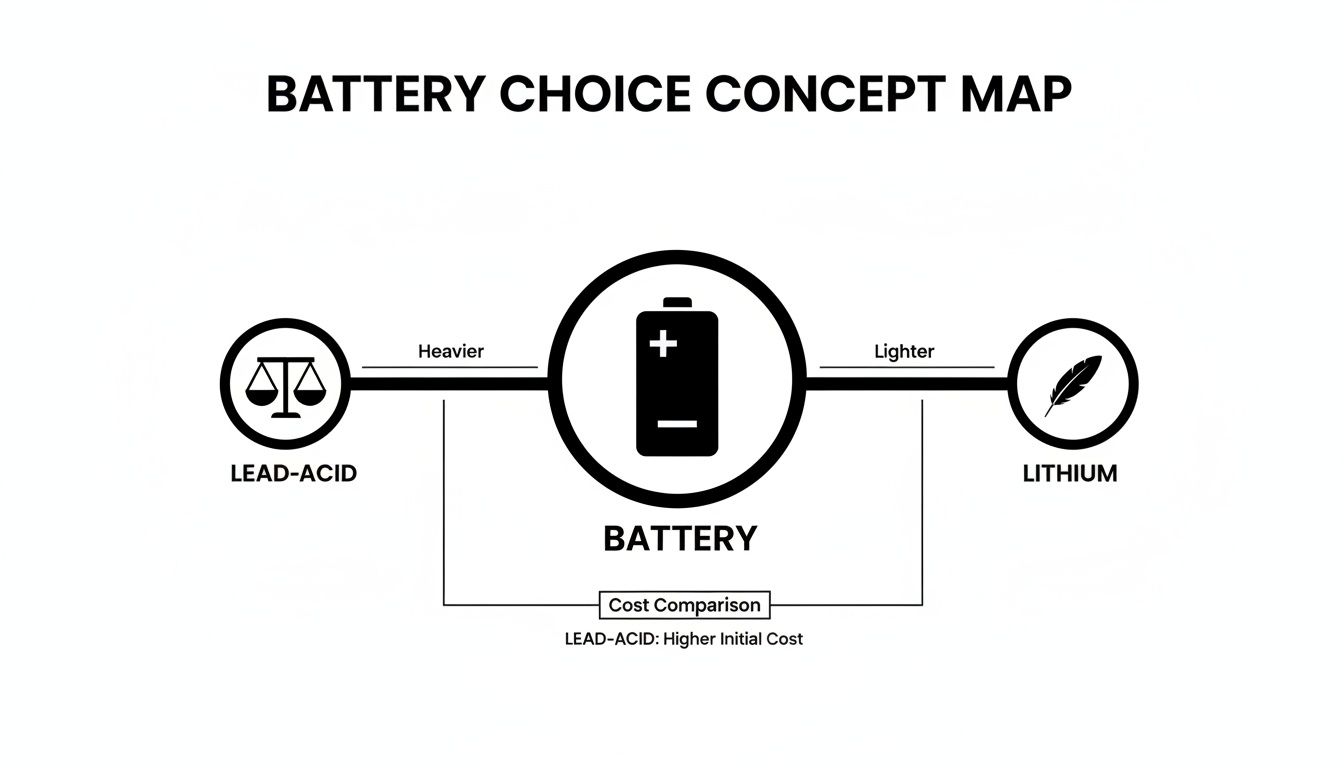
As you can see, the feather-light nature of lithium is a world away from the heavy, cumbersome profile of lead-acid, framing the essential choice every modern golfer faces.
Maybe the best part? Lithium batteries are pretty much maintenance-free. No water to check, no terminals to scrub. You just plug it in, charge it up, and you’re good to go. They also charge way faster, often in just a few hours compared to the 8-10 hours needed for lead-acid. For a look at how far lithium-ion tech has come, you can even see it in products like the Bluetti EB3A Portable Power Station, which shows just how capable these modern power sources are.
Head-to-Head Feature Showdown
To make the decision even clearer, let's put these two technologies side-by-side and see how they stack up on the features that matter most on the course. This comparison table helps explain why lithium's higher price tag often makes sense in the long run.
Lead-Acid Vs. Lithium-Ion Golf Cart Batteries at a Glance
A direct comparison of key features and performance characteristics to help you choose the best battery for your golfing needs.
| Feature | Lead-Acid Battery | Lithium-Ion Battery |
|---|---|---|
| Lifespan | Typically 3-5 years (500-1,000 charge cycles). | Often 8-10+ years (3,000-5,000 charge cycles). |
| Maintenance | Requires regular watering and terminal cleaning. | Zero maintenance required. |
| Weight | Very heavy (300+ lbs for a full set). | Lightweight (under 100 lbs for a replacement pack). |
| Charging Time | Slow, typically 8-10 hours for a full charge. | Fast, often 2-4 hours for a full charge. |
| Performance | Power fades as the battery discharges, struggles on hills. | Delivers consistent, strong power until fully depleted. |
| Upfront Cost | Lower initial investment. | Higher initial investment. |
| Long-Term Value | Lower value due to frequent replacements and upkeep. | Higher value due to longer life and no maintenance costs. |
Ultimately, while lead-acid gets the job done and saves you money upfront, lithium-ion offers a superior experience in almost every way. The choice really boils down to balancing your immediate budget against the long-term benefits of convenience, performance, and durability that define modern golf carts and batteries. If you're interested in a similar breakdown for smaller electric caddies, be sure to check out our guide on golf trolley batteries.
Calculating Your True Power Needs For 18 Holes and Beyond
Nothing kills a great round of golf faster than "range anxiety"—that nagging fear your cart is going to die somewhere on the back nine. Choosing the right battery isn't just about picking a brand; it’s about matching its capacity to the way you actually play. A little knowledge here goes a long way in making sure your cart can handle 18, 36, or even more holes on a single charge.
This is more important than ever, as the golf cart market is seeing some serious growth, mostly driven by the switch to powerful electric models. According to Persistence Market Research, the market is expected to jump from US$ 2,853.3 million in 2025 to a whopping US$ 4,178.2 million by 2032. That's creating a massive US$ 1,097.1 million opportunity for electric carts as courses and players look for sustainable options packed with modern features.
Understanding Voltage and Amp Hours
Let's break down the two most important terms you'll see on a battery: Voltage (V) and Amp Hours (Ah). The easiest way to think about it is to imagine a water hose.
Voltage (V) is the water pressure. It’s the force pushing the power through the system to get your wheels turning. Generally, a higher voltage means more torque, which is exactly what you need for climbing those steep hills without slowing to a crawl.
Amp Hours (Ah) is the size of the water tank. It tells you how much energy the battery can store. Just like a bigger tank holds more water, a battery with more amp hours will run for a lot longer before it needs a recharge.
So when you see a battery rated at 48V and 100Ah, you know it delivers strong "pressure" and has a big "tank" of energy. This one-two punch is what really determines your cart’s total range and on-course stamina.
Factors That Impact Your Range
A battery's advertised range is just a starting point. Your real-world mileage will always vary based on a handful of factors that drain power at different rates. To get a true picture of what you need, you have to think about how and where you play.
Here's a quick power consumption checklist to run through:
- Course Terrain: A flat, links-style course sips energy. A hilly course with steep inclines guzzles it. Constant climbing is one of the biggest power drains there is.
- Cart Load: It’s simple physics. The more weight you have—passengers, heavy tour bags, coolers—the harder the motor has to work.
- Driving Style: Are you a lead foot? Aggressive acceleration and flooring it down the fairway use a lot more juice than smooth, steady driving.
- Tire Pressure: This one is often overlooked. Underinflated tires create more friction with the ground, forcing the motor to work harder and draining your battery faster.
- Accessories: Got a GPS unit, a powerful sound system, or a USB charger for your phone? Every single electronic you add pulls power from the main battery.
A golfer who regularly plays a hilly course with a partner and two fully loaded bags is going to need a much higher-capacity battery than someone playing solo on a flat executive course.
Planning for Endurance
Once you've sized up your typical day on the course, you can pick a battery that gives you a comfortable buffer. If you consistently play 18 holes on a tough course, a battery rated for exactly 18 holes is cutting it way too close. One windy day or a slightly heavier load, and you could be walking home.
This is where modern lithium batteries really shine. They pack a ton of energy into a lightweight package, giving you impressive range without weighing the cart down. For example, the Caddie Wheel was engineered with a high-capacity lithium battery specifically to deliver a reliable 36-hole performance. This completely eliminates range anxiety, ensuring that even on your longest days, your equipment won’t be the reason you call it quits early.
For a deeper dive into the numbers, check out our guide on how to calculate power consumption the right way. Ultimately, choosing a battery with plenty of capacity means you can stop worrying about your power gauge and start focusing on your game.
Smart Charging and Maintenance to Maximize Battery Life
Think of your golf cart battery like a high-performance athlete. To stay in peak condition, it needs the right routine of work and recovery. Neglect it, and you’ll see its performance drop off fast. But with the right charging habits and a little maintenance, you can keep it running strong for years to come.
Getting this right is a big deal, especially now. The North American golf cart market is on a massive upswing, projected to grab a 58.5% market share and hit USD 7.2 billion by 2035. A huge part of that growth is coming from the switch to long-lasting, fast-charging lithium-ion batteries—the same kind of efficient power you see in systems like the Caddie Wheel. You can dig deeper into this trend in this golf cart market report.
The Two Worlds of Battery Care
How you care for your battery boils down to one thing: its chemistry. Lead-acid and lithium batteries are worlds apart in their maintenance needs, highlighting the classic trade-off between hands-on upkeep and set-it-and-forget-it convenience.
Traditional lead-acid batteries demand a consistent, hands-on schedule. It’s a real commitment that includes:
- Checking Water Levels: You have to regularly top off the battery cells with distilled water. If you don't, the lead plates can dry out, causing permanent damage.
- Cleaning Terminals: Corrosive buildup is a constant enemy. You'll need a mix of baking soda and water to scrub it off and keep the electrical connection clean and strong.
- Ensuring Full Charges: These batteries thrive on a full charge after every single use. Letting them sit partially charged leads to sulfation, where crystals build up and choke off the battery's capacity.
Lithium batteries, on the other hand, are practically maintenance-free. Their sealed design means there's no water to check and no corrosion to clean up. The real hero here is the integrated Battery Management System (BMS), which does all the heavy lifting by automatically protecting the cells from overcharging, deep discharging, and extreme temperatures. That little piece of tech is the secret to their incredibly long and hassle-free lifespan.
Smart Charging Practices for All Batteries
No matter what type of battery you have, your charging routine is the single biggest factor in how long it will last. A few simple rules can help you get the absolute most out of every charge cycle.
First and foremost, always use the charger designed specifically for your battery. Grabbing any old charger is a recipe for disaster, as a mismatch in voltage or amperage can damage the battery or create a serious safety risk.
The golden rule of battery health is to avoid extremes. Never run your battery completely dead, and don't leave it plugged into a "dumb" charger long after it's full. Both deep discharging and overcharging put a ton of stress on the battery's internal components.
When it's time to put the cart away for the off-season, don't leave the battery completely full or completely empty. The sweet spot for long-term storage is between a 50% and 80% charge. Find a cool, dry place for it, and you'll slow down the natural aging process significantly.
A Simple Dos and Don'ts Checklist
To make things easy, here’s a quick-glance guide to keeping your battery in prime condition. Following these simple rules will help you avoid the most common mistakes that kill battery performance over time. For an even deeper dive, check out our complete guide on charging golf carts.
| The Dos of Battery Maintenance | The Don'ts of Battery Maintenance |
|---|---|
| Do use the correct charger. | Don't use extension cords unless absolutely necessary. |
| Do charge after every use. | Don't let the battery fully discharge. |
| Do store it partially charged in the off-season. | Don't charge a frozen or overly hot battery. |
| Do keep lead-acid terminals clean. | Don't interrupt the charge cycle frequently. |
How Modern Batteries Power Push Cart Innovations
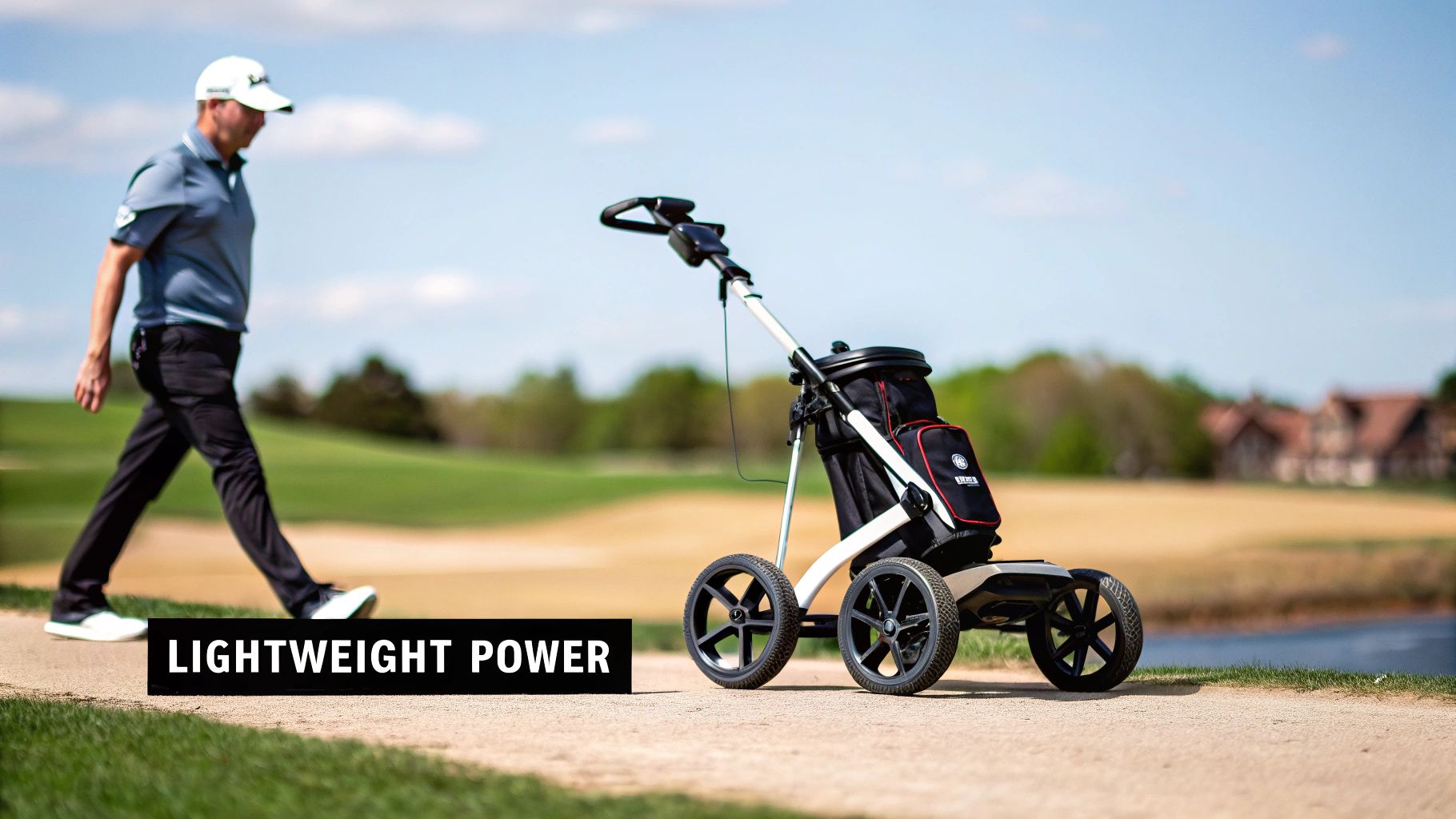
The evolution of golf carts and batteries goes way beyond the traditional ride-on models. For golfers who love to walk, the same leaps in lightweight power and efficiency are completely changing the game. The days of awkward, heavy electric caddies with bulky external batteries are numbered, replaced by slick, integrated solutions that make walking the course a breeze.
This whole shift is thanks to modern lithium-ion batteries. These powerhouses pack an incredible amount of energy into a tiny, lightweight package. This high power-to-weight ratio is the secret ingredient that unlocks innovations like the Caddie Wheel, turning a standard push cart into a self-propelled machine.
The Seamless Integration Advantage
In the past, adding power to your push cart was a clumsy affair. It usually meant strapping on a heavy battery pack that completely threw off the cart's balance and made it a pain to steer. It was a clunky solution that often created more problems than it solved, with messy wiring and a frustrating setup process.
Today's designs are on another level. The Caddie Wheel, for example, has its battery fully integrated right inside its rugged motorized wheel. This isn't just a small design tweak; it’s a game-changing improvement that fixes the biggest headaches of older electric caddies.
- Preserves Natural Balance: By tucking the power source inside the wheel, the cart’s center of gravity doesn't change. This means it handles just as smoothly and naturally as it did before the upgrade.
- Eliminates Clutter: Say goodbye to external battery bags getting in your way or unsightly wires you have to manage. The design is clean, compact, and keeps a low profile.
- Simplifies Installation: With a simple drop-on design and snap-in bracket, you can convert a manual push cart in just a few minutes. This plug-and-play approach makes advanced technology easy for anyone to use.
By integrating the battery directly into the wheel, the system becomes a seamless part of your equipment rather than a bulky add-on. This preserves the feel of walking while removing the physical strain of pushing.
Real-World Performance on the Course
This integrated design does more than just look good; it delivers real, tangible benefits on the course. The lightweight nature of the lithium battery means you're not lugging around dead weight. All that energy is focused purely on propulsion, giving you robust power for up to 36 holes on a single charge without weighing you down on hills or uneven ground.
The demand for reliable, high-capacity batteries is exploding everywhere, not just in golf. While the global golf cart market is set to grow from USD 1.86 billion to USD 3.29 billion by 2034, the Asia-Pacific region is a major force, holding a 35% revenue share in 2024. New uses in airports, factories, and resorts are driving the need for durable, long-lasting power—much like the 36-hole reliability that serious golfers demand. You can explore more data on this expanding market to see the global trends behind battery innovation.
For the walking golfer, this all boils down to one thing: you can enjoy the health benefits of walking the course without the exhaustion. The Caddie Wheel is a perfect case study of how the core principles of lithium technology—lightweight power, long runtime, and zero maintenance—come together to solve a real problem, making the game more enjoyable for everyone.
Got Questions About Golf Cart Batteries? We've Got Answers.
It’s only natural to have a few questions when you start digging into the world of golf carts and batteries. Whether you're thinking about an upgrade or just trying to squeeze every last drop of power out of your current setup, getting straight answers is key. Let’s tackle some of the most common questions golfers ask so you can feel confident in your next move.
How Long Do Golf Cart Batteries Typically Last?
A battery's lifespan really boils down to two things: its chemistry and how well you take care of it. Think of it like the tires on your car—proper use and regular maintenance make all the difference.
If you’re running traditional lead-acid batteries, you can generally expect to get 3 to 5 years of service out of them, but only if you’re on top of their care. That means keeping them watered, cleaning the terminals, and sticking to a smart charging routine.
Lithium-ion batteries, on the other hand, are in a completely different league. They’re built for the long haul, often lasting 8 to 10 years or even more. This incredible longevity comes from their more robust chemistry and the ability to handle thousands of charge cycles without breaking a sweat, making them a solid long-term investment.
Can I Upgrade My Old Cart From Lead-Acid to Lithium?
Yes, you absolutely can! In fact, it's one of the single best upgrades you can make to an older golf cart. Swapping out that heavy slab of lead-acid batteries for a modern lithium-ion system is like giving your cart an instant performance makeover.
The benefits are immediate. Your cart will be significantly lighter, it'll accelerate quicker, and you can finally say goodbye to all that messy battery maintenance. It’s critical, however, to use a proper conversion kit to ensure the new lithium battery and its management system play nicely with your cart's motor and controller.
Always have a chat with the battery manufacturer or a qualified technician before making the switch. This is the best way to guarantee a safe and effective upgrade that won't cause electrical headaches down the road.
Is It Safe to Leave My Golf Cart Plugged In All The Time?
This really depends on your charger. Modern "smart" chargers—which are standard for all lithium systems and most new golf carts and batteries—are designed to automatically stop charging once the battery is full. Leaving these plugged in is generally safe and incredibly convenient.
However, if you're using an older, more basic charger, leaving it hooked up indefinitely is a recipe for trouble. These old-school chargers can easily overcharge a battery, especially a lead-acid one. This can lead to permanent damage, a shorter lifespan, and even create a safety hazard. When in doubt, always check your charger's manual for the manufacturer's specific advice.
What Is the Biggest Advantage of Lithium for a Walking Golfer?
For a walking golfer using an electric-assist wheel, the single greatest advantage of lithium is its incredible power-to-weight ratio. It’s the magic that makes products like the Caddie Wheel so effective.
Lithium technology packs a massive amount of energy into a tiny, lightweight package. This allows you to have a powerful motor that can cruise for up to 36 holes without adding clumsy, heavy bulk to your push cart. The result? A much more natural, less tiring walk, especially on hilly courses. You can finally focus on your next shot instead of wrestling with your gear.
Ready to feel the effortless power of an integrated lithium battery on your push cart? The Caddie Wheel offers a simple, lightweight solution to transform your walk.
Share:
Your Guide to the Best Electric Golf Cart Charger
How Fast Are Golf Carts and What Affects Their Speed