
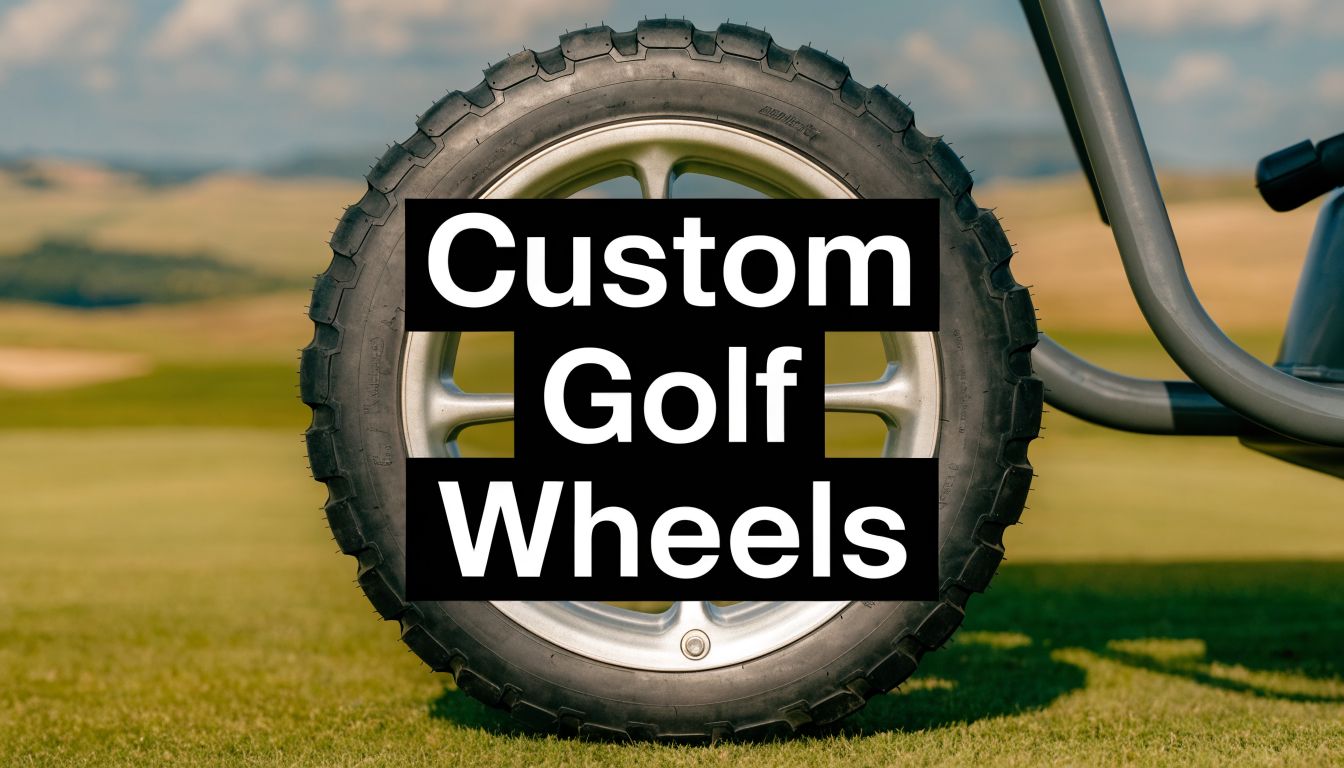
You’re probably looking at your push cart right now and thinking two things at once. It still works, but the stock wheels feel cheap. And if you’ve spent any time searching for cart custom golf wheels, you’ve already noticed most advice is built for ride-on carts, not the push cart you walk with.
That gap matters more than people think. A push cart doesn’t hide a bad wheel choice behind a motor, suspension, and wide chassis. You feel everything. The cart drifts on side slopes, chatters over hard paths, drags through soft turf, or gets awkwardly top-heavy if you go too big. Add an electric power assist into the mix and wheel choice starts affecting balance, traction, and how natural the whole setup feels during a round.
I’ve upgraded enough push carts to know this: the best wheel upgrade isn’t always the flashiest one. Sometimes the smartest move is a lighter material, a saner diameter, and a tread that matches the courses you play. If you walk often, especially on hilly ground, that practical stuff matters more than polished looks in the parking lot.
Why Upgrade Your Push Cart Wheels
A push cart wheel upgrade usually starts with annoyance, not vanity. The cart leans too much on a sidehill. The front wheel chatters across firm cart paths. The rear wheels cake up on a damp morning and suddenly your “easy walk” feels like you’re dragging a bag through wet rough.
That’s when custom wheels start making sense. On a push cart, wheels change the feel of the round more than most golfers expect. Better rolling, steadier tracking, and more predictable grip can make the cart feel calmer from the first tee to the last green. You’re not fighting the cart on every off-camber fairway or bumping it back into line after every turn.
There’s also the simple truth that a lot of stock push cart wheels are built to meet a price point. They work, but they rarely feel refined. If you’ve already tuned your bag setup, picked shoes you trust, and dialed in your walking routine, a flimsy wheel setup starts to stand out.
Better movement, not just better looks
A good wheel upgrade can help in a few very real ways:
- Sidehill stability: A wheel with the right width and shape can make the cart feel less twitchy when the fairway tilts.
- Smoother roll: Better bearings and lower drag help the cart keep moving without that sticky, stop-start feel.
- Traction where it matters: Morning dew, soft approaches, and patchy turf expose weak wheel designs quickly.
- Cleaner fit with your gear: A cart that looks sorted tends to get used more. That sounds cosmetic, but golfers know the difference between gear you tolerate and gear you enjoy using.
A push cart upgrade is worth it when the wheels make walking easier. If they only make the cart look tougher, you bought the wrong wheels.
Why push carts need their own advice
Most wheel guides jump straight into ride-on cart talk. That’s useful if you own a Club Car or EZ-GO. It’s not useful when your push cart uses a direct axle mount and has to stay balanced while you walk beside it.
That’s the key distinction throughout this guide. Push carts are lighter, narrower, and less forgiving. Wheel changes affect steering feel, folding clearance, brake behavior, and, if you use electric assist, how confidently the cart climbs and tracks. That’s why smart cart custom golf wheels choices on a push cart are less about showing off and more about building a setup that disappears under you during the walk.
How to Choose The Perfect Custom Wheels
You feel wheel choice fastest on the back nine, after the cart has already crossed a few sidehills, a wet collar, and two stretches of cracked path. A good setup keeps tracking straight and stays predictable. A bad one starts tugging at your hands, parking awkwardly, or draining the battery on a power assist sooner than expected.

If you want a broader look at wheel styles before narrowing the field for a push cart, this overview of golf cart wheels and wheel styles is a useful reference. Keep the categories in mind, then filter everything through push cart geometry, not ride-on cart standards.
Start with diameter, but stay close to stock
On a push cart, wheel diameter changes more than appearance. It affects how the cart tips into turns, how the brake engages, how much room you have when the frame folds, and how much torque a motorized assist has to apply at the axle.
That last point gets missed all the time. If you run an electric assist such as a Caddie Wheel, larger-diameter drive wheels can smooth out cracks and rough turf, but they also ask the motor for more torque from a stop and on climbs. Smaller wheels usually help the assist feel punchier uphill, while slightly larger wheels can make the cart calmer over broken ground. There is no free gain here.
I use a simple rule. Stay close to the factory diameter unless you have a clear reason to change it.
| Choice | What it usually does well | Where it can go wrong |
|---|---|---|
| Close to stock diameter | Keeps balance, brake feel, and folding clearance predictable | Limited improvement on rough ground |
| Slightly larger | Rolls over seams and bumpy turf more easily | Can feel taller, slower to turn, and heavier for a power assist to start |
| Smaller than stock | Sharpens steering and can help assisted torque delivery | Harsher ride and less clearance on uneven ground |
A push cart is light enough that small wheel changes are easy to feel. Ride-on carts can hide a questionable wheel choice behind weight and suspension. Push carts cannot.
Material affects effort more than style
Finish gets attention. Material decides how the cart behaves after twenty rounds.
Steel still makes sense for golfers who toss the cart into a trunk, play muni courses with rough curbs, or just want a cheaper wheel that can take abuse. Aluminum is usually the better choice if the goal is easier rolling, less corrosion, and lower rotating weight. On a push cart, that lighter feel shows up during every start, turn, and correction.
It also matters if you use electric assist. A heavier wheel asks the assist to work harder each time the cart accelerates, especially from a dead stop or on an incline. The difference is not dramatic enough to justify an expensive swap by itself, but it is noticeable if you already walk hilly courses and care how naturally the assist tracks.
Choose based on use, not finish:
- Steel suits rough handling, tight budgets, and carts that live in the trunk.
- Aluminum suits frequent walkers, damp climates, and golfers trying to keep the cart responsive.
- Composite-heavy designs can work well on some push carts if the hub and bearing quality are solid, but cheap versions tend to flex and wear poorly.
Tread should match turf, not marketing
Push carts need traction, but they do not need an ATV tire pattern. Too much tread adds drag and can make the cart feel sticky on firm paths or closely mown turf. That is even more noticeable with a power assist, because aggressive tread can hunt for grip and pull the cart off line under load.
Use tread depth to solve an actual problem:
- Low-profile or smooth tread works on firm fairways, dry conditions, and path-heavy rounds.
- Moderate tread is the best all-around choice for mixed turf, morning dew, and the occasional soft patch.
- Aggressive tread only earns its place on consistently wet, soft, or uneven courses.
Most walkers are happiest with moderate tread. It rolls smoothly, cleans off well enough, and does not fight you every time the course firms up by midday.
Bearing quality decides whether the upgrade lasts
A flashy wheel with poor bearings gets old fast. You hear it first, then you feel it. The cart starts to wander, the wheel develops play, and the whole upgrade suddenly feels cheap.
Look for sealed bearings, smooth spin under load, and minimal side-to-side movement at the hub. For push carts with electric assist, this matters even more because resistance at the wheel can confuse tracking and make the assist feel jerky on starts or uneven on sidehills.
The right custom wheel for a push cart usually looks modest on paper. Close to stock diameter. Sensible tread. Good bearings. Material that matches how you use the cart. That combination walks better than a flashy setup built for photos.
Ensuring a Perfect Fit On Your Push Cart
The biggest mistake in cart custom golf wheels shopping is assuming “golf cart wheel” means “it’ll fit my golf cart.” For push carts, that assumption causes most bad purchases.
Ride-on golf carts use a lug-based hub system. Push carts usually don’t. That one difference changes everything about compatibility.

As noted in this explanation of the universal 4x4 golf cart lug pattern, most online “cart custom golf wheels” are designed for ride-on carts using four lug holes on a 4-inch diameter circle. Push carts use direct axle mounts, so those wheels are incompatible unless you’re working with a purpose-built conversion. That’s why shopping from push cart specialists matters.
What you’re actually measuring
Push carts usually use one of a few axle retention styles. You’ll commonly see a quick-release arrangement, a pin-lock setup, or a threaded fastening method. The wheel may look simple from the outside, but the attachment point has to match exactly.
When I’m checking a push cart for new wheels, I care about these dimensions first:
- Axle diameter: The center bore has to fit the axle cleanly, without slop.
- Usable axle length: Too short and the wheel won’t seat fully. Too long and the locking system may not engage correctly.
- Hub width: This affects spacing against the frame and brake hardware.
- Clearance to frame or fender area: A wheel can fit the axle and still rub once the cart is loaded with a bag.
If you need help getting the first measurement right, this guide on how to measure wheel diameter accurately is worth keeping open while you work.
A quick fit-check routine
Before buying, remove one existing wheel and check the cart itself, not just the wheel. You’re looking for signs of rubbing, wear marks, asymmetry, and how the brake engages. A cart that already tracks slightly off-center will exaggerate that problem with a bigger or heavier wheel.
Use this quick routine:
- Pull one wheel and clean the axle area. Dirt hides wear and makes measurements less trustworthy.
- Measure the axle and the old hub. Compare both. Don’t assume the old wheel bore is perfectly preserved if it’s worn.
- Check outside clearance under load. Put your golf bag on the cart and compress the frame slightly by hand.
- Inspect the brake side separately. Brake-side fit is often tighter and less forgiving.
Measure the cart with the bag on it. A wheel that clears in the garage can still rub once the cart is carrying real weight.
Why universal fit claims usually fail
“Universal” often means universal within one product category. Ride-on cart wheels can share standards like the 4-on-4 pattern, but push carts are all over the map because manufacturers use different axle shapes, locking clips, and spacing.
That’s why a wheel can be beautifully made and still be useless to you. The failure isn’t quality. It’s category mismatch. A lot of buyers end up frustrated because they searched the right keyword but landed in the wrong wheel ecosystem.
If you only take one lesson from this section, let it be this: buy fit before finish. On a push cart, correct axle matching decides whether the upgrade feels factory-clean or becomes a garage project you regret.
Your Guide to Installation and Removal
A push cart wheel swap usually goes one of two ways. It takes ten clean minutes, or it turns into half an hour of fighting grit, a sticky release button, and a hub that is almost right.

Set the cart up open on a flat floor with the bag off and the brake released. I leave both original wheels on for a minute so I can check orientation, washer order, and how far the old hubs sit on the axle before I pull anything apart. Keep a rag, a small nylon brush, and only a light axle-safe grease nearby if your cart manufacturer allows it.
Push carts deserve a different mindset than ride-on carts here. On a ride-on cart, the wheel bolts to a hub and the motor has enough torque to mask small setup mistakes for a while. A push cart relies on low rolling resistance and clean tracking, and if you use an electric assist such as the Caddie Wheel, wheel diameter and grip matter even more because the assist unit has to push through whatever change you made. A heavier or taller rear wheel can alter rollout, brake behavior, and how hard the power assist works on climbs.
Removing the old wheels
Most push cart wheels use a release button, a locking tab, a retaining clip, or a simple axle cap. Support the frame with one hand and pull the wheel straight out with the other. If it feels stuck, stop twisting and clean around the axle first. Dirt and dried grass often create more resistance than the fastener does.
Once the wheel is off, wipe the axle clean and inspect the contact points. Light cosmetic wear is common. Burrs, rust, or a groove worn into the axle need attention before the new wheel goes on. I file burrs lightly if needed, then wipe the area again so the new hub is not forced over damage.
Overall height still matters on a push cart even though the hardware is different from a ride-on cart. A small change can improve rollover on rough turf. Too much change raises the cart, shifts the bag angle, and can make an electric assist push less naturally because the cart’s rear geometry is no longer what the assist was designed around.
Securing your new set
Slide the new wheel on by hand. It should seat fully and lock with firm, ordinary pressure. Any install that needs a hammer, pliers, or aggressive forcing is the wrong install.
Check four things before you call it finished:
- Full seating: The hub sits where it should, with any washers or spacers back in the correct order.
- Free spin: The wheel rotates cleanly without scraping the frame or brake hardware.
- Controlled side play: A tiny amount of movement can be normal. Noticeable slop usually is not.
- Brake check under load: Put the bag back on, engage the brake, and confirm it still holds on a slight incline.
If you want a clear visual of the parts you’re working around, this golf cart wheel hub assembly guide is useful for seeing how the mounting area should line up.
A video makes the final check easier than a paragraph can:
Small details that prevent big headaches
Use grease sparingly. On carts that allow lubrication, a thin film on the axle contact area is enough. Excess grease turns into a dirt trap, and on a walking cart that shows up fast.
I also mark left and right during the first few rounds if the aftermarket hubs are not perfectly identical. That sounds fussy, but some sets have slightly different tolerances side to side, and keeping each wheel on its best-fitting axle can reduce noise and drag. If your cart uses a power assist, test it with the assist attached before treating the job as done. A wheel setup that feels fine while hand-pushing can still make the assist hunt for traction or feel more abrupt when starting.
For finish protection, especially if you play in wet conditions or wash the cart often, a product like Ceramic Wheel Coating can make cleanup easier. It will not fix a bad fit, but it does help custom wheels stay presentable longer.
The last test should happen on pavement and grass. Roll the cart empty, then loaded. Make a few tight turns, let it track straight, and if you use a Caddie Wheel or similar assist, test one climb and one controlled descent. Quiet, straight, low-effort rolling is the result you want.
Common Troubleshooting and Maintenance Tips
A push cart wheel install can look perfect in the garage and still show problems on the course. That’s normal. The fix is usually simple if you diagnose the symptom instead of guessing.
If the cart wobbles
Wobble usually comes from one of three places. The wheel isn’t fully seated. The axle interface has dirt or wear. Or the bearing fit inside the wheel isn’t as tight as it should be.
Check the easy stuff first:
- Re-seat the wheel: Remove it, clean the axle, and reinstall it squarely.
- Inspect the lock point: Pins, clips, and quick-release parts can look engaged when they’re only halfway home.
- Spin it unloaded: If the wheel runs true in the air but wobbles under load, the hub fit or bearing is the likely issue.
If the wheel rubs
Rubbing usually means the wheel diameter, width, or hub spacing is too aggressive for the frame. It can also show up only when the bag is on the cart, which is why unloaded garage tests miss it.
Look for polished marks on the frame, brake contact, or wear on the inside sidewall. If the wheel barely clears, even slight frame flex on rough ground can turn a “close fit” into a constant scrape. In practice, the answer is often to go back to a more conservative size rather than force the setup.
If a custom wheel only works when the cart is empty and parked on a flat floor, it doesn’t work.
If rolling gets slower after the upgrade
This surprises people. A more aggressive-looking wheel can make the cart feel worse to push. Heavier materials, rougher tread, and oversized diameter can all add drag in ways that don’t show up in product photos.
When that happens, compare the whole package, not just the rim. Tire profile, bearing quality, and wheel weight all affect the feel. On push carts, “performance” often means less drama, not more hardware.
Simple maintenance that keeps wheels smooth
Good wheel maintenance is boring, and that’s exactly why it works. Clean grass, sand, and fertilizer residue off the wheel after wet rounds. Wipe down the hub area now and then. Don’t let grime build up where the wheel meets the axle.
For finish care, polished wheels usually demand more attention than more protective finishes. If you’ve spent real money on a custom set, a product like Ceramic Wheel Coating can make cleanup easier and help protect the finish from the usual mix of moisture, dirt, and course chemicals.
A basic upkeep routine goes a long way:
- After wet rounds: Rinse and dry the wheels before storing the cart.
- Every few rounds: Check for hairline looseness, odd noises, or brake interference.
- Before a new season: Pull the wheels, inspect the axles, and refresh lubrication if your cart design calls for it.
Most wheel problems don’t start as failures. They start as tiny fit or maintenance issues that get ignored until the cart feels rough and unpredictable.
When to Upgrade to a Motorized Wheel
You feel it on the second long climb of the day. The cart is rolling straight, the bearings are quiet, and your wheel upgrade did what it was supposed to do. You still have to supply the force, especially on a hilly course or during a 36-hole day.
That is the point where a motorized wheel starts to make sense on a push cart.

Push-cart upgrades and ride-on cart upgrades get mixed together far too often. They should not. A ride-on cart can hide a lot with motor torque and a completely different chassis. A push cart lives or dies by axle alignment, wheel weight, rolling resistance, and how the frame behaves when you are the one guiding it by hand.
Add a power assist like the Caddie Wheel, and wheel choice matters in a different way. The assist does not erase a bad setup. It amplifies it. If the rear wheels are too heavy, too wide, or tall enough to change the cart's stance, the assisted cart can feel slower to respond, less settled on side slopes, and harder to keep tracking cleanly uphill. I have seen carts that felt fine manually start feeling a little awkward once assist was added, because the custom wheels shifted the balance too far from the stock geometry.
The biggest mistake is treating a motorized wheel like a fix for any wheel setup. It is not. On a push cart, the best assisted builds are usually the boring ones. Moderate diameter. Reasonable weight. Bearings that spin freely. Tread that grips turf without turning the cart into a drag sled.
A motorized wheel is usually worth the money when the cart is already sorted and the remaining problem is effort:
- You walk often enough that fatigue changes your swing late in the round.
- Your home course has repeated climbs, long green-to-tee transitions, or soft ground that makes pushing feel like work.
- You want to keep walking instead of switching to a ride-on cart.
- You have already improved fit and wheel quality, but the cart still takes too much out of you.
That last point matters. If the cart rattles, pulls, or binds, fix that first. Power assist works best on a stable push cart with properly fitted wheels. It is an upgrade for reducing strain, not a shortcut around fit problems.
There is also a cost question. If you only walk a few flat rounds each month, money spent on premium wheels or fresh bearings may deliver more value than a powered add-on. If you walk every week, play in summer heat, or want to save your legs for practice after the round, the equation changes fast. The same logic applies at home. A setup you use all the time is worth doing right, whether that means electric assist on the course or building a flawless backyard putting green that rolls true.
For push carts, I would keep custom wheels conservative if a motorized wheel is in your future. Good assist systems reward efficient rolling and predictable geometry, not flashy wheel swaps borrowed from ride-on cart culture.
Enjoy the Walk
A good push cart wheel upgrade should make the round feel lighter, quieter, and less fussy. Measure carefully, respect the axle design, and don’t let ride-on cart advice steer you into the wrong purchase. On push carts, clean fit and sensible wheel choices beat oversized flash almost every time.
And if you care about practicing as much as walking, the same mindset applies at home. A well-built setup pays off. The difference is as obvious as rolling putts on a flawless backyard putting green instead of a patchy lawn.
If you’re ready to stop pushing your cart up every hill, take a look at Caddie Wheel. It adds lightweight electric power assist to standard push carts, installs with a simple drop-on setup, and helps you keep the benefits of walking without the fatigue that builds over 18 or 36 holes.
Partager:
Golf Scorecard Holder: A Buyer's & Usage Guide (2026)
Golf Push Cart with Umbrella Holder: A 2026 Buyer's Guide