

Take a walk around any golf course these days, and you'll notice something different. More and more golfers are trading up to four wheel golf push carts, and it's easy to see why. They're quickly becoming the go-to for walkers, offering a rock-solid, balanced design that's changing the game for everyone from seasoned players to weekend warriors.
Why Four Wheel Carts Are Taking Over the Fairway
It wasn't long ago that push carts were mostly associated with senior golfers. Not anymore. Players of all ages are realizing the massive advantage of saving their energy for the swing instead of wasting it on lugging a heavy bag. A four wheel golf push cart isn't just a piece of gear; it's a smart investment in your game and your body.
Imagine trying to balance a tripod versus a four-legged table on a bumpy lawn. The table is just naturally more stable, and that same simple physics applies right on the fairway. This core stability is the number one reason these carts have exploded in popularity. It means no more frustrating tip-overs on side hills, which keeps your expensive clubs safe and gives you a secure base for all your gear.
The Move Toward Effortless Golf
Today's golfer is always looking for an edge—a way to get more enjoyment and better performance out of every round. Pushing a cart takes the physical grind out of walking the four to five miles of an average round. That saved energy translates directly into better focus and lower scores, especially on the back nine when fatigue usually starts creeping in.
Here’s why so many are making the switch:
- Less Physical Strain: It completely eliminates the back and shoulder stress you get from carrying a bag or wrestling with an unbalanced pull cart.
- Sharper On-Course Focus: When you save your energy for each shot, you keep your mental game sharp from the first tee to the 18th green.
- More Enjoyment: Walking the course becomes a relaxing part of the game instead of a chore. You actually get to enjoy the walk.
A well-designed four wheel cart lets you walk with a natural, upright posture, saving your energy for what really matters: your swing. It turns a demanding trek into a seamless part of your game.
Plus, this super-stable platform is the perfect foundation for upgrades that make walking the course even better. With a simple add-on like the Caddie Wheel electric assist, you can turn your manual cart into a remote-controlled caddy. Now you're gliding up hills without breaking a sweat, setting the stage for a truly modern and efficient round of golf. This guide will show you exactly how these carts deliver on that promise.
The Stability Showdown: Four Wheels Versus Three
When you're picking out a golf push cart, the number of wheels might seem like a minor detail. Trust me, it’s the single most important decision you'll make for your on-course experience. The whole debate between a three-wheel and a four-wheel model boils down to one simple, crucial concept: stability. It's the defining feature that sets four-wheel golf push carts in a class of their own.
Think about setting up a camera tripod on a bumpy, uneven lawn. It gets the job done, but you know it can get wobbly. Now, imagine putting a solid, four-legged table in that same spot. The table’s wider, rectangular base makes it inherently more secure and far less likely to tip over. That’s the exact principle that gives four-wheel push carts their incredible balance out on the course.
This isn’t just a feeling; it’s pure physics. A four-wheel cart spreads the weight of your heavy golf bag over a wider, more stable footprint. With four points of contact on the ground, the cart gains a lower center of gravity, anchoring it firmly whether you’re strolling down a flat fairway or navigating a tricky sidehill lie.
Preventing Those Frustrating Tip-Overs
Every golfer who’s ever used a less stable cart knows the agony of a tip-over. One wrong move on a slope, and your expensive clubs, phone, and rangefinder are scattered across the grass. This is where the real-world benefit of a four-wheel design truly shines. That extra stability isn't just a luxury—it’s a form of insurance for your gear.
By virtually eliminating the risk of tipping, a four-wheel cart gives you the freedom to park it anywhere on the course without a second thought. You can focus on your next shot, knowing your equipment is safe and sound.
This graphic breaks down how that core stability translates into a better round, leading to less physical strain and letting you focus completely on your game.
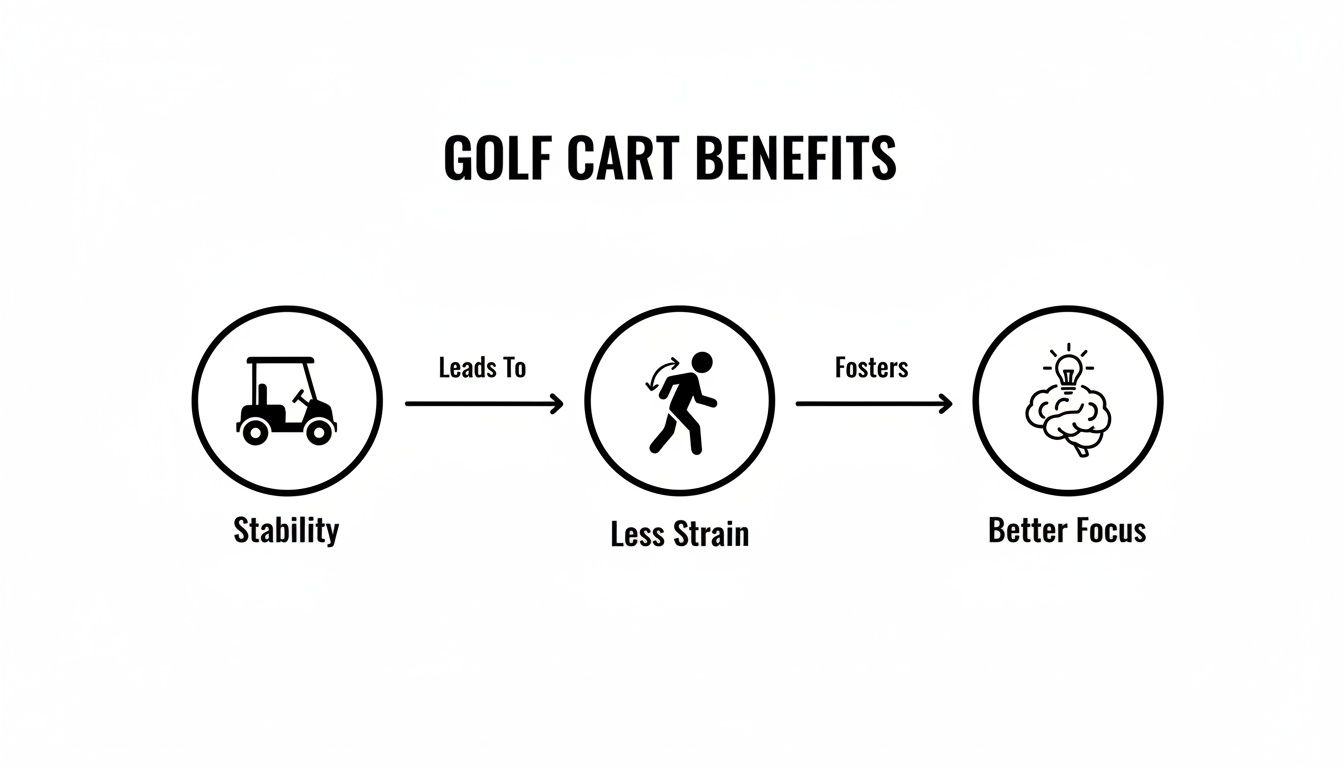 The key takeaway here is simple: a stable cart is the first step toward saving your energy and keeping the mental clarity you need for a great round of golf.
Four Wheel vs Three Wheel Push Cart Comparison
To make the right call for your game, it helps to see a direct, head-to-head comparison. While three-wheel carts have their perks—especially when it comes to quick turns—the four-wheel models consistently come out on top for the things that lead to a stress-free walk.
Here’s a quick breakdown of how they stack up against each other.
| Feature | Four-Wheel Cart | Three-Wheel Cart |
|---|---|---|
| Stability | Excellent: Superior balance on hills and uneven terrain due to a wider base. | Good: Generally stable but more prone to tipping on side slopes. |
| Maneuverability | Good: Modern designs track straight and handle turns well. | Excellent: Often more agile with a tighter turning radius. |
| Push Effort | Minimal: Glides smoothly and requires very little effort to keep straight. | Minimal: Lightweight and easy to push, but may require more steering. |
| Best For | Hilly courses, heavy bags, windy conditions, and golfers prioritizing security. | Flat courses, lighter bags, and players who value nimble handling. |
Ultimately, the choice becomes pretty clear: if your home course has any kind of hills, slopes, or uneven ground, the peace of mind a four-wheel cart offers is priceless. It’s built to handle real-world golf conditions without compromise.
The market has definitely noticed this advantage. Four-wheel models are so popular because their four-point contact with the ground reduces wobble by up to 30% compared to three-wheel versions, according to industry tests. This rock-solid stability is a key reason the global golf push cart market, valued at around USD 657 million, is expected to climb to USD 817 million by 2030.
While both designs have their place, understanding the trade-offs is essential. If you want to dig a little deeper, we have a complete comparison of the two in our three-wheel carts guide.
What Makes a Great Push Cart? The Features That Matter Most
Beyond just counting the wheels, the little details are what separate a truly fantastic four wheel golf push cart from one that’s just… fine. A high-performance cart isn't just about being stable; it's a smartly designed piece of gear built to make your round as smooth and easy as possible. Getting to know these critical components is the secret to finding a cart that feels less like a chore and more like your own personal caddie.
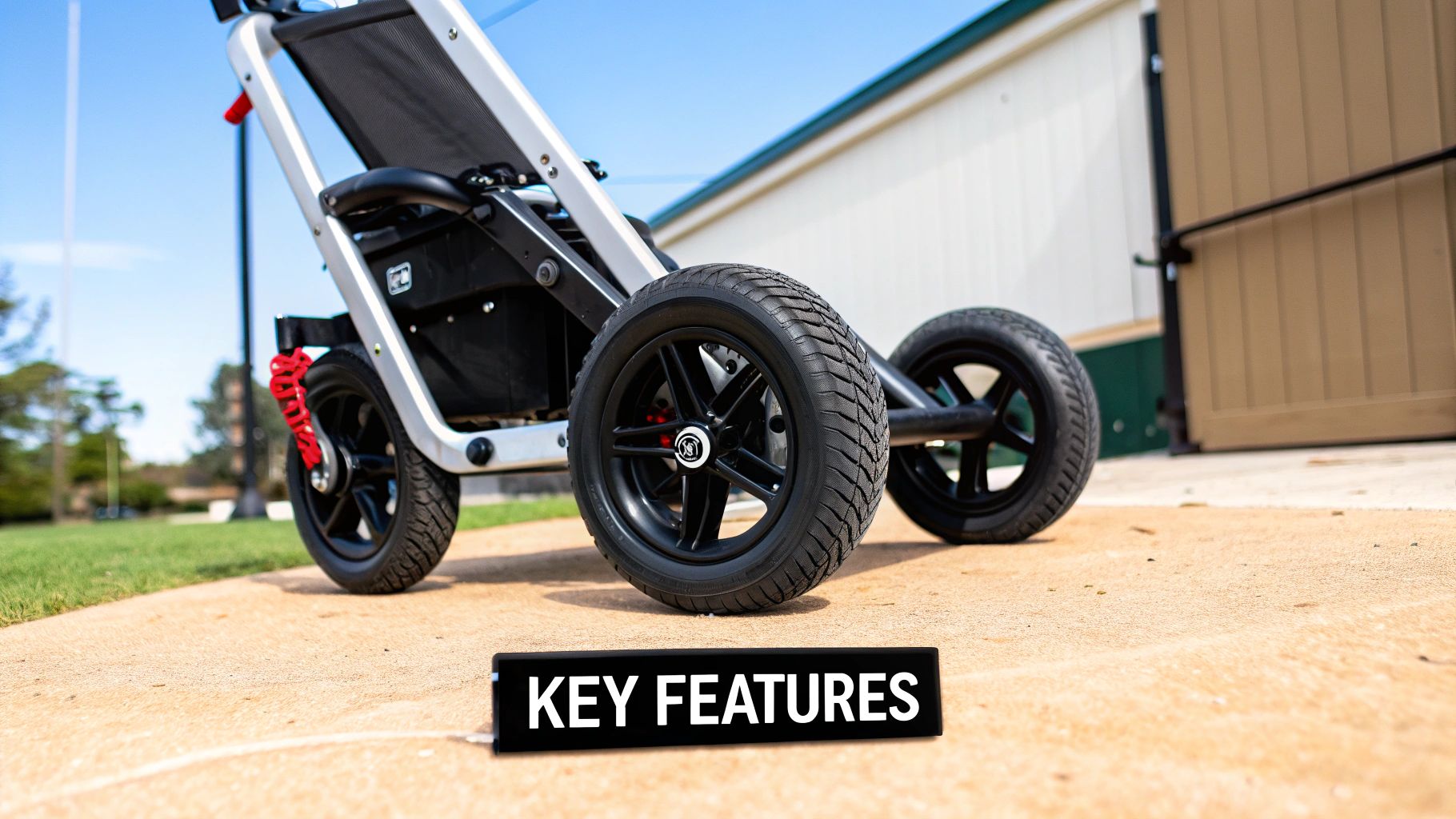
Think of it like this: anyone can slap four wheels on a box, but it takes real thought to create a tool that feels like a natural part of your game. Let’s break down the features that really define a quality four-wheel cart so you can make a smart choice.
The Magic of the Folding Mechanism
The first thing you’ll deal with every single time you play is the folding mechanism. A clunky, multi-step process can become a real headache in the parking lot. The best modern carts have slick, often patented, one-click or one-step folding systems that are an absolute joy to use.
These systems let the cart collapse into a surprisingly small package in one fluid motion, making it a breeze to toss into even the tiniest car trunks. When you're looking at a cart, really pay attention to how smoothly it opens and closes. A great mechanism feels effortless and locks securely into place with zero wobble.
The gold standard is a folding mechanism you can figure out without digging for the instruction manual every time. It should be quick, intuitive, and reliable round after round.
On the flip side, a poorly designed system might have you wrestling with multiple latches or trying to remember a confusing sequence of steps. This one detail can have a massive impact on your overall experience, turning setup and breakdown from a chore into a seamless part of your pre-round routine.
Frame Materials and Weight
The frame is the skeleton of your push cart, and what it’s made of determines both its durability and how much it weighs. You'll mostly find two materials: aluminum and steel, each with its own pros and cons.
-
Lightweight Aluminum: This is the go-to choice for most modern, high-performance carts. Aluminum frames are way lighter than steel, which makes the cart much easier to push up hills and lift into your car. And don't worry about strength—aircraft-grade aluminum is incredibly tough and won't rust, so it's built to last.
-
Durable Steel: While you don't see it as often in premium models, steel frames offer incredible strength and rigidity. The trade-off? That strength comes with extra weight, which can make the cart feel a lot heavier over 18 holes.
Smart frame design is a huge deal in the golf accessories market right now. Carts with lightweight frames under 20 pounds that also have tons of integrated storage are what everyone is looking for. In North America, which accounts for over 40% of the market share, golfers are all about this blend of convenience and durability. You can explore more about these market trends and see how they're shaping new products.
All About the Wheels and Brakes
The wheels are where your cart meets the turf, and their design makes a huge difference in the ride. You’ll generally find two types of tires: airless and pneumatic. Airless, maintenance-free tires are now the industry standard. They’re made from solid foam or rubber that can't go flat, giving you a reliable, worry-free experience on any terrain.
Pneumatic (air-filled) tires, like the ones on a bicycle, can offer a slightly softer, more cushioned ride. However, they mean you have to keep them aired up and you always run the risk of getting a flat mid-round, which is why they’ve become the less popular option.
Just as important is the braking system. A solid brake is a non-negotiable safety feature, especially if you play on hilly courses. Most quality carts use either a hand-operated lever right on the handle or a simple foot-press brake down by the rear wheels. A good brake should engage firmly and hold your fully loaded cart securely in place, even on a steep slope.
Ergonomics and Smart Storage
Finally, a great cart is designed with your comfort in mind. An adjustable handle is a critical ergonomic feature that lets you set the height and angle to perfectly match your stride. This simple adjustment prevents you from hunching over or reaching too far, which saves your back and shoulders from a lot of strain during that four-to-five-mile walk.
Smart storage solutions are what really take a cart from good to great. Look for the thoughtful features that keep all your essential gear organized and right at your fingertips:
- Deep Console: A roomy compartment for your phone, keys, and wallet, often with a handy magnetic lid.
- Integrated Holders: Dedicated spots for your drink, scorecard, pencil, and tees.
- Secure Umbrella Mount: A sturdy holder that won't let your umbrella fly away in the wind and rain.
- Built-in Cooler Pouch: An insulated pocket to keep your drinks and snacks chilled.
These little touches mean you spend less time digging around in your bag and more time focused on your next shot. By carefully looking at these essential features, you can find a four-wheel golf push cart that perfectly fits your needs and makes every walk on the course better.
Upgrading to an Effortless Electric Caddy
Imagine gliding up the steepest hill on your course without breaking a sweat. That's the game-changing promise of electric power assist add-ons. These clever devices can transform your standard four wheel golf push cart into a fully remote-controlled electric caddy, giving you all the benefits without the premium price tag of a dedicated trolley.
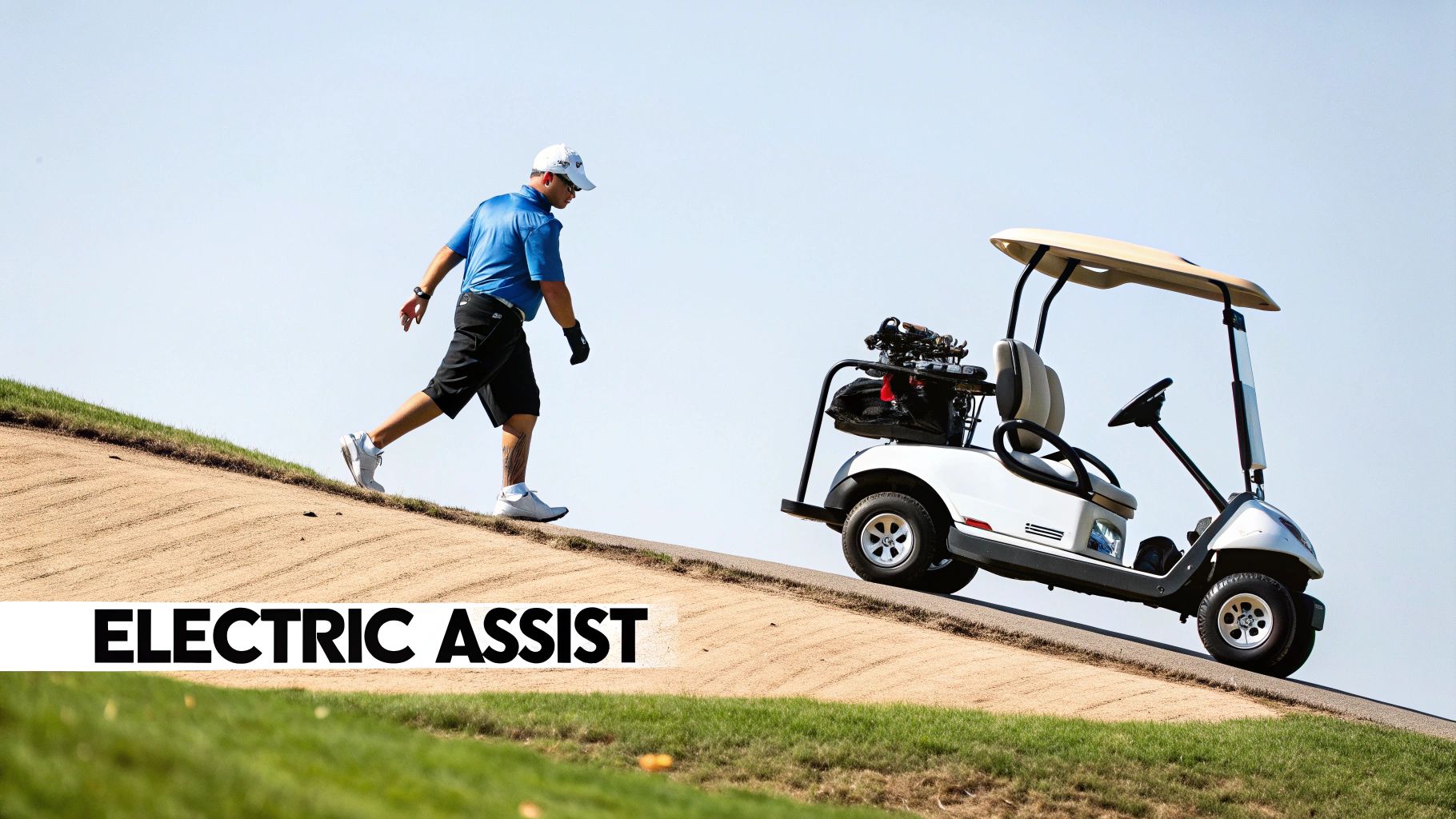
This isn’t about replacing your trusted cart; it’s about making it smarter. Think of it as adding a powerful, silent engine to a vehicle you already know and love. For both new and existing cart owners, this is an accessible upgrade that turns a great piece of equipment into an indispensable golfing partner.
The Power of an Add-On System
The real beauty of an electric assist system like the Caddie Wheel lies in its brilliant simplicity. Instead of shelling out for an entirely new, heavy, and expensive electric cart, you can retrofit your current setup in just a few minutes. It's a value proposition that’s pretty hard to ignore.
Key features that make these systems a no-brainer include:
- Simple Drop-On Design: Most units are engineered for lightning-fast installation. A simple snap-in bracket attaches to your cart's frame, letting you drop the motorized wheel on or pop it off in seconds.
- Lightweight Construction: These add-ons are all about providing power without the penalty of extra bulk. The motor and battery are compact, so your cart stays easy to lift and transport.
- Intuitive Remote Controls: You get full command of your cart with a simple handheld remote. This means forward and reverse movement, variable speed control, and electronic braking are all just a button-push away.
This technology lets you conserve 100% of the energy you’d normally spend pushing. That saved energy can be the difference between a good shot and a great one, especially when fatigue starts creeping in on the back nine.
By converting your manual cart, you get the best of both worlds—the stability of your four-wheel frame and the effortless convenience of electric power. You can learn more about how it all works in our guide to electric golf push cart conversion kits.
How Electric Assist Improves Your Game
Adding power to your push cart does a lot more than just make the walk easier. The benefits have a direct, measurable impact on your performance and how much you enjoy the game. When you take the physical grind of pushing your gear out of the equation, several key advantages open up.
First, you can conquer any hill with ease. That beast of a par-4 with a steep uphill fairway no longer drains your tank before you even reach your ball. Instead, you arrive at your shot feeling fresh, focused, and ready to make a proper swing. This simple change allows you to play more holes without feeling physically wiped out.
Second, you conserve precious mental and physical energy for what really matters: your swings. Golf is a game of fine margins, and even a little bit of fatigue can mess with your mechanics, tempo, and decision-making. By letting the motor do the work, you ensure you have the stamina to play your best from the first tee to the 18th green.
The market for these power-assist add-ons is growing for this very reason, tapping into a market valued at over USD 420 million. More and more golfers are recognizing the clear performance benefits.
Ultimately, upgrading to an electric assist helps you walk the course, get the health benefits, and still finish your round feeling strong. This powerful combination makes it one of the smartest upgrades a walking golfer can make.
Who Should Be Using a Four-Wheel Cart?
While pretty much any golfer who walks the course can appreciate a rock-solid platform, for some players, a four-wheel golf push cart isn't just a nice-to-have—it's a total game-changer. These carts are specifically built to solve real-world problems out on the links, making them a perfect match for certain golfers looking to boost their enjoyment, health, and scores.
Think of it like choosing the right club for the shot. By matching the core strengths of a four-wheel cart to specific needs, you'll quickly see if it's the right investment for your game.
The Senior Golfer Playing for the Long Haul
For senior golfers, the main goal is often to stay active and keep playing the game they love for as long as possible. Let's be honest, the physical toll of walking 18 holes can become a real obstacle over time. A four-wheel cart provides an incredibly stable base, which means no more wrestling to keep the cart balanced on uneven ground. That simple change dramatically reduces strain on your joints and muscles.
This isn't just a small perk; it's a critical feature for preventing injuries and adding more years to your golfing life. For seniors, a huge part of the golfing community, ergonomic studies have shown these carts can cut shoulder strain by as much as 40%. That’s a huge deal when you consider that walking a round burns between 1,500-2,000 calories—you get all the incredible health benefits without the physical punishment. You can find more details on these market trends on researchandmarkets.com.
The Fitness-Minded Walker
A lot of golfers walk the course for the fantastic cardiovascular workout it provides. They welcome the physical challenge but want to make sure their energy is being spent where it counts—on the walk itself, not on fighting their equipment. A four-wheel cart lets these players get all the health perks of walking without the extra fatigue from wrangling an unstable cart up hills or across side slopes.
Here’s how it helps them hit their fitness goals:
- Promotes Good Posture: Pushing a stable, four-wheeled platform encourages a more natural walking rhythm and upright posture. It's a world away from pull carts, which can put a real strain on your back and shoulders.
- Cuts Out Wasted Effort: The cart glides smoothly and tracks straight, which means fewer of those tiny, constant steering adjustments that quietly drain your energy over a long round.
- The Perfect Base for Electric Assist: That stable frame is the ideal foundation for adding a power assist unit like the Caddie Wheel, turning a good workout into a great one without pushing you past your limits.
The Competitive Golfer Saving Every Ounce of Energy
For the serious competitor, every bit of energy matters. Mental mistakes on the back nine are almost always a product of physical fatigue. These players know that a round of golf is a marathon, not a sprint, and saving energy is a core part of their strategy to maintain peak performance from the first tee to the last putt.
A four-wheel push cart basically acts as your personal caddie. It reliably shoulders the load so you can reserve 100% of your physical and mental gas tank for executing shots. That alone can be the difference between finishing strong and collapsing on the final few holes.
A stable cart eliminates the mental distraction of worrying about your bag tipping over and the physical drain of pushing a heavy, wobbly load. By the time they step onto the 18th tee, they are fresher and more dialed-in than their opponents who carried their bags. That’s a real competitive edge when the pressure is on.
Your Essential Push Cart Maintenance Checklist
A good four-wheel push cart is a real investment in your game, and just like any other key piece of gear, a little upkeep goes a long way. Protecting that investment doesn't mean you need to spend hours in the garage. A simple, regular maintenance routine will keep your cart rolling just as smoothly as the day you unboxed it, year after year.
Think of it as a quick post-round ritual. These checks take just a few minutes but will stop common wear-and-tear issues from ever starting.
Cleaning and Inspection
It all starts with the basics: a clean cart is a happy cart. You'd be surprised how quickly dirt, sand, and grass clippings can work their way into moving parts, creating friction and causing damage over time.
- Frame Wipe-Down: Grab a damp cloth and give the entire frame a good wipe. This gets rid of grime and, more importantly, lets you spot any scratches or dings before they have a chance to turn into rust spots on a steel frame.
- Wheel and Tire Check: Pop the wheels off and give them a thorough cleaning. Clear out any debris stuck in the treads and make sure the axles are free of tangled grass or dirt. If you have air-filled tires, this is the perfect time to check the pressure.
A clean cart isn't just about looking good. It’s about preventing that slow, gritty buildup that grinds down folding mechanisms and wheel bearings. Keeping it clean ensures every part operates smoothly for the life of the cart.
Lubrication and Adjustments
Next up, give some love to the moving parts. The right lubrication and a few quick tweaks are what keep your cart operating without any friction or resistance, giving you that effortless push down the fairway.
- Folding Joints: A light spray of silicone-based lubricant on all the folding mechanisms and locking latches does wonders. It stops them from getting stiff or sticking, which makes setup and breakdown a total breeze.
- Brake Cable Tension: Give your brake handle or foot pedal a squeeze. If it feels mushy or isn't locking the wheels tight, it's time to adjust the cable tension. Check your user manual for instructions—a solid brake is a non-negotiable safety feature.
There's a reason four-wheel carts are a top choice for club fleets; they're built for reliability and can easily last five years with proper care. Since most new carts now feature four wheels for better stability, this simple maintenance is key to getting the most out of your investment, especially since they're often rated to carry loads up to 50 pounds. To learn more about the industry trends, you can check out the growing push cart market on technavio.com.
For a more detailed walkthrough, don't miss our guide on 6 essential golf cart maintenance tips for 2025. Following this simple checklist is one of the best things you can do to add long-term value to your gear.
Of course. Here is the rewritten section, crafted to sound completely human-written and natural, following all your provided instructions and examples.
Your Top Questions Answered
Even after weighing all the pros and cons, you might have a few nagging questions before pulling the trigger on a four wheel golf push cart. That’s perfectly normal. Let's tackle some of the most common things golfers ask, so you can make your final choice with total confidence.
Most of these questions boil down to everyday, on-the-course usability. Is it going to be a pain to steer? Will it work with that cool electric wheel I saw? Let's clear up any lingering doubts.
Are Four Wheel Carts A Pain to Steer?
This is easily the number one question we hear. It’s a fair point—a three-wheeler with a swiveling front wheel can turn on a dime. But the idea that four-wheel carts are clumsy is a bit outdated. Modern designs are surprisingly nimble and offer a perfect blend of straight-line stability and easy handling.
The real game-changer is their rock-solid base. You won't have to worry about that frustrating tipping that often happens with less balanced carts, especially on sidehills or during a sharp turn. Plus, many newer models have front wheels that can switch between swiveling for tight spots and locking for those long, straight fairway walks.
For 99% of your time on the course, the incredible stability you get from four wheels is a trade-off you'll gladly make. It just feels more secure and easier to manage overall.
Will an Electric Assist Fit My Cart?
Great news on this front: most modern electric assist units, like the Caddie Wheel, are designed from the ground up to be universal. The companies making them know golfers have all sorts of different push carts, so they build their mounting systems to be as flexible as possible.
Typically, these kits use a simple, sturdy bracket that clamps right onto the rear axle or lower frame of just about any standard push cart. Installation is usually a breeze and doesn't require a toolbox full of special gear. It's always smart to double-check the manufacturer's compatibility list, but these devices are intentionally built to fit a huge range of popular cart brands right out of the box.
Is It Really Worth the Extra Money Over a Pull Cart?
Absolutely. The difference isn't just noticeable; it's night and day for both your body and your game. Think about it: a traditional two-wheel pull cart forces you to yank and twist, putting a ton of uneven strain on your dominant shoulder, back, and arm. That constant pulling can mess with your posture, sap your energy, and even subtly throw off your swing by the back nine.
A four wheel push cart gets rid of that harmful motion entirely. It lets you walk with a natural, upright posture, saving your energy for what actually matters—hitting good golf shots.
Just consider the upgrades:
- Better for Your Body: Pushing is way more ergonomic and keeps the strain off your joints.
- Unbeatable Stability: No more worrying about your expensive clubs taking a tumble.
- Smarter Storage: Everything you need is organized and right at your fingertips.
- Ready for Power: The stable frame is the perfect foundation for adding an electric assist later on.
When you add it all up—the stability, the storage, and the option to go electric—a four wheel cart is a true long-term investment in your health and your handicap.
Ready to transform your walk and elevate your game? The Caddie Wheel offers a powerful, lightweight electric assist that drops onto your existing push cart in seconds. Experience effortless hills and save your energy for the perfect swing. Explore the Caddie Wheel today!
Partager:
A Practical Guide to Golf Cart Parts for Every Owner
Golf cart dimensions: A Comprehensive Guide to Sizes (golf cart dimensions)