
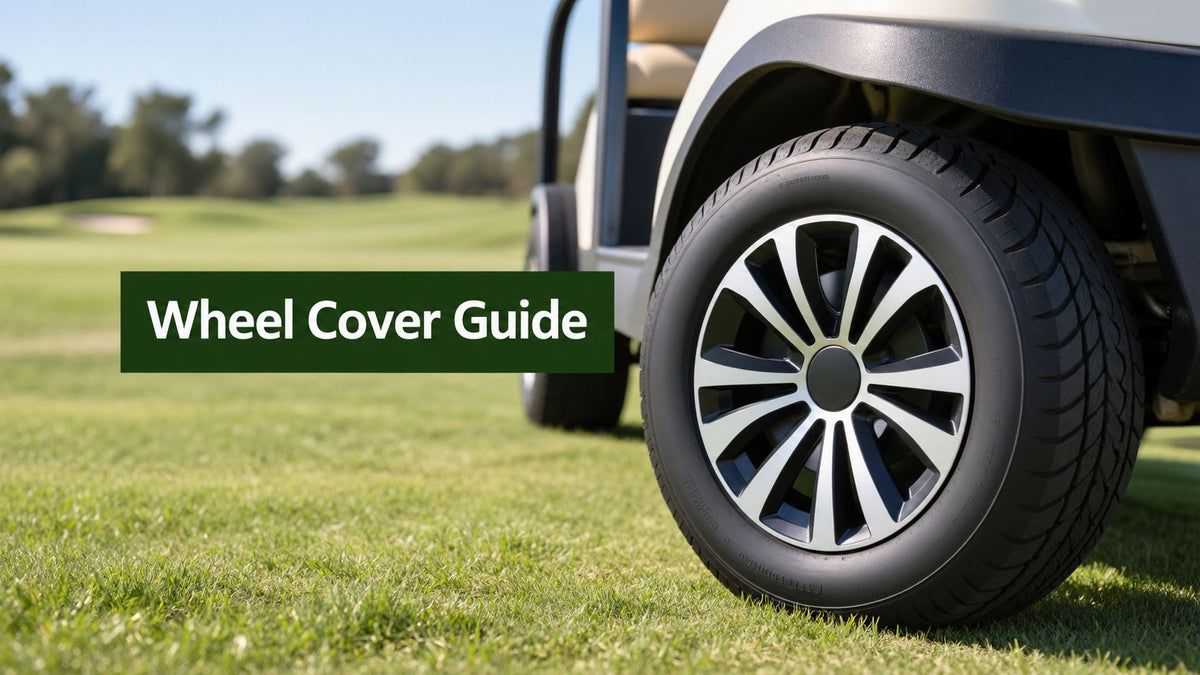
You're parked beside a customized cart, and the contrast is hard to miss. Its wheels have a polished, finished look, while your factory wheels are collecting mud, brake dust, and small scuffs. You're not sure whether a golf cart wheel cover is a useful upgrade or just decorative trim, and product listings don't always explain the difference.
That confusion makes sense. Covers sit between wheel protection, personal style, and the broader effort to make a cart look cared for. The right choice depends on your wheel type, tire profile, climate, cleaning habits, and the appearance you want, not just on the brightest finish in a product photo.
Why Golf Cart Owners Are Talking About Wheel Covers
A plain cart can still run perfectly, but owners increasingly judge it as more than a utility vehicle. A cart used around a neighborhood, at a club, or on private property becomes part of its owner's visible setup. Small details, including wheel trim, seat upholstery, lighting, and storage accessories, can influence whether the cart looks maintained or unfinished.
That shift fits into a much larger equipment story. Historical summaries trace golf-cart hardware from mobility aids into mainstream golf equipment. One account identifies a custom electric golf cart made in 1932, while broader acceptance among U.S. golfers arrived in the mid-1950s. The history matters because accessories followed the cart's adoption. Once carts became common, owners had a platform to protect, personalize, and refine.
Practical rule: Treat wheel covers as part of the cart's overall condition, not as an isolated decoration.
The market now reflects that wider ecosystem. One study valued the global golf push-cart market at US$430 million in 2024 and projected US$740 million by 2034, with a 5.7% compound annual growth rate over that decade, as reported in Global Growth Insights' golf push-cart market study. A separate estimate placed the broader golf push and pull cart market at US$630.6 million in 2023, forecasting US$817.0 million by 2030, while electric carts were expected to reach US$450.6 million by the end of that period, according to the same reference.
Those figures describe push-cart equipment rather than wheel covers directly, but they show why accessory choices are receiving more attention. A larger installed base creates more opportunities for practical upgrades, especially in North America and other major golf markets where walking and push-cart use remain common.
By 2026, personalized wheel covers are part of the broader customization conversation. Buyers may choose covers as an easy first change before tackling a lift kit or replacing seats. That makes the purchase less about copying another cart and more about deciding what your own cart should communicate: understated care, rugged use, or a polished clubhouse appearance.
What a Golf Cart Wheel Cover Actually Does
A golf cart wheel cover is a shaped shell that attaches over the visible center portion of an existing wheel. It usually snaps onto a basic steel wheel, sits outside the wheel face, and leaves the tire itself unchanged. It doesn't replace the wheel, alter the axle, or change the tire's contact with the ground.
The easiest comparison is a phone case. A phone case protects the surface underneath while changing the device's color and texture. A golf cart wheel cover works in a similar way. It can shield visible wheel areas from dirt, debris, minor scuffs, and weather exposure, while giving a plain wheel a different visual character.
Most covers use ABS plastic, chrome-plated plastic, or stainless steel, with ABS commonly favored for its balance of low weight, impact resistance, and flexibility. That flexibility helps the snap-on retention clips remain engaged while the cart vibrates. Chrome-plated versions generally use an ABS base with a decorative coating, so the finish changes the appearance more than the underlying structure, as explained in this golf cart wheel cover styles, sizing, and installation guide.
Protection and personalization serve different purposes
Protection is practical. A cover can help keep the center of the wheel cleaner and reduce direct exposure around visible hardware. It may also make routine washing easier because the cover presents a smoother surface than an open steel wheel.
Personalization is visual. Glossy black, chrome, matte, spoke-patterned, and blank designs can make the same cart appear modern, traditional, rugged, or deliberately simple. A cover can also coordinate with a roof, body panels, seats, or other accessories without requiring a full wheel replacement.
That distinction prevents a common buying mistake. A cover isn't a full rim, and it isn't necessarily the same thing as a hubcap. It's an accessory that depends on the existing wheel's shape, diameter, material, and available clearance. The attractive finish only matters after the cover can attach securely.
For related golf styling ideas, the Tattoo Golf style guide offers useful perspective on coordinating visible golf accessories without treating every item as a purely technical purchase.
Comparing Common Wheel Cover Materials
Material affects more than appearance. It influences how the cover responds to vibration, how much attention the finish needs, and whether the design suits a damp or coastal environment. Product listings often emphasize shine first, but the better question is how the cover will look after repeated rounds, washing, loading, and storage.
The three common options are ABS plastic, chrome-plated plastic, and stainless steel. Their practical differences are summarized below.
Golf Cart Wheel Cover Materials Compared
| Material | Typical Look | Durability | Weight | Maintenance | Price Range |
|---|---|---|---|---|---|
| ABS plastic | Clean, molded, painted, or matte | Good resistance to vibration and minor impacts | Light | Wash with mild soap and dry normally | Budget to mid-range |
| Chrome-plated plastic | Bright, reflective, traditional | Solid everyday protection, but the coating can show scuffs | Light to moderate | Frequent wiping helps prevent visible water spots | Mid-range |
| Stainless steel | Bright metal, premium, substantial | Strong and resistant to many everyday impacts | Heavier than plastic | Polish when needed and rinse away grit | Mid-range to premium |
ABS plastic is the sensible choice for owners who want a light cover that can tolerate ordinary cart vibration. Its flexibility supports the clip-based fit, and the material doesn't add much visual or physical weight. A black or molded finish can suit a daily neighborhood cart, especially if you prefer low-effort cleaning.
Chrome-plated plastic gives you more visual flash without the heft of a metal cover. Because the chrome is a surface coating over a plastic substrate, scratches or scuffs can be especially noticeable where the cover meets lug areas or receives contact during installation. It suits a traditional cart appearance, but it rewards careful washing and drying.
Stainless steel delivers a genuine metal look and a more substantial feel. That strength and shine can appeal to owners building a premium, polished cart, but the added heft and higher purchase cost may not make sense for a cart that regularly travels rough trails. Stainless steel still needs cleaning, because grit and water residue can dull any bright surface.
No material is maintenance-free. Choose ABS when flexibility and simplicity matter most, chrome when appearance leads the decision, and stainless steel when you value metal construction enough to accept more weight and upkeep.
Styles and Finishes Worth Knowing
Style changes the cart's visual balance even when the underlying wheel stays the same. A flat cover can make a basic wheel look finished and restrained, while a deep-dish design creates more depth and makes the wheel appear more assertive. The best option depends on whether you want the wheels to blend in or become the focal point.
A flat cover resembles a painted hubcap. It works well on a stock cart, a low-key neighborhood cruiser, or any build where the body color should remain the main feature. A deep-dish cover pushes the eye outward and gives a small wheel a stronger stance. It often fits lifted or trail-oriented carts, but you'll need to confirm clearance rather than assuming the visual depth will work.
Five-spoke patterns create a familiar automotive look. Slot-and-vent designs mimic alloy-wheel styling and add visual movement without becoming overly busy. A smooth, blank surface gives owners a neutral base for a custom wrap, painted detail, or coordinated body treatment.
Golf Cart Wheel Cover Styles and Finishes Compared
| Style | Typical Look | Best Cart Personality | Finish Options |
|---|---|---|---|
| Flat | Simple, hubcap-like | Stock, quiet, neighborhood-focused | Gloss, satin, matte |
| Deep-dish | Pronounced depth and stance | Lifted or trail-oriented | Gloss black, chrome, machined |
| Five-spoke | Familiar automotive appearance | Classic or balanced custom cart | Black, chrome, painted |
| Slot and vent | Alloy-inspired, technical | Sporty or modern build | Gloss, matte, patterned |
| Smooth blank | Minimal, uninterrupted face | Custom wrap or paint project | Plain, matte, gloss |
Finish changes the mood. Glossy black reads modern and coordinated. Chrome feels traditional and eye-catching. Matte has a tougher, more understated quality, while a patterned or milled-looking face pulls attention toward the wheel itself.
Bolt count and spoke count also matter. Even when two covers use the same base material, a five-spoke pattern can appear calm and familiar, while a multi-spoke design looks denser and more performance-oriented. Before ordering, compare the cover's spoke arrangement with the cart's body lines, lift height, tire sidewall, and other visible hardware. The custom golf cart wheels guide can help you think through that larger visual combination.
Getting the Right Size and Fit
A cover that looks perfect online can fail if it doesn't match the wheel underneath. Start with the tire sidewall. Look for the diameter marking and use it as your first reference, but don't stop there because diameter alone doesn't describe the entire fit.

Park the cart on level ground and inspect the wheel from the side. Measure across the tire as a cross-check, then note the tire's width and sidewall profile. A wide tire may need a deeper cover even when the diameter appears correct. A lifted cart or one fitted with aftermarket wheels can create additional clearance issues near the suspension, fender, or hub area.
Use this fitment sequence
- Confirm the diameter. Read the tire marking and compare it with the manufacturer's fitment chart.
- Confirm the tire profile. Check whether the tire is narrow, wide, low-profile, or rounded at the shoulder.
- Confirm the wheel material. Many covers are intended for basic steel wheels, not every aluminum or aftermarket wheel design. An accessory supply listing for wheel covers specifically describes covers as fitting the center portion of basic steel golf cart wheels.
- Check the center area. Make sure center caps, axle hardware, and valve-stem openings won't interfere.
- Verify the attachment method. Hub-centric covers center around the axle area, while clip-on covers grip the rim and depend on the rim profile.
The steel-versus-aluminum distinction causes many avoidable returns. A cover designed around a steel wheel's edge may not find the same retaining surface on a shaped aluminum wheel. Product photos can hide that difference, so read the fitment notes and contact the seller if the listing doesn't identify the intended wheel type.
For additional wheel terminology and component context, consult this guide to golf cart wheels.
Test-fit all four covers before driving. Check that each clip is seated, the cover doesn't wobble, and the valve stem remains accessible. A loose cover can damage its clips and mark the wheel as the cart moves.
Installing and Caring for Your Wheel Covers
Most snap-on covers can be installed in a driveway, but rushing the first fit is how owners bend clips or trap grit under the finish. Set aside a clean work area and inspect every cover before installation. If one clip looks distorted out of the package, photograph it before fitting and contact the seller.

A careful installation routine
- Clean the wheel. Remove mud, sand, and brake dust so trapped grit won't rub against the cover or wheel.
- Inspect the clips. Check the snap-on retention clips and identify the valve-stem opening.
- Align before pressing. Place the valve-stem cutout in the correct position, then start the cover evenly around the rim.
- Seat the edge gradually. Press around the circumference instead of forcing one side. If a lip resists, use a soft mallet with gentle taps. A hard blow can crack plastic.
- Check the result. Tug lightly at several points, spin the wheel by hand if safe, and verify that the cover sits evenly.
The clips should flex into place, not fold sharply. Bending one during installation can reduce its holding force and create a rattle later. Don't use a metal hammer, pry bar, or aggressive pressure washer to solve a fit problem. If the edge won't seat, stop and recheck the wheel type and cover size.
This video provides a visual reference for the installation process:
Wash with mild automotive soap rather than a strong degreaser. Dry chrome surfaces to reduce water spots, and keep pressure-washer nozzles away from the cover edges. Lifted carts used on trails deserve extra inspection because mud can work behind the cover and hold moisture against the wheel.
For owners who swap accessories between carts, remove covers carefully, wash them, let them dry completely, and store them in a padded box. Keep clips from pressing against hard surfaces, and use this golf cart wheel hub assembly guide when you need to understand the hardware behind the cover.
Are Wheel Covers Worth Buying for Looks and Value
The answer depends on what you expect the accessory to accomplish. If you want a dramatic appearance change without replacing the entire wheel, a cover can be a practical first upgrade. If your priority is maximum impact resistance, wheel replacement or a different wheel design may deserve comparison.
A good cover can protect visible wheel areas from dirt, debris, minor scuffs, and weather exposure. That protection doesn't guarantee a measurable resale premium, because used-cart offers depend on the cart's overall condition, service history, tires, battery system, body, and local demand. Still, a clean, coherent appearance can help a private buyer understand that the owner has maintained the vehicle rather than neglected it.
Separate the value into three questions
Appearance: Does the cover improve the cart in a way you'll enjoy every time you park it? If the answer is yes, the visual benefit alone may justify the purchase for a personal cart.
Protection: Will the cart encounter muddy paths, dusty storage areas, curb edges, or frequent outdoor exposure? If so, a cover may help keep the wheel center and visible hardware cleaner.
Value perception: Does the finish match the rest of the build? A polished cover on a cart with worn tires and damaged seats can look like a distraction. A coordinated cover on a well-kept cart can reinforce the impression of care.
Value check: Buy the cover for the improvement you can see and use now. Treat any future resale benefit as a possible bonus, not a promise.
Budget ABS covers may suit an owner who wants a simple visual refresh and easy replacement. Premium stainless designs make more sense when metal construction and a substantial finish matter enough to justify the added cost. The right decision isn't the most expensive material. It's the option that matches your climate, cleaning routine, wheel type, and willingness to protect the finish.

Smart Buying Tips and Common Questions
A low-regret purchase starts before you open the checkout page. Save the product listing, record the tire marking, photograph the wheel face, and compare the seller's fitment notes with your cart. Recent customer photos can reveal whether a finish looks closer to satin, bright chrome, or deep gloss in ordinary light.
Use this buyer checklist
- Confirm the wheel first. Identify diameter, tire profile, wheel material, center hardware, and attachment style.
- Read the return policy. Keep the original packaging until every cover has been test-fitted.
- Check finish photos. Customer images can expose color differences that studio photography hides.
- Ask about replacements. Find out whether you can purchase one cover after a curb scrape instead of replacing a complete set.
- Document installation. Photograph the clips and final fit in case you need warranty assistance.
- Inspect after the first drive. Listen for rattles and check that each cover remains evenly seated.
- Match care to use. Trail carts need more frequent cleaning behind the cover than carts used only on paved paths.
Common questions from first-time buyers
Will covers fit a lifted cart? They may, but lift height doesn't guarantee compatibility. Confirm tire width, wheel profile, suspension clearance, and the cover's stated application.
Will a cover rattle at speed? A correctly matched cover with seated clips shouldn't rattle under normal use. Movement usually points to incorrect sizing, a damaged clip, or an incompatible wheel edge.
Can I pressure-wash them? Use caution. Keep the nozzle away from the edges and retention clips, where concentrated pressure can force water and grit behind the cover or disturb the fit.
Can I replace one after damage? Some sellers offer individual replacements, while others package covers as sets. Confirm this before buying, especially if you choose a distinctive finish.
Should I install them immediately? Test-fit first. Keep all packaging and photograph the installation until you know every wheel fits securely.

For 2026, the smartest buyer treats a golf cart wheel cover as a three-part decision: protection for the existing wheel, a finish that suits the cart, and a fit that won't create maintenance problems. Confirm those points before ordering, and you'll spend less time handling returns and more time enjoying the finished setup.
If you're also upgrading a standard push cart for easier walking, visit Caddie Wheel to explore its lightweight electric power-assist system. Its drop-on design and variable-speed remote help reduce pushing effort while keeping your existing cart at the center of your setup.
Partager:
Caddie Wheel Remote Control Not Working: How to Fix It
Electric Assist Wheel for Golf: What It Is and How It Works