
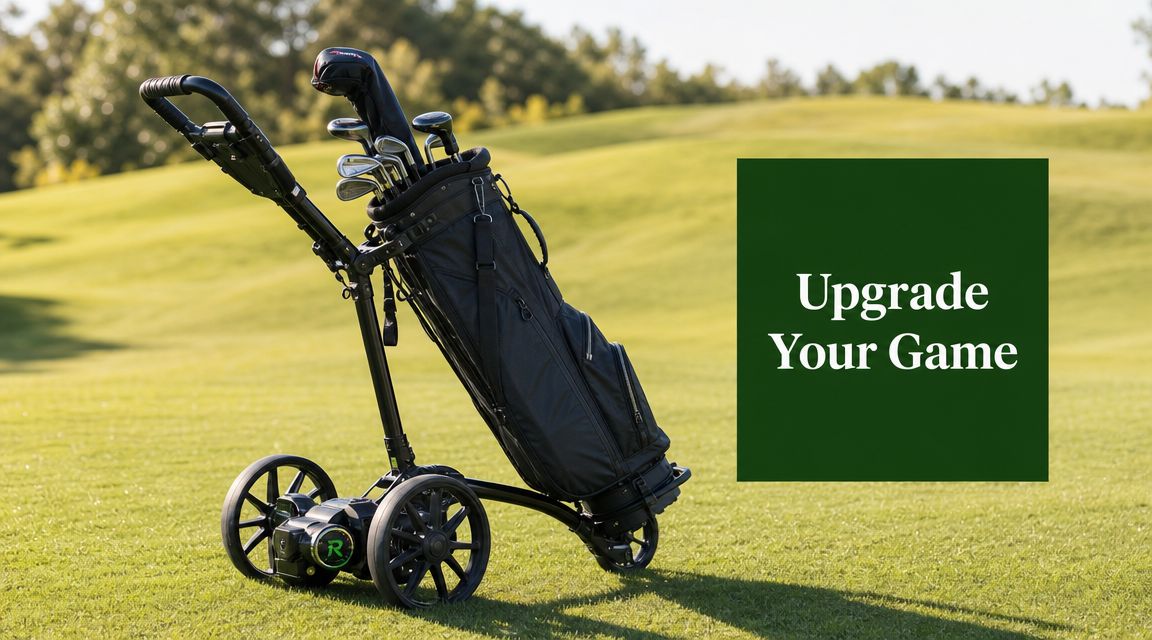
You're probably here because you typed Hippo golf cart into a search bar and expected to find a small electric cart, a powered caddie, or maybe replacement parts for something you saw years ago. Instead, the results likely felt mixed up. Some looked old. Some looked irrelevant. Some didn't even seem motorized.
That confusion makes sense.
The name “golf cart” gets used loosely in everyday golf talk. Sometimes people mean a riding cart. Sometimes they mean a push cart. And with Hippo, the search results often point to an older style of manual bag cart, not the kind of electric walking aid many golfers expect today.
If you've got an older Hippo model in the garage, or you're trying to figure out whether one is still worth using, the fundamental question isn't just “What is it?” It's also “What should I use now?” That's where this gets more interesting, because golf mobility has changed a lot. The old manual carts did a simple job well. Modern electric-assist options aim to keep the walking part you like while reducing the pushing part you probably don't.
Decoding the Hippo Golf Cart Mystery
The short answer is this. A Hippo golf cart usually refers to an older manual push or pull cart, not a modern electric caddie.
A big reason people get tripped up is that search results are often dominated by older material, including a 16-year-old review of a Hippo Deluxe push/pull cart on YouTube. That outdated footprint can send golfers down the wrong path when they are looking for a newer powered solution or current product availability, as seen in this older Hippo Deluxe review result.
Why the name creates confusion
In club conversations, golfers often say “cart” to describe three different things:
- A riding cart you drive
- A push cart you walk with
- An electric caddie that powers itself or helps propel your clubs
Hippo falls into the second group in the results commonly found. That means if you were expecting a battery-powered unit, your search probably felt off from the first click.
For a quick reset on the category itself, this guide on what a push cart is helps separate manual walking carts from motorized options.
Practical rule: If the product description focuses on wheels, frame weight, straps, and handle shape, you're usually looking at a manual push cart, not a powered golf vehicle.
What most readers actually want to know
When someone asks about a Hippo golf cart, they're usually asking one of four things:
- Was it a real product? Yes.
- Was it motorized? Usually no.
- Can I still use one? Yes, if it's in good shape and fits your game.
- Is there a smarter modern version of the same idea? Also yes.
That last question matters most. The older Hippo-style cart belonged to a simpler era of walking golf. You supplied all the force. The cart just carried the bag. Today, many golfers still want that walking experience, but they don't want to spend the round wrestling a loaded bag up hills, across side slopes, and through long transitions between holes.
So before you decide whether the Hippo golf cart is “good” or “bad,” it helps to understand what it originally was.
What Was the Original Hippo Golf Cart
The original Hippo golf cart that shows up in search results was a manual push/pull bag cart. It wasn't a riding cart, and it wasn't a self-propelled electric unit.
A surviving listing for the Hippo DELUXE GOLF CART describes it as a super lightweight 2-wheel steel cart with straps and an ergonomic handle, built for easy manual transport of a golf bag rather than motorized propulsion, according to this Hippo Deluxe product listing.

What that cart was designed to do
The design tells you a lot about the era it came from. A two-wheel steel cart is simple. You strap the bag on, grab the handle, and either push or pull it for the round.
That setup appealed to golfers who wanted:
- A lightweight frame that was easier to lift in and out of the car
- No charging routine because there was no battery
- Basic reliability with fewer parts to fail
- A walking round without carrying a bag on the shoulders
This was practical gear, not advanced gear. It solved one clear problem. It moved the clubs off your back.
What it did not do
It didn't give you powered assistance. It didn't manage pace on hills. It didn't reduce effort beyond the fact that wheels are easier than carrying. That distinction matters because many golfers read “golf cart” and assume some level of onboard power.
Here's a simple comparison:
| Feature | Original Hippo-style cart |
|---|---|
| Propulsion | Manual only |
| Wheel setup | 2-wheel design |
| Frame material | Steel |
| Bag attachment | Straps |
| Main purpose | Carry clubs while walking |
A Hippo cart was basically a bag transporter on wheels. Useful, straightforward, and completely dependent on the golfer for movement.
Why golfers still remember it
Older push carts stick in people's memory because they were honest tools. They folded up, did their job, and didn't ask much from you. If you played flatter courses, didn't mind a little effort, and wanted a low-tech round, they made sense.
They can still make sense today for some players. But once you've walked a hilly course with a full bag, a water bottle, a jacket, and a few extra balls in the pockets, you start to notice the limits of a basic two-wheel manual setup. That's where the bigger conversation begins.
The Pros and Cons of Traditional Manual Carts
A traditional manual cart, including an older Hippo-style model, still has a lot going for it. Golfers often keep them for one reason. They're simple. No battery. No charger. No electronics. Put the bag on and walk.
That simplicity is part of the charm. It also explains why manual carts remain relevant even as newer mobility options keep improving.

Where manual carts still shine
Manual carts work well for golfers who value routine and low fuss.
- Lower buy-in: A manual cart is usually the least complicated path into walking golf.
- Easy ownership: There's no battery care, no charging habits, and fewer moving parts to think about.
- Good for light rounds: On a flatter course with a lighter bag, many golfers feel perfectly comfortable pushing for 9 or 18 holes.
- Keeps you walking: If your goal is to stay active, a manual cart supports that without putting a bag on your shoulders.
For some players, that's enough. If your course is gentle and your body feels fresh after a round, a classic push cart may continue to do the job.
Where they start to wear on you
The trouble shows up slowly, not all at once. A manual cart asks you to supply steady force throughout the round. On the first tee that may feel minor. By the closing holes, especially on slopes or long walks between greens and tees, that extra effort can take something out of your legs, back, and shoulders.
Manual carts don't usually feel difficult on one hole. They feel draining over the whole round.
Terrain matters a lot here. A slight uphill, wet turf, rough edges near paths, or uneven ground all increase the effort needed to keep the cart moving in a straight, controlled way.
Safety and control matter more than many golfers think
This isn't just about convenience. In the U.S., one independent analysis estimated more than 23,000 golf-cart-related injuries each year, and the same review reported a 129% spike in 2020. It also found that incidents rose by about 64% between 2015 and 2024, which is one reason golfers and courses are paying more attention to safer, easier-to-control mobility options, according to these golf cart injury statistics.
That data covers golf-cart injuries broadly, not just manual push carts. Still, it highlights a useful point for everyday golfers. When movement on the course becomes awkward, rushed, or harder to control, risk goes up.
A manual cart can also create smaller performance problems that don't show up in an injury report:
- Fatigue before approach shots
- Tension in the shoulders
- Extra strain on hilly layouts
- Less energy late in the round
The real tradeoff
Traditional carts are excellent for golfers who want low-tech, low-maintenance walking. But they ask for more physical input than many players realize, especially as courses get hillier or rounds get longer.
If you've ever finished a round thinking, “I enjoyed the walk, but I'm tired of pushing the clubs,” you've already identified the gap modern electric-assist gear is trying to fill.
The Next Step Up Electric-Assist Technology
Electric-assist technology grew out of a simple idea. Many golfers still want to walk, but they don't want the cart to feel like a workout that competes with their swing.
That middle ground is where add-on motor systems fit. Instead of replacing walking with a full riding cart, they add propulsion to a push cart you already own or already understand how to use.

Why this category has grown
The broader mobility market in golf keeps expanding. One forecast estimated the global golf cart market at USD 2.12 billion in 2025, rising to USD 3.70 billion by 2034, while the push/pull golf cart market was projected to grow at a 6.2% CAGR, according to this golf cart market forecast.
That tells you golfers aren't moving in just one direction. Some want riding carts. Some prefer walking with manual carts. Many are looking for something in between, and electric-assist systems answer that need.
If you want a broader look at that category, this guide to electric push carts for golf is a useful next read.
What electric assist actually changes
With an electric-assist setup, the cart still feels like a walking cart. The difference is that the motor helps handle propulsion, especially when the bag is heavy or the course fights back.
That changes the round in a few practical ways:
- You walk behind the cart instead of driving it forward with your arms
- Uphill sections feel more manageable
- Your pace stays steadier
- You save energy for shots instead of spending it on transport
This matters most to golfers who like the rhythm of walking but dislike the repeated push effort.
Here's a quick look at one example in action:
Why add-on systems appeal to practical golfers
Some players don't want to buy a whole new machine. They already own a push cart they like. They know how it folds, how it fits in the trunk, and how it handles on their home course.
That's why retrofit-style options have become appealing. One example is Caddie Wheel, which is a motorized wheel attachment for standard push carts rather than a separate full cart system. The attraction is easy to understand. You keep the walking format, but reduce the part that wears you down.
Golfers who already like walking often don't need a different style of round. They need less effort inside the same round.
That's the big shift from the old Hippo era to today. The original cart helped you carry less. Electric assist helps you push less.
Manual Push Cart vs Electric-Assist Upgrade
The cleanest way to judge an upgrade is to compare the same style of round. You're still walking. You still have your clubs on a push cart. The only real question is how much work you want to do moving that load from tee to green.

Side-by-side on the course
Here's how the experience usually differs.
| Category | Manual push cart | Electric-assist upgrade |
|---|---|---|
| Effort | You provide all forward force | Motor helps propel the cart |
| Hills | Push effort rises quickly | Movement feels steadier uphill |
| Late-round energy | Fatigue can build | More energy stays with the golfer |
| Setup mindset | Very simple, low-tech | Slightly more setup, but less work during play |
| Ownership approach | Minimalist | More feature-focused |
The biggest difference isn't speed. It's strain.
On a flat practice loop, a manual cart may feel perfectly fine. On a full round with elevation, awkward lies around paths, and a loaded bag, the electric-assist option usually feels more controlled and less taxing.
Storage and space matter too
A lot of golfers assume any powered upgrade will become bulky. That's not always true.
A standard 2-seat golf cart averages about 92 × 48 × 75 inches, and a typical 2-seater is often 96 to 108 inches long, 48 inches wide, and 72 to 84 inches tall. By contrast, a push cart with an add-on motor preserves a narrower profile, which makes it easier to maneuver through tight paths and fit into normal vehicle storage spaces, as outlined in these golf cart dimension examples.
That compactness is a major advantage for walking golfers. You don't need the footprint of a full riding cart to get a meaningful reduction in effort.
A golfer's-eye comparison
Think about three common moments in a round:
-
The long uphill walk after a poor tee shot
With a manual cart, you're managing your disappointment and pushing a loaded frame uphill. With electric assist, you're mostly just walking and regrouping. -
The back nine when your legs feel heavier
A manual cart keeps asking for the same physical output. Electric assist softens that demand. -
The path from the parking area to the first tee
Even before the round starts, a powered setup can make the day feel easier.
The value of electric assist shows up in the spaces between shots. Those small savings add up over 18 holes.
Cost versus value
Manual carts still win the pure simplicity argument. They cost less to get started with, and there's less to think about.
Electric-assist upgrades ask you to think differently. Instead of asking, “What's the cheapest way to move my clubs?” you ask, “What helps me enjoy walking without turning the walk into extra fatigue?”
That's why many golfers look into a golf push cart electric conversion kit rather than jumping straight to a full electric cart. It keeps the familiar push-cart format while changing the effort level in a meaningful way.
For golfers who already own a manual cart and like the walking habit, that can be a sensible middle step. You keep what works. You improve what doesn't.
Is an Electric Upgrade the Right Move for Your Game
The right answer depends less on your handicap and more on how you feel after a round.
If you finish 18 holes still enjoying the walk, still swinging freely, and never noticing your cart, then your current setup may be serving you well. But if your cart keeps becoming part of the struggle, it's worth paying attention. Golf is hard enough without spending energy on the transport side of the day.
Golfers who usually benefit most
An electric-assist upgrade often makes the most sense for a few familiar types of players.
-
The regular walker with a hilly home course
You like walking and don't want to switch to a riding cart. You just want the climbs and long transitions to feel less demanding. -
The senior golfer or anyone managing strain
You may still move well, but repeated pushing wears you down faster than it used to. -
The player who wants energy for scoring
Some golfers don't mind exercise, but they'd rather spend their strength on tempo, balance, and decision-making than on moving a bag. -
The practical upgrader
You already own a push cart and want to improve the experience without replacing your whole walking setup.
Signs your current cart may be holding you back
You don't need a dramatic problem to justify a change. Small frustrations are often enough.
Ask yourself:
- Do hills change how much you enjoy the round?
- Do your shoulders, hands, or back feel the cart more than the golf?
- Do you ever choose to ride because pushing sounds tiring?
- Would you walk more often if the effort dropped?
If you answered yes to more than one, you're probably not looking for nostalgia. You're looking for a better fit.
Good golf gear doesn't just carry equipment. It removes friction from the round.
A useful way to think about the upgrade
The old Hippo golf cart belongs to a generation of equipment that valued simplicity above all else. There's nothing wrong with that. For many golfers, it was a helpful step away from carrying a heavy bag.
But modern walking golfers often want a different balance. They still want the health, rhythm, and pace of walking. They just don't want the constant push effort that comes with a fully manual cart.
If you're also improving your practice setup away from the course, the same “fit the tool to the player” mindset applies when selecting a home golf simulator. The smartest gear choices usually aren't about novelty. They're about reducing friction so practice and play happen more often.
In that sense, the Hippo question is really a present-day equipment question. Not “Can I still use an old manual cart?” but “Does my current walking setup help me enjoy golf more, or does it gradually wear me down?”
For a lot of golfers in 2026, that answer points toward electric assist.
If you want to keep walking but reduce the push effort, Caddie Wheel offers a motorized power-assist attachment for standard push carts, so you can upgrade a familiar setup instead of replacing it outright.
Partager:
Powerstride Golf Cars: The 2026 Explainer for Golfers
Golf Cart Parts USA: The Ultimate Buyer's Guide 2026