
You hear it on the back nine before you feel it. The cart starts to sputter, then hesitates on a hill it used to climb without complaint. You press the pedal a little harder, and now you’re not thinking about club selection. You’re thinking about whether you’re getting back to the clubhouse under your own power.
That moment usually sends golfers down the same path. Is it the battery, the controller, the wiring, the engine, or the motor itself? And if it is the motor, what specifically matters when you own, repair, or replace an EZ GO setup?
Most golfers don’t need a deep engineering lecture. They need clear answers. They need to know what an ez go golf cart motor does, how gas and electric versions behave differently, what warning signs matter, and how to avoid turning a small issue into an expensive one.
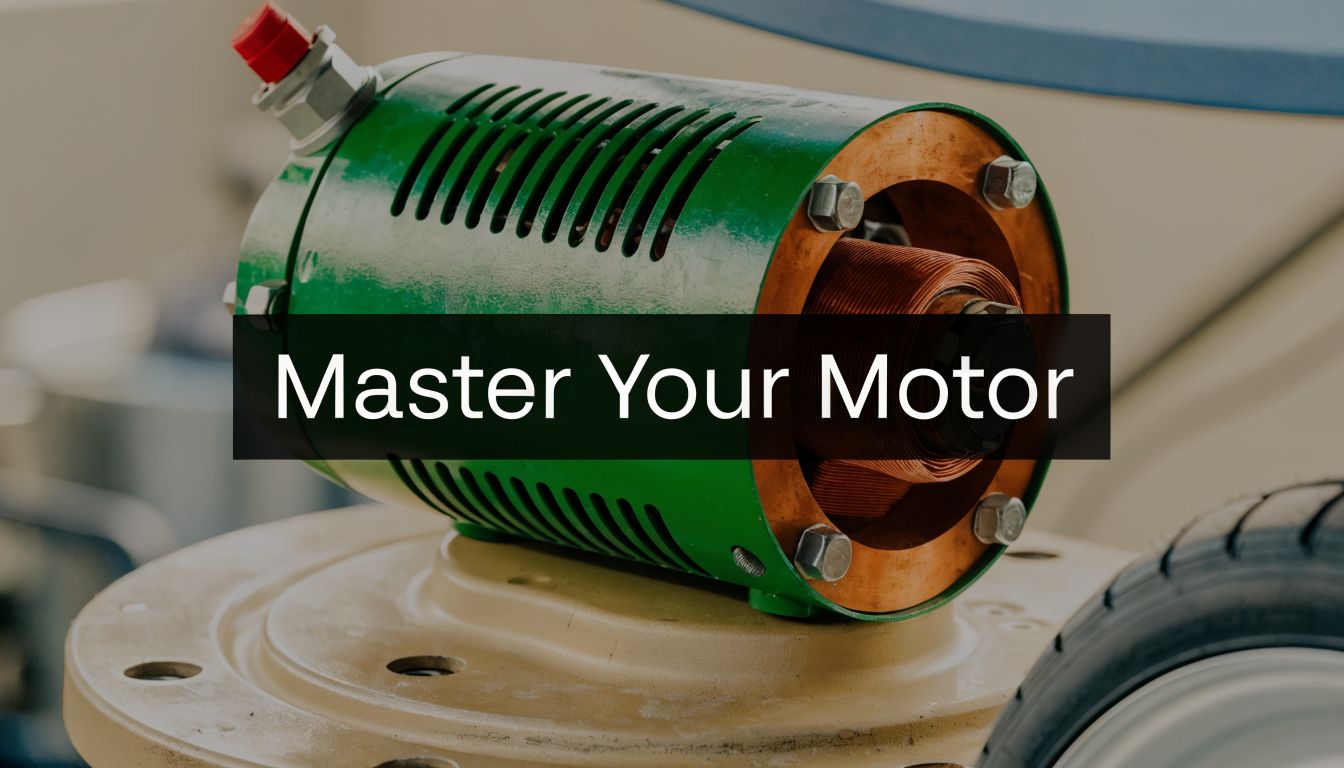
The Heart of Your Cart An Introduction to the EZ GO Motor
A golf cart motor is a lot like your legs during a walking round. When they’re fresh, everything feels easy. When they’re tired or failing, every slope feels steeper, every stop feels harder, and the whole round changes.
That’s why the motor largely defines the cart's personality. It decides whether the cart pulls away smoothly, creeps up hills with confidence, or feels weak and uneven. You can have decent tires, clean bodywork, and a solid frame, but if the motor is unhappy, the whole machine feels worn out.

EZ GO’s motor story goes back a long way. The first E-Z-GO carts launched on June 13, 1954, and they used repurposed military surplus 24-volt motors from B-17 bomber wing flaps. The company built carts as electric models until 1971, when the first gas-powered option arrived, according to this history of E-Z-GO’s early development.
Why golfers get confused
A lot of owners use the word “motor” to describe the whole power system. In everyday talk, that’s understandable. In the garage, it creates confusion.
Here’s the simple version:
- Gas cart: The engine makes power, but the full system still depends on related parts working together.
- Electric cart: The motor is the main power unit, but it also depends heavily on batteries, cables, and the controller.
- Same symptom, different cause: Weak hill climbing in a gas cart and weak hill climbing in an electric cart can feel identical from the seat, even when the root problem is completely different.
Practical rule: If your cart feels lazy, don’t blame the motor first. Blame the power system as a whole, then narrow it down.
Golfers who tinker with carts often learn this the expensive way. They replace the wrong part because they chased the symptom instead of the cause.
Why this matters to a walking golfer
Even if you’re only mildly curious about cart mechanics, understanding the motor helps you make better decisions. You’ll know when a repair is sensible, when an upgrade is worthwhile, and when a full cart starts demanding more attention than it’s worth.
That matters because powered movement on a golf course should make the day easier, not give you another machine to babysit.
Decoding Motor Types Gas vs Electric
If you want to understand an ez go golf cart motor, start with the biggest split of all. Is your cart gas or electric? Everything else follows from that answer.
Think of a gas cart as a workhorse. It builds power through combustion, likes to keep moving, and needs regular service the way a mower, motorcycle, or small utility vehicle does. Think of an electric cart as a silent sprinter. It responds quickly, makes little noise, and feels more immediate from the first press of the pedal.

What the numbers tell you
The standard EZ-GO gas engine is a 295cc, 9 horsepower twin-cylinder unit. A common electric benchmark is the 36V PDS motor at 2.25HP, and the key trade-off is that the electric setup delivers strong instant torque even though the horsepower figure looks lower, as outlined in these EZ-GO engine and motor specifications.
If that sounds contradictory, here’s the plain-English version. Horsepower helps describe sustained power output. Torque is the shove you feel when starting from a stop or climbing slowly. On a golf course, that low-speed shove matters a lot.
Gas behavior on the course
Gas carts tend to feel familiar to anyone who has driven equipment with a small engine. You hear the engine rise and fall. You smell fuel and exhaust. You know there’s oil, air filtration, and ignition involved.
Gas often suits golfers who care about:
- Heavy-duty feel: A gas setup can feel more comfortable for repeated use over demanding terrain.
- Long sessions without charging: You refuel instead of plugging in.
- Mechanical familiarity: Many owners already understand spark plugs, oil, and fuel systems.
The downside is straightforward too. Gas carts ask for more regular mechanical attention, create more noise, and add more moving parts that can age or drift out of tune.
Electric behavior on the course
Electric carts are different from the first inch of pedal travel. The response is quick and smooth, especially at low speed. For course use, that often makes the cart feel calmer and easier to control.
Electric setups usually appeal to golfers who want:
| Feature | Gas cart feel | Electric cart feel |
|---|---|---|
| Noise | Audible engine note | Much quieter |
| Takeoff | Builds as engine revs | Immediate response |
| Routine upkeep | More service items | Fewer service items |
| Course atmosphere | More mechanical presence | More peaceful ride |
A gas cart announces itself. An electric cart just moves.
That doesn’t mean electric is trouble-free. Batteries, cables, solenoids, switches, and controllers all affect performance. When an electric cart goes soft on hills, the motor may be fine and the issue may live elsewhere in the system.
Which one feels better to most golfers
That depends on what “better” means to you.
If you like the rugged feel of a machine with an engine, don’t mind maintenance, and use the cart in more demanding ways, gas can make sense. If you care about quiet operation, smoother low-speed control, and less fuss, electric often feels more natural on the course.
For walking golfers, there’s another layer to this. Both systems can start to feel like more machine than you need. Once you move from “I need help getting around the course” to “I’m managing a fuel or battery-driven vehicle,” the convenience equation starts to change.
Spotting the Signs of a Failing Motor
Motor problems rarely begin with a dramatic breakdown. More often, the cart starts talking to you in small ways. It gets slower. It sounds rougher. It feels inconsistent. Smart owners listen early.

One reason diagnosis gets tricky is that there’s a real information gap around golf cart motor lifespan. There isn’t standardized guidance that tells owners exactly when a motor is likely to fail, which is why early warning signs matter so much, as noted in this discussion of common EZ GO problem patterns and lifespan uncertainty.
Symptoms worth taking seriously
Start with what the cart is doing, not what you think is broken.
- Loss of pulling power: If the cart slows noticeably on familiar inclines, the motor may be struggling, but weak batteries, poor cable connections, or fuel delivery issues can create the same feel.
- Jerky acceleration: A smooth cart that now lunges, hesitates, or surges needs attention. Electric carts often show this when power delivery becomes inconsistent. Gas carts can show it when combustion or throttle response gets uneven.
- Strange sounds: Grinding, whining, or a harsh mechanical note usually means something in the system is no longer moving cleanly.
- Excess heat or smoke: Heat is a warning sign, not a personality trait. If components are running unusually hot, something is overloaded, dirty, mismatched, or failing.
A simple first-pass check
When golfers panic, they often skip the easy checks and jump right to replacement. Don’t do that.
Use this order instead:
- Listen first: Is the sound electrical, mechanical, or combustion-related?
- Notice the pattern: Does it happen only on hills, only from a stop, or all the time?
- Check the basics: Look for loose cables, dirty terminals, obvious wear, fuel issues, or visible damage.
- Test before buying parts: If you need a structured process, this guide on how to test a golf cart motor gives a practical starting point.
A short visual walkthrough can help if you’re trying to separate normal wear from a true warning sign.
Gas and electric don’t fail the same way
A gas cart often gives clues through sound, smell, and visible exhaust behavior. An electric cart often gives clues through sluggish response, heat, or inconsistent acceleration.
In the shop: The symptom you feel with your right foot is often only the final result. The cause may be two or three parts upstream.
That’s why “bad motor” should be your conclusion, not your opening guess. A weak cable can mimic a weak motor. A controller problem can feel like a dying electric drive unit. A neglected gas engine can act worn out when it really needs basic service.
The practical lesson is simple. If your cart’s behavior changes suddenly or steadily worsens, don’t wait for total failure. Motors and power systems usually get more expensive when owners keep driving them after the warning signs show up.
How to Choose or Replace Your EZ GO Motor
Replacing a motor gets expensive when you buy based on frustration instead of fit. Before you choose anything, ask one question. What job does your cart need to do on your course?
Some golfers need steady hill climbing and low-speed control. Others care more about efficiency and normal-course cruising. Those are not the same requirement, and the best motor for one golfer can feel wrong for another.
Torque first or speed first
One of the least understood choices in electric cart replacement is the difference between series-wound and shunt-wound motors, often called SEPEX in some conversations. Consumer-friendly comparison data is limited, but the broad practical takeaway is clear: series-wound motors favor high torque, while shunt-wound motors favor higher speed and better efficiency, as discussed in this consumer gap around series and shunt motor understanding.
That sounds technical, but the practical translation is simple.
- Series-wound: Better for golfers who deal with hills, stop-and-go terrain, or heavier loads.
- Shunt-wound: Better for flatter ground where smoother speed and efficiency matter more.
- Wrong match: A speed-oriented setup on a hilly course can feel disappointing even if the parts are functioning properly.
Questions to ask before you buy
Don’t start with brand names. Start with your use case.
Ask yourself:
- Terrain: Is your home course mostly flat, or does it ask for steady climbing?
- Use pattern: Do you mostly cruise, or do you stop and start constantly?
- Current issue: Are you replacing a failed motor, or covering up another problem?
- Compatibility: Will the new motor work with your existing controller, wiring, and overall setup?
If you want a buyer-focused overview before narrowing your options, this guide on how to choose the best electric motor for golf cart use is a useful companion.
Repair rebuild or replace
Owners often overspend here.
| Decision | Best when it makes sense | Main caution |
|---|---|---|
| Repair | The issue is isolated and the rest of the system is healthy | Don’t repair around a worn-out core problem |
| Rebuild | You have a motor worth saving and access to the right technician | Quality varies with workmanship |
| Replace | The old unit is unreliable, mismatched, or no longer worth chasing | Make sure the rest of the system can support it |
A lot of carts get a “new motor” when they really needed diagnosis. That’s like putting new tires on a car with a bad transmission. The new part may be fine, but the result still disappoints.
The practical buyer mindset
The best replacement choice usually isn’t the most aggressive one. It’s the one that matches your course and your expectations.
Buy for the hill you climb every week, not for the spec sheet that sounds exciting in the garage.
For many golfers, especially those who mainly want reliable movement around the course, simplicity beats chasing top-end performance. If your cart has become a project instead of a convenience, that’s worth noticing too.
Essential Maintenance for Motor Longevity
Golf cart motors don’t usually die from one dramatic event. More often, owners let small issues stack up. Dirt stays put. Connections loosen. Fluids get ignored. Components stop working as a team.
The smartest maintenance habit is to think in systems. A strong motor can still perform badly if the parts around it are neglected.
Gas engine basics
If your EZ GO uses a gas engine, routine service matters more than heroic repairs later.
The standard E-Z-GO gas engine is a 295cc, 9 horsepower twin-cylinder unit. The published specifications call for 10W-30 to 10W-40 oil meeting SF, SG, or CC ratings, with 1.5 quarts capacity, and NGK BPR4ES spark plugs gapped at 0.020 to 0.030 inches, according to these EZ-GO engine maintenance specifications.
Use that information as a maintenance checklist:
- Check oil quality and level: Wrong or neglected oil can shorten engine life fast.
- Inspect the spark plugs: Correct plug type and gap matter for clean running.
- Keep cooling paths clear: Air-cooled engines need unobstructed airflow.
- Watch for dirty intake parts: A clogged air path changes how the engine breathes and runs.
Electric motor basics
Electric carts usually need less day-to-day fuss, but they still need inspection.
Focus on these habits:
- Inspect cable connections: Loose or dirty terminals create resistance and heat.
- Look over wiring: Worn insulation and rubbing points can cause intermittent issues.
- Keep debris away from the motor area: Dirt buildup traps heat and hides trouble.
- Pay attention to behavior changes: Slower starts or uneven pulling often show up before a total failure.
Upgrades need matched parts
Many owners encounter issues. They upgrade the motor and forget the rest of the system has to keep up.
High-torque aftermarket motors such as the AMD Series High-Torque 36V Motor are rated at 8HP at 1600 RPM and require a minimum 400A controller for the intended E-Z-GO applications. If components are mismatched, the system can suffer a 20% efficiency loss or even motor burnout, as described in this AMD motor compatibility overview.
If you’re trying to decide whether upkeep or repair is the better path, this guide to golf cart motor repair basics can help frame the decision.
Maintenance mindset: Don’t ask, “Is the motor good?” Ask, “Is the system healthy?”
That one shift in thinking prevents a lot of wasted money.
The Modern Alternative A Caddie Wheel Power Assist
A full golf cart solves one problem by creating several others. You get powered movement, but you also inherit storage needs, charging or fueling routines, maintenance demands, troubleshooting, and the occasional mystery noise that appears right before a tee time.
That tradeoff doesn’t bother every golfer. Some enjoy owning and maintaining a cart. Others just want help getting around the course without turning golf into another equipment project.

Why some golfers move away from full carts
Walking golfers often reach a point where they realize they don’t need a vehicle. They need assist. That’s a different category of problem.
A full cart is useful when you want to ride. It’s less ideal when your real goal is to walk, conserve energy, and avoid pushing a loaded cart up every incline. In that situation, a compact power-assist setup makes more sense than a machine built to carry passengers, body panels, and a much larger powertrain.
The practical difference
For a walking golfer, simple often wins.
A power-assist wheel for a push cart changes the daily experience in a few important ways:
- Less mechanical overhead: You’re not managing an entire golf cart platform.
- Easier storage: A push cart setup takes far less room than a full vehicle.
- Walking stays part of the round: You keep the rhythm and health benefits of walking.
- Less distraction: The equipment supports the round instead of competing with it for attention.
This matters a lot for seniors, golfers with mobility concerns, and players who still want exercise but don’t want the strain of pushing a loaded cart over rolling terrain.
A different way to think about powered golf
Owning an EZ GO cart often leads to a maintenance mindset. You start thinking about motors, batteries, controllers, oil, plugs, wiring, and replacement parts. Sometimes that’s fine. Sometimes it pulls your attention away from the game itself.
A walking setup with power assist flips that logic. The goal isn’t to own a vehicle. The goal is to make walking easier.
The best power solution is the one that helps your round feel lighter, not the one with the most hardware attached to it.
For many golfers, that’s the cleaner answer. They still get support on hills and during long rounds, but they skip much of the complexity that comes with full cart ownership.
Conclusion Powering Your Perfect Round
A good ez go golf cart motor makes a cart feel dependable. A struggling one changes the whole day. Once you understand the basic split between gas and electric, the early warning signs of trouble, and the difference between torque-focused and efficiency-focused replacements, you’re in a much stronger position to make smart decisions.
That doesn’t always mean buying more parts. Sometimes it means maintaining what you already have with more discipline. Sometimes it means replacing the right component instead of guessing. And sometimes it means recognizing that a full golf cart is more machine than your game requires.
Golf is better when your energy goes into the shot, the walk, and the company. Not into chasing wiring faults or trying to decode why a cart suddenly lost power on the seventh hole.
Choose the setup that fits the way you play. That’s usually the choice that keeps you moving with the least friction.
If you like walking but want less strain, Caddie Wheel offers a simpler kind of power assist. It adds motorized help to a standard push cart, so you can keep the health benefits of walking without taking on the maintenance lifestyle of a full golf cart.
Partager:
Sun Mountain Push Carts Parts: A Complete Repair Guide
Golf Scorecard Holder: A Buyer's & Usage Guide (2026)