

For most golfers who love to walk, the ideal motorized push cart is one that saves your back without forcing you to ditch your current setup. While fully integrated electric caddies are slick, a quality conversion kit like the Caddie Wheel offers a powerful and budget-friendly upgrade to the cart you already know and love.
Why a Motorized Cart Is a Golfer's Secret Weapon
Picture this: you're walking off the 18th green feeling just as fresh and focused as you did on the first tee. For walkers, that’s not just a nice thought—it’s a real competitive edge. Pushing a 30-pound bag over miles of rolling hills burns a surprising amount of energy, which can tank your mental game and swing mechanics on the back nine.
This is where a little motorized help becomes more than a luxury; it’s a performance enhancer. When you take the strain of pushing out of the equation, you save all that energy for what actually matters: your next shot. Golfers who switch to electric assistance almost always say they feel less tired, which leads to smarter decisions and, often, lower scores. The market is catching on, too. Valued around $649.94 million in 2025, the global golf push cart market is expected to surge as more players look for an effortless way to walk the course. You can see the full breakdown in a market analysis from Market Report Analytics.
When you’re ready to motorize your game, you generally have two ways to go.
Choosing Your Path to Power
The first route is the fully integrated electric caddy. These are all-in-one units built from the ground up with the motor, battery, and frame designed to work together. They often have some pretty advanced features, but they come with a hefty price tag and mean you have to replace your current push cart.
The second path is an innovative conversion kit. This approach lets you motorize the push cart you already own. It's a smart, efficient upgrade that gives you the core benefits of electric power—like remote control and help on the hills—without the high cost of a brand-new system.
Key Takeaway: The choice really boils down to buying a whole new system or upgrading the gear you already have. A conversion kit is a practical, wallet-friendly way to get a serious advantage on the course.
This table lays out the main differences to help you figure out which path makes the most sense for you.
| Feature Comparison | Fully Integrated Electric Caddy | Electric Conversion Kit |
|---|---|---|
| Initial Cost | High ($800 - $2,500+) | Low to Moderate ($500 - $800) |
| Equipment Needed | None; it's an all-in-one unit | Your existing 3 or 4-wheel push cart |
| Setup & Installation | Ready to use out of the box | Simple, often tool-free installation |
| Portability | Can be heavier and bulkier | Adds minimal weight to your current setup |
| Best For | Golfers needing a new cart entirely | Golfers who love their current cart |
Integrated Caddy vs. Conversion Kit: a Head-to-Head Comparison
When you're ready to add power to your walk on the course, you'll hit a fork in the road. Do you go with a fully integrated electric caddy or a conversion kit? It’s a big decision, and the answer isn't the same for everyone.
An integrated unit is an all-in-one system—the motor, battery, and frame are all engineered to work together right out of the box. A conversion kit, on the other hand, is a clever upgrade that adds electric power to the push cart you already have. This choice will shape everything from your budget to how you pack your trunk for a tee time. Let’s break it down.
Upfront Cost and Long-Term Value
The first thing you’ll notice is the price. A brand-new, fully integrated electric caddy is a serious piece of equipment with a price tag to match, often running from $800 to over $2,500. You're paying for a complete, purpose-built machine, which can be a great option if you have the budget for it.
But for many golfers, that's a hefty price to pay, especially if their current push cart is in perfectly good shape. This is where conversion kits really make sense. They give you the core benefit—motorized power—by working with the gear you already own. It's a much more accessible way to stop pushing and start walking freely.
Compatibility with Your Existing Gear
Here’s where conversion kits truly shine. They are designed specifically to work with the cart you’ve already picked out for its weight, features, and how it folds. A well-designed kit like the Caddie Wheel is built for wide-ranging compatibility, easily attaching to most popular three- and four-wheel carts. You get to keep what you love and just add the muscle.
Going with an integrated caddy means starting from scratch. If you were already in the market for a new cart, it’s a seamless way to go. But if you're happy with your current setup, buying an integrated model means you're paying for a cart you don't really need and learning a whole new system.
This decision tree gives you a great visual for figuring out your next move.
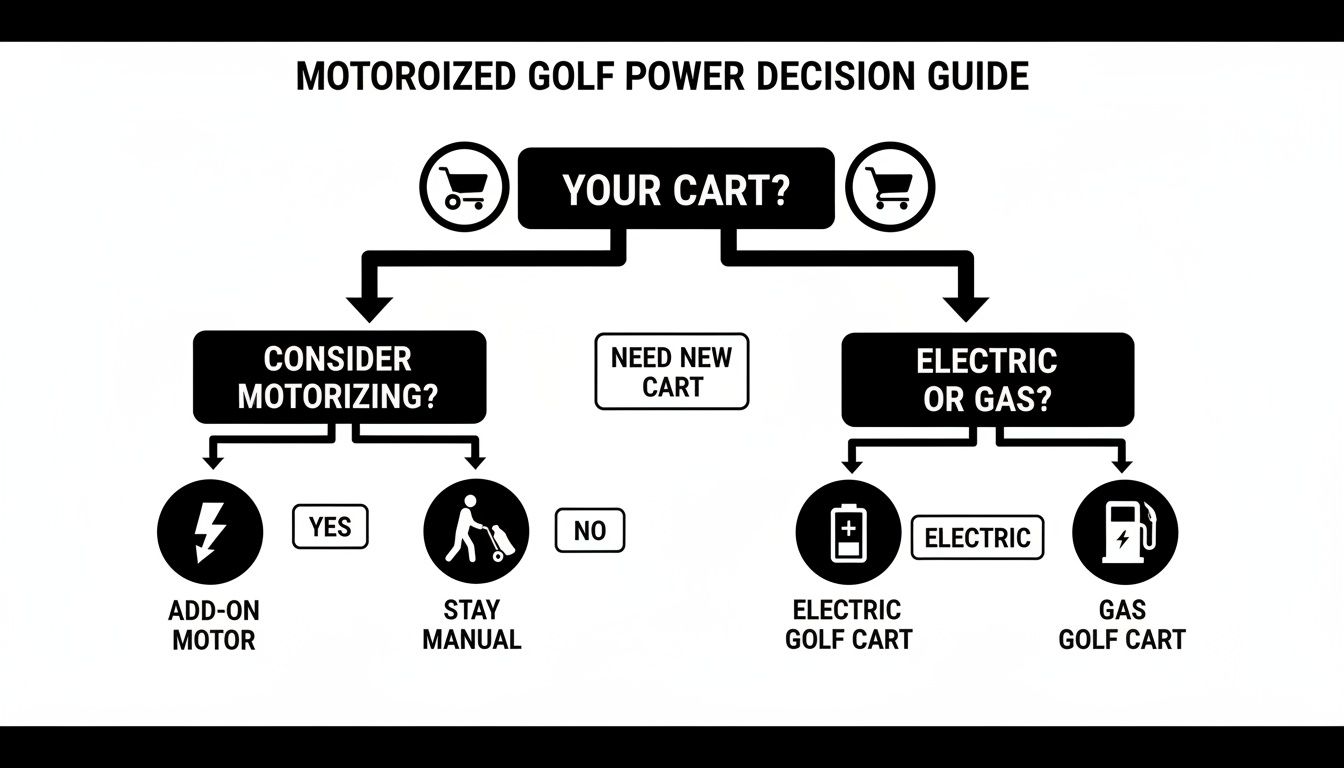
As you can see, if you already have a push cart you like, a conversion kit is the most direct path to getting motorized.
Portability and Storage Considerations
Think about the logistics. How easy is it to get your gear from the garage, into the car, and out to the first tee? Integrated caddies, with their built-in motors and batteries, are naturally heavier and can be a bit bulkier. While many have slick folding designs, you’re always lifting the full weight of the unit in one go.
A conversion kit offers a more flexible approach. You can detach the motorized component, like the Caddie Wheel, and carry the cart and power unit separately. This breaks the weight into smaller, more manageable pieces—a huge plus if you have a tight trunk space or find lifting heavy, awkward items a chore.
Key Differentiator: The genius of a conversion kit is its modularity. You add power when you need it and can handle the components separately, making storage and transport simpler than managing a single, heavier integrated unit.
Performance and Battery Endurance
Both integrated caddies and quality conversion kits are engineered to get you through your round without a problem. High-end models in both categories typically use lithium-ion batteries that will last anywhere from 18 to 36 holes on a single charge. The experience, however, can be a little different.
- Integrated Caddies: The battery is often hidden away inside the frame. This looks sleek, but it can sometimes make it a pain to get to for charging or replacing.
- Conversion Kits: The battery is part of the add-on unit, so it’s simple to pop off and charge wherever is most convenient. This also makes replacing the battery down the road a breeze.
Ultimately, it comes down to what you prefer: a clean, built-in aesthetic or the practical convenience of a detachable power source. You can explore a deeper dive into what makes an electric golf push cart conversion kit such a smart choice in our detailed guide.
Ease of Use and On-Course Experience
At the end of the day, you just want something that works without getting in the way of your game. Integrated caddies deliver a unified experience right out of the box—all the controls are designed to work together from the get-go. No assembly required.
A conversion kit does require a quick, one-time installation. For instance, the Caddie Wheel uses a simple "snap-in" bracket system that takes just a few minutes to set up without any tools. Once it's on, the remote control gives you effortless operation, letting you focus completely on your next shot. The on-course experience becomes just as seamless as any integrated model, proving you don't need a whole new cart to enjoy the freedom of motorized walking.
Integrated Caddy vs. Conversion Kit: a Situational Comparison
To help you decide, think about what matters most to you. This table breaks down which option is likely the better fit based on different priorities.
| Decision Factor | Fully Integrated Electric Caddy | Conversion Kit (e.g., Caddie Wheel) | Best For... |
|---|---|---|---|
| Budget | High initial investment ($800 - $2,500+) | Lower initial cost (under $600) | Golfers wanting the core benefit of motorized power without a huge upfront expense. |
| Existing Gear | Requires buying a whole new cart | Upgrades your current, familiar push cart | Golfers who already own and love their push cart. |
| Storage & Transport | Heavier, single-unit lift | Lighter, modular components | Players with limited trunk space or who prefer not to lift heavy items. |
| Setup | Ready to go out of the box | Quick, one-time installation | Golfers looking for a simple, DIY upgrade that takes just a few minutes. |
| Flexibility | All-in-one system | Use cart with or without the motor | Golfers who want the option to use their cart manually on shorter courses or at the range. |
| Battery Access | Often integrated into the frame | Easily detachable for charging/replacement | Anyone who values the convenience of charging the battery away from the cart. |
Ultimately, there's no single "best" choice, only the best choice for you. If you’re starting from scratch with a healthy budget, an integrated caddy is a fantastic, seamless option. But if you want to smartly upgrade the gear you already trust while saving money and gaining flexibility, a conversion kit is tough to beat.
Digging into the Features of a Top Motorized Cart
Once you’ve landed on either an integrated caddy or a conversion kit, it’s time to get into the nitty-gritty. The specific features are what truly separate a good motorized push cart from a great one. These details will directly shape your experience on the course, from how long the battery lasts to the way it tackles a steep fairway. Knowing what to look for ensures you’re putting your money into a system that’s going to perform reliably, round after round.
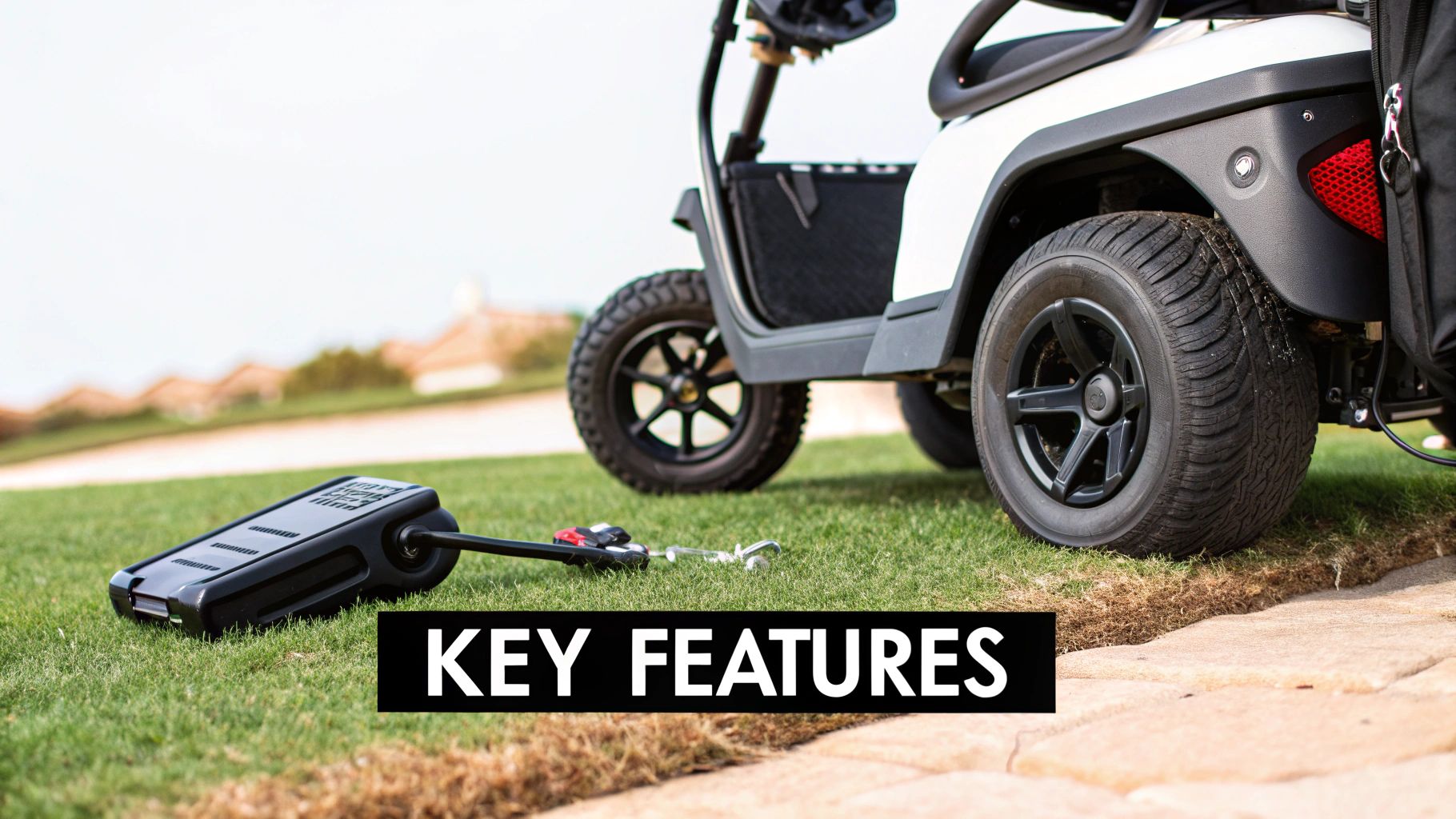
This kind of attention to detail is what’s fueling some serious growth in the golf world. Electric push carts are a massive part of the $1.5 billion global golf push and pull cart market, which is on track to hit $2.4 billion by 2032. This boom is all thanks to innovations like lightweight batteries and dead-simple controls that can cut a golfer’s physical effort by up to 80% over an average round. You can dig into more of this data in Dataintelo's industry report.
Battery Performance and Range
The battery is the heart and soul of any motorized cart. While most modern units run on efficient lithium-ion technology, not all batteries are built the same. The number you really care about is its capacity, usually measured in amp-hours (Ah), which tells you exactly how many holes you can play on a single charge.
A standard battery might get you through 18 holes. That’s fine for a casual round, but it can definitely create some "range anxiety" on longer days or hillier courses. A much better option, like the battery in the Caddie Wheel, is rated for up to 36 holes. That gives you the confidence to play two full rounds without hunting for an outlet—a huge plus for tournament players or weekend golf trips.
- 18-Hole Battery: Good enough for golfers who stick to one round at a time on mostly flat courses.
- 27-Hole Battery: A solid middle ground, giving you a buffer for hilly terrain or slightly longer rounds.
- 36-Hole Battery: This is the gold standard for serious walkers. It guarantees you’ll have juice for back-to-back rounds without a single worry.
Remote Control Functionality and Ease of Use
Your remote is the direct line to your cart, and its design can absolutely make or break the whole experience. A clunky, confusing remote is a distraction you don't need. A good one feels like a natural extension of your walk. Look for simple, clearly labeled buttons for the stuff you actually use.
Here are the must-have remote features:
- Variable Speed Control: Lets you perfectly sync the cart's pace with your natural walking speed.
- Forward and Reverse: Absolutely essential for wiggling your way around greens, bunkers, and other tight spots.
- Emergency Stop: A one-touch button that instantly kills the motor is a non-negotiable safety feature.
Expert Tip: The best remotes are small enough to slide into your pocket without feeling like a brick, but big enough that you can use them without having to stare at them. Some systems even toss in an extra remote, which is a fantastic backup to have if one ever gets lost or takes a tumble.
Motor Power and Terrain Handling
A motor's power dictates how well your cart handles the real-world challenges of a golf course, especially hills. An underpowered motor will bog down on inclines, forcing you to give it a push—which completely defeats the purpose of having a motorized cart in the first place.
Motor power is often measured in watts. For most courses, a motor in the 200-250 watt range gives you plenty of torque to climb hills without breaking a sweat, even with a bag full of clubs and gear. Also, keep an eye out for features like downhill speed control or automatic braking. These prevent the cart from getting away from you on steep declines, maintaining a consistent, safe pace and leaving you in total control. To learn more about the technical side, check out our guide on everything you need to know before buying an electric golf push cart.
Design Portability and Build Quality
Finally, think about the physical design. A motorized system should add convenience, not create a new hassle. For conversion kits, the total weight of the add-on unit is a huge factor. A lighter design makes it way easier to lift your cart in and out of your car.
Look for a straightforward attachment mechanism. A system with a "drop-on" wheel and "snap-in" bracket can be installed in just a few minutes with no tools required. Build quality is also critical; durable materials like aviation-grade aluminum and rugged, all-terrain tires ensure your investment will hold up to the abuse of the course for years to come.
Why Caddie Wheel Is a Leading Contender
In a crowded market, the best motorized push cart isn't always the one with the most bells and whistles—it's the one that delivers reliable power and seamless operation without getting in your way. This is where the Caddie Wheel really makes its mark. It wasn't dreamed up in some corporate lab; it was born from the practical needs of two avid golfers, Bob Houston and Robert Paffrath, who just wanted a better way to walk the course.
Their goal was simple: create a solution that gave golfers the core benefits of motorization without the steep price tag or complexity of a fully integrated caddy. The result is a system built on simplicity, reliability, and broad compatibility, making it a fantastic option for any golfer who already owns a push cart they love.
Simplicity and Installation
Let's be honest, one of the biggest things that holds golfers back from conversion kits is the fear of a complicated setup. Caddie Wheel was engineered to put that fear to rest. Its drop-on installation is exactly what it sounds like—the motorized wheel assembly literally drops right onto your cart’s axle.
From there, the patent-pending bracket system snaps into place without a single tool. The whole process takes just a few minutes, turning your standard push cart into a remote-controlled powerhouse. This user-friendly design means you spend less time messing around in the garage and more time on the first tee.
Real-World Benefit: You can install the Caddie Wheel in the country club parking lot minutes before your tee time. Its straightforward design removes the technical barrier that often discourages golfers from upgrading their existing gear.
Broad Compatibility and Power
A conversion kit is only useful if it fits your cart. The Caddie Wheel’s universal design is compatible with most major three- and four-wheel push carts out there, including top brands like Clicgear, Sun Mountain, and Bag Boy. This wide-ranging compatibility means the vast majority of walking golfers can upgrade their current setup without a problem.
Performance is where it really shines. The Caddie Wheel is powered by a high-capacity lithium-ion battery engineered to last for up to 36 holes on a single charge. That kind of endurance completely eliminates range anxiety. You can confidently play back-to-back rounds or tackle a long, hilly course without ever worrying about running out of juice.
This focus on long-lasting performance is perfectly timed for a growing market. The global golf push cart industry was valued at $0.45 billion in 2025 and is projected to hit $0.74 billion by 2034, driven by golfers demanding energy-efficient, low-strain solutions just like this one. You can dive deeper into the golf push cart market growth on globalgrowthinsights.com.
Thoughtful Features and Value
Beyond the core mechanics, the Caddie Wheel package includes a few thoughtful touches that show it was designed with real golfers in mind. Every unit ships with a free extra remote control—a small detail, but a huge deal if you ever lose or damage one. You're never left stranded.
Here’s a quick look at the value packed into every Caddie Wheel:
- Dual Remotes: Peace of mind comes standard with an included backup remote.
- 36-Hole Battery: All the power and endurance you need for even the longest days on the links.
- 12-Month Warranty: A full year of coverage shows the creators stand behind their product's durability.
- Cost-Effective Upgrade: You get the full motorized experience at a fraction of the cost of a brand-new integrated electric caddy.
Ultimately, the Caddie Wheel offers a smart, practical path to motorization. It gives a massive segment of golfers the chance to upgrade the equipment they already own, save their energy for the swing, and enjoy the walk more—all without the high cost and commitment of buying a whole new system. It’s a solution designed by golfers, for golfers.
Installation and Maintenance for Lasting Performance
Even the best motorized push cart is only as good as its upkeep. The real value of any golf gear reveals itself in how easy it is to own and operate long-term. From the initial setup to routine care, a little attention goes a long way in making sure your motorized system delivers reliable performance for hundreds of rounds to come.
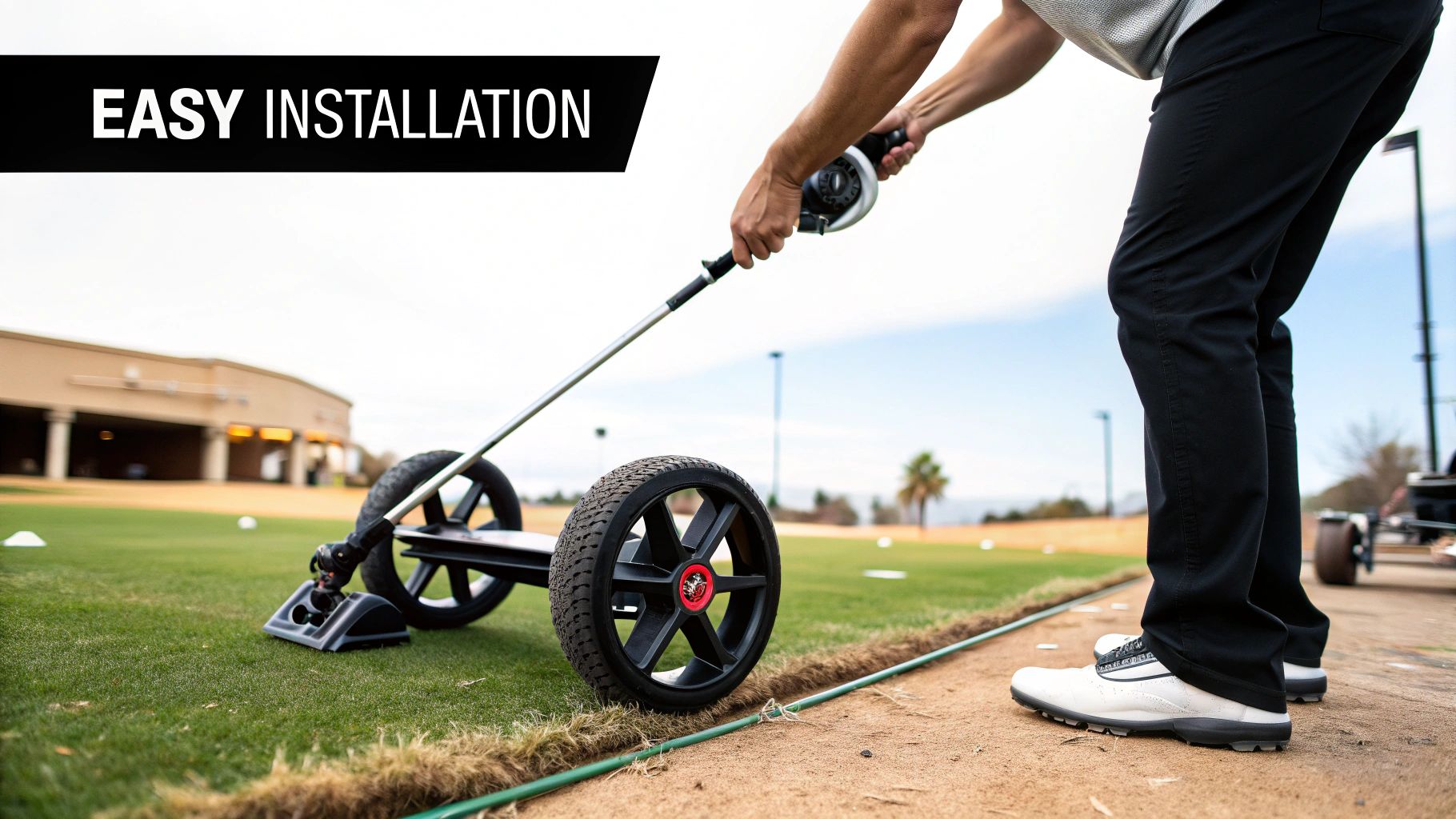
Thankfully, modern conversion kits are designed with the user in mind, getting rid of the technical hurdles that once made golfers hesitate. A system like the Caddie Wheel, for example, has a simple drop-on installation that requires no special tools. The motorized wheel assembly fits right onto your cart's axle, and a snap-in bracket secures it in just a few minutes. It’s a straightforward approach that lets you upgrade your cart and be ready to play almost immediately.
Simple Installation Process
A quality conversion kit should have an intentionally simple setup. The goal is to get you on the course, not leave you fumbling with a complicated manual.
- Prepare Your Cart: Make sure your existing push cart is clean and in good working order. You might need to remove the rear wheels first.
- Attach the Motorized Wheel: Slide the motorized wheel unit, like the Caddie Wheel, onto the cart's axle. It’s designed to create a snug, secure fit.
- Secure the Bracket: Fasten the snap-in bracket to your cart’s frame. This usually involves a simple latch or clamp that requires zero tools.
- Connect and Go: Plug in the battery, power on the remote, and you're ready to walk the course with a whole new level of freedom.
This quick, no-fuss process is a key advantage, making motorization accessible to any golfer.
Essential Maintenance for Longevity
Once it's installed, keeping your motorized system in top shape is easy. A few routine checks will extend its life and guarantee it’s ready for every tee time. Proper battery care is especially important. For a deeper dive into battery health, check out our complete guide to golf cart battery maintenance for best practices.
It’s also crucial to understand the safe operating temperature range for lithium-ion batteries to avoid damage from extreme heat or cold.
Pro Tip: After a rainy round, take a moment to wipe down the motorized unit and battery connections with a dry cloth. This simple step prevents moisture buildup and protects the electronic components from corrosion over time.
Beyond battery care, other maintenance tasks are quick and straightforward.
- Keep It Clean: Regularly wipe down the wheels and axle to clear away grass, mud, and debris. This prevents unnecessary strain on the motor.
- Check Tire Pressure: If your cart has air-filled tires, make sure they are properly inflated. This helps optimize efficiency and battery life.
- Inspect Connections: Every now and then, give the cables and connections a quick check to ensure they are secure and free of any damage.
- Remote Control Care: Store the remote in a safe, dry spot. Replace its batteries as needed so you always have a reliable connection on the course.
By investing just a few minutes in maintenance after every few rounds, you'll ensure your motorized push cart remains a reliable and valuable partner in your game.
Frequently Asked Questions About Motorized Golf Carts
Still on the fence? Let's clear up some of the most common questions golfers have before making the switch to a motorized push cart. Getting the right answers will help you feel confident you're choosing the best balance of power, convenience, and value for your game.
How Difficult Is It to Install a Conversion Kit?
One of the biggest hesitations I hear from golfers is the fear of a complicated setup. The good news is, modern conversion kits are designed to be incredibly simple. A system like the Caddie Wheel uses a 'drop-on' wheel and a 'snap-in' bracket, meaning you don't need a toolbox or any special skills.
Honestly, the whole process usually takes just a few minutes. You can upgrade your current push cart and be ready for the first tee without any real hassle. This really tackles that major concern for golfers who want a powerful solution but don't want a time-consuming, frustrating installation.
This user-friendly approach makes the benefits of motorization accessible to anyone, no matter how comfortable you are with tools. It's a straightforward upgrade that pays off immediately.
Will a Motorized Cart Actually Improve My Game?
Absolutely. Think about it: pushing a 30-40 pound cart across several miles of hills and fairways burns a lot of physical and mental energy. That's energy you could be using for your swing, and it directly impacts your performance over 18 holes.
By taking that strain away, a motorized cart lets you save your strength for what really matters.
Studies have shown that golfers using electric carts often feel more energized, and nearly one-third of players report playing better because of it. It’s common to hear players say they feel less fatigued on the back nine, which leads to better focus, sharper decision-making, and, ultimately, lower scores.
Performance Insight: The energy you save by not pushing your cart translates directly into steadier hands for putting and a more consistent swing tempo throughout the entire round. It’s a direct investment in your performance and enjoyment on the course.
How Long Does the Battery Last on One Charge?
Battery anxiety is a real concern, but today's systems are built for endurance. How long a charge lasts depends on the battery's capacity and the course conditions (hilly courses will use more juice), but any high-quality unit is designed to easily outlast a standard round of golf.
The Caddie Wheel's high-capacity lithium battery, for instance, is engineered to last for up to 36 holes on a single charge. This gives you the confidence to complete two full rounds or play on a long tournament day without ever worrying about running out of power.
Here’s a general expectation for battery range:
- Standard Batteries: Typically provide enough power for 18-27 holes, which is plenty for most single rounds.
- Premium Batteries: Offer a 36-hole capacity, giving you peace of mind for back-to-back rounds or tournaments.
Plus, the portable charger makes it easy to power up at home or the clubhouse between rounds, offering both reliability and convenience for any serious golfer.
Is a Conversion Kit a Better Value Than a New Caddy?
For the vast majority of golfers who already own a push cart they like, a conversion kit is an exceptional value. It gives you all the core benefits of motorization—remote-controlled power, less fatigue, and effortless navigation—at a fraction of the cost of a brand-new, high-end integrated electric caddy.
By upgrading the equipment you already have, you can save hundreds, or even thousands, of dollars and avoid replacing a perfectly good cart. It's a smart, budget-conscious way to enhance your game. While a new integrated unit might run you anywhere from $800 to $2,500, a quality conversion kit delivers the same performance boost for significantly less.
This makes it the best motorized push cart option for players who want to smartly invest in their game without breaking the bank. You get the power and freedom you want while keeping the familiar cart you already trust.
Ready to transform your walk on the course? The Caddie Wheel offers a powerful, easy-to-install, and affordable way to motorize the push cart you already own and love. Experience the freedom of a remote-controlled caddy and save your energy for your best game.
Share:
Golf Pull Carts Electric: The Modern Golfer's Guide
Your Guide to the Modern Golf Remote Control Cart