

Electric pull carts golf are battery-powered trolleys that take the grunt work out of walking the course. They haul your bag on demand, so you stay fresh and focused on every swing.

Benefits Of Electric Pull Carts Golf
No more lugging heavy bags up steep fairways. These motorized trolleys feel like a power-assisted stroller, gliding over hills while you concentrate on your next shot.
- Reduced Physical Strain: Motor torque carries the load so you stay energized from hole one to hole eighteen.
- Consistent Pace Control: Cruise mode locks in a steady speed, even on tricky inclines.
- Improved Focus: Intuitive buttons and remotes mean your mind stays on game plan, not gear.
- Customizable Features: Choose from follow mode, slope compensation, or remote steering to match your style.
- Long-Lasting Battery: Modern lithium-ion packs power you through 18–36 holes on a single charge.
Picture a senior golfer smoothing over uneven turf without a wince in the knees. Or a weekend warrior saving leg strength on par-fours, then unleashing a powerful drive when it matters most.
Real-World Scenarios To Inspire
- Weekend warriors clip along steep par-fours, ready for that extra burst when driving off the tee.
- Tech-savvy players use follow mode like a robotic caddie, freeing both hands for practice swings.
Whether your goal is better fitness or just a more relaxed round, electric pull carts golf adapt to every ambition.
Caddie Wheel simplifies the upgrade with a snap-in bracket and one-step installation. Its compact motor and removable battery slot neatly into three- and four-wheel push carts.
Learn more about manual trolleys in our article What Is a Push Cart to compare how electrified units enhance your game.
In the next sections, we’ll break down how these carts work, offer setup tips, and unpack every key feature—battery chemistry, control options, weight considerations and more.
Then, we’ll tackle compatibility—slot dimensions, bracket standards and how to fit your Caddie Wheel without a hitch.
Finally, you’ll get maintenance pointers—battery care, wheel alignment checks, and other insider tips to keep rolling from tee to green.
Understanding Key Concepts
When you’re shopping for an electric pull cart, it helps to picture how the core parts work together—almost like a power-assisted stroller carrying your golf bag.
At its heart, an electric trolley merges four main elements into one smooth system.
Parts and Analogies
- Motor: Like bicycle gears, it multiplies the force you put in.
- Battery Pack: Think of it as a fuel tank that holds all your energy.
- Control Interface: Works like cruise control in a car, letting you dial in your speed.
- Chassis: The sturdy frame that keeps everything in place.
Back in the 2000s, these carts started showing up as batteries shrank and motors got more efficient. By the 2010s, you’d spot them on courses across the UK and US—places where walking remains part of the charm. Fast forward to the mid-2020s, specialist golf retailers reported that electric trolleys made up 60–70% of new trolley sales. Golfers loved the steady handling and relief from pushing heavy bags. For extra insight, check out this market trends report.
Range And Slope Compensation
“Range” simply tells you how far a cart will go on a full charge. Battery chemistry and the course’s ups and downs both play a role.
Slope compensation is your built-in hill assist—it senses when you’re climbing and injects more torque so your pace barely changes.
Electric pull carts keep your speed consistent on every incline, saving your energy for the swing.
Some models even offer a “follow mode” that trails behind at a set distance, giving you true hands-free freedom to focus on your next shot.
- Cruise Control: Locks in a steady speed across flats or gentle rollers.
- Hill Assist: Automatically kicks in extra power on steeper fairways.
Interpreting The Screenshot
Here’s a screenshot from Wikipedia showing an electric golf cart chassis and battery location.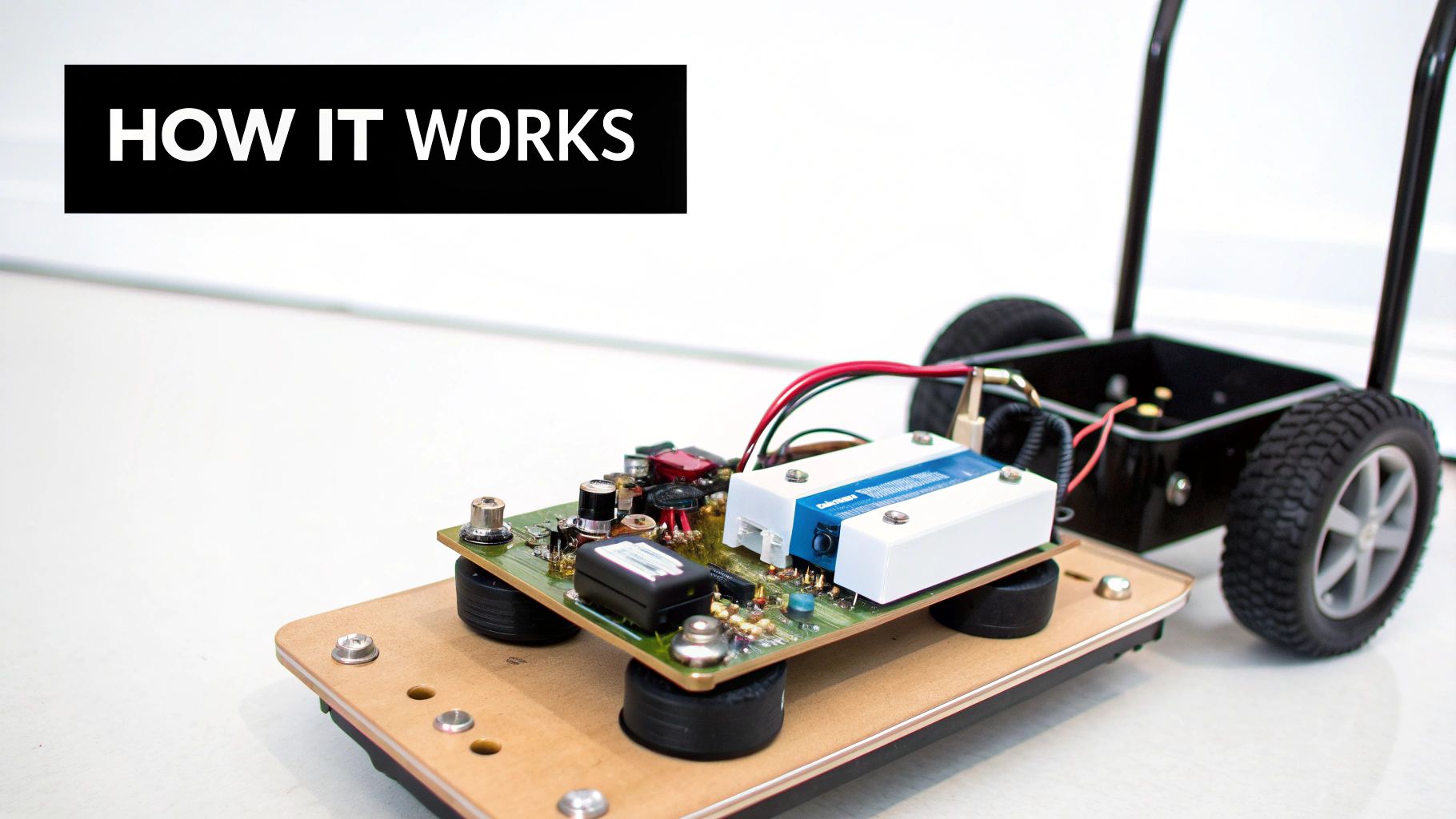
Notice how the battery sits low and centered. That placement fine-tunes balance and drive efficiency, making the cart feel rock-steady over varied terrain.
Control Interface Details
You’ll find everything from simple handlebar buttons to full-blown wireless remotes—some even feature touchscreen dashboards with preset speed modes.
Common control elements include:
- Forward/Reverse Buttons: Quick direction changes without fuss.
- Speed Adjustment Dial or Arrows: Fine-tune your pace in small steps.
- Braking Function: Locks the cart on steep slopes or busy tees.
Building Confidence For Model Selection
Now that these basics are clear, comparing specs feels a lot less daunting. You’ll know exactly which numbers matter when sizing up options like the Caddie Wheel’s drop-on motor and intuitive remote.
Simple Diagram Teaser
Coming up next is a straightforward line diagram that traces power flow from battery to motor. It’ll anchor concepts like current draw and torque ratings so you can shop with real confidence.
Let’s dive in and explore those details.
Benefits For Different Golfer Types
Walking 18 holes can feel like a marathon, but electric pull carts let you dial in power, pace, and features to match your swing and stamina.
In regions with large retiree communities—think the US, UK, Japan, and Western Europe—over 40% of regular club golfers now prefer battery-powered assistance to sidestep walking-related fatigue. That surge in demand has driven trolley makers to offer lithium-ion systems that shed 20–40% of their weight and go 18–36 holes on a single charge. Discover more insights about the golf cart market on GM Insights.
Real-World Golfer Scenarios
Imagine a retiree gliding up a steep fairway without stressing tired knees—thanks to slope compensation and a torque-controlled motor.
Picture a competitive amateur clicking on cruise control, conserving leg energy for a game-winning drive on the 18th hole.
Think of a family round where juniors track the cart’s GPS in follow-mode, swapping bag-pushing for high-fives and friendly competition.
“I feel like I’m walking with a personal caddie,” says a senior club member who now plays 36 holes in a weekend.
- Reduced Fatigue: Seniors glide up slopes without knee strain.
- Energy Conservation: Amateurs save strength for late-round performance.
- Engaging Play: Families turn every round into a tech-friendly adventure.
Feature Focus For Each Golfer
| Golfer Type | Key Benefit | Must-Have Feature |
|---|---|---|
| Retiree | Low joint stress | Slope compensation |
| Competitive Player | Consistent pacing | Cruise-control speed |
| Family Golfer | Hands-free interaction | Follow-mode GPS |
Competitive players prize a steady walking pace to keep swing rhythm intact. Families, on the other hand, love animated displays and wireless remotes that turn distance tracking into a friendly challenge.
Tips For Choosing Your Cart
Match your playing style to these quick pointers before you buy:
- Focus on battery range if you plan to tackle 36 holes in a day.
- Opt for ultra-light frames if joint health is a priority.
- Test follow-mode responsiveness—reliability matters.
- Weigh portability: a heavy cart can be a chore to load and unload.
- Check warranty coverage and battery replacement options.
Caddie Wheel integrates seamlessly with most three- and four-wheel push carts, offering quick installation and a lightweight design. That means less setup time and more time focusing on your swing.
“Using Caddie Wheel, I play two extra holes without fatigue,” says co-founder Bob Houston.
Explore more Caddie Wheel options at the official site today to discover your perfect match.
Next, we’ll cover precise setup steps and compatibility tips to get your electric pull cart ready for the green.
Key Features To Evaluate When Buying
Choosing the right electric pull cart for golf means focusing on four key pillars: battery life and chemistry, weight and portability, control options, and bag-mount flexibility. A quick specs overview lets you match features to your course and budget without wading through jargon.
- Battery Life and Chemistry: How many holes you can play per charge and how long the pack lasts.
- Weight and Portability: Impacts how easy it is to load, unload, and carry.
- Control Options: Ranges from handle controls to remote steering and follow modes.
- Bag-Mount Flexibility: Compatibility with three- or four-wheel frames and various bag designs.
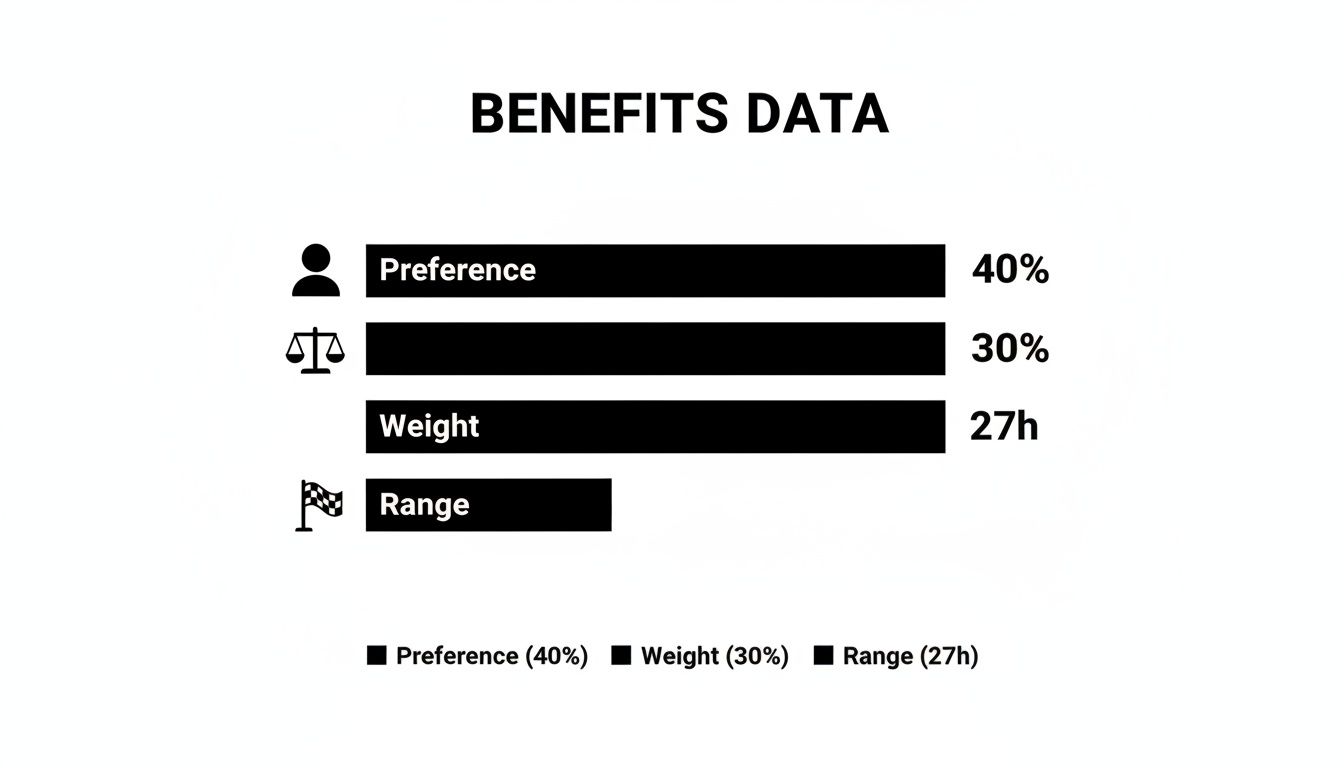
The graphic shows 40% of golfers value ease of use most, with 30% prioritizing weight and 27% focusing on range.
Battery Life And Chemistry
Your battery pack determines how far and how long your cart will run. Early models with sealed lead-acid batteries weighed 10–12 kg and delivered about 9–18 holes per charge.
Fast forward to the 2020s and lithium-ion packs have cut that weight by 20–40%, trimming the total trolley weight by 2–6 kg and boosting range to 18–36 holes under normal conditions. Let’s break down how lead-acid stacks up against lithium-ion:
Comparison Of Battery Types And Performance
| Feature | Lead Acid | Lithium Ion |
|---|---|---|
| Weight Per Pack | 10–12 kg | 6–9.6 kg |
| Range Per Charge | 9–18 holes | 18–36 holes |
| Cycle Life | 300 cycles | 800 cycles |
| Cost Per Wh | Lower cost | Higher cost |
Lithium-ion packs weigh up to 40% less and offer more than double the cycle life compared to lead-acid.
Weight And Portability
Overall weight shapes how easily you load and transport your cart. A lighter setup means less strain lifting it into your trunk or carrying it between holes.
Shaving off 2–6 kg with lithium-ion systems makes a noticeable difference, especially on hilly fairways.
- Folded Dimensions: Check how compact it becomes for trunk space and home storage.
Control Options
Cart controls range from simple handlebar buttons to advanced remotes with programmable speeds and hill-assist. Some units even include follow modes that trail behind you at a set distance.
- Handle-Mounted Controls: Quick access without bending over.
- Remote Steering: Guide the cart as you walk without touching it.
- Follow Mode: Keeps the cart a few paces behind, hands-free.
- Slope Compensation: Adjusts torque automatically on inclines.
Bag Mount Flexibility
A universal bracket design ensures most three- and four-wheel frames can accept your bag. Look for adjustable straps, clamps, and quick-release locks to secure any standard golf bag in seconds.
Check out our guide on electric golf push carts 101 everything you need to know before buying for detailed setup and compatibility tips.
By sizing up these four pillars, you’ll zero in on the electric pull cart that aligns with your swing, course terrain, and wallet. Next, we’ll dive into installation tips, slope calibration, and battery care to keep your trolley humming round after round.
Brands like Caddie Wheel even include a 12-month warranty on batteries rated for 800 cycles for extra peace of mind. Warranty details vary.
Initial Setup And Compatibility Tips
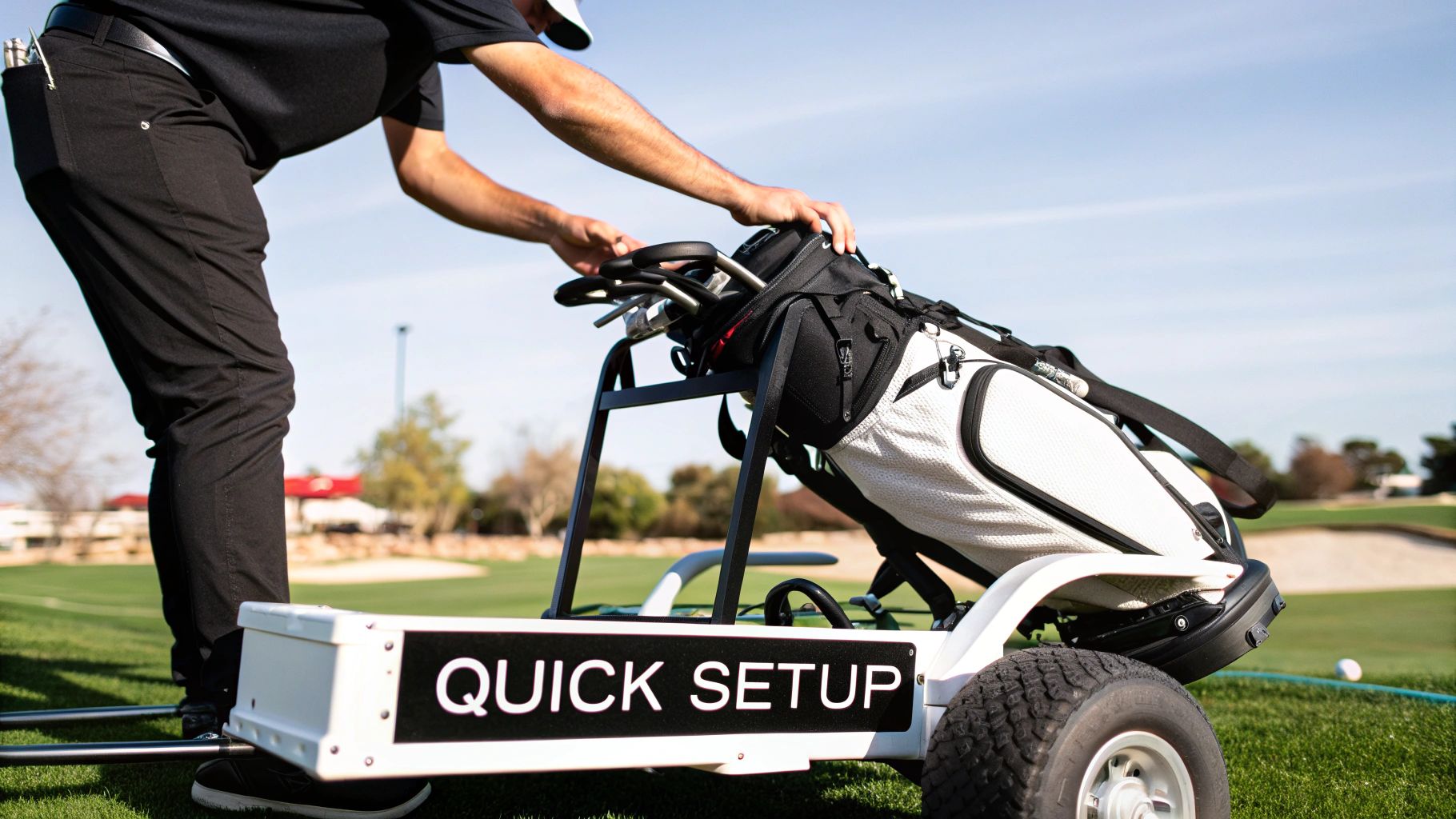
Setting up your new electric pull cart the right way can make all the difference between a smooth round and a round of surprises. A quick pre-round check is like tuning your clubs—you’ll save time and frustration down the line.
Begin by mounting your golf bag. The bracket included should click snugly into the cart’s frame, much like securing luggage on a bike rack.
Mounting Your Golf Bag
- Ensure the bracket grips firmly: tug gently away from the frame to confirm a solid lock.
- Use adjustable straps to eliminate any wobble—no one wants their clubs dancing as you roll.
- Angle the bag so your favorite clubs are easy to grab without tipping the cart off balance.
Next, fine-tune the wheel alignment so the cart tracks straight on level ground. This step prevents battery drain caused by constant course corrections.
Place the cart on a mild incline to calibrate slope compensation. Adjust the torque settings uphill, then test downhill—think of it as tuning a guitar string for perfect tension.
Walk away with your remote in hand and check responsiveness at various distances. A quick trial run ensures you won’t discover fit issues at the first tee.
Testing And Accessories
Personalize your cart with handy add-ons like cup holders, scorecard trays, and phone mounts. Each accessory secures with clamp mounts designed for both three- and four-wheel frames.
- Cup Holders: Keep beverages upright for spill-free rounds.
- Scorecard Trays: Snap your card into view for instant reference.
- Phone Mounts: Secure your device for GPS, swing analysis, or hands-free calls.
Avoid over-tight straps or loose fittings that could damage bag material or jam the folding mechanism. Perform a full fold-and-unfold sequence to check clearance before loading into your vehicle.
Take your cart for a quick spin on flat and sloped terrain. This final shakedown reveals any loose mounts or misalignments before you tee off.
Quick Tips Before You Play
- Always lock the battery latch firmly to avoid power interruptions.
- Check tire pressure for a smoother roll and consistent traction.
- Store the remote in its holder so it’s always at hand.
“A proper setup cuts postural strain by 30% on hilly courses,” says gear expert Jim Frank.
Compatibility checks with standard push carts are hassle-free—no drilling or welding required. The Caddie Wheel design fits most frames right out of the box.
Once everything clicks into place, you’re set for faster setup, fewer headaches, and more time perfecting your swing.
Don’t forget to check firmware updates for smoother operation.
Maintenance And Troubleshooting Common Issues
Keeping your electric pull cart in shape means fewer surprises and more time focused on your swing.
A quick clean after a dusty or muddy round goes a long way. Grab a soft brush to loosen grit, then wipe the frame and wheels with a damp cloth.
- Tire Inspections Spot uneven wear, cuts, or bulges early.
- Pressure Checks Inflate to the manufacturer’s recommendation for consistent traction.
- Lubrication Every 5 rounds, apply golf-grade grease to pivot points for silky-smooth turns.
Finish with a dry rag before stowing it to prevent rust and sticky joints.
Next, let’s dive into the battery—the lifeblood of your cart.
Battery Care And Storage
Recharge the battery right after your round instead of letting it drain completely. This simple habit preserves capacity over time.
Store the pack in a cool, dry spot; extreme temperatures can sap its performance.
Always lock the battery latches and remove the unit for long-term storage to avoid corrosion risks.
Learn more in our article A Guide to Golf Cart Battery Maintenance
A quick voltage check—using the built-in meter or a handheld multimeter—lets you catch a weak cell before it leaves you stranded.
Safety Check: Inspect wiring and connections before teeing off to prevent unexpected shutdowns.
Troubleshooting Common Issues
Signal dropouts usually mean the remote battery is low or the line of sight is blocked by metal objects.
DIY Tip: Swap in fresh batteries and re-pair in an open area free of interference.
If your cart refuses to charge, examine the charger cable and power brick for wear or loose connections.
- Motor Hesitation Sluggish starts under load often point to worn brushes or low voltage.
- Tight Connections Give each terminal a firm twist and test on a level surface to see if torque improves.
When you notice strange noises, excessive heat, or unresponsive controls, reach out to Caddie Wheel support. Our team can guide you through warranty claims and advanced diagnostics.
If home repairs fall short, our customer service is ready to help with next-level troubleshooting and warranty assistance.
A quick function check before every round keeps hiccups off the scorecard.
Always pack:
- A spare remote battery for uninterrupted play.
- Isopropyl alcohol to clean electrical contacts.
- Firmware updates checked quarterly to ensure peak performance.
Common Questions About Electric Pull Carts Golf
Ever found yourself staring at your electric pull cart, wondering how it really stacks up? You’re not alone.
These answers break down the essentials so you can focus on your swing, not the tech.
We’ve distilled complex questions into actionable tips you can refer to before you tee off.
Battery Runtime In Real Conditions
-
What Sets Electric Pull Carts Golf Apart From Ride-On Carts: Think of electric pull carts as the nimble sprinters of the golf world. They’re lighter on your wallet, fit in most car trunks, and give you that extra step workout. Ride-on models, by contrast, offer a backseat ride—literally—but at a higher cost and limited course access.
-
How Many Holes Can I Expect Per Charge: On a typical course, a modern lithium-ion trolley will carry you through 18–36 holes on a single charge. Steeper hills might shave off about 20% of that range, while a flat layout could push you toward the top end.
Retrofit And Maintenance
-
Can I Add A Motor Kit To My Existing Push Cart: Imagine clipping an engine onto your old bike—similar principle here. Several motor kits drop right onto standard push trolleys, though you’ll need to confirm frame and wheel compatibility. Always double-check your cart’s design specs before you buy.
-
What Maintenance Habits Extend Battery Life: Treat your battery like a household pet. Keep it in a temperate spot, plug in before it hits zero, follow the charging routine, and wipe the terminals now and then. These simple steps can stretch its lifespan significantly.
Pro Tip Maintaining your battery at moderate temperature can preserve up to 90% of its original capacity after 200 cycles.
Armed with these FAQs, you’ll breeze through any surprise cart hiccups on the course. Keep this guide in your pocket—or on your scorecard—and enjoy a more reliable round every time.
Ready to take the stress off your next walk? Check out Caddie Wheel for an easy drop-on electric boost that turns most push carts into hands-free companions.
Share:
The Ultimate Guide to an Electric Golf Push Cart That Follows You
The Essential Guide to Three Wheel Carts for Golf