
Trying to pin down the price of an electric golf cart can feel a bit like aiming at a moving target. You’ll see some listed for the price of a small car, while others seem almost surprisingly affordable. That huge price gap is there for a reason, and it all comes down to what you're actually getting for your money.
A new electric golf cart will typically run you anywhere from $5,000 to $15,000, while a used model can range from $2,000 to $10,000. This wide spectrum reflects major differences in brand, features, and overall condition, with basic models sitting at the low end and fully loaded, street-legal carts at the very top.
Your Guide to Electric Golf Cart Prices
Think of it like buying a car. A basic, no-frills sedan is going to have a much lower sticker price than a decked-out SUV with all the bells and whistles. Electric golf carts work the same way. The price you see is just the starting point, shaped by everything from the brand's reputation to the technology humming beneath the seat.
To give you a clearer picture, let's break down what you can expect to pay. Below is a quick look at the typical price ranges for new and used electric golf carts, from simple two-seaters to feature-packed models.
Typical Electric Golf Cart Price Ranges
This table offers a snapshot of the market, helping you line up your budget with the type of cart that fits your needs.
| Cart Type | Condition | Typical Price Range (USD) |
|---|---|---|
| Basic 2-Seater | Used | $2,000 – $4,500 |
| Basic 2-Seater | New | $5,000 – $8,000 |
| 4-Seater (Standard) | Used | $4,500 – $7,500 |
| 4-Seater (Standard) | New | $8,000 – $12,000 |
| 6-Seater or Luxury | Used | $7,000 – $10,000+ |
| 6-Seater or Luxury | New | $12,000 – $15,000+ |
| Street-Legal (LSV) | New | $10,000 – $20,000+ |
As you can tell, the jump from a used, basic cart to a brand new, street-legal Low-Speed Vehicle (LSV) is pretty significant. That's because LSVs are required to have federally mandated safety gear like headlights, seatbelts, and turn signals, which drives up the manufacturing cost.
The single biggest financial decision you'll make is choosing between new and used. A new cart offers a warranty and modern technology, while a used cart provides substantial upfront savings but may come with questions about its battery health and maintenance history.
Ultimately, the "right" price for an electric golf cart depends entirely on what you're looking for. Do you just need simple, reliable transportation around your community? Or are you after a high-performance vehicle with all the modern conveniences? Understanding these price brackets is the first step toward making a smart choice.
Understanding the Factors That Drive Cart Prices
Ever wonder why you see a brand-new electric golf cart listed for $7,000 right next to a decked-out model priced at $15,000? What possibly makes one worth double the price of the other? The answer is hidden under the seat, inside the frame, and in all the little details that separate a basic utility vehicle from a high-performance machine.
Knowing what drives that sticker price helps you decode what you’re actually paying for. You can figure out which features are essential for you and which are just expensive extras you can live without. This is more important than ever, considering electric carts commanded a massive 85.5% share of the market in 2023. With the total market expected to grow from USD 2.00 billion in 2024 to USD 3.29 billion by 2032, understanding the nuts and bolts of pricing is key. You can dig deeper into these trends over at Fortune Business Insights.
The diagram below gives you a quick visual on how prices scale up, from used, budget-friendly carts to brand-new luxury models.
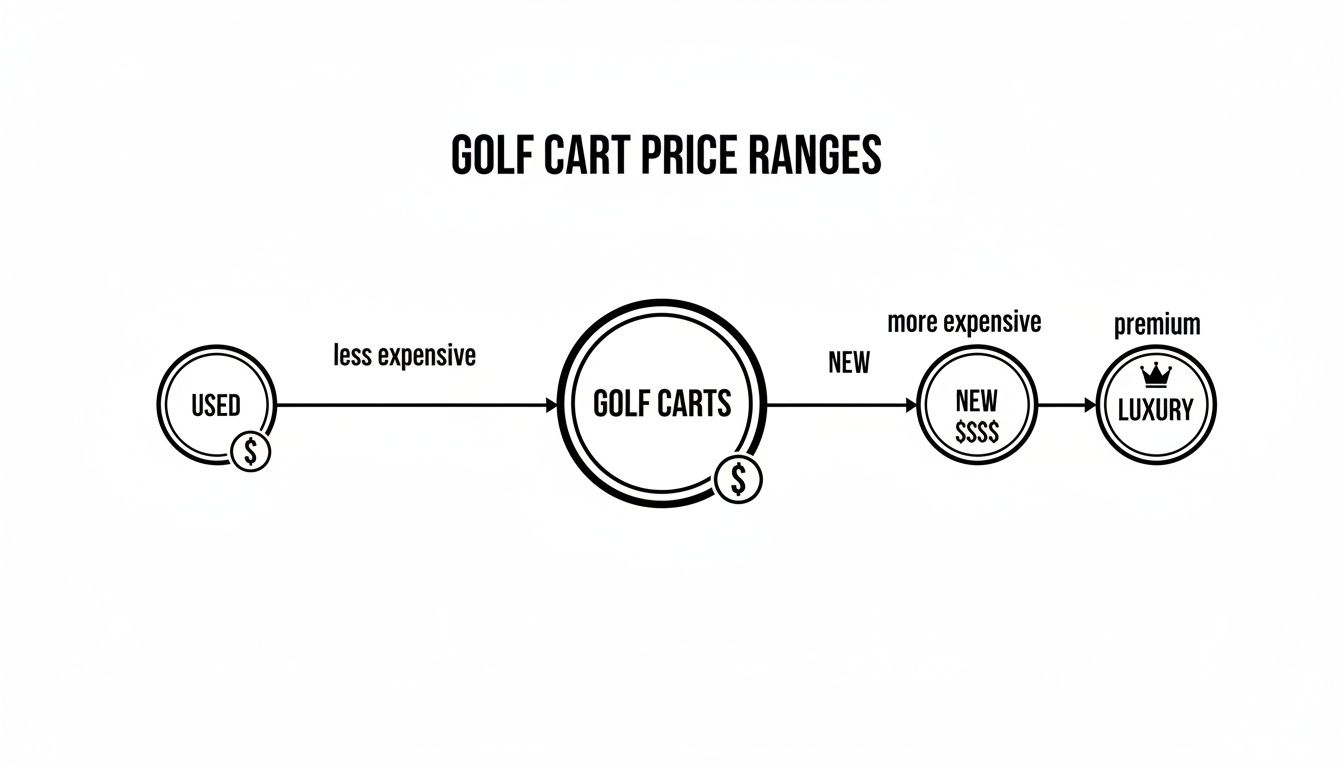
As you can see, a cart's journey—whether it’s a pre-owned workhorse or a fresh-off-the-lot luxury ride—creates clear pricing tiers in the market.
The Heart of the Cart: Battery Technology
The single biggest factor driving the cost of an electric golf cart is its battery system. Think of it as the engine and the fuel tank all rolled into one. The tech powering your cart has a huge impact on its price, performance, and how much work you'll have to put into it down the road.
You'll run into two main types:
- Lead-Acid Batteries: This is the old-school, traditional option. They’re heavy, need regular maintenance (like topping off water levels), and have a shorter lifespan, usually around 4-6 years. The big plus? A much lower upfront cost.
- Lithium-Ion Batteries: This is the same modern tech that powers your smartphone and electric cars. They're way lighter, require zero maintenance, charge faster, and last much longer—often 8-10 years or more. But all that superior performance comes with a higher price tag, adding thousands to the final cost.
A cart with lithium-ion batteries will almost always be more expensive than an identical model with lead-acid. It’s a classic trade-off: pay less now for more upkeep later, or invest more upfront for years of convenience and better performance.
Motor and Controller: The Powertrain
If the battery is the heart, then the motor and controller are the muscles and the brain. The motor dictates the cart's power and torque—its oomph for climbing hills and getting up to speed. The controller manages that power, regulating speed and efficiency.
A standard cart built for flat golf courses might have a basic DC (Direct Current) motor that gets the job done. But higher-end models, especially those meant for hilly neighborhoods or street-legal use, will feature more powerful AC (Alternating Current) motors. AC motors are more efficient, provide better regenerative braking (which puts a little juice back into the battery when you slow down), and are far superior at climbing hills.
A cart with a high-performance AC motor and an advanced controller can easily cost $1,000 to $2,000 more than a base model with a standard DC setup. This upgrade is a must-have for anyone living in a hilly area or who wants a quicker, more responsive ride.
Chassis Construction: Frame Material Matters
The cart's frame, or chassis, is its skeleton. The material it's made from determines its durability, weight, and ability to fend off rust and corrosion. This is a huge deal, especially if you live near the coast or in a wet climate.
- Steel Frames: Strong and less expensive, steel is common in budget-friendly and standard carts. The downside is that it’s heavy and will rust over time if it’s not properly cared for.
- Aluminum Frames: Aluminum is lighter, naturally rust-proof, and offers fantastic long-term durability. Premium brands like Club Car are famous for their aluminum frames. This superior material costs more to manufacture, which bumps up the final price.
While a steel frame is perfectly fine for many people, an aluminum frame is a smart investment for longevity and will definitely help with resale value. It's one of those invisible upgrades that adds significant, lasting value.
Factory Features and Customization
This is where the price can really start to balloon. Just like with a car, all the optional bells and whistles add up fast. A bare-bones utility cart has a much lower starting point than one loaded with creature comforts.
Here are some common factory-installed options that pack on the dollars:
- Premium Seats: Upgraded, contoured seats with nicer upholstery.
- Lift Kits and Custom Wheels: Bigger, off-road tires and lift kits give it an aggressive look and better ground clearance.
- Sound Systems: Integrated Bluetooth speakers and audio dashboards.
- LED Light Kits: Headlights, taillights, and turn signals for street-legal use or just better visibility.
- Enclosures: Full enclosures to keep you protected from rain and cold weather.
A cart with these features installed at the factory will always cost a lot more than a base model you decide to upgrade yourself over time.
Brand Reputation and Warranty
Finally, the name on the front of the cart matters. Established brands like E-Z-GO, Club Car, and Yamaha have spent decades building a reputation for quality, reliability, and having parts readily available. That brand trust lets them command higher prices.
A new cart from a top-tier brand also comes with a solid manufacturer's warranty, which typically covers the vehicle for two to four years and the battery for even longer. That peace of mind is a valuable part of the deal, protecting you from surprise repair bills and adding to the cart’s overall value. Cheaper, lesser-known brands might have a tempting price tag, but they often come with shorter warranties and questionable long-term support.
The Hidden Costs of Owning an Electric Golf Cart
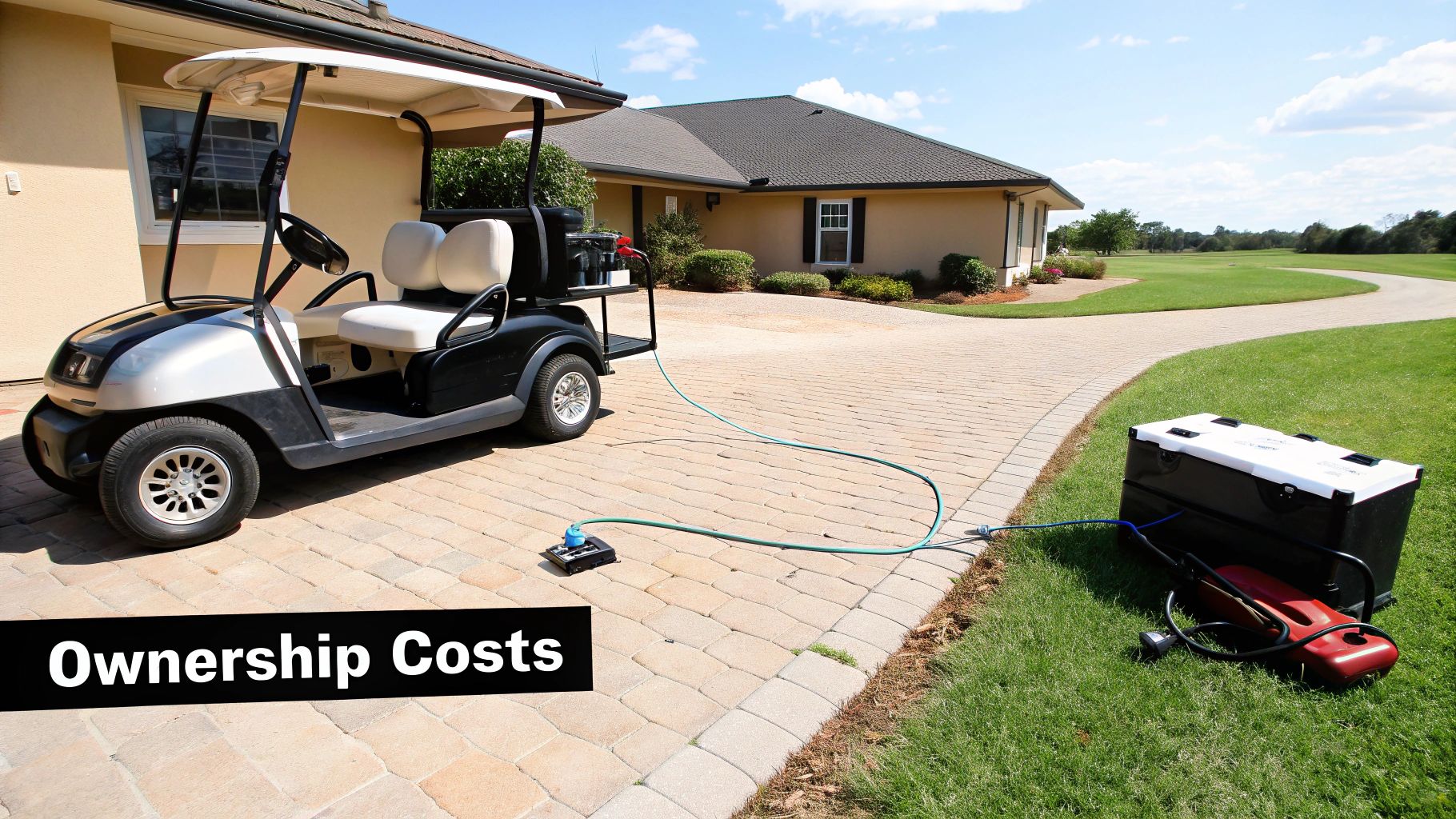
That shiny new electric golf cart's sticker price is really just the first page of its financial story. It’s easy to focus on that initial number, but the true cost of ownership is something that plays out over years of use. Think of it less like buying an appliance and more like getting a new car—there are ongoing expenses you’ll need to budget for.
Understanding these long-term running costs is the key to avoiding any nasty surprises down the road. The day-to-day expenses for an electric cart are totally different from its gas-powered cousins. You're swapping trips to the pump for a bump in your electricity bill and trading engine tune-ups for battery maintenance. If you plan for these "hidden" costs from the start, your cart will remain a source of fun, not financial stress.
Breaking Down the Ongoing Expenses
The total price you'll pay for an electric golf cart goes way beyond what you hand the dealer. Several key expenses pop up over its lifespan that really contribute to the total cost of ownership.
Here’s a realistic look at what you need to budget for:
- Electricity for Charging: This is your new "fuel" cost. While it's a whole lot cheaper than gasoline, charging your cart will add a little extra to your monthly utility bill. The exact amount will depend on your local electricity rates and how much you drive, but most owners find themselves spending $10 to $25 per month.
- Routine Maintenance: Electric carts have fewer moving parts than gas models, which is great, but they aren't maintenance-free. Regular checks are vital for keeping it safe and running for years. This means checking tire pressure and tread, looking at the brake pads, and making sure all the electrical connections are tight and clean.
- Occasional Repairs: Parts wear out. It's just a fact of life. You might need to replace a solenoid, a controller, or other electrical components over time. It’s smart to set aside a small fund for unexpected repairs so a minor issue doesn't turn into a major headache. Don't forget to also account for the cost of essential charging cables to power up your cart.
The Elephant in the Room: Battery Replacement
By far, the single largest long-term expense you will face is replacing the batteries. This isn’t an if, it’s a when, and it's a pretty significant financial event in the life of your cart.
The cost and how often you'll face it comes down to your battery type:
- Lead-Acid Batteries: These are the traditional, more budget-friendly option upfront. They do require regular maintenance (like checking water levels) and typically last 4-6 years. A full replacement set can run you anywhere from $800 to $1,500.
- Lithium-Ion Batteries: These will add a few thousand dollars to the initial purchase price, but they last much, much longer—often 8-10 years or even more. A replacement is more expensive, potentially $2,000 to $4,000, but you'll be doing it far less often.
When you break down the cost over the lifespan of the batteries, the long-term expense of lithium-ion often proves to be a better value proposition despite the higher initial investment.
For a more detailed look at how these factors influence the initial purchase, you might be interested in our complete guide to the cost of electric golf carts.
Comparing Annual Costs: Electric vs. Gas
To put it all into perspective, let's stack up the estimated annual running costs of an electric cart against a traditional gas-powered one. This really highlights where you save and where you spend.
| Expense Category | Electric Golf Cart (Annual Est.) | Gas Golf Cart (Annual Est.) |
|---|---|---|
| Fuel/Energy | $120 – $300 (Electricity) | $300 – $500 (Gasoline) |
| Routine Maintenance | $100 – $200 (Tires, Brakes) | $200 – $350 (Oil, Filters, Plugs) |
| Major Replacements | Battery ($1,200 / 5 yrs = $240/yr) | Engine Tune-ups ($150/yr) |
| Total Estimated Annual Cost | $460 – $740 | $650 – $1,000 |
As you can see, the electric model generally comes out ahead with lower annual running costs. While that eventual battery replacement is a big one-time hit, the day-to-day savings on "fuel" and reduced engine maintenance make electric carts a more economical choice over the long haul for many owners. Factoring these hidden costs in gives you a much more realistic picture of your investment.
Choosing Between a New or Used Golf Cart
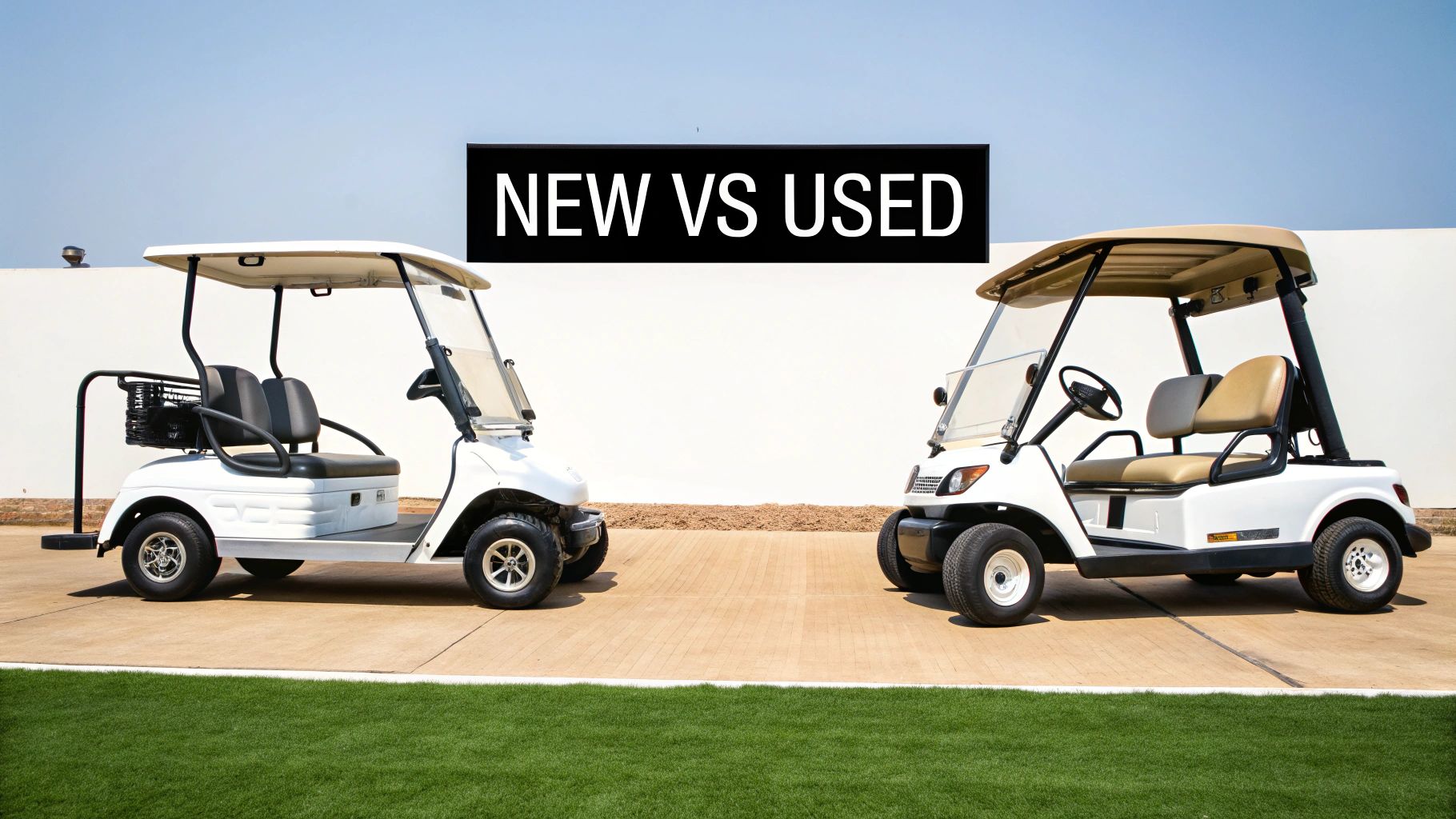
One of the first big decisions you'll face is whether to buy a pristine, factory-fresh model or a pre-owned one. It’s the classic dilemma: pay a premium for peace of mind, or save a bundle upfront and take on a little more risk? Each path has its own set of perks and potential headaches, and the right choice really comes down to your budget and priorities.
A new cart is just like a new car—it’s untouched, packed with the latest technology, and backed by a manufacturer's warranty. You get to be the first and only owner, which means no hidden history or shoddy maintenance records to worry about. This is the perfect route for anyone who values reliability and wants to build their dream ride from the ground up without thinking about immediate repairs.
On the flip side, the used market can offer huge savings, often slicing thousands off the initial cost. For budget-conscious buyers, that's a massive draw. But that lower price tag comes with some mystery about the cart’s past, especially the health of its single most expensive component: the battery.
The Case for Buying a New Golf Cart
Going new is all about confidence and customization. You're not just buying a vehicle; you’re investing in a worry-free experience right from day one.
Here’s what makes buying new so appealing:
- Full Manufacturer Warranty: This is the biggest selling point, hands down. If a major part like the motor, controller, or battery fails within the warranty period (usually 2-4 years), the repairs are covered. It’s your shield against unexpected, wallet-draining bills.
- Latest Technology: New models roll out with the most advanced features. Think more efficient AC motors, longer-lasting lithium-ion batteries, and modern comforts like USB ports and integrated sound systems.
- Complete Customization: When you order new, you call the shots. You pick the exact color, seats, wheels, and any accessories you want. You get the perfect cart built just for you, not one someone else designed.
This choice taps into a booming market. The electric golf cart industry is seeing incredible growth, with its value projected to jump from over USD 1.5 billion in 2024 to nearly USD 3.0 billion by 2033. It’s clear that the demand for new, feature-rich carts is on the rise.
The Reality of Buying a Used Golf Cart
Opting for a used cart can be an incredibly smart financial move, but it demands a bit more homework. The main attraction is the significantly lower price of an electric golf cart, which lets you get more bells and whistles for your money than you could ever afford new.
However, you need to be ready to play detective. Those savings are a trade-off for taking on the risk of the cart's unknown history. A well-maintained used cart from a trusted brand can be a fantastic deal, but a neglected one can quickly turn into a money pit.
The most critical thing to check in a used electric cart is the battery's health. A cart that looks like a bargain can become a huge expense if you suddenly have to drop $800 to $1,500 on a new set of lead-acid batteries right after you buy it.
Your Used Cart Inspection Checklist
Before you even think about handing over cash for a used cart, a thorough inspection is non-negotiable. For a complete walkthrough, check out our comprehensive guide to buying a power golf cart.
Here’s a quick checklist to get you started:
- Check the Battery Age: Most lead-acid batteries have a date code stamped right on the terminal. If they're more than 4-5 years old, they're on their last legs, and you should factor the cost of a replacement into your budget.
- Inspect the Frame for Rust: Get underneath the cart and look closely, especially around the battery compartment where acid spills can cause serious corrosion. A steel frame with significant rust is a major red flag.
- Test Drive for Performance: Take it for a spin and drive it up a hill to see how the motor handles the strain. Listen for any weird grinding noises from the motor or differential, and make sure the brakes engage smoothly and firmly.
- Examine the Tires: If the tires are worn down unevenly, it could signal an alignment problem. That might point to bigger issues with the frame or suspension.
Ultimately, the choice between new and used comes down to your personal balance of budget, risk tolerance, and how badly you want the latest and greatest features.
Finding Deals and Navigating the Purchase
Okay, you've got a solid handle on what drives the price of an electric golf cart. Now for the fun part: actually buying one. This is where a little bit of strategy can save you a serious chunk of change. From sorting out financing to sealing the deal, a smart approach is your best friend.
A lot of dealerships will offer in-house financing, which is definitely convenient. It's a one-stop-shop, after all. But it’s always a good idea to get pre-approved by your own bank or credit union first. This gives you a baseline interest rate to compare against and, more importantly, some real negotiating power.
And don't forget about insurance. While you might not legally need it for a cart that never leaves your private property, it's a smart safeguard. For any street-legal model, though, insurance is mandatory and will cover your liability if an accident happens.
Smart Strategies for Saving Money
When you're hunting for a deal, timing and negotiation are your two best friends. It’s just like buying a car—there are good times and not-so-good times to pull the trigger on a golf cart.
A little patience can translate into big savings. Try these tips:
- Shop During the Off-Season: Demand for golf carts takes a nosedive in the late fall and winter. Dealers get pretty motivated to move inventory and are often willing to offer some hefty discounts to make a sale.
- Negotiate the Price: Never be afraid to haggle. The sticker price is almost always just a starting point, especially at a dealership. Arm yourself with some research on the fair market value for the model you’re eyeing.
- Consider a Certified Refurbished Model: Many reputable dealers have certified pre-owned or refurbished carts. These have been professionally inspected, tuned up, and often come with a limited warranty, giving you a great middle ground between brand new and used.
- Start with a Basic Cart: Get a no-frills model and add your own upgrades over time. Customizing a cart yourself with cool wheels or new seats is often way cheaper than buying one that's fully loaded from the factory.
Protecting Your Investment
Once you've made the purchase, the next step is protecting your new ride. This is about more than just getting insurance; it’s about being aware of the market and making savvy choices. The global electric golf cart market is absolutely booming—it's projected to hit USD 2,029.44 million by 2034, thanks in large part to battery costs coming down.
Securing a good deal isn't just about the initial price—it's about understanding the total value. A slightly more expensive cart from a reputable dealer with a solid warranty can be a much better long-term investment than a rock-bottom deal from a private seller with no guarantees.
To really get an edge, mastering price drop alerts can be your secret weapon for snagging the best price at the perfect moment.
Of course, knowing where to look is half the battle. Our guide on the best places to buy 3-wheel electric golf carts can point you in the right direction. When you combine smart shopping tactics with a good grasp of financing and insurance, you’ll drive away feeling confident you got a great deal.
A Few Final Questions About Electric Golf Cart Prices
As you get closer to making a decision, a few specific questions usually pop up. Getting these details ironed out will help you buy with confidence, knowing exactly what to expect from your investment. Let's tackle some of the most common ones.
How Long Do Electric Golf Cart Batteries Last?
The lifespan of your cart's batteries is a huge piece of the long-term value puzzle, and it really comes down to the tech inside.
- Lead-Acid Batteries: Think of these as the traditional workhorses. If you keep up with the maintenance, like topping off the water levels, you can expect a set of lead-acid batteries to last a solid 4-6 years.
- Lithium-Ion Batteries: This is the more modern, "set it and forget it" option. Lithium-ion batteries need pretty much zero maintenance and last significantly longer, often pushing 8-10 years or even more before they need to be replaced.
Is It Cheaper to Build My Own Electric Golf Cart?
Going the DIY route can definitely look like a money-saver on the surface. While hunting down used parts for a custom build might mean less cash out of pocket upfront, it's a path that’s often full of hidden costs and technical headaches you didn't see coming.
A factory-built cart, on the other hand, comes with professionally engineered reliability, tested safety features, and the peace of mind of a warranty. For most people, that built-in assurance makes a professionally assembled cart a much better and safer value in the long run.
Are Street-Legal Golf Carts More Expensive?
Yep, they sure are. Street-legal models, which are officially called Low-Speed Vehicles (LSVs), always carry a higher price tag. The price jump comes from all the mandatory safety equipment they need to legally operate on public roads.
This isn't just a few minor tweaks. We're talking about headlights, taillights, turn signals, mirrors, seatbelts, and an automotive-grade windshield. The cost of adding and integrating all those components adds up, tacking on several thousand dollars to the final price.
This is also why top brands like E-Z-GO, Club Car, and Yamaha hold their value so well. They're known for durable construction, which makes even their used models a hot commodity for buyers looking for a great deal.
If a full-sized cart still feels like too much of an investment or just more than you need, Caddie Wheel is a clever alternative. It clips onto your existing push cart and transforms it into a powerful electric caddy, giving you that motorized boost without the high price tag of a traditional golf cart. Learn more about how Caddie Wheel works and get back to walking the course with ease.
Share:
The Essential Guide to Three Wheel Carts for Golf
How to Make Your Electric Golf Cart Fast A Pro's Guide