
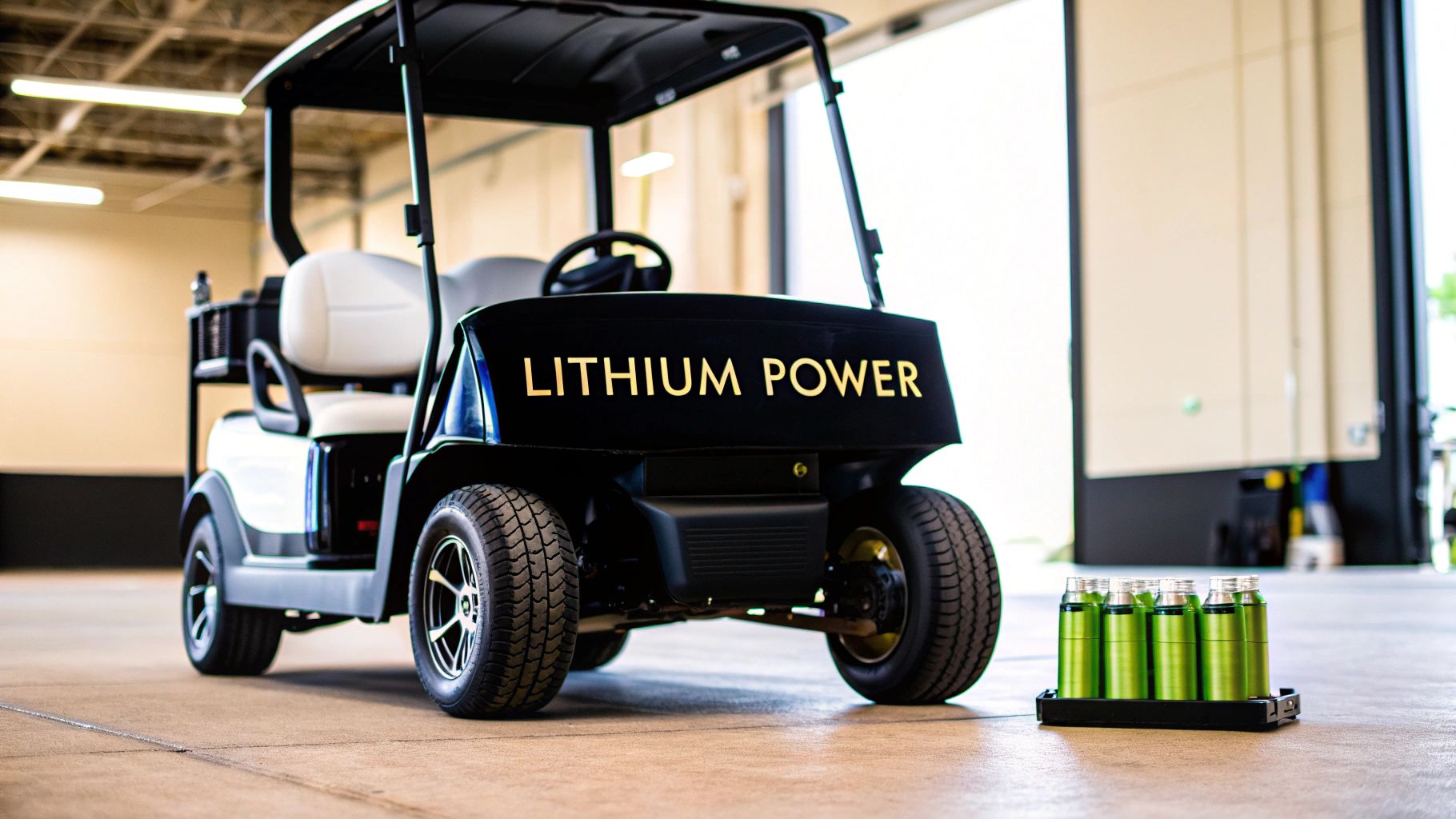
When you're looking for the best lithium batteries for your golf cart, the choice is pretty clear. The top options deliver more power, last way longer, and require zero maintenance compared to the old-school lead-acid batteries you're used to. Making the switch gives you a serious upgrade with faster charging and less weight, making your cart feel quicker and more powerful from the first ride. This guide will cover everything you need to know.
Why Lithium Is The New Standard For Golf Carts

Upgrading your golf cart from a traditional lead-acid battery to a modern lithium powerhouse is one of the biggest improvements you can make. Think of it like swapping an old, clunky, gas-guzzling engine for a sleek, efficient electric motor. The difference isn’t just noticeable—it completely changes how your cart feels and performs.
This isn't just about convenience. It’s a smart investment in performance, reliability, and long-term savings. With a lithium battery, you can forget about constantly checking water levels and cleaning up corrosive acid residue. Instead, you get a clean, hands-off power source that’s ready to go whenever you are.
Lithium vs Lead-Acid At A Glance
To put it simply, switching to lithium is a game-changer. Here’s a quick breakdown of why so many cart owners are making the move and leaving lead-acid behind.
| Feature | Lithium Battery (LiFePO4) | Lead-Acid Battery |
|---|---|---|
| Lifespan | 3,000-5,000 cycles (10+ years) | 500-1,000 cycles (2-5 years) |
| Maintenance | None | Regular watering & cleaning |
| Charge Time | 2-4 hours | 8-10 hours |
| Weight | 70% lighter | Heavy and bulky |
| Performance | Consistent power until empty | Fades and slows as it drains |
| Efficiency | ~95% efficient | ~80% efficient |
The numbers don't lie. Lithium offers a superior experience across the board, from how long it lasts to how it performs on the course.
The Real-World Benefits Of A Lithium Upgrade
The advantages of making the switch are obvious from day one. Your cart will accelerate faster, climb hills without losing steam, and go farther on a single charge. This is because lithium batteries maintain a steady voltage output, which means your cart performs just as well with 20% charge as it does at 100%. Old lead-acid batteries, on the other hand, get sluggish and weak as they drain.
This performance leap is fueling huge growth in the industry. The market for lithium golf cart batteries is expected to jump from USD 793.8 million in 2025 to over USD 2,500 million by 2035. This trend is driven by the fact that lithium lasts up to five times longer than lead-acid, which can cut your overall replacement costs by as much as 60% over the battery's life. You can find more details about the lithium golf cart battery market on wiseguyreports.com.
The real value of a lithium upgrade is simple: You get a smarter, more powerful, and longer-lasting energy source that saves you time and money. It’s an investment that pays for itself in both performance and peace of mind.
A Smarter Choice For Modern Cart Owners
Ultimately, choosing lithium is about adopting better technology that makes your life easier. The key benefits are impossible to ignore:
- Longer Lifespan: Expect 3,000 to 5,000 charge cycles, a huge jump from the 500-1,000 you get with lead-acid.
- Zero Maintenance: Say goodbye to watering batteries and scrubbing terminals forever.
- Faster Charging: Get a full charge in just 2-4 hours instead of waiting the typical 8-10 hours.
- Lighter Weight: Lithium batteries are up to 70% lighter, improving your cart’s handling and efficiency.
- Consistent Power: No more sluggish performance as the battery level drops.
This guide will dive deeper into these advantages, helping you understand the tech and choose the perfect battery for your cart.
How Lithium Batteries Deliver Superior Performance
When you swap out a heavy set of lead-acid batteries for a modern lithium one, the difference is immediate. It’s not just an upgrade; it feels like you’ve put a whole new engine in your cart.
Imagine trying to run a race with a heavy, sloshing bucket of water. It’s clunky, slows you down, and the stream weakens as it gets emptier. That’s your golf cart on lead-acid—it gets sluggish and loses its punch as the battery drains.
Now, picture running that same race with a lightweight, high-pressure canister. It delivers a powerful, consistent stream from start to finish. That’s the lithium experience. This isn’t magic; it’s just better chemistry and engineering that changes what you can expect from your cart.
The Power Of Higher Energy Density
One of the biggest wins for lithium is its higher energy density. In simple terms, this means it packs more power into a much smaller and lighter package. A typical lithium battery is 50-70% lighter than a lead-acid battery with the same power rating.
That massive weight reduction has a huge impact on your cart's performance. With less weight to haul around, your cart accelerates faster, feels more nimble on the turns, and puts way less strain on the motor and suspension. You’ll really feel the difference when climbing hills, where a lithium-powered cart just keeps going without the struggle you’re used to.
Consistent Voltage For Unwavering Power
Ever notice how your cart feels zippy with a full charge but gets frustratingly slow as the battery meter drops? That’s called voltage sag, and it’s a classic problem with lead-acid batteries. As they discharge, their voltage drops, which means less power goes to your motor.
Lithium batteries solve this completely with what’s called a flat discharge curve. They hold a steady voltage for almost their entire cycle.
This means your cart has the same punchy acceleration and hill-climbing power at 20% charge as it does at 90%. You get consistent, reliable performance for your entire round, every single time.
This reliability is a game-changer, and it’s why golf courses and commercial fleets are making the switch in droves. In fact, fleet trials show that converting to lithium can lead to 99% uptime and energy savings of around 30%, solidifying its reputation as the superior technology. You can get a deeper dive into these performance gains and the future of the lithium market at golf-energy.com.
A Smarter Long-Term Investment
Okay, let's talk about the price. Yes, a lithium battery costs more upfront, but its long-term value is where it really shines. The secret is in its lifespan, which we measure in charge cycles (one full drain and recharge).
Here’s a quick breakdown:
- Lead-Acid Batteries: These typically give you 500-1,000 cycles. Depending on how much you use and care for them, that’s about 2-5 years of service.
- Lithium Batteries (LiFePO4): These are built to last, offering a massive 3,000-5,000 cycles. That translates to a reliable service life of 8-10 years or even more.
Think about that for a second. You might have to replace your lead-acid batteries three or even four times in the same period you'd own a single lithium battery.
When you add in the fact that they are completely maintenance-free—no more topping off with distilled water or cleaning up corrosive acid—the total cost of ownership swings heavily in favor of lithium. For any cart owner who wants peak performance without the constant hassle, it’s simply a smarter, more cost-effective choice.
Understanding Key Battery Specifications
Choosing the best lithium batteries for your golf cart can feel like trying to read a foreign language. With terms like Volts, Amp Hours, and BMS flying around, it's easy to get lost in the technical jargon. But getting a handle on these specs is the key to finding the right power source for your specific needs. Let's break them down into simple, practical terms.
Think of your battery like the engine and fuel system of a car. Each specification plays a distinct role in how your cart performs on the course and around the neighborhood. Nailing these details ensures you get the power, range, and safety you expect from a modern upgrade.
This concept map shows how these key factors—lighter weight, longer life, and more power—all work together to create a better battery.
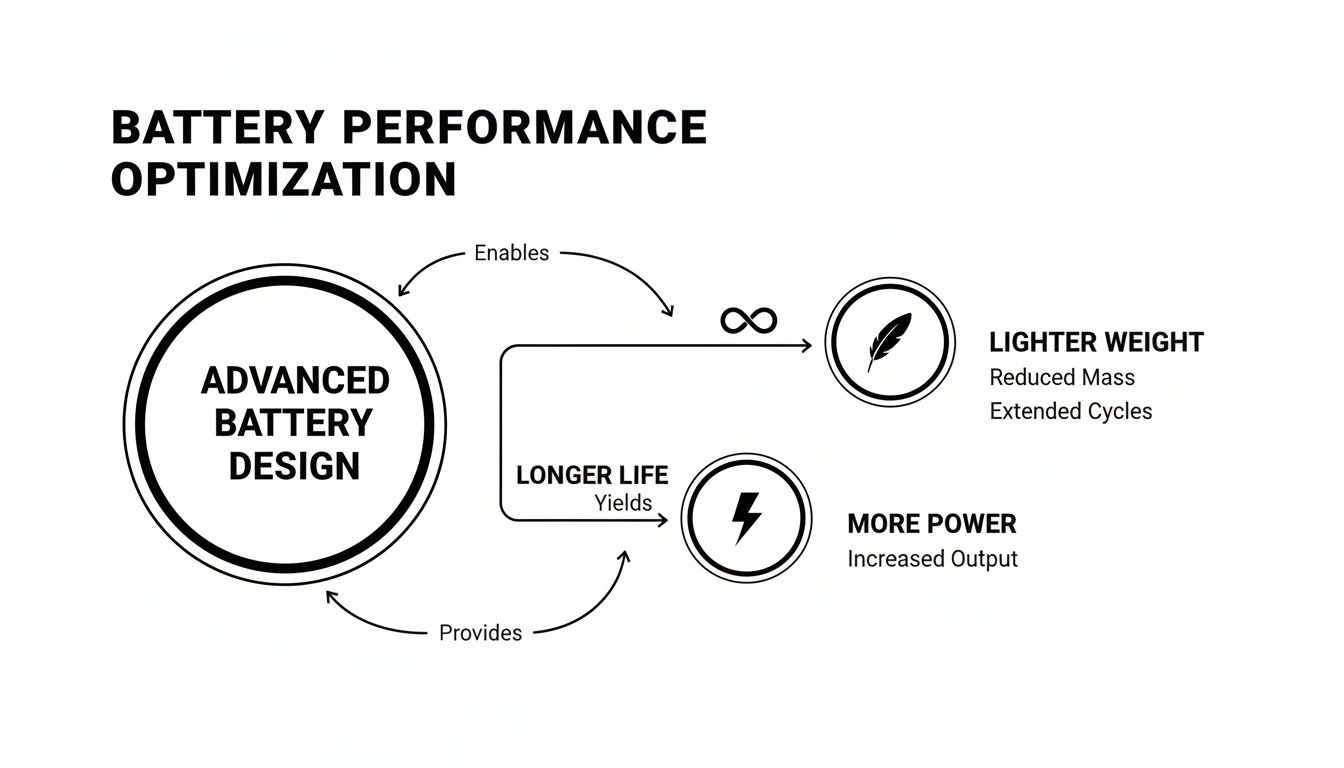
As you can see, the advanced design of lithium batteries directly translates into real-world benefits for your golf cart.
Voltage: The Power of Your Engine
Voltage (V) is the first and most critical spec to get right. Think of it as the raw horsepower of your golf cart's engine. A higher voltage means more electrical "muscle" to turn the motor, giving you better acceleration and hill-climbing ability. Most golf carts run on one of three standard systems:
- 36V Systems: Commonly found in older or smaller golf carts.
- 48V Systems: The most common standard for modern golf carts, offering a great balance of power and efficiency.
- 72V Systems: Reserved for high-performance, customized carts that demand maximum speed and torque.
You absolutely must match your new lithium battery's voltage to your cart's existing system. Dropping a 48V battery into a cart designed for 36V is a recipe for a fried motor and controller. Always check your current battery setup or your owner's manual to confirm the correct voltage before you buy.
Amp Hours: The Size of Your Fuel Tank
If voltage is your engine's power, then Amp Hours (Ah) is the size of your fuel tank. This number tells you how much energy the battery can store. A higher Ah rating means a larger "tank," which gives you a longer driving range on a single charge.
For example, a 100Ah battery can deliver 100 amps of current for one hour. The right Ah rating depends entirely on how you use your cart.
- Casual Use (60-75 Ah): Perfect for a quick 18 holes or short trips around the community.
- All-Day Use (100-120 Ah): Ideal for golfers who play 36 holes or use their cart extensively throughout the day.
- Heavy-Duty Use (150+ Ah): Best for commercial applications, large properties, or carts loaded with power-hungry accessories.
While a bigger fuel tank is always nice, it also comes at a higher cost. The trick is to pick an Ah rating that comfortably covers your daily use without paying for extra capacity you'll never need. If you want to dig deeper, our guide on how to test battery capacity has some great insights into measuring real-world performance.
Discharge Rate: Power on Demand
The Discharge Rate, or C-Rate, tells you how quickly the battery can deliver its energy. A battery might have a massive fuel tank (high Ah), but if it can't deliver that fuel quickly enough, your cart will feel sluggish, especially under load. This is a huge deal for carts with upgraded motors or those that frequently tackle steep hills.
A high continuous discharge rating ensures your cart gets a strong, steady supply of power when it needs it most, preventing lag and ensuring a responsive ride. Peak discharge rates allow for short bursts of intense power, perfect for quick acceleration.
The Battery Management System: The Onboard Computer
Finally, every quality lithium battery has a Battery Management System (BMS). This is the battery's onboard computer, or "brain." Its sole job is to monitor and protect the battery cells to guarantee safety, performance, and a long lifespan.
The BMS is a non-negotiable safety feature that prevents common problems like:
- Overcharging: Which can damage cells and shorten battery life.
- Over-discharging: Stopping the battery from draining dangerously low.
- Overheating: Shutting things down if temperatures get too high.
- Short Circuits: Protecting against dangerous electrical faults.
A sophisticated BMS is what makes the best lithium batteries so reliable. It intelligently balances the charge across all the cells, maximizing efficiency and making sure you get every bit of power you paid for, safely.
Your Essential Golf Cart Compatibility Check
So you’re ready to upgrade to a lithium battery—fantastic choice! But hold on a second. It's not quite as simple as just dropping in a new power source and hitting the links. Think of it like a heart transplant for your cart. For everything to work right, the new heart has to be a perfect match for the body.
Running a quick compatibility check beforehand saves you from major headaches down the road, like performance bottlenecks, fried electronics, or the frustrating discovery that your shiny new battery doesn’t even fit. Let’s walk through the essential checks so you can buy with confidence and know your investment will work flawlessly from day one.
Step 1: Confirm Your Cart’s Identity
First things first, you need to know exactly what you're working with. Just like cars, every golf cart has a specific make, model, and year, and those details dictate which batteries are a match.
Start by figuring out who made your cart. The big three are Club Car, E-Z-GO, and Yamaha, but there are plenty of others out there. Find the serial number—it’s usually on a sticker or plate inside the glove box, under the seat, or on the frame near the floor. That number is your golden ticket to confirming the model and year. Once you have that, you can lock down the single most important electrical spec.
Step 2: Match The System Voltage
Your cart’s entire electrical system—the motor, the controller, all of it—is designed to run at one specific voltage. Hooking up a battery with the wrong voltage is the fastest way to cause catastrophic, expensive damage. You absolutely must match your new lithium battery to your cart's native system voltage.
There are three standard voltages you’ll see in golf carts:
- 36 Volts (36V): Common in older, vintage carts.
- 48 Volts (48V): The go-to standard for most modern golf carts.
- 72 Volts (72V): Usually found in high-performance or heavily customized carts.
The easiest way to find your cart’s voltage is to look at your old lead-acid batteries. Just count how many batteries you have and multiply that by the voltage of each one (they’re usually 6V, 8V, or 12V). For instance, if you see six 8-volt batteries, you’ve got a 48V system. Your new lithium battery has to be a 48V model. No exceptions.
Step 3: Measure The Battery Compartment
A single lithium battery is a whole lot smaller and lighter than a pack of chunky lead-acid ones, but it still needs to fit snugly in the battery tray. Don’t just eyeball it and assume you’re good to go.
Grab a tape measure and get the exact dimensions of your battery compartment: length, width, and height. Jot them down and compare them to the specs of the lithium battery you’re looking at. Every reputable brand lists the exact dimensions of their products. This simple step can save you from the nightmare of discovering your new battery is a few inches too big. A proper fit keeps the battery stable so it won’t slide around while you drive, which is crucial for safety and long-term health.
Pro Tip: Many lithium battery kits come with mounting brackets or spacers. These are a huge help for securing a smaller lithium unit inside a big, empty battery tray, giving you that snug, safe installation you need.
Step 4: Plan For Your Electronics
Finally, think beyond the battery itself. An upgrade to lithium means making sure the entire system is ready to play nice. This involves two components that are completely non-negotiable.
-
A Lithium-Specific Charger: You cannot use your old lead-acid charger. I repeat, you cannot use it. Lead-acid chargers use a totally different charging algorithm that will confuse and damage a lithium battery’s advanced Battery Management System (BMS). Using the wrong charger won’t just hurt the battery and shorten its life—it can create a serious safety hazard. Always buy the charger that was designed for your specific lithium battery.
-
A Voltage Reducer: All the accessories on your cart—headlights, taillights, horns, USB ports—are designed to run on 12V power. Your main battery pack (whether it's 36V, 48V, or 72V) pushes out way too much juice for them. A voltage reducer is a small but vital device that "steps down" that high voltage to a safe 12V, protecting your accessories from getting fried.
By taking a few minutes to run through this checklist, you’re setting yourself up for a successful and seriously rewarding upgrade. If you want a broader look at the different power options out there, our article on battery golf cart systems is a great place to start.
How To Choose The Right Lithium Battery For You
Okay, you’ve got a handle on the technical specs. That’s half the battle. But the other half? That’s all about the companies standing behind the batteries. When you're trying to find the best lithium batteries for your golf cart, the brand’s reputation, warranty, and safety standards are just as critical as the amp-hours. This is where you move beyond a simple price comparison and start looking at true, long-term value.
Making a smart purchase means looking at the whole package. A cheaper battery might save you a few bucks today, but if it comes with a weak warranty, nonexistent customer support, or unverified safety claims, it could cost you a lot more in frustration and dollars down the road. Let’s break down the factors that separate a good battery from a great one.
Assessing Warranty and Customer Support
A company’s warranty is the single best clue you have about how much they believe in their own product. A long, comprehensive warranty isn't just a marketing ploy; it's a promise that they’ve built something to last. But you have to read the details, because not all warranties are created equal.
You should be looking for a warranty that lasts at least five years, though you'll see top-tier brands offering eight to ten-year warranties, or even "limited lifetime" coverage. Dig into the fine print. Does it cover the full replacement cost, or is it prorated? A prorated warranty loses value over time, so a strong, non-prorated one offers much better protection for your investment.
Just as important is the quality of their customer support. Before you commit, do a little recon:
- Check Reviews: See what other customers are saying about their support experience. Were they helpful? Fast?
- Contact Them: Shoot them an email or call their support line with a simple question before you buy. A quick, knowledgeable response is a fantastic sign.
- Location Matters: Is their support team based in your country? Local support often means faster resolutions and no weird time-zone delays.
A great warranty backed by responsive, knowledgeable support provides a peace of mind that a low price tag simply can't match. It’s your safety net, ensuring the company will be there if you ever need them.
Prioritizing Safety Certifications
When you're dealing with this much power, safety is non-negotiable. Reputable battery makers invest a ton of money into third-party testing to prove their products are safe and reliable in all sorts of conditions. The most important certification you want to see is from Underwriters Laboratories (UL).
A UL listing means the battery has survived a series of tough tests for fire safety, electrical shock, and other potential dangers. It's an independent stamp of approval confirming the battery was built to the highest safety standards. Don't just take a company’s word for it—look for the official UL mark on the product itself or in its official documents.
Beyond UL, other certifications like CE (for European standards) and IP ratings (for water and dust resistance) also show a real commitment to quality. Choosing a certified battery isn't just about protecting your golf cart; it's about protecting yourself and your property.
Calculating The True Cost Of Ownership
The initial price of a lithium battery can feel like a shock, but it doesn't tell the whole story. To really understand the value, you need to calculate the Total Cost of Ownership (TCO). This approach often shows how a premium battery is actually the more economical choice over its lifespan.
Think of it this way: a $600 set of lead-acid batteries might last three years, which works out to $200 per year. A $1,500 lithium battery that lasts ten years costs you only $150 per year. Over that decade, you'd spend $2,000 replacing those lead-acid batteries, making the lithium option $500 cheaper in the long run. And that's not even counting the savings from zero maintenance and lower electricity bills.
This long-term view is what really matters. For a deeper dive into battery types, especially for demanding uses, this guide on the best RV battery for boondocking is a great resource. When you focus on value instead of just the sticker price, you always make a smarter financial decision.
Identifying Premium Features
Finally, the best brands often toss in features that make your life easier and boost performance. A smart Battery Management System (BMS) with Bluetooth connectivity is a game-changer, letting you monitor your battery’s health, state of charge, and other vital stats right from your phone.
Some high-end batteries also offer amazing cold-weather performance, with built-in heaters that allow for safe charging even when it's near freezing outside. These are the kinds of thoughtful additions that truly separate the best from the rest, giving you a better experience and protecting your investment for years to come.
Decision Matrix For Choosing Your Lithium Battery
To bring it all together, here’s a quick way to think about your options. Use this table to weigh what matters most to you, whether it’s saving money upfront or going all-in on performance and range.
| Consideration | Budget-Friendly Choice | Balanced Performance | Maximum Power & Range |
|---|---|---|---|
| Primary Goal | Get into lithium without a huge initial investment. | A solid, all-around upgrade with good features. | The best performance, range, and longevity available. |
| Typical Warranty | 5-8 years | 8-10 years | 10+ years or Limited Lifetime |
| Key Features | Standard BMS, reliable but basic performance. | Bluetooth monitoring, good cycle life, brand reputation. | High C-rates, cold-weather tech, advanced BMS. |
| Best For | Casual golfers, flat courses, shorter trips. | Regular players, varied terrain, a desire for data. | Avid golfers, hilly courses, heavy-duty use. |
Ultimately, the right battery is the one that fits your budget, your playing style, and your peace of mind. By looking at the complete picture—from warranty and safety to the true cost of ownership—you can make a choice you’ll be happy with for the next decade.
Installation And Long-Term Care For Your Battery
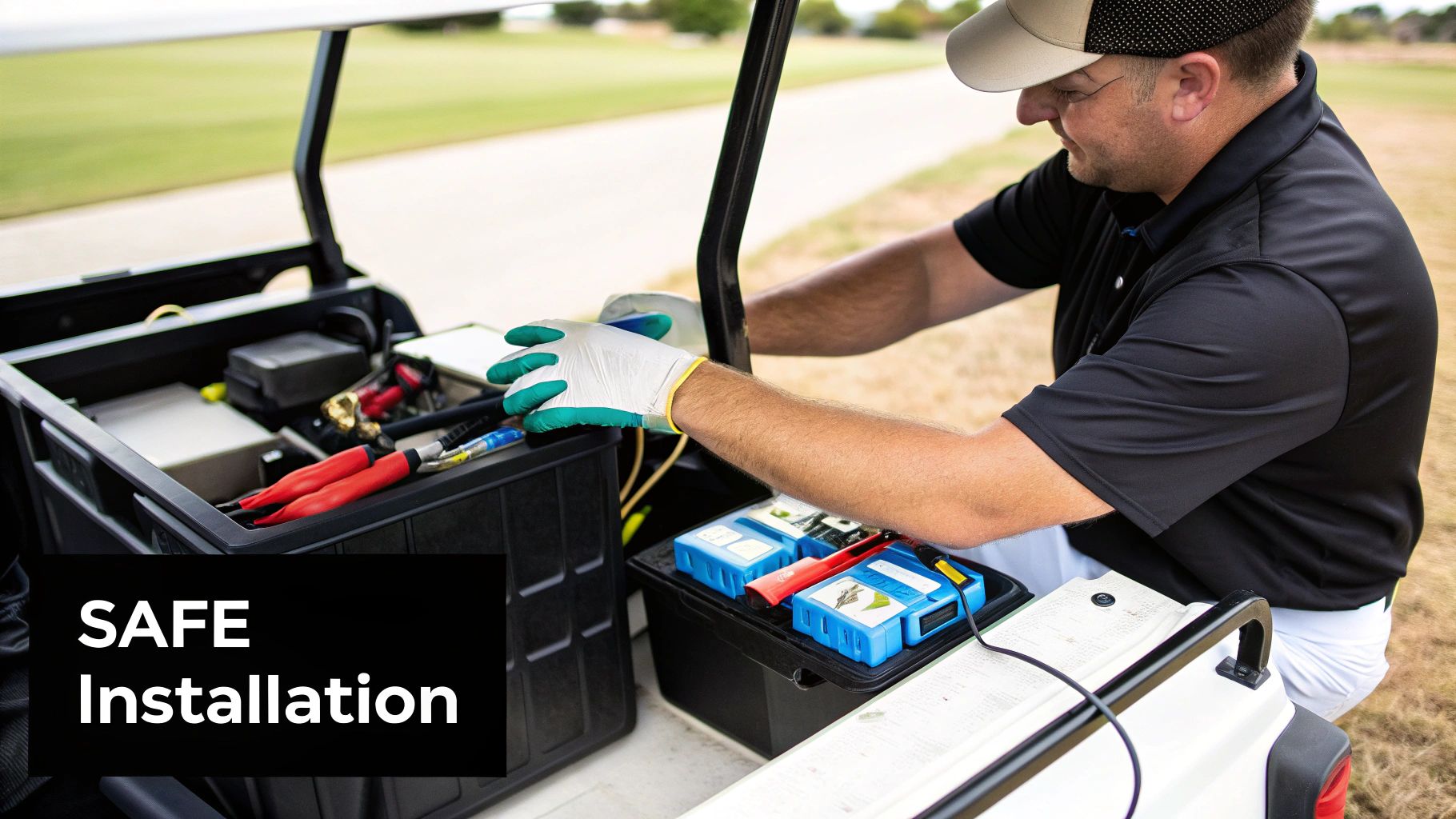
You’ve made the investment, and now it’s time to get your new lithium battery installed. Getting this part right is the first step to unlocking years of hassle-free performance. While most kits are designed to be pretty straightforward for a DIY job, your first priority should always be safety.
Before you start, make sure the cart is completely off. Get some protective gloves and eyewear on. When it's time to disconnect the old lead-acid batteries, follow the correct sequence: disconnect the negative terminal first, then the positive. This little step is crucial for preventing sparks.
When you're ready to connect the new lithium battery, just reverse that process. Connect the positive terminal first, then the negative. This simple procedure is the best way to avoid accidental short circuits. Once everything is hooked up, use the mounting brackets or straps that came with the battery to secure it tightly in the compartment so it doesn't shift around while you're driving.
Maximizing Battery Lifespan With Smart Habits
One of the best things about switching to lithium is how low-maintenance it is—truly "set it and forget it." But a few smart habits will help you squeeze every bit of life out of it, often pushing its lifespan to 8 to 10 years or even more. Unlike the old lead-acid technology, lithium batteries don’t suffer from a "memory effect" and actually prefer not to be completely drained.
Pro Tip: Try to avoid running your battery all the way down to zero. Partial charging is your friend here. A quick top-off after a round of golf is much healthier for the battery's long-term chemistry than waiting until it’s totally dead.
Best Practices For Charging And Storage
Getting into a good routine with charging and storage is the secret to protecting your investment and ensuring you get reliable power for thousands of cycles.
- Use the Right Charger: This one's a biggie. Always use the lithium-specific charger that came with your battery. Your old lead-acid charger uses a totally different charging algorithm that can seriously damage the battery's sensitive Battery Management System (BMS).
- Avoid Extreme Temperatures: While lithium batteries handle the cold way better than lead-acid, it's still best to avoid charging them below freezing (32°F or 0°C). The only exception is if your battery has a built-in self-heating function.
- Proper Long-Term Storage: If you're putting the cart away for the winter, charge the battery to around 50-70%. This "storage charge" is the ideal state to minimize degradation over months of inactivity. Store it in a cool, dry place and you'll be good to go next season.
Follow these simple guidelines, and your battery will be a reliable powerhouse for years to come. For a deeper dive, check out our guide on finding the right replacement lithium battery. And if you really want to get the most out of your investment, these expert tips for maximizing lithium-ion battery lifespan are a fantastic resource.
Answering Your Top Questions About Lithium Upgrades
Thinking about making the switch to lithium power? It’s a smart move, but it’s natural to have a few questions. From compatibility worries to how much more time you'll actually get on the course, getting the facts straight will help you upgrade with total confidence. Let's tackle the most common questions cart owners have.
Getting these details sorted out from the start means you'll get the most out of your investment right away.
Can I Use My Old Lead-Acid Charger?
This one is a hard no. You absolutely must use a charger built specifically for lithium (LiFePO4) batteries. Think of it this way: your old lead-acid charger speaks a completely different language than the sophisticated Battery Management System (BMS) inside a lithium battery.
Trying to use the wrong charger is a costly mistake. It can fry the battery cells for good, slash its lifespan, and even create a serious safety hazard. Always, always pair your new battery with the charger that’s recommended for it.
How Much More Range Can I Expect?
While the exact distance depends on the Amp Hour (Ah) rating you choose, most golfers see a 25-50% increase in how far they can drive on a single charge. This isn't just marketing hype; it's physics. Lithium batteries deliver strong, steady power right up until they're nearly empty.
Lead-acid batteries, on the other hand, start to feel sluggish as their voltage drops, and your range suffers. A lithium battery gives you dependable performance from the first tee to the last green, which means more usable energy and fewer trips back to the plug.
Are Lithium Batteries Safe For My Golf Cart?
Yes, when you buy from a reputable brand, lithium batteries are incredibly safe. The chemistry used in most golf cart batteries is Lithium Iron Phosphate (LiFePO4), which is famous for its stability. It’s far less prone to overheating than the types of lithium batteries you find in phones or laptops.
On top of that, every good battery has an advanced BMS built right in. This little onboard computer is like a full-time bodyguard for your battery, constantly protecting it from:
- Overcharging and over-discharging
- Short circuits
- Crazy-hot or freezing temperatures
This multi-layered safety system makes LiFePO4 a rock-solid and secure choice for powering your cart.
Ready to make your golf game easier? The Caddie Wheel brings effortless power to your push cart, letting you walk the course without the strain. Upgrade your round today at caddiewheel.com.
Share:
The Ultimate Guide to Remote Golf Caddie Technology
The Ultimate Guide to an Electric Golf Push Cart That Follows You