
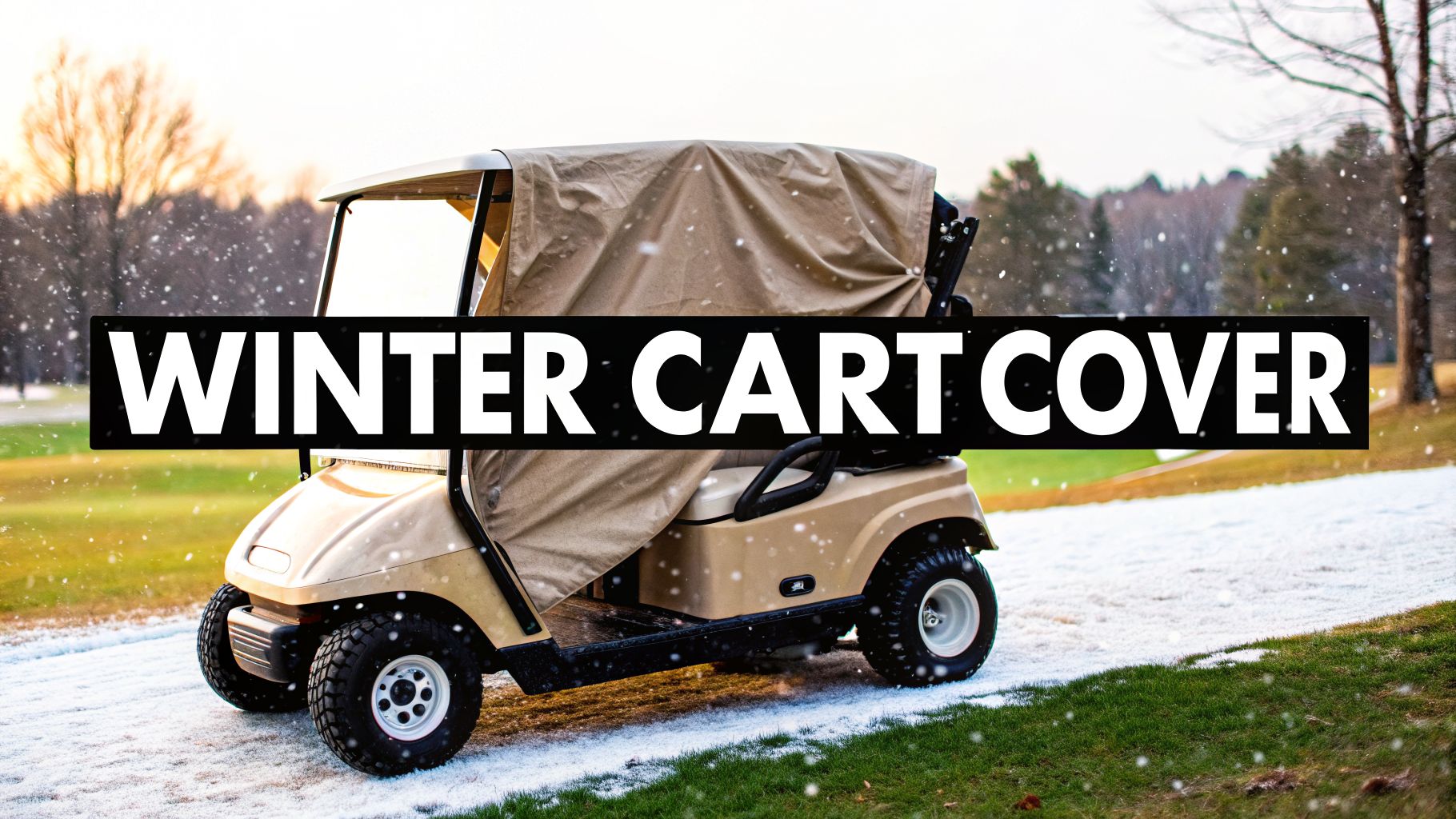
A high-quality golf cart winter cover isn't just a nice-to-have accessory; it's the best insurance policy you can buy for your investment. It’s your first and best line of defense against the costly damage that moisture, UV rays, and freezing temperatures can inflict during the offseason, ensuring your cart is ready to roll on the first warm day of spring.
Why a Golf Cart Winter Cover Is Your Best Offseason Investment

Leaving your golf cart out in the elements all winter is asking for trouble. The damage isn't just cosmetic, either—it gets deep into the core components, leading to frustrating and expensive repairs when you’d rather be hitting the links. Think of a good cover as the simplest way to protect your cart's value and avoid a headache.
The offseason throws a lot more at your cart than just a bit of snow. Once you understand the specific risks, it’s clear why a purpose-built cover is so essential.
The Hidden Dangers of Winter Exposure
Even on those milder winter days, the mix of moisture and fluctuating temperatures can wreak havoc. Freezing rain and melting snow, for instance, introduce moisture that seeps into sensitive electrical parts, which can lead to corroded battery terminals—a top cause of poor performance or a completely dead battery.
And don't forget the sun. Winter sunlight still packs a punch with powerful UV rays. Over a few months, this constant exposure can fade your cart's paint, turn vibrant colors dull, and make vinyl seats brittle and prone to cracking. It's this kind of slow, steady damage that quietly chips away at your cart's resale value. For a deeper dive into protecting valuables, the benefits of climate controlled storage offer some great insights.
Pro Tip: The biggest risk we see is moisture getting into wiring harnesses. When that water freezes, it expands and can make the wire’s insulation brittle. This leads to electrical shorts and gremlins that are an absolute pain to diagnose and fix.
Winter Damage Risks for Unprotected Golf Carts
To see the whole picture, here’s a quick overview of the problems caused by winter exposure and how a quality cover steps in to prevent them.
| Component | Winter Risk (Uncovered) | How a Cover Protects |
|---|---|---|
| Battery & Electrical | Corroded terminals, brittle wiring, and short circuits from moisture. | Creates a barrier against rain, snow, and condensation. |
| Paint & Body | Faded paint, peeling decals, and rust spots from UV rays and moisture. | Blocks 100% of harmful UV radiation and keeps the body dry. |
| Seats & Upholstery | Cracked vinyl, faded fabric, and mildew growth due to sun and dampness. | Shields seats from sun damage and prevents a damp environment. |
| Tires | Premature cracking and dry rot from constant exposure to the elements. | Protects the rubber from UV degradation and temperature extremes. |
As you can see, a good cover does a lot more than just keep your cart clean. It actively prevents a whole cascade of issues that can be expensive and time-consuming to fix.
More Than Just a Tarp
Tossing a cheap blue tarp over your cart might feel like a smart, budget-friendly move, but it almost always does more harm than good. Tarps are notorious for trapping moisture underneath, creating a damp, stagnant environment that’s a perfect breeding ground for mold, mildew, and rust.
They also don’t have a soft inner lining. When the wind picks up, the abrasive material rubs against your cart’s finish, causing chafing, scratches, and swirl marks. A proper golf cart winter cover is designed to be breathable, secure, and protective—not just to hide your cart away.
Ultimately, investing in the right cover is one of the most important things you can do to get your cart through the winter unscathed. Of course, a cover is just one part of proper offseason care. Our guide to 6 essential golf cart maintenance tips will help you get your cart fully prepped for storage, ensuring it stays in peak condition for next season.
Decoding Cover Materials: From Canvas to Vinyl
Choosing the right material for your golf cart winter cover is a lot like picking the right jacket for the weather. What works for a cool, dry day won't hold up in a freezing downpour. The fabric really does determine everything—from durability to breathability—and knowing the difference is what separates a smart buy from a wasted one.
Think of the material as your cart's personal bodyguard against the elements. A flimsy, poorly chosen fabric is going to fail right when you need it most, leaving your investment to face the winter alone. Let’s walk through the most common options so you can find the perfect shield for your specific climate.
Polyester: The All-Around Workhorse
When you picture a golf cart winter cover, you’re probably thinking of polyester. This synthetic fabric is the go-to for a reason. It hits that perfect sweet spot of being tough, water-resistant, and great at blocking UV rays, all without being so heavy that it’s a pain to wrestle on and off.
You'll see high-quality polyester covers rated by denier (D), which is just a fancy way of saying how thick and tough the fabric is.
- 300D Polyester: This is a lighter-weight fabric, best for carts stored in a garage or carport. It’s perfect for keeping off dust and preventing scratches in milder conditions.
- 600D Polyester: Here’s the sweet spot for most people. A 600D golf cart winter cover is way more robust and tear-resistant, giving you solid protection against snow, rain, and wind. It's the reliable choice for outdoor storage in most parts of the country.
- 800D+ Polyester: Now we’re talking heavy-duty. This is for extreme weather. It offers maximum durability, but it’s also bulkier and a bit more of a hassle to handle.
One of polyester’s best traits is that it resists shrinking and stretching. That means the snug fit you get on day one is the same fit you’ll have years down the road.
Vinyl: The Waterproof Fortress
If your number one enemy is water, then vinyl is your answer. Vinyl covers are 100% waterproof. They create an unbeatable shield against rain, sleet, and melting snow—like a personal raincoat for your cart, making sure not a single drop gets through to the bodywork or electrical parts.
But that total waterproofing comes with a catch. Vinyl doesn’t breathe at all. In seriously frigid, sub-zero temperatures, it can get stiff and even crack. If you live somewhere that sees deep freezes, a high-quality, treated polyester might be the more resilient pick.
Canvas: The Breathable Classic
Canvas, usually made from cotton or a poly-cotton blend, has one major thing going for it: it’s incredibly breathable. That natural airflow is a huge advantage because it stops condensation from building up underneath the cover, which is one of the biggest culprits behind mold and mildew.
While classic canvas is strong, it's also naturally absorbent. To work as a winter cover, it has to be treated with a waterproofing agent. Over time, that coating can wear off and will need to be reapplied. It's a fantastic choice for dry, cold climates where sun and dust are bigger threats than a blizzard.
Key Takeaway: Don’t just look at the outside material. A soft, non-abrasive inner lining is absolutely critical. This gentle layer is what protects your cart's paint job from getting scratched up, especially when the cover is flapping around in the wind.
Non-Negotiable Features: Air Vents and Coatings
No matter what fabric you choose, there are two features you absolutely must have. First, your cover needs built-in air vents. These small, often-overlooked additions are what prevent the cover from turning into a sweatbox.
Vents allow trapped moisture and air to escape, which is your best defense against the condensation that leads to mold, mildew, and even rust.
Second, look for specialized coatings. A UV-resistant coating is a must-have to stop the sun from breaking down the fabric and fading your cart’s paint and seats—even in the winter. At the same time, a durable water-repellent (DWR) finish on polyester or canvas will make rain and snow bead up and roll right off, giving it an extra line of defense against moisture.
How to Measure Your Golf Cart for a Perfect Fit
Picking a golf cart winter cover that doesn't fit right is almost as bad as using no cover at all. A cover that’s too big will flap and billow in the wind like a sail, constantly rubbing against your cart’s finish. Over time, that friction can cause chafing and even scratch the paint.
On the flip side, a cover that’s too tight is a constant struggle to get on and off. The seams are always under stress, making them prone to ripping and leaving your cart exposed anyway.
Getting the fit just right is the secret to real protection. A snug, properly-sized cover creates a solid barrier against snow, ice, dust, and even critters looking for a winter home. The good news? Measuring your cart is a simple job that takes just a few minutes.
The Three Key Dimensions
To find a cover that fits like a glove, you only need three basic measurements. Grab a tape measure—and maybe a friend to help hold it steady—and write down these numbers:
- Length: Measure from the very front of the front bumper to the very back of the rear bumper. You want the longest possible line, so run the tape straight across the side of the cart.
- Width: Find the widest point of your golf cart. This is usually from the outer edge of one fender to the outer edge of the other. Don't just measure the seat, or you'll come up short.
- Height: Start at the highest point of the roof and measure straight down to the ground, just behind the front wheel. This ensures the cover is long enough to hang properly and protect the wheels and tires.
Pro Tip: Always add a few extra inches to your measurements. This little buffer makes the cover much easier to slip on and gives you some wiggle room for securing the straps underneath without straining the fabric.
Accounting for Aftermarket Modifications
Here’s where a lot of people go wrong. Standard measurements are great for a stock golf cart right off the lot, but they become useless the minute you add custom parts. Aftermarket accessories can dramatically change your cart's dimensions, and you must account for them.
Make sure to measure your cart with all its permanent add-ons already installed. Common modifications that will change your cart’s profile include:
- Rear-Facing Seats: These kits can add a foot or more to your cart's total length. Always measure to the very back of the rear seat's footrest.
- Extended Roofs: If you have an 80" or longer roof on a 4-passenger cart, your original height measurement is no longer accurate. Measure from the highest point of the new, longer roof.
- Cargo Boxes or Utility Beds: These add both length and sometimes width. Measure to the furthest point of the box.
- Brush Guards and Lift Kits: A front brush guard adds to the overall length, while a lift kit will significantly increase the total height.
Forgetting to include these add-ons is the number one reason people end up with a cover that doesn’t fit. For a deep dive into the dimensions of different models, check out our complete guide to golf cart dimensions.
Once you have your measurements, you can start thinking about materials. The right fabric is just as important as the right fit.

As you can see, polyester offers a great balance of features, while vinyl is king for waterproofing and canvas provides superior breathability.
Universal vs. Custom-Fit Covers
With your measurements ready, you'll generally find two types of covers on the market: universal and custom-fit. A universal golf cart winter cover is made to accommodate a range of carts within specific dimensions (for example, "fits most 2-passenger carts up to 95" long"). They're a versatile and often more affordable choice.
A custom-fit cover, on the other hand, is tailored to a specific make and model, like an EZ-GO TXT or a Club Car Precedent. It delivers a glove-like fit that’s unbeatable for security and a clean look, especially if your cart is still stock and hasn't been heavily modified.
Covering a Cart with Custom Accessories
You’ve spent time and money tricking out your golf cart with accessories that make it perfect for you. But when it comes to finding a golf cart winter cover, those same custom add-ons—like lift kits, rear seats, and mobility aids—can throw a major wrench in the works.
A standard, off-the-shelf cover is designed for a stock cart right from the factory. Try to pull one over your modified ride, and you’ll quickly run into problems. You might get it halfway on before it snags on a rear seat kit or won't stretch past your oversized tires. This leaves you with a poor fit, full of gaps that invite rain, snow, and pests to settle in for the winter. That completely defeats the purpose of covering it in the first place.
Protecting a modified cart just means you need to think beyond the "one-size-fits-all" approach and find a cover that truly fits its unique shape.
To Remove or To Cover? That Is the Question
When a cover just won't fit, the first question is always the same: "Should I just take the accessory off for the winter?" For some things, that’s a perfectly good solution. A removable cooler rack or a snap-on club washer can be stored inside, allowing a standard cover to fit like a glove.
But what about the bigger, more permanent upgrades? You’re not going to uninstall a rear-facing seat or a lift kit just for the offseason. The same goes for helpful tools like the Caddie Wheel, a motorized power assist wheel that makes walking the course easier and is often stored on the golf cart between rounds. These are integrated parts of your setup, and the answer isn't to take your cart apart—it's to find a more accommodating cover.
If you’re looking for more ideas to personalize your cart, check out our guide on some of the cool accessories for golf carts.
Finding a Flexible and Secure Fit
When your cart has a unique shape, the key is to find a cover with features built for flexibility. You need something that can stretch, cinch, and conform to odd angles while still creating a tight seal against the elements.
Keep an eye out for these game-changing features when shopping for a cover for your modified cart:
- Deep Elastic Hems: A strong, thick elastic band at the bottom is your best friend. It helps the cover grab onto the underside of the frame, creating a snug barrier all the way around—even over beefy tires or extended bumpers.
- Multiple Adjustable Straps: Don't settle for just one or two. Look for covers with several click-close straps that run underneath the cart. These let you pull everything taut from different angles, so the cover won't flap in the wind or let snow pile up in loose pockets.
- Zippered Access Panels: While not strictly for fit, zippered doors are incredibly convenient on larger covers. They allow you to get into the cart or access a charging port without having to wrestle the whole thing off and on again.
For a cart with a rear seat kit and a lift, a standard cover often won't even reach the bottom of the frame. A cover designed for a 4-passenger cart with extra height is essential for getting the full coverage needed to protect the chassis and undercarriage from moisture.
At the end of the day, protecting your custom ride means being honest about its true size. Don't try to force a cover that’s too small. Instead, invest in one with the generous cut and smart securing features you need to keep every part of your investment safe and sound.
Installation and Storage Tips for Your Cover

Getting a high-quality golf cart winter cover is a great start, but knowing how to properly install and store it is where you'll get the real long-term value. A little bit of know-how goes a long way in protecting both your cart and the cover itself.
Think of it like this: a loose cover in a winter storm is just a giant sail. It'll flap around, potentially scuffing your cart's finish and putting a ton of stress on the cover’s seams. Mastering a few simple installation tricks ensures it stays put and does its job all season long.
A Simple Guide to Secure Installation
Installing your cover correctly only takes a few extra minutes, but it makes all the difference. The goal is a snug, secure fit that won't budge in high winds.
Follow this straightforward process for a perfect fit every time:
- Start from the Front: Unfold the cover and find the front end. Drape it over the front of your cart first, pulling it down neatly over the bumper and tires.
- Work Your Way Back: Smoothly pull the rest of the cover over the roof and down the back. Take a second to make sure it’s centered and hanging evenly on both sides.
- Secure the Hems: Most covers have an elastic hem. Make sure this hem is tucked securely under both the front and rear bumpers to create a good initial seal.
- Fasten All Straps: This is the most important step. Connect all the click-close straps that run underneath the cart. Pull them snug but not overly tight, eliminating any large, loose areas where wind could get in.
We see this all the time—people only use one or two straps. It’s crucial to use all of them. This distributes tension evenly across the fabric and prevents a single point from taking all the strain during a storm. This one habit can add years to your cover’s life.
Storing Your Cover During Golf Season
How you put your cover away for the spring and summer is just as important as how you use it in the winter. Just bunching up a damp, dirty cover and tossing it in the storage bag is a recipe for disaster. You’re creating the perfect dark, damp home for mildew and mold.
These fungi don't just smell bad; they actively eat away at the fabric and its protective coatings. By the time you pull the cover out next fall, you might find its waterproofing is shot and the material is starting to break down.
Follow these best practices for off-season storage:
- Clean It First: Before you pack it up, give the cover a gentle cleaning with some mild soap and water. A soft brush is great for getting off any dirt, bird droppings, or tree sap.
- Dry It Completely: This is non-negotiable. Lay the cover out in a sunny spot or hang it somewhere with good airflow until it is 100% dry. Pay extra attention to the seams and inner lining, as these spots hold onto moisture the longest.
- Fold, Don’t Stuff: Once it's totally dry, fold the cover neatly instead of cramming it into its bag. This prevents hard creases that can weaken the fabric and seams over time.
Taking these few extra steps ensures that when winter rolls around again, your golf cart winter cover is clean, fresh, and ready to go. It's a small investment of time that pays off season after season.
Answering Your Golf Cart Winter Cover Questions
So you've picked out the perfect winter cover for your golf cart. That's a great first step, but a few questions always seem to come up once you start using it. From cleaning and care to settling some common debates, getting the right answers helps you protect your investment with confidence.
We get these questions all the time, so we’ve put together the most common ones with straightforward, practical solutions. Let's clear up any confusion so you can spend less time worrying and more time looking forward to spring.
How Do I Clean My Golf Cart Winter Cover?
Over a long winter, your cover is going to collect its fair share of dust, pollen, bird droppings, and tree sap. Keeping it clean isn't just about looks—it's essential for making sure the protective materials last for years.
Thankfully, cleaning is a simple job. Just grab a bucket of cool water, a bit of mild soap (dish soap works great), and a soft-bristle brush. Gently scrub the cover to lift off the grime, then give it a thorough rinse with a garden hose. The most important part? Let it air dry completely before you fold it up for storage or put it back on the cart.
Warning: Whatever you do, never put your golf cart winter cover in a washing machine or dryer. The intense spinning and high heat will absolutely destroy its waterproof coatings and UV-resistant layers, making it useless. You'll also want to avoid harsh detergents or bleach, as they will strip away those critical protective finishes.
Can I Just Use a Tarp Instead of a Real Cover?
It's a question we hear a lot, and while it seems like a tempting shortcut, using a generic blue tarp is one of the worst things you can do for your golf cart. Think of a tarp as a big plastic sheet, not a piece of protective gear. It often creates more problems than it solves.
First off, tarps are not breathable. They trap every bit of moisture underneath, creating a damp, humid dome over your cart. This is the perfect breeding ground for mold, mildew, and rust, which can cause far more damage than snow or rain ever could.
Second, that rough, abrasive texture on a tarp acts like low-grit sandpaper when the wind picks up. As it flaps and rubs against your cart all winter, it can easily scratch your paint, scuff up your decals, and wear down your vinyl seats.
A proper golf cart winter cover is designed with a soft inner lining and breathable fabric for these exact reasons. It’s custom-fit to prevent flapping and allows moisture to escape, keeping your cart safe and sound.
Do I Need a Cover if My Cart Is in a Garage?
Yes, you absolutely do. A garage is great for shielding your cart from snow and freezing rain, but it’s not a sterile, climate-controlled bubble. There are plenty of other things that can cause issues over a long offseason.
Dust, dirt, and debris will inevitably settle on your cart over several months, leaving it filthy by the time you're ready to play. Garages are also common homes for pests looking for a warm place to nest. More importantly, an unheated garage still experiences big swings in temperature and humidity, which can lead to condensation forming on your cart.
A quality cover acts as that final line of defense, protecting your cart from:
- Dust and Grime: Keeps your cart looking clean and ready to go.
- Pests and Critters: Prevents mice or insects from making a home in your seats or engine bay.
- Accidental Scratches: Shields it from being dinged by bikes, yard tools, or car doors.
- Moisture Fluctuations: Adds an extra layer of protection against condensation.
Think of it as the ultimate dust cover, ensuring your cart stays in pristine condition even when it’s stored indoors.
What Is the Best Way to Prevent Mold Under the Cover?
Stopping mold and mildew before they start all comes down to one thing: moisture control. If you get this right, you’ll have no musty surprises waiting for you in the spring. It all boils down to two simple rules.
First, always start with a completely dry cart. Before you even think about putting the cover on, do a final check to make sure the seats, floor, and bagwell are 100% dry to the touch. Covering a damp cart is like sealing it in a Ziploc bag with a wet sponge—you're just asking for trouble.
Second, make sure you use a cover with built-in air vents. This feature is a non-negotiable. These vents are specifically designed to create passive airflow, letting any moisture from condensation escape before it has a chance to settle. A breathable, well-vented cover is your best friend in the fight against mold.
Ready to give your cart the protection it deserves? The Caddie Wheel is designed with the walking golfer in mind, but we know how important it is to care for your entire setup. Ensure your investment is safe all year with the right protective gear. Learn more about how you can upgrade your game at caddiewheel.com.
Share:
How to Make a Golf Cart Faster Your Complete Guide
The Essential Guide to Golf Cart Smart Chargers