
Walking the course isn't just for the old-school traditionalists anymore. It's a full-blown movement, and it’s picking up steam because players are realizing the health benefits and the deeper connection you get with the game. The advanced push carts golf enthusiasts are using today have made this possible, turning what could be a chore into a seamless part of the experience.
Why Walking Golf Is Making a Comeback
For decades, the motorized golf cart was the very symbol of a relaxed round of golf. But times are changing. More and more players are rediscovering the original way to play this great game—on their own two feet.
This isn't just about getting nostalgic. It's a deliberate choice. Golfers are actively seeking better health, a clearer mind, and a more authentic feel for the game.
This shift has been powered by modern equipment. You can forget that old picture of a golfer struggling with a heavy bag digging into their shoulder. Today’s sophisticated manual and electric push carts have completely changed the game, letting players of all ages and fitness levels enjoy the walk without the physical beating.
The Benefits Fueling the Trend
The reasons for this comeback are crystal clear. Golfers are ditching the riding cart because walking offers a ton of advantages that you just can't get while sitting down.
- A Real Workout: Walking 18 holes can burn anywhere from 800 to 1,500 calories while covering four to eight miles. It's a fantastic low-impact workout that's great for your cardiovascular health.
- Deeper Connection to the Game: When you walk, you feel every subtle slope and contour of the course. That connection helps you strategize shots and read greens far better, leading to a more thoughtful, engaged round.
- Mental Reset: The steady rhythm of walking gives you time to clear your head between shots, which helps cut down on stress and sharpen your focus. You can dive deeper into the specifics in our article about whether walking golf is good exercise.
This isn't just a feeling; the numbers back it up. The global golf push and pull cart market is expected to explode from USD 0.29 billion in 2026 to USD 0.65 billion by 2035. That kind of growth shows just how serious health-conscious players are about walking the course. For more on this trend, check out the analysis from Business Research Insights.
Choosing Between 3-Wheel and 4-Wheel Carts
So, you've decided to walk the course—great choice! Your first big decision is figuring out the foundation of your walking setup. The debate between 3-wheel and 4-wheel push carts is a classic one in the clubhouse, and for good reason. Each design brings something different to the table, and the right one for you really depends on where you play and what you value most.
Think of a 3-wheel cart as the sports car of the push cart world. Its single front wheel gives it an incredibly tight turning radius, which translates to fantastic maneuverability. You'll find it a breeze to navigate around tricky bunkers, greenside obstacles, and those narrow, winding paths between tee boxes.
On the other hand, a 4-wheel cart is like a sturdy, reliable SUV. Its wider, more balanced base provides exceptional stability, which is a massive plus on hilly, uneven ground. If your home course is full of dramatic slopes and bumpy fairways, a four-wheeler is far less likely to tip over, giving you a lot more confidence as you traverse the landscape.
The flowchart below breaks down that initial, simple decision to walk the course—a choice that immediately leads you to think about which type of cart will be your new best friend out there.
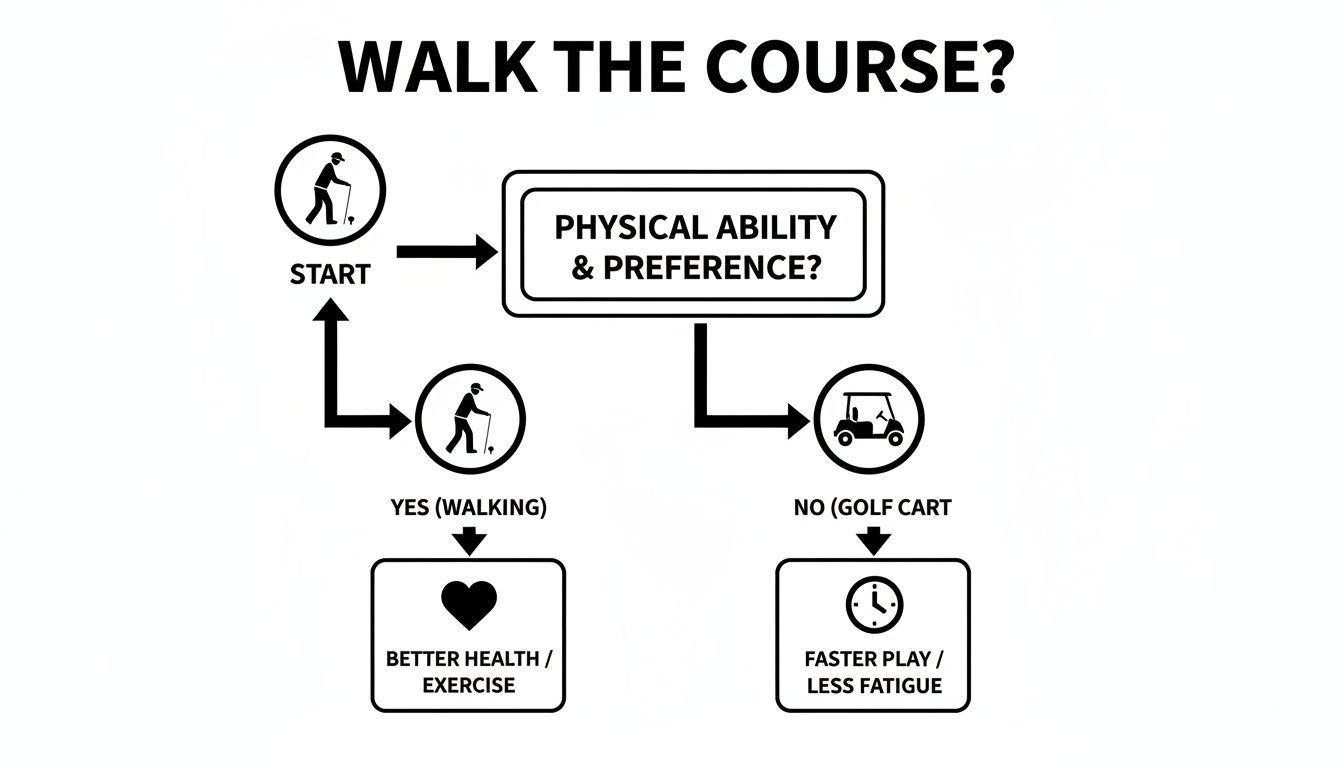
As you can see, choosing to walk is the first step toward better health and a deeper connection with the game itself. Now, let's find the right wheels for that journey.
Maneuverability vs. Stability: The Core Trade-Off
When it comes down to it, your choice boils down to what you prioritize on the course. Do you mostly play a flat, parkland-style course where zipping around obstacles is the name of the game? Or are you constantly tackling rolling hills where you need a rock-solid base that won't quit on you?
- 3-Wheel Carts are the champions of agility and are often a bit lighter. They pivot on a dime, making them a favorite for players who love quick, responsive handling.
- 4-Wheel Carts just feel more "planted." Their stability is second to none on sidehill lies, and many golfers find they track straighter over long distances with less babysitting.
Here's a key insight: Modern engineering has really started to blur the lines between the two. Many of today's best 3-wheel carts now have a wider rear wheelbase to boost stability, while newer 4-wheel models often feature swiveling front wheels to make them much easier to turn. For a deeper dive, you might want to check out our guide on three-wheel cart designs and what makes them tick.
To make the comparison even clearer, here’s a quick side-by-side look at the main differences.
3-Wheel vs 4-Wheel Push Cart Comparison
This table should help you quickly weigh the pros and cons of each style based on what matters most to you and the courses you play.
| Feature | 3-Wheel Push Cart | 4-Wheel Push Cart |
|---|---|---|
| Maneuverability | Excellent; tight turning radius for nimble navigation. | Good; less agile but improved with swivel front wheels. |
| Stability | Good; best on flatter terrain, can be tippy on hills. | Excellent; the clear winner on hilly and uneven ground. |
| Weight | Generally lighter and easier to push. | Typically heavier due to the extra wheel and frame. |
| Footprint | Often folds down to a more compact, triangular shape. | Can be bulkier when folded due to the wider base. |
| Best For | Flat to moderately hilly courses; players who value agility. | Hilly courses; golfers who want maximum stability. |
Ultimately, both are fantastic options. It's just a matter of matching the cart's strengths to your specific needs on the course.
Considering the Fold: How It Packs Up
Beyond the wheel count, how the cart collapses is a make-or-break feature. This is all about storage and transportation. Trust me, a cart that's a nightmare to fold will become your least favorite part of the day in the clubhouse parking lot.
Generally, you'll run into two types of folding mechanisms:
- One-Step Folds: These are all about convenience. With the push of a button or the pull of a lever, the whole thing collapses in one smooth motion. They're perfect for golfers who want to get from the car to the first tee without any fuss.
- Compact Folds: These might take an extra step or two to collapse, but they fold down into a much smaller, tighter package. If you're working with limited trunk space or need to stash your cart in a small locker, a compact fold is definitely the way to go.
Key Features That Define a Great Push Cart
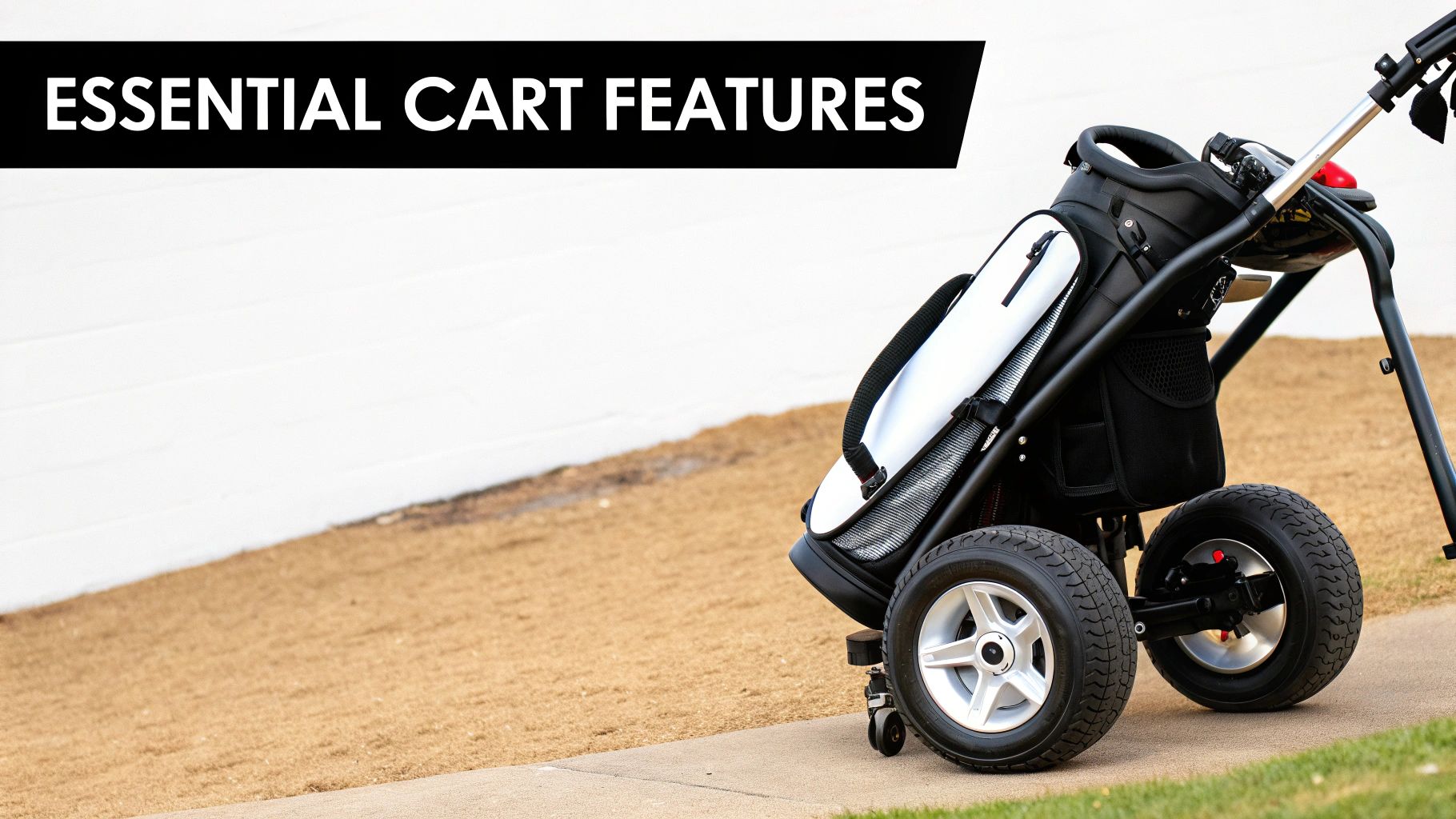
Beyond just the number of wheels, a few critical features are what truly separate a frustrating cart from a fantastic one. These are the little details that genuinely impact your experience on the course, turning a simple walk into a seamless, enjoyable round. It's easy to get lost in marketing hype, so let's focus on what actually matters when you're out there for 18 holes.
The best push carts golf has to offer blend durability, convenience, and comfort into one smooth-rolling package. From the frame's material to the design of the wheels, every component plays a role. Let's break down the most important features to look for.
Frame Material and Weight
Think of the frame as the skeleton of your push cart—it directly affects both its weight and its lifespan. This is where you’ll find a classic trade-off: how easy the cart is to push versus how well it stands up to years of use and abuse.
Most carts on the market use one of two main materials:
- Aluminum: This is the most popular choice, and for good reason. It’s incredibly lightweight, making it a breeze to push up hills and lift in and out of your car. While it's plenty strong for regular use, it is more susceptible to dings and dents than steel.
- Steel: For sheer, brute-force durability, steel frames are the toughest you can get. They'll handle rough terrain and frequent use without breaking a sweat, but all that strength comes at the cost of added weight. Pushing a steel cart is a bit more of a workout.
It’s a lot like choosing a bicycle frame. Aluminum offers a fantastic balance for most riders, while steel is the heavy-duty choice for those who put ruggedness above all else.
Wheels and Braking Systems
Your cart's wheels are its connection to the turf, and their design can make a massive difference in your walk. You'll generally find two types of tires. Air-filled tires give you a cushioned, smooth ride over bumpy ground but need to be topped up with air occasionally. On the other hand, solid foam or rubber tires are 100% maintenance-free and will never go flat mid-round.
Just as important as going is stopping. A reliable braking system is non-negotiable, especially if your home course has any hills. A simple foot brake is common, locking the rear wheels in place. Many modern carts, however, feature a hand brake right on the handle for quicker, more convenient control.
A cart rolling away on a sloped fairway isn't just an inconvenience; it can be a real hazard. The best brakes engage securely and release with minimal effort, giving you total confidence that your gear is staying put.
Storage and Ergonomics
A great push cart is more than just a frame with wheels; it’s your mobile command center for the entire round. The best models come with a multi-feature console that provides smart, accessible storage for all your on-course essentials.
Look for these key features to maximize convenience:
- Integrated Console: At a minimum, this should have a scorecard holder, ball storage, and a few tee slots.
- Drink Holder: A deep, secure holder is an absolute must for staying hydrated.
- Storage Pouch: A mesh or solid pouch is perfect for stashing a rangefinder, snacks, or an extra layer of clothing.
- Cooler Pocket: An insulated pouch is a fantastic bonus, especially for keeping drinks cold on those hot summer days.
Finally, make sure the handle is adjustable. An ergonomic handle that you can set to your height prevents you from slouching and reduces strain on your back and shoulders. It's a small detail that makes your walk significantly more comfortable.
The Game-Changing Electric Push Cart Upgrade
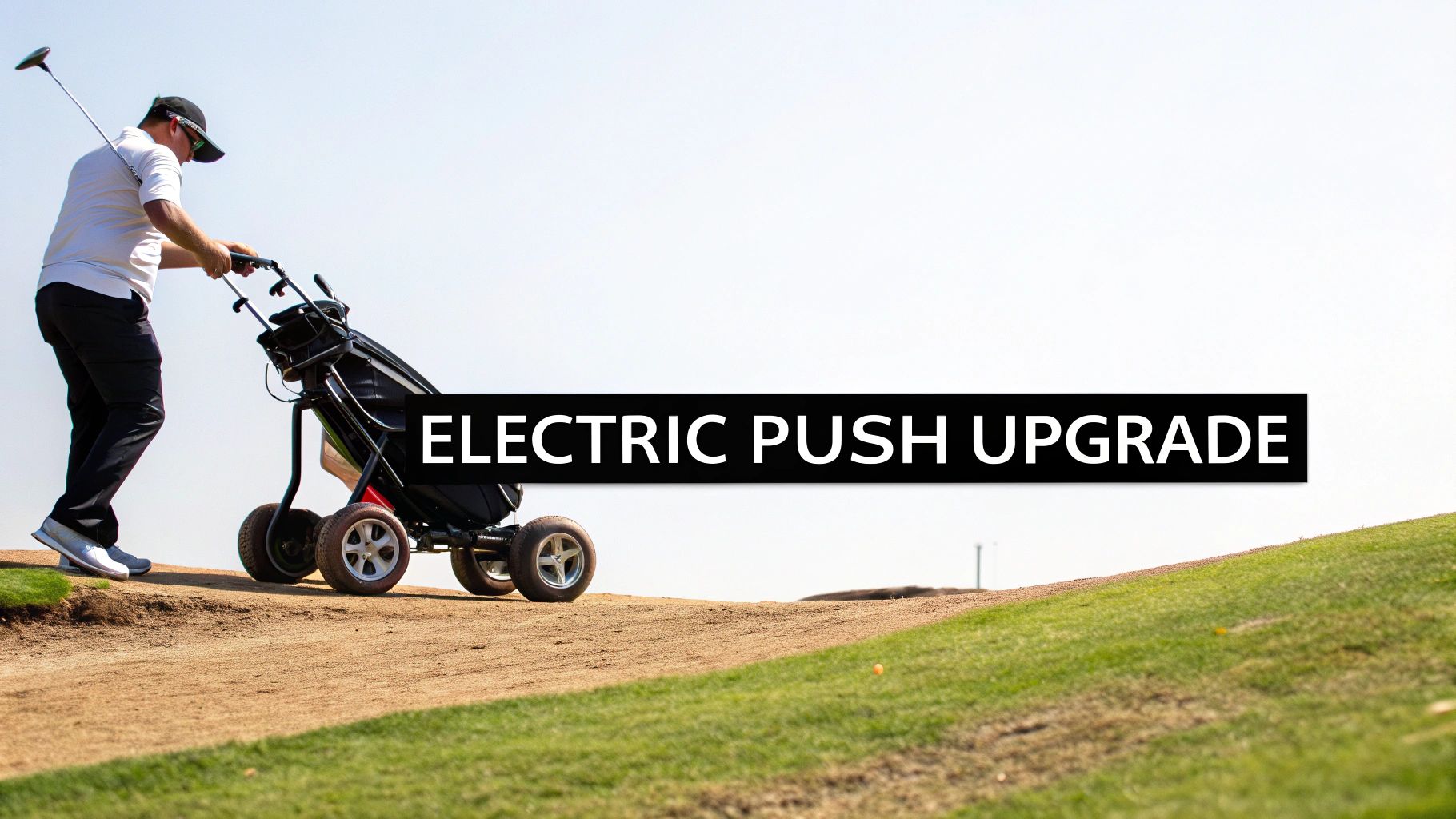
What if you could get all the health benefits of walking the course without the muscle strain of hauling your gear up every hill? That's exactly where the next evolution in push carts golf comes into play: the electric upgrade. This technology carves out a brilliant middle ground between a purely manual cart and a pricey, fully integrated electric caddy.
Think of it like adding a motor to your bicycle to create an e-bike. You still get to pedal, but a quiet, powerful motor flattens out the hills and makes long distances feel effortless. With an electric-assist push cart, you walk freely and save your energy for what really matters—your swing.
This simple yet powerful idea has quickly gone from a niche gadget to a mainstream solution for thousands of golfers who want to walk smarter, not harder.
How Electric-Assist Systems Work
At its heart, an electric-assist system is all about simplicity and compatibility. Leading kits, like the Caddie Wheel, are built around a motorized wheel that attaches directly to your existing push cart's frame. In many cases, the installation is completely tool-free, using a universal bracket that just snaps into place in a couple of minutes.
Once it's on, you control everything from a small, lightweight remote. This little device gives you total command of your cart, typically offering:
- Forward Propulsion: Set your cart to cruise at your exact walking pace.
- Reverse Control: Need to back out of a tight spot? No problem.
- Braking Power: An electronic brake keeps your cart locked in place, even on steep slopes.
This setup transforms your trusty manual cart into a remote-controlled partner that follows you around the course. It’s a super accessible way to get all the perks of a fully automated caddy without having to replace the cart you already know and love.
The Best of Both Worlds
The real beauty of an electric upgrade is the perfect balance it strikes. You're not just buying another piece of gear; you're making the one you have infinitely better. This approach gives you the freedom and high-tech features of an electric cart but without the steep investment, which can easily top $1,500.
This smart upgrade preserves your initial investment in a quality manual push cart while adding a layer of convenience that can genuinely change your on-course experience, especially on demanding, hilly courses.
This trend really took off in May 2025 after the United States Golf Association (USGA) gave the green light for electric-assist push carts in all sanctioned competitions. That landmark ruling was a game-changer, opening the door for walking golfers to use motorized help in both pro and amateur events and fueling huge demand for these clever upgrades. You can discover more insights about this market shift and its impact on the industry.
The result is a more efficient way to walk the course. You save crucial energy, put less wear and tear on your body, and finish 18 holes feeling fresh, not drained. For a lot of golfers, it’s the most practical and cost-effective upgrade out there, making the game more accessible and fun for everyone.
Understanding Battery Life and Performance
Any electric push cart is only as good as the battery powering it. Think of it as the heart of the whole system. Getting a handle on what it can do is the key to ditching any "range anxiety" before you even step onto the first tee. We can skip the dense technical specs, because battery capacity is usually measured in a language every golfer gets: holes.
Most high-quality lithium-ion batteries today are rated for 27 or even 36 holes on a single charge. That gives you more than enough juice for a standard 18-hole round, with plenty left over for an extra nine or a second full round if you’re making a day of it. It’s all about having the confidence that your cart will go the distance.
Of course, real-world mileage always varies. Just like your car burns more gas going uphill, your electric cart has to work a lot harder on hilly, rugged courses. Wet, soft turf also creates more drag on the wheels, forcing the battery to put out more power.
Maximizing Battery Lifespan
A modern lithium-ion battery is built to last for hundreds of charge cycles, but its long-term health really comes down to how you treat it. A few simple habits will keep your battery performing reliably for years and protect your investment in one of the best upgrades for push carts golf.
Smart maintenance makes all the difference:
- Charge After Every Use: Make it a habit to top off your battery after a round, even if you only played nine holes. This keeps the cells conditioned and ready for your next tee time.
- Avoid Extreme Temperatures: Never leave your battery baking in a hot car trunk or sitting in a freezing garage. Room temperature is the sweet spot for preserving its capacity long-term.
- Use the Right Charger: Stick with the charger that came with your unit. Using a mismatched charger can slowly degrade or even damage the battery cells.
It helps to think of your cart's battery like the one in your smartphone. You wouldn't leave your phone on the dashboard in the summer sun or let it sit dead for months. The same common-sense care applies here, and it pays off big time in performance and reliability.
Charging Logistics and On-Course Expectations
Getting your battery ready for a round is simple. Most will reach a full charge in about 4-6 hours, so plugging it in overnight is the perfect routine. This way, you’re guaranteed to start every round with maximum power.
If you really want to get into the details, you can learn more about how electric trolley batteries work in our complete guide. Follow these tips, and you can walk the course knowing your cart will keep up every step of the way.
Finding the Perfect Push Cart for Your Game
Choosing the right push cart isn't just about comparing features on a spec sheet; it’s about finding a partner for your game. Every golfer walks the course for different reasons. The perfect cart is the one that makes your round better, whether you’re grinding for a new personal best or just soaking up a beautiful day on the links.
Let's figure out which cart is right for you.
This decision is more relevant now than ever. In North America, a whopping 50% of all rounds are played on foot, fueling a massive boom in the golf world. The region now accounts for 42% of global growth in the push cart market, which tells you just how many players are ditching the riding cart for the walk. You can dig into more of this data in the full market report from Data Insights Market.
Recommendations for Different Golfers
Your playing style, fitness goals, and budget will naturally point you toward the right type of cart. Here’s a quick breakdown for three common types of golfers.
-
The Fitness-Focused Walker: If your main goal is getting in a great workout, a lightweight manual cart is your best friend. A nimble 3-wheel design makes navigating the course feel almost effortless, letting you keep a brisk pace and save your energy for your swing—not for wrestling with heavy gear.
-
Seniors and Players with Mobility Concerns: For golfers managing an injury or simply looking to take it easy on their joints, an electric-assist upgrade is a game-changer. It completely removes the effort of pushing, turning hilly courses from a challenge into a pleasure. This clever tech helps you walk more holes with less fatigue, so your energy goes into the game itself.
Upgrading your current manual cart to electric offers a huge advantage over buying a brand-new, all-in-one electric model. You get the exact same strain-reducing benefits but at a fraction of the cost, making it the smartest financial move for most players.
This approach gives you the best of both worlds: you get the health benefits of walking combined with the ease of electric power. The result? You’ll finish 18 holes feeling refreshed, not completely wiped out.
A Few Common Questions About Push Carts
Diving into the world of push carts golf, especially when you're thinking about adding an electric motor, is bound to bring up a few questions. Let's get you some quick, clear answers from someone who's seen it all.
Is It a Hassle to Install an Electric-Assist on My Cart?
Not at all. In fact, most electric-assist conversion kits are designed so that anyone can install them without needing a toolbox. They usually come with a universal bracket system that just clips right onto your cart's frame in a matter of minutes.
Once the bracket is on, the motorized wheel attaches to it. This clever design lets you switch between pushing it yourself and letting the motor do the work whenever you feel like it.
What's the Best Cart for a Hilly Golf Course?
For those really hilly courses, a 4-wheel push cart is your best bet for stability—they're just much less likely to tip over. That said, a well-designed modern 3-wheel cart with a wide base and a solid brake can still handle hills just fine.
But if you really want to conquer the ups and downs, adding an electric-assist with a remote brake changes the game completely. It makes any incline or decline feel safe and effortless, no matter how many wheels your cart has.
How Much Upkeep Does an Electric Wheel Really Need?
You'll be pleasantly surprised—the maintenance is incredibly low. Your main job is just taking care of the battery. Make sure you give it a full charge after every round and store it properly during the off-season.
Beyond that, a quick wipe-down of the wheel now and then to clear off any mud or grass is all it really needs.
The motors themselves are sealed units, built to be maintenance-free for years of reliable use. To really round out your setup, think about how your push cart works with some of the best golf accessories that can seriously elevate your game.
Ready to make every walk on the course feel like a breeze? You can transform the push cart you already own with the Caddie Wheel. Experience the freedom of a remote-controlled caddy and save all your energy for your swing. Upgrade your cart today at CaddieWheel.com.
Partager:
The Ultimate Guide to a 4 Wheeled Golf Push Cart
Golf Cart Battery Issues: Fixes for golf cart battery issues